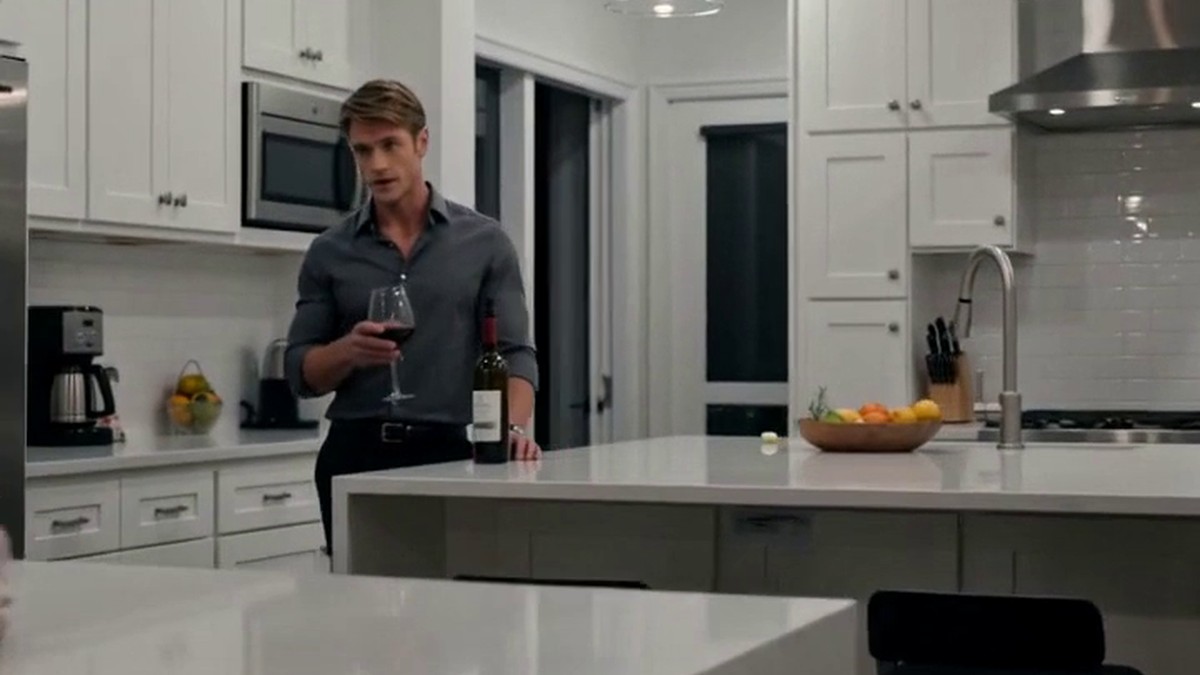
Rachel heard the whole thing through the bathroom vent. Not on purpose, not at first. She’d gotten up at two in the morning because the Thai food from dinner wasn’t sitting right, and she’d locked herself in the guest bathroom so she wouldn’t wake Derek. The fan was off. The vent connected to the kitchen, two floors down, and sound traveled through it with the weird clarity of a tin-can telephone.
Linda’s voice came through first. Derek’s mother had a way of speaking that always reminded Rachel of a librarian explaining overdue fines—patient, precise, and utterly certain of her authority.
“—the condo is hers free and clear. Her grandmother left it to her specifically. Before you were engaged. Before you even met. You have no claim to it whatsoever.”
A pause. Then Derek: “Mom. We’re getting married. It’s basically ours.”
“No, sweetheart.” Linda’s voice dropped, but the vent carried every syllable. “It’s basically hers. That’s the problem. If she sells it after the wedding, the money goes into a joint account, and then it’s a marital asset. But if she keeps it separately? It stays hers. Forever.”
Rachel sat very still on the edge of the bathtub. The porcelain was cold through her sleep shorts.
“So what do you want me to do?” Derek asked.
“I want you to be smart,” Linda said. “Convince her to sell now. Before the wedding. Tell her you want to pool the money for a real house—something with a yard, in a good school district. She’s crazy about you. She’ll go for it. And once the cash is in a joint account before the marriage, it’s half yours, no questions.”
A longer pause. Rachel could hear the refrigerator humming, the clink of a wine glass.
“Half mine,” Derek said slowly.
“Half yours. We’re protecting you, honey. That’s all this is.”
Then Derek laughed. Not his real laugh—not the one she heard when they watched bad reality shows on the couch. A different laugh. A laugh that could have belonged to anyone.
“Protecting me,” he said. “Right. Okay. I’ll figure out the timing.”
Rachel stayed in that bathroom for another forty minutes. She didn’t cry. She gripped the edge of the bathtub, her knuckles white, and counted the small white octagonal tiles on the wall—thirty-eight across, maybe more—until her jaw unclenched and the urge to vomit passed. Then she stood, made her way back to bed in the dark, and lay down beside Derek without touching him.
The next morning, she called her aunt Jo.
Aunt Jo lived in a one-bedroom in San Diego with two rescue greyhounds and an attitude about men that Rachel had always found a little extreme. Now she wasn’t so sure.
“I need to ask you a favor,” Rachel said. She was sitting in her car in the parking lot of a Trader Joe’s, because she didn’t want to have this conversation anywhere near the brownstone she shared with Derek. The brownstone Linda had helped him buy four years ago. The brownstone where Rachel paid exactly half the mortgage—$1,875 a month—and wasn’t on the deed.
“Name it,” Jo said.
“I want to transfer my grandmother’s condo into your name. Temporarily.”
A beat of silence. Jo had been a real estate attorney before the burnout and the greyhounds. She understood what Rachel was asking without needing the backstory.
“When?”
“Today. If we can.”
“I’ll call my old firm. Meet me downtown at two.”
Rachel hung up and sat in her car for a long time. A mom with a toddler in the cart walked past her window. The toddler was eating a snack bar and kicking his feet. Rachel watched him and thought about the word *grandchildren*, how Linda had started using it at brunch last month. *When you two give me grandchildren.* Plural. As if it were a done deal.
She drove downtown.
The transfer took three business days to process. Rachel told Derek she was working late. She told him her aunt was in town, they were catching up. She told him whatever she needed to tell him, and she did it with the same easy smile she’d always had. Because that was the thing: the smile still worked. He didn’t see anything different.
That was the part that wrecked her. Not the betrayal—the fact that he couldn’t tell she’d stopped loving him.
Two weeks after the paperwork cleared, Derek made his move. He didn’t know it was a move. He probably thought he was being smooth, the way he poured her a glass of the Sancerre she liked and suggested they take a drive out to the suburbs that weekend.
“Just to look,” he said. “I’ve been thinking. That condo’s been sitting empty for almost a year. Your grandmother would’ve wanted you to use it, you know? To build something.”
Rachel swirled her wine. “Build something.”
“Yeah. A life. For us.” He reached across the kitchen island and took her hand. His palm was warm and dry. “We sell the condo, we take the equity, we find a real house. Something with a yard. Somewhere we can… grow.”
He said the word *grow* like it was a promise. Like it meant children and a garden and a golden retriever and thirty years of joint tax returns.
Rachel looked at his hand on hers. She thought about the vent, the wine glass clinking, the stranger’s laugh.
“Derek,” she said. “I need to tell you something.”
“Okay.” He squeezed her fingers. “What’s up?”
“The condo isn’t in my name anymore.”
His hand went still.
“What do you mean?”
“I transferred it. To my aunt Jo. It’s done.”
He pulled his hand back. The movement was slow, deliberate.
“Why would you do that?”
“Because I heard you.” Rachel kept her voice calm. “Two weeks ago. You and your mother. Through the bathroom vent.”
Derek’s face went blank. Not angry. Just… recalculating. Like she’d handed him a receipt with a total higher than he’d counted.
“Rachel. Whatever you think you heard—”
“I heard her say you had no claim. I heard her say to convince me to sell before the wedding. I heard you laugh.”
The kitchen was very quiet. Outside, a car alarm went off somewhere down the block, a distant whooping that faded into the night.
“You misunderstood,” he said. “My mom, she’s just—she worries. She’s old-fashioned. She didn’t mean it the way it sounded.”
“She meant it exactly the way it sounded.” Rachel stood up. She wasn’t shaking. She’d been shaking for two weeks, in private, in her car, in the bathroom at work. Now she was just tired. “And so did you.”
“Baby. Come on.” He stood too, came around the island, tried to take her hands again. “We can fix this. Whatever you need me to do. Therapy. Boundaries with my mom. Whatever. You just—you made a big decision without talking to me. That’s not how we do things.”
“We don’t do things at all anymore.”
She said it gently. There was nothing left to argue about.
“The engagement’s off,” she said. “I’ll be out by the end of the month.”
Derek’s expression shifted. The blankness cracked open, and underneath it was something raw and real—not guilt, probably, but loss. Loss of the condo, loss of the plan, loss of whatever future he’d been building in his head where everything was half his.
“You can’t just—you’re throwing away four years over a conversation you misheard through a vent?”
“I’m not throwing anything away,” Rachel said. “I’m keeping what’s mine.”
Linda showed up the next evening.
She didn’t call first. She used her key—Derek had given her one years ago, before Rachel moved in, and Rachel had never felt like she had standing to ask for it back. Linda walked into the living room at 7:15 p.m. while Rachel was packing books into a cardboard box.
“I think we need to have a conversation,” Linda said.
She was wearing a camel coat and a silk scarf. Her hair was immaculate. She looked like she was about to chair a board meeting.
Rachel put down the copy of *Pride and Prejudice* she’d been holding. “I don’t think we do.”
“You’ve made a very serious accusation against my son. Based on something you claim you overheard.”
“I didn’t claim anything,” Rachel said. “I heard you. You told him to convince me to sell before the wedding so the money would be a marital asset.”
Linda’s mouth tightened. It was a tiny movement, almost imperceptible, but Rachel saw it.
“I was advising my son. Mothers advise their children. That’s not a crime.”
“No,” Rachel agreed. “It’s not. But it’s also not the kind of family I’m going to marry into.”
She taped the box shut. The sound of the packing tape was loud in the quiet room.
“You’re making a mistake,” Linda said. “Derek loves you. He’s devastated.”
“Derek loves the idea of a down payment on a house in Weston.”
Linda’s eyes flickered. Rachel had named the suburb Derek had mentioned. The one with the good school district.
“I don’t know what you think you’ve accomplished,” Linda said, and her voice was colder now, the librarian voice entirely gone, replaced by something harder. “You’ve alienated the man who wanted to build a life with you. Over a piece of property.”
“Over a piece of property that my grandmother left me,” Rachel said. “That she paid off over thirty years working as a nurse. That she kept in her name her whole life because she learned the hard way not to trust men with her money. So yeah. I guess I’m keeping it.”
Linda stared at her.
Rachel stared back.
“You’ll regret this,” Linda said finally.
“No,” Rachel said. “I really don’t think I will.”
She moved out on a Saturday. Her brother flew in from Chicago with his pickup truck, and they hauled her stuff—books, clothes, a standing mixer, a fiddle-leaf fig that was too big for the passenger seat—to a studio apartment in Somerville that she’d found in three days. The rent was $1,350, heat not included, and the floors slanted and the radiator made a sound like someone tapping on a pipe with a spoon.
It was hers.
Derek texted her twice. Once to ask if she’d reconsider, and once, two months later, to say he’d met someone new. Rachel didn’t respond to either message. She deleted his number and blocked his mother’s and started running along the Charles River in the mornings before work.
Six months passed. Aunt Jo called one afternoon while Rachel was at her desk, eating a salad out of a plastic container and reviewing a grant proposal.
“You ready to take back what’s yours?”
Rachel leaned back in her chair. The condo. Her grandmother’s condo, up on the third floor of a brick building in Jamaica Plain, with the bay windows and the built-in bookshelves and the funny little balcony where her grandmother had grown tomatoes in terracotta pots.
“Yeah,” she said. “I think I am.”
They met at the same office downtown where they’d done the first transfer. Jo looked tan and lean, her greyhounds waiting in the car outside. She signed where the lawyer told her to sign, and Rachel signed, and just like that, the condo was back in her name.
Afterward, they got coffee. Sat outside in the thin November sunshine.
“So, you moving back in?” Jo asked.
“After New Year’s. I want to paint first.”
“Get the sample pots,” Jo said. “Those giant swatch cards are useless once the light hits the wall.”
“I know.” Rachel smiled. “I still have the list Grandma left me. Tomato varieties to start in March.”
Jo laughed. “That’s perfect.”
They finished their coffee. Rachel walked Jo back to her car, hugged the greyhounds through the open window, and watched them drive off.
That first night back, New Year’s Eve, the condo was mostly empty—just a mattress on the floor, a lamp, the fiddle-leaf fig that had survived the move to Somerville and back. She’d scrubbed the windows that afternoon, and now they were clean and clear, looking out over the rooftops toward the skyline.
At midnight, fireworks started going off somewhere in the distance. Rachel opened the sliding door to the balcony—the same balcony, the same terracotta pots still stacked in the corner—and stepped out into the cold.
The air smelled like winter and gunpowder. She wrapped her arms around herself and watched the lights bloom over the city.
Her grandmother had bought this place in 1987. She’d lived here alone for thirty-two years, on her own terms, with her tomatoes and her mystery novels and her strong opinions about local politics. She’d left a note with her will, a yellow Post-it in her handwriting: *Roma, Early Girl, Cherokee Purple. Don’t overwater.* Rachel had taped it to the refrigerator.
When the fireworks ended, she went back inside and made a cup of tea. The kettle was old, from her grandmother’s cabinets. It whistled the same way it always had. Rachel poured the water over a bag of Earl Grey and stood in her empty living room, holding the warm mug in both hands.
She opened her laptop and started looking at paint colors for the bedroom.