The charity gala at the Whitmore Museum was the kind of event where champagne glasses clinked like wind chimes and every handshake was a transaction. The city’s power players drifted between art installations, their laughter polished and practiced.
Emma Davis didn’t belong there. Twenty-three years old, a bartender from Queens, she’d only come because her roommate had scored two invitations and refused to go alone. Emma wore a borrowed black dress that was slightly too long and flat shoes that squeaked on the marble floor.
Around her neck hung the only thing that mattered.
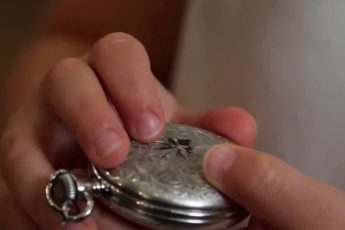
A white-gold star pendant with a single diamond at its center, suspended on a thin chain. Her adoptive mother had pressed it into her palm on her deathbed five years ago. *You were wearing this when they placed you in my arms*, she’d whispered. *The only thing that came with you.*
Emma never took it off.
She was examining a modern sculpture near the east gallery when a crisp voice cut through the ambient chatter.
“Excuse me.”
A woman in her fifties stood three feet away, champagne flute frozen halfway to her lips. She wore a steel-gray pantsuit that probably cost more than Emma’s monthly rent. Her eyes were locked on the pendant.
“Where did you get that necklace?”
Emma touched the star instinctively. “It was a gift.”
The woman stepped closer, close enough for Emma to smell her perfume—something sharp and expensive. Her name tag read *Katherine Shaw, Board of Directors*.
“A gift.” Katherine’s mouth curled. “Right. Do you have any idea what you’re wearing?”
“It’s just a pendant. My mother gave it to me.”
“Your mother.” Katherine set her champagne down with a deliberate clink. “That pendant is a Lionel Finch original. Hand-fabricated. One of a kind. I know because I’ve seen the sketches. And no ‘gift’ puts a piece like that around the neck of someone like you.”
People were turning now. A circle was forming.
“I think you should leave,” Katherine announced, loud enough for half the room. “And leave the necklace with security on your way out.”
Emma’s face burned. “I didn’t steal anything.”
“Then prove it. Who gave it to you?”
The question hit like a slap. Emma couldn’t answer. Her adoptive mother had been a hospice nurse with a modest pension. There was no paperwork, no receipt, no explanation that would satisfy this woman.
Katherine smiled thinly. “That’s what I thought.”
She was reaching for her phone—*calling security*, someone murmured—when the crowd near the gallery entrance shifted. A path opened, the way it does for someone who commands rooms without asking.
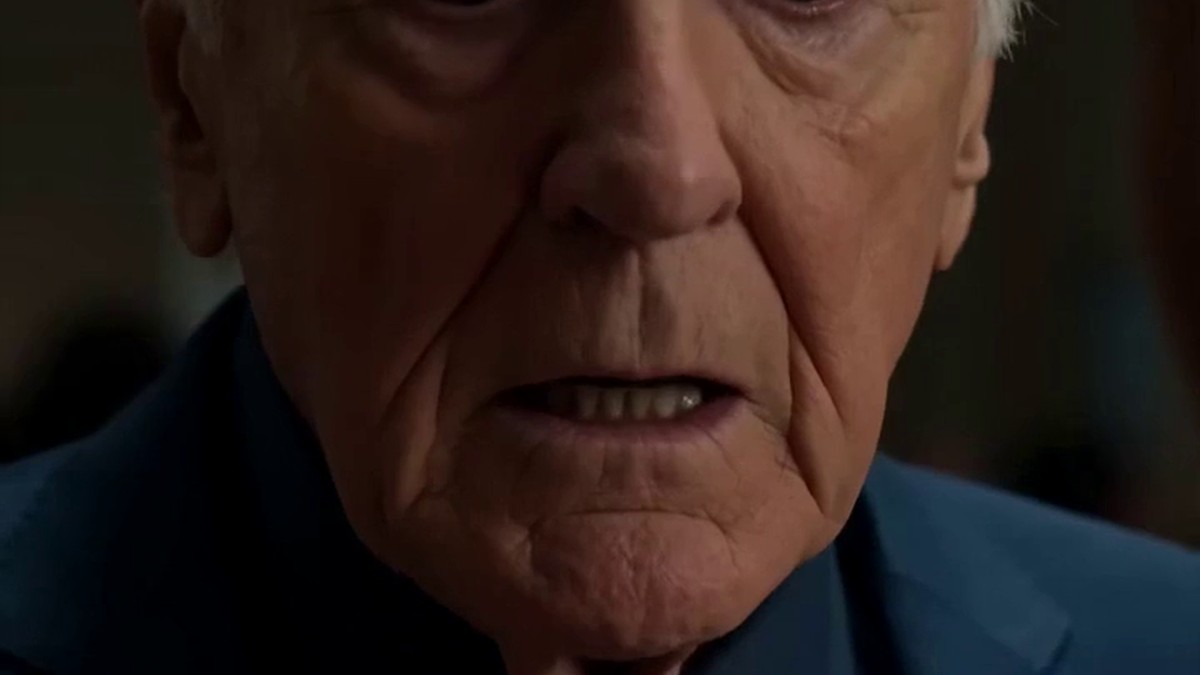
An old man in a charcoal suit walked through. He moved with a cane but didn’t lean on it heavily. His hair was white, clipped short, and his eyes were the kind of pale blue that seemed to see through things.
Gerald Callahan. Seventy-three years old. He’d built Finch & Callahan Jewelers from a one-room workshop in Brooklyn into a name that appeared on auction catalogs and royalty’s wrists. He was supposed to be retired now. Everyone said he rarely left his brownstone.
“What’s going on over here?” His voice was gravelly but calm.
Katherine straightened. “Mr. Callahan. We have a situation. This young woman is wearing what appears to be a stolen Lionel Finch piece. I was about to call security.”
Gerald’s gaze moved to Emma. Then to her neck.
He went still.
For a long, uncomfortable moment, he simply stared at the pendant. The room held its breath.
Then he did something no one expected. He smiled.
“It’s not stolen,” he said.
Katherine blinked. “What?”
Gerald stepped toward Emma slowly, each tap of his cane echoing in the silence. He stopped close enough that she could see the faint tremor in his hands.
“May I?” he asked, gesturing toward the chain.
Emma couldn’t speak. She nodded.
He lifted the pendant gently, turning it over. On the curved back of the star, tiny letters caught the gallery light.
*For my North Star, E.*
“I engraved that,” Gerald said, so quietly Emma almost didn’t catch it. “Twenty-three years ago. In my workshop. The night before my daughter was born.”
Emma’s throat tightened. “I don’t… I don’t understand.”
Gerald released the pendant and met her eyes. His own were glistening.
“My wife went into early labor. There were complications. They rushed her to St. Catherine’s on the Lower East Side.” He paused, swallowing hard. “The hospital caught fire that night. Electrical fault, they said. The maternity wing was evacuated. In the chaos…” His voice cracked. “In the chaos, they told me my wife didn’t make it. And my daughter—a baby girl—was gone. They said her body was never recovered. I buried an empty casket.”
Emma’s hands were shaking now. “St. Catherine’s,” she repeated. “I was adopted. My mom—my adoptive mom—she told me I came through St. Catherine’s. She was a nurse there. She said… she said the records were a mess after the fire, and a social worker just handed me to her. No birth certificate, no name. Just a blanket and…”
“And that necklace,” Gerald finished.
The room had gone utterly silent. Even Katherine had backed up a step, her face drained of color.
Gerald reached into his jacket and withdrew a folded envelope, worn at the edges, as if it had been carried a long time.
“I never stopped looking,” he said. “Private investigators. Newspaper ads. Cold cases. Three years ago, I got a lead—a retired nurse who remembered a baby girl with a star pendant being placed with a family right after the fire. It took two years to track down the adoption records. Another year for the court order to unseal them.” He held out the envelope. “A DNA test was processed last month. I got the results four days ago.”
Emma didn’t take it. She couldn’t move.
“I was going to contact you properly,” Gerald said. “A letter, a phone call—something that didn’t feel like an ambush. I had no idea you’d be here tonight. When I saw you across the room, wearing that necklace…” He shook his head slowly. “I’ve waited twenty-three years for this.”
The first tear slid down Emma’s cheek before she felt it coming. Her knees buckled, and Gerald caught her—cane clattering to the floor as he wrapped both arms around his daughter.
The embrace was awkward and fierce and silent. Gerald’s shoulders shook. Emma pressed her face against his jacket and breathed in the smell of wool and cedar and something she couldn’t name but somehow recognized.
She wasn’t sure how long they stood like that.
The applause started somewhere to her left, tentative at first, then swelling until it filled the gallery. Someone was crying. Maybe multiple someones.
Katherine stood frozen at the edge of the circle, her mouth slightly open. She looked reduced somehow, smaller than she had five minutes ago.
When Emma finally pulled back, wiping her eyes with the back of her wrist, she found Katherine’s gaze.
The older woman opened her mouth. Closed it. Then she spoke, her voice stripped of its earlier sharpness.
“I misjudged you.” The words came out stiff, unpracticed. “I saw the dress and the shoes and I assumed. I was wrong.”
Emma studied her for a moment. She thought of all the times she’d been sized up and dismissed—by customers at the bar who snapped their fingers, by landlords who saw her paycheck and stopped returning calls, by people like Katherine who decided her worth before she opened her mouth.
“You’re not the first,” Emma said. “You won’t be the last.”
Katherine flinched.
“But maybe,” Emma added, “next time you’ll wait thirty seconds before you decide who someone is.”
Gerald bent down slowly, wincing, and retrieved his cane. When he straightened, he took Emma’s hand in his. His grip was warm and solid.
“I have a lot to tell you,” he said. “About your mother—your birth mother. About the life I wanted to give you. About everything.” He hesitated. “I know this is overwhelming. If you need time, if you need space—”
“No.” Emma squeezed his hand back. “No more space.”
They walked out of the gallery together, leaving the champagne and the whispers behind them. Outside, the November air was crisp and clean. Taxis hummed down Fifth Avenue. The city glittered around them, indifferent and electric.
Gerald paused on the museum steps and looked at the pendant one more time, resting against Emma’s collarbone.
“The star,” he said. “I named you Estella. It means ‘star’ in Latin. But I see your name is Emma now.”
“I go by Emma.” She hesitated. “But I think… I think I could get used to Estella.”
Gerald smiled, and for a second the years fell away from his face.
“We have time,” he said. “All the time in the world.”
Somewhere behind them, through the museum windows, the gala resumed its rhythm. But the pendant around Emma’s neck—around Estella’s neck—caught the streetlight and held it, a small bright point in the dark, no longer the most valuable jewel in any collection.
Just a father’s gift to his daughter, finally delivered.