Beckett Stone ran a manicured thumb over the engraved invitation one last time, then slipped it back into his breast pocket with a smirk. Through the window of the groom’s suite at The Langham, Chicago, the late-September sun was bleeding gold across Lake Michigan. Everything was exactly as it was supposed to be.
This wasn’t just a wedding. This was a victory lap.
Seven years ago he’d been nobody—a dropout with a burned-out Honda and a stack of rejection letters. The only person who believed in him back then was Delilah. Delilah, who worked double shifts at a 24-hour diner on Western Avenue, then cleaned office buildings until three in the morning, all so Beckett could take night classes at Kellogg. She’d come home smelling of fryer grease and ammonia, shake him awake, and whisper, “One day you’re gonna own this city, Beck. I know it.”
She was right. Two years into their marriage, his logistics startup got acquired by a Silicon Valley giant. The money didn’t trickle in—it detonated. And Beckett decided that the woman who’d scrubbed floors so he could study case studies didn’t fit the new image. He still remembered laying the divorce papers on their laminate kitchen counter next to a cold cup of coffee. His words had been surgically precise: “Del, I’m not trying to be cruel, but you’re… weight. I’m moving into a world you can’t follow. You’ll thank me someday.” He’d walked out before she could respond, the sound of her catching her breath the last thing he heard.
Now, six years later, he was marrying Tinsley Prescott—aspiring lifestyle mogul, heiress to a real estate fortune, and a woman whose Instagram grid looked like a Vogue editorial. The wedding had a six-figure floral budget and a guest list packed with people Beckett wanted to impress. But there was one invitation he’d sent for purely personal reasons.
He’d mailed Delilah a thick, cream-colored envelope with a handwritten note inside: *Thought you should see what it looks like when someone doesn’t settle. Come if you’re brave enough.* He wanted her to walk into that ballroom, see the crystal chandeliers, the ice sculpture of his and Tinsley’s initials, the string quartet, and understand exactly how far out of her league he’d climbed. He wanted her to feel small.
His best man, a junior partner from the firm, leaned in. “Think she’ll actually show?”
Beckett laughed, adjusting the cufflinks on his slate-gray Tom Ford tux. “If she does, she’ll be in some off-the-rack dress from Nordstrom Rack, trying not to cry. It’s going to be beautiful.”
The ceremony was a blur of white roses and camera flashes. By the time the reception started in the Grand Ballroom, Beckett was basking in his own triumph, a glass of Dom Pérignon in his hand. Tinsley posed for photos near the twelve-tier cake, shimmering in a gown that cost more than Delilah’s old annual salary. Everything smelled like peonies and privilege.
Then the murmuring started near the entrance.
At first it was just a ripple—a few guests turning their heads, a photographer lowering his lens. Beckett followed their gaze and felt the champagne glass go loose in his fingers.
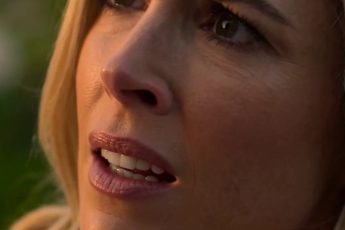
Delilah stepped into the ballroom, and she didn’t look like a woman who’d lost anything.
She wore a deep emerald gown that hugged her like liquid, her hair swept up in a way that made her neck look impossibly elegant. Her skin glowed. She walked with the kind of slow, confident stride that didn’t ask for permission—women twice her age and net worth paused their conversations to watch her. On her arm was a tall man with salt-and-pepper hair and an impeccably tailored charcoal suit. He had the calm, unbothered presence of someone who’d never had to raise his voice to get what he wanted.
But it wasn’t the man who made Beckett’s stomach drop.
It was the little boy holding Delilah’s other hand.
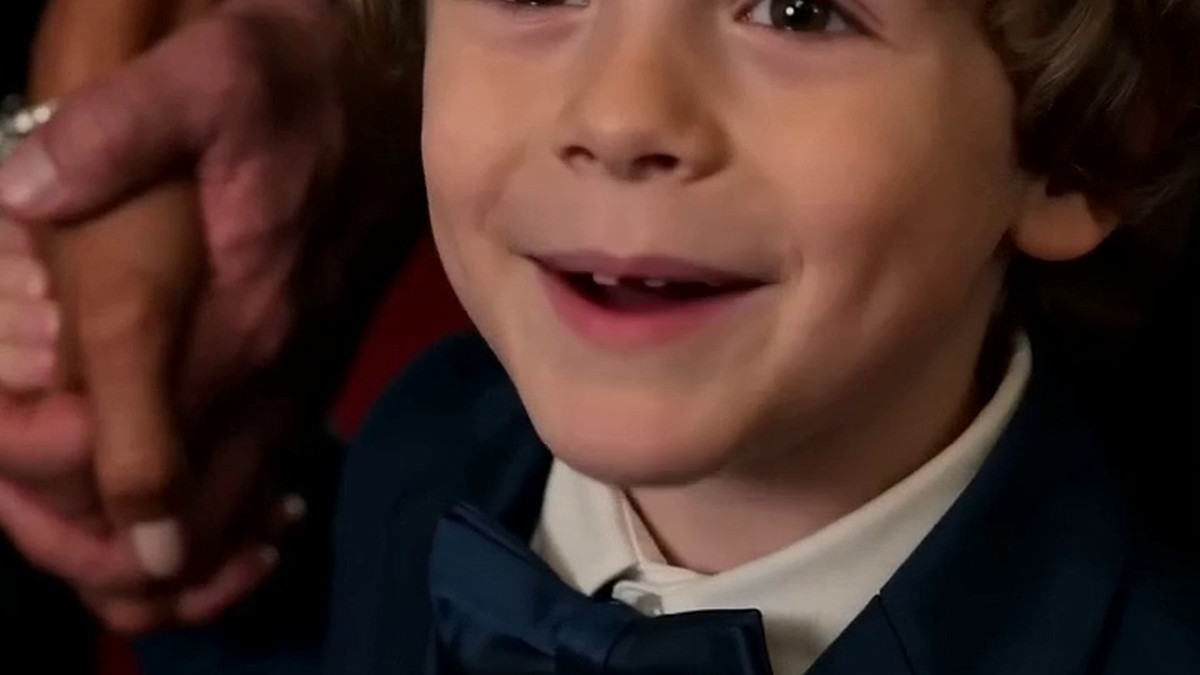
He looked about five years old, dressed in a miniature navy blazer and a pair of shiny loafers. He had a mop of messy brown curls and a grin that showed one missing front tooth. His eyes were a warm, golden-brown flecked with green.
Beckett knew those eyes. He saw them every morning in the mirror.
The champagne glass slipped out of his grip and shattered on the marble floor. The string quartet played on, but in Beckett’s head everything went silent. He was already moving, weaving through clusters of guests who smelled like expensive perfume and confusion.
Delilah spotted him coming and stopped. She didn’t flinch. She just tilted her chin a fraction of an inch higher and waited.
“Delilah,” Beckett said, forcing a smile that felt like a wound. “You actually came.”
“Wouldn’t miss it.” Her voice was steady. She let the silence hang for half a beat before adding, “Congratulations, Beckett.”
He barely heard her. His eyes dropped to the boy, who was now studying the ice sculpture with the intense curiosity of a child trying to figure out if it was edible.
“And, uh…” Beckett’s throat tightened. “Who is this?”
Delilah didn’t break eye contact. She crouched down gracefully, smoothing a stray curl off the boy’s forehead.
“Sweetheart, want to introduce yourself to the man getting married?”
The boy looked up at Beckett. Those eyes—God, those eyes—locked onto his. The kid gave a small, polite nod.
“Hi. I’m Miles.”
Beckett’s heart slammed against his ribs. *Miles.* The name meant nothing, but the age—five. The timeline—six years since the divorce. He did the math before he could stop himself. His ears started ringing.
“I… he…” Beckett’s voice cracked in a way he hadn’t heard since he was a teenager.
The man on Delilah’s arm—the one Beckett had been trying to ignore—stepped forward just slightly, just enough to make it clear he was present. He placed a hand on Delilah’s lower back, a gesture so natural and intimate that it stung more than any insult.
“You okay, honey?” the man asked her, quiet and unhurried.
“I’m fine, Julian.” She straightened up. “Beckett and I were just catching up.”
Julian. Beckett had never heard the name before. He looked like a man who owned a sailboat and never raised his voice. The polar opposite of everything Beckett had become.
Miles tugged on Julian’s sleeve. “Daddy, can I go see the cake? It’s taller than me.”
*Daddy.*
The word hit like a physical blow. Beckett’s mouth opened, but no words came out.
Delilah watched him carefully, reading every twitch in his face. Then she spoke, her voice low enough that only he could hear.
“He’s five, Beckett. Do the math. I tried to call you when I found out. You’d already changed your number. Your lawyer sent a letter saying you didn’t want any ‘further entanglements.’ Remember that word? Entanglements.”
Beckett remembered. He’d dictated that letter himself, standing in his new corner office with a view of the river. He’d felt so clean, so free.
“You should have told me,” he rasped.
“I should have done a lot of things.” She let the words settle like ash. “But so should you. You made it very clear that I wasn’t part of your world anymore. Why would I drag a baby into it?”
Across the room, Tinsley was beginning to notice the tension. She excused herself from a conversation with her mother and began walking toward them, her heels clicking like a countdown.
Beckett’s mind scrambled for control. “He’s my son. My kid. You can’t just—he’s calling another man ‘Daddy’!”
“That’s because another man showed up,” Delilah said evenly. “Julian’s been there since I was six months pregnant, crying on my bathroom floor because I was terrified and alone. He’s the one who held Miles the night he was born. He’s the one who taught him to ride a bike last summer. You signed papers, Beckett. You walked out. You don’t get to rewrite history because you’re suddenly curious.”
Tinsley arrived, the perfect smile on her face already hardening into something suspicious. “Beckett? What’s going on? Who are these people?”
Beckett didn’t answer her. He was staring at Miles, who had wandered a few steps closer to the towering cake and was now pointing at it while Julian quietly explained the concept of tiers.
“I want a DNA test,” Beckett said, his voice too loud. A few nearby heads turned.
Delilah let out a breath that was almost a laugh. “You think I’d show up here with a child who *wasn’t* yours? Just to—what? Scam you? I don’t want your money, Beck. Julian’s a pediatric surgeon. We’re doing fine. I came because you sent me that smug little invitation trying to humiliate me. And I thought… you should see what you actually threw away.”
Tinsley’s face went pale. “Beckett, you have a son? With her? And you didn’t tell me?”
“I didn’t know!” he snapped, but the words sounded pathetic even to his own ears.
Miles, as if sensing the tension, turned and ran back to Delilah. He wrapped his arms around her leg and peered up at Beckett with a frown. In the light of the chandeliers, Beckett noticed a tiny birthmark behind the boy’s left ear—a crescent-shaped smudge he’d only ever seen on his own neck in barbershop mirrors.
His knees went weak.
“Mommy,” Miles whispered, “is that man sad?”
Delilah stroked his hair. “He’s just confused, baby. Sometimes adults get confused when they forget what’s important.”
Tinsley grabbed Beckett’s arm, her manicured nails digging in. “You need to fix this. Right now. My father is here. The Tribune photographer is here. I will not have my wedding turned into a soap opera.”
But Beckett couldn’t move. He just stood there, a man in a $6,000 tuxedo, watching his entire past and the family he never knew he had standing three feet away, completely out of reach.
Julian caught Delilah’s eye and nodded toward the door. A silent conversation passed between them—the kind that comes from years of trust—and she nodded back.
“We should go,” she said. “I did what I came here to do.”
“Wait.” Beckett took a step forward, and Julian instantly shifted his body, a quiet human wall between Beckett and the boy.
“You’re not taking my son,” Beckett said, the words clumsy and raw.
“He’s *our* son by blood,” Delilah corrected. “But you’re just a stranger in a nice suit who signed a piece of paper. You have no legal rights to him unless we go through the courts, and trust me—I’ve got six years of documentation showing you wanted nothing to do with us. So let’s not do this here in front of him.”
Miles looked back over his shoulder as Julian took his hand. “Bye-bye, Mr. Getting Married.”
It was the most innocent, brutal gut punch Beckett had ever received.
He watched them walk away—the three of them, a complete family unit, moving through the crowd of gossiping guests like a ship through ice. Delilah never looked back. Julian kept his hand on the small of her back until they reached the exit. The last thing Beckett saw was Miles’s small hand waving at the doorman.
The ballroom felt cavernous now. Tinsley was hissing something into his ear, her composure cracking into sharp little pieces. Her mother was bearing down on them with an expression that promised a very expensive disaster. The string quartet had finally stopped playing.
Beckett stumbled toward the terrace. He braced himself against the stone railing and looked down at the Magnificent Mile, the city lights blurring into streaks of gold and white. A block away, a black Escalade pulled away from the hotel entrance. He could just make out a small silhouette in the back window, bouncing slightly—probably asking for a Happy Meal instead of wedding cake.
The night air smelled like autumn and exhaust and other people’s happiness.
He stood there for a long time, long enough for the terrace doors behind him to close and muffle the rising chaos inside. Long enough for the weight of what he’d lost—not six years ago, but in this very moment—to press down on his chest until it hurt to draw breath.
Somewhere down Lake Shore Drive, a little boy with his eyes was calling another man Daddy. And Beckett Stone, the man who’d been so sure he’d won, had never felt more bankrupt in his life.