I was in my kitchen with a second cup of coffee when the photo came through on my phone. Outside, the snow had been falling since before dawn—fat, wet flakes that stuck to the power lines and made the road look like a frosted cake. I don't usually check Facebook at seven in the morning, but my hip was bothering me and I needed a reason to sit still.
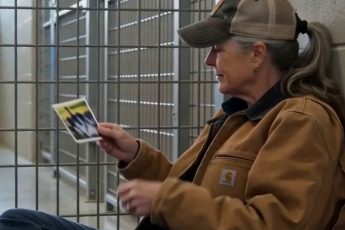
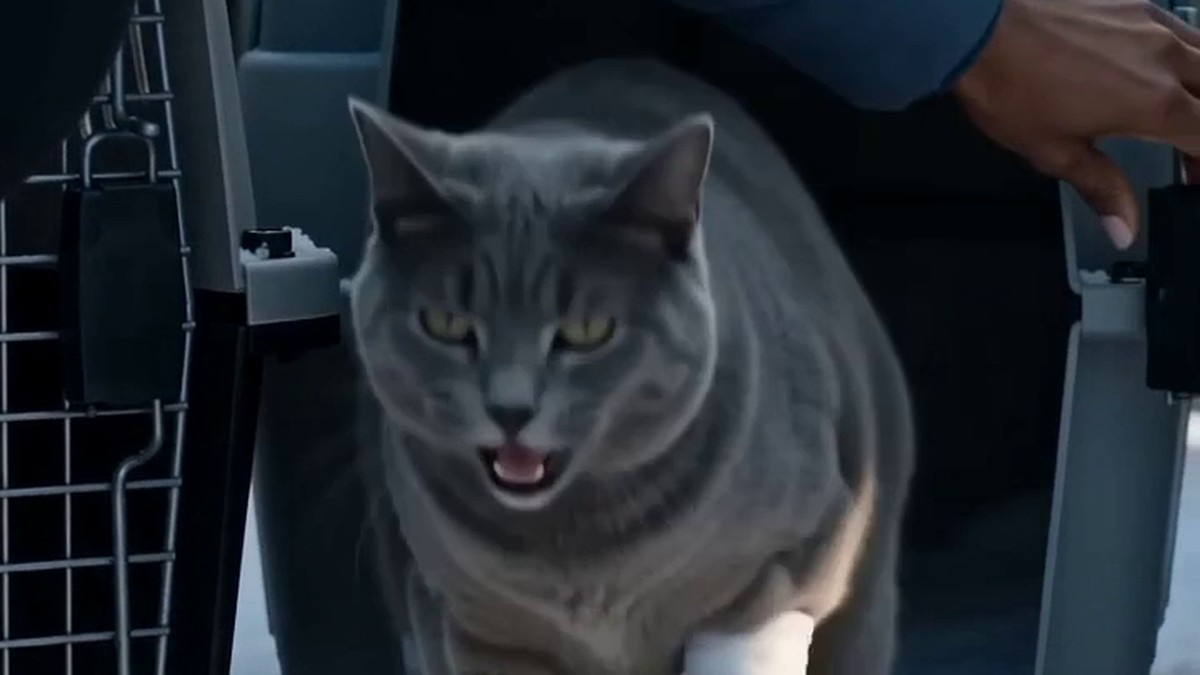
The post was from a local rescue group over in Willow Creek, about forty minutes from my place. A volunteer named Jess had put up two pictures. The first showed a gray tomcat collapsed on a pile of straw, one back leg stretched out wrong, a dark stain on his side. The second was the same cat, but now a fox stood over him. A fox. Not running, not snarling. Just standing there, ears back, like he'd been hired for guard duty.
I read the caption three times. They'd found the pair behind an old milk barn on Route 30, where the snow had drifted chest-high. The cat was half-dead. The fox wouldn't let anyone near him. They had to trap the fox first, then scoop up the cat. Now they were both at the rescue's clinic, separated for safety. The fox was wild, the cat was hurt, and nobody knew what to do with them.
I called the number before I finished my coffee.
A young woman answered, her voice hoarse. "Willow Creek Animal Rescue, this is Jess."
"You're the one who found the fox and the cat," I said.
"Me and my partner Ryan. You saw the post?"
"I did. I want to see them."
There was a pause. I heard a dog barking in the background, then a door closing. "Ma'am, the fox isn't available for adoption. He's a wild animal. We're moving him to a rehab facility in a few days. The cat, we can talk about, but—"
"I don't want the cat," I said. "I want the pair of them."
Another pause, longer. "That's not how it works."
"Well, make it work."
I'm sixty-one years old. I've lived alone on my farm since my husband passed, and before that I raised three children while running a produce stand at the county fair. I know a thing or two about animals that don't fit into boxes. For the past fifteen years, I've taken in injured barn owls, a one-winged hawk, two ducks with frostbite, and a goat that learned to open latches faster than any person I know. My back pasture has a fenced pen with a wooden shelter. I built it for a coyote pup a few years back, but the pup died of distemper before spring. The pen has been empty since.
I didn't tell Jess all that on the phone. I just gave her my address and told her I'd be there in an hour if the roads held.
The drive took me past the old auction house and the Amish furniture store, then out toward the highway where the plows had left ridges of gray slush. The heat in my truck only worked on the driver's side, so my right hand stayed cold on the steering wheel. I kept thinking about that photo. A fox doesn't stand over a wounded cat for no reason. It runs, or it fights, or it ignores. But it doesn't guard. Not unless something inside it broke the rules.
When I pulled into the clinic lot, a young woman in a puffy blue coat was waiting by the side door. Her cheeks were red from the wind.
"You must be Mrs. Callahan," she said.
"Maggie."
"Right, Maggie. I'm Jess. Listen, I need to warn you—the fox is not friendly. He bit through a pair of thick gloves when we trapped him, and he's been pacing his kennel since we got here. The cat's stable now, but the vet said he wouldn't have lasted another night out there."
"I know," I said. "I read the post."
Jess let me inside. The smell hit me first—disinfectant, wet fur, and something sweet, like old hay. Two metal cages sat side by side in a back room, but there was a glass partition between them. In the left cage, a scrawny fox lay curled in the corner. His fur was matted, one front paw wrapped in bandages. In the right cage, the gray tom sat propped against a towel, eyes half-closed.
The fox lifted his head when I walked in. He didn't growl. He just watched me, his eyes the same color as the dirty snow outside.
Jess stayed near the door. "The cat's name is Gus, by the way. We started calling the fox Red. Not very creative, I know."
I didn't answer. I watched the fox. He was still as a stone, but his tail twitched once.
Then Gus let out a weak, rusty meow—not much more than a creak. And the fox was on his feet in half a second, nose pressed to the glass, paws scratching at the floor. He didn't bark or whine. He just stood there, every muscle tight, staring at the cat.
"That's been happening all morning," Jess said. "We had to move the cat to the other side of the room for five minutes to change his bandage, and Red nearly tore the door off his kennel. They can't stand to be apart."
I walked closer to the glass. The fox's eyes followed me, but his body stayed angled toward the cat.
"What if they didn't have to be?" I asked.
Jess sighed. "It's not that simple. He's a wild animal. We can't just hand him over like a stray dog. The state requires a permit, a proper enclosure, and someone with experience handling wildlife. And even then, most places won't take a fox that's too used to people. He's not—he doesn't trust anybody."
"Nobody's asking him to trust us," I said. "He just needs to trust that the cat isn't leaving without him."
The vet came in then—a tall man with gray at his temples. He introduced himself as Dr. Phillips. He had the tired eyes of a man who'd been up all night with a dying animal. "You're the farm woman," he said. "Jess told me. You've got a coyote pen, right?"
"It's empty," I said. "Sixteen hundred square feet, six-foot fencing, buried a foot down to stop diggers. Two shelters, insulated. It's not heated, but it's dry and out of the wind."
Dr. Phillips gave a short nod. "That's better than most rehab pens. But he's still a fox. He'll eat your chickens."
"I don't have chickens. Last ones died two winters back. The hawk made short work of them."
"Good. Then you might be the only person in this county who can do this."
Jess looked at him like he'd lost his mind. "Doc, you can't be serious. She's a sixty-year-old woman living alone. What if the fox turns on her?"
"She's not going to go in the pen with him," Dr. Phillips said. "She'll feed him from outside the fence, like she did with the coyote. The cat can go in and out through a small door if we build one. They can be together without her ever having to touch the fox."
"I didn't say I wouldn't touch him," I put in. "I said he doesn't have to be tamed. There's a difference."
Dr. Phillips gave a tired half-smile, then looked at Jess. "Let's get them into the big run today. See if they'll share space without the glass between them."
An hour later, we were all standing behind a chain-link fence in the clinic's outdoor exercise yard. The snow had stopped, but the wind cut through my coat like a knife. They let Gus out first. He limped to the far corner and sat down in a patch of weak sunlight. Then they opened Red's kennel.
The fox stepped out onto the packed snow and stopped. He looked around, sniffed the air. Gus meowed once. Red turned and trotted straight to him. No hesitation. He lowered his head, touched his nose to the cat's ear, then lay down beside him in the snow.
Jess let out a long breath. "Well, damn."
I didn't say anything. I just watched the two of them. The cat closed his eyes. The fox rested his chin on his front paws. And in that moment, the wind didn't matter, the cold didn't matter, nothing mattered except the fact that these two had found each other in the worst weather and had decided to stay.
I told Dr. Phillips then and there: I'd take them. I'd pay for the permits, the fencing repairs, the vet bills. I'd sign whatever needed signing. I'd give them a home where they'd never be separated again.
He studied me for a long moment. "You understand this isn't a pet situation. The fox will never be a lap animal. He might always hide when you come near. And the cat—he could live another ten, twelve years. You ready for that?"
"I buried my husband, raised my kids, and outlived a goat that used to steal my car keys. I think I can handle a fox and a cat."
The paperwork took two weeks. I had to get a wildlife rehabilitation permit from the state, prove I had a proper enclosure, and have the pen inspected by a game warden. It cost me four thousand two hundred dollars out of pocket, not counting the gas for three trips to the county office. I paid it without blinking. I'd been saving for a new roof, but the roof can wait. The fox and the cat could not.
The day I brought them home, the sky was that pale January gray that makes everything look like an old photograph. Jess and Ryan followed my truck in their van, the fox in a heavy plastic carrier, the cat in a soft-sided carrier on the seat beside me. I'd made the back seat warm with a blanket, and every few miles I'd glimpse the cat's pink nose poking out.
When we pulled into my driveway, the first thing I saw was the pen. It looked smaller than I remembered, but it was solid. I'd spent the previous day patching the wire and adding a second latch to the gate. Inside, I'd put a fresh bed of straw in the shelter, a heated water bowl near the fence, and a wooden ramp so the cat could climb up to a shelf by the window.
I opened the gate and stepped back. Ryan carried the fox's carrier inside the pen and unlatched the door. Then he stepped out fast and closed the gate behind him. The fox didn't move for a long time. He stayed curled in the carrier, one eye watching us through the metal bars.
So I turned to the cat. I lifted Gus out of his carrier and sat him down just inside the pen, near the small cat door I'd cut into the fence. He looked up at me, then at the fox's carrier.
"Go on," I said. "He's not going anywhere."
Gus took a few wobbly steps toward the shelter. The fox poked his head out of the carrier. For a second, they just looked at each other. Then the fox came out, low to the ground, and walked to the cat. They touched noses through the wire shelf, and then Gus limped into the shelter and the fox followed him in.
I didn't stay to watch. I went inside my house, poured myself a glass of iced tea, and sat down at the kitchen table with the receipt for the wildlife permit. I wrote the amount on a sticky note and stuck it to the fridge, next to the one from the county inspector. Four thousand two hundred dollars. For a fox and a cat.
That night, I looked out the kitchen window before bed. The porch light reflected off the snow, and I saw two shapes in the shelter doorway, curled together. The fox's tail was draped over the cat's back.
The next morning, I went out to feed them. I set the dishes by the fence and stepped away. The cat came right over. The fox held back, but he watched. When the cat finished eating and lay down in the sun, the fox came out and ate his fill, then went back to the shelter.
They've been here three months now. The cat has gained weight and follows me to the house every morning. The fox still won't let me within ten feet, but that's fine. I don't need him to love me. I need him to know that the cat is safe, and that's enough.
Last week, the game warden stopped by for a follow-up inspection. He stood outside the pen, clipboard in hand, and watched the two of them for a while. When he left, he shook his head and said, "In twenty years, I've never seen anything like that."
I didn't answer. I just went inside and put the coffee on. Outside my window, the fox lay in the straw with the cat curled against his side, and the sun came out from behind a cloud, turning the snow on the fence bright as a new dime.