My brother Marcus has always been the one people hand things to. Wallets, dropped phones, a stranger's toddler at the airport. He moves through the world like it owes him something, and somehow it always pays up. I've watched it my whole life.
But this story isn't about him being a hero. It's about the fifteen minutes I spent watching him decide whether to be one, and what that decision cost both of us.
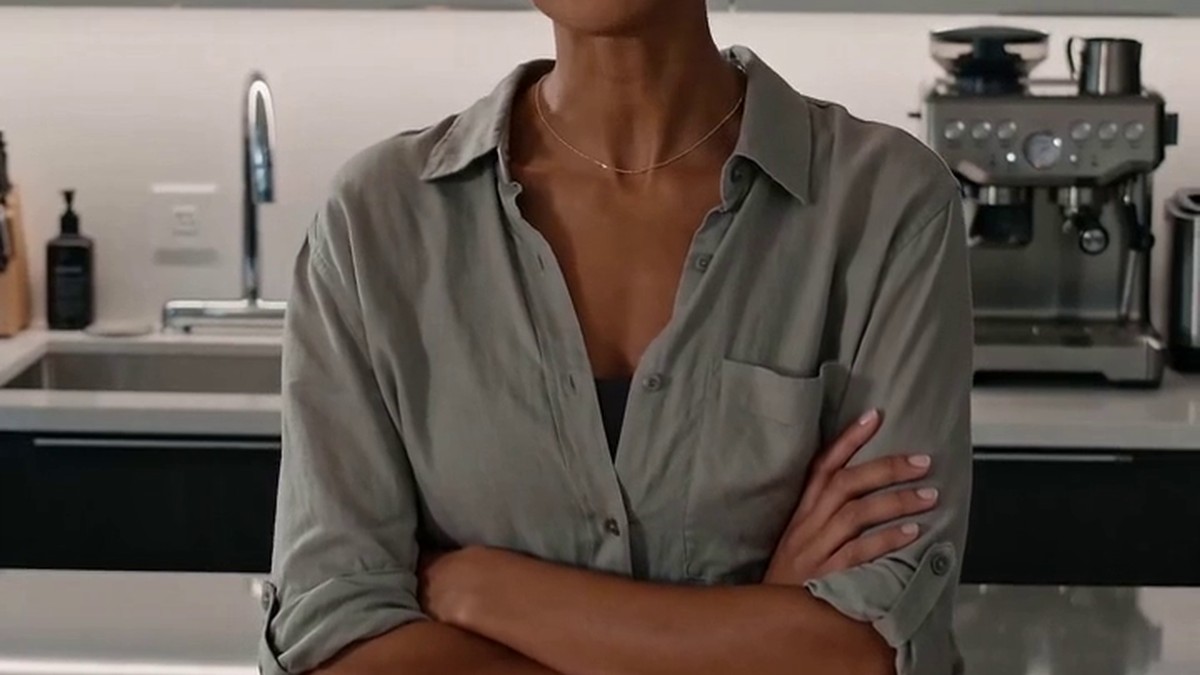
That Tuesday started with me missing my bus on Flatbush Avenue because Marcus wanted me to try his new espresso machine. He'd bought it off some guy in Bay Ridge who was moving to Austin. Three hundred and forty dollars, still in the box, a Breville that retails for almost seven hundred. Of course it was. Marcus has a talent for finding people who are desperate to get rid of things they don't want to carry anymore.
"Just taste it," he said, shoving a tiny white cup at me. "This is what they drink in Italy, Marcus, this is the real thing."
I don't know anything about Italy. I know the espresso was bitter and burned my tongue. I know I missed the 8:22 bus and had to wait for the 8:47. I know that when I finally got to the Rite Aid on Court Street for my shift, I was eleven minutes late and Dolores gave me the look that says "this is your third time this month" without actually saying anything.
The pharmacy was dead by noon. I was restocking the vitamin aisle, which is my least favorite place in the entire world because the bottles all look the same and the labels have print so small it makes my eyes water. That's when I heard the commotion outside.
A woman was crossing the street by the payday loan place, the one with the red awning that's always got a guy sleeping in front of it. She had one of those quilted tote bags, the expensive kind with the leather handles, and when she stepped off the curb to avoid a puddle, the bag tipped. Her wallet slid out. It hit the concrete next to the storm drain.
She didn't notice. She just kept walking toward the bus stop, head down, tote bag swinging.
The wallet sat there on the sidewalk. Brown leather. Fat with cards and cash, probably, the way wallets look when someone's been carrying them for years, broken in at the spine like a book someone's read too many times.
And then I saw him. Marcus. Walking up Court Street from the direction of the subway, phone in hand, earbuds in. My brother. The hero. The guy who found a lost Chihuahua in Prospect Park when we were kids and spent four hours going door to door in Carroll Gardens trying to find its owner. The guy who once chased a purse snatcher three blocks down Atlantic Avenue and got punched in the mouth for his trouble but held onto the purse anyway.
He saw the wallet.
I watched him stop. He pulled out one earbud. Looked at the wallet. Looked at the woman, who was now maybe thirty feet away, still walking, still not noticing. Looked back at the wallet.
And I saw something I'd never seen on my brother's face before. I don't know what to call it. Not excitement. Not concern. It was something else. Something I'd been too much of a little brother to ever notice.
He didn't move.
Marcus stood there for what felt like a full minute, just staring at that brown leather wallet on the concrete. The payday loan guy was watching from his doorway. A woman with a Duane Reade bag stepped over the wallet without seeing it. The light changed at the intersection, and a Muni bus wheezed past, and still Marcus didn't move.
I knew what was in his head. I've known my brother my whole life. He was thinking about how much cash might be in there. He was thinking about the credit cards. He was thinking about the fact that people lose wallets all the time, and most of them never see them again anyway, and whoever found it usually just takes what they want and tosses the rest. He was thinking about his rent, which went up again in September – I know because our mother won't stop talking about it. He was thinking about the fact that he's thirty-four and works the register at a hardware store and lives in a studio apartment with a fold-down bed and still owes me six hundred dollars from when his car got towed in Red Hook.
I was inside the Rite Aid, watching through the window, and I didn't do anything. I just stood there with a bottle of store-brand vitamin D in my hand, watching my brother decide what kind of person he was going to be.
The woman was at the bus stop now. The B61 was coming. I could see it a block and a half away, its sign glowing. In another thirty seconds she'd be on it, gone, and the wallet would be just another lost thing on a Brooklyn sidewalk.
Marcus knelt down.
He picked up the wallet.
He held it for a moment, not opening it, just holding it. His thumb was over the clasp. Then he turned and looked toward the bus stop.
I don't know what he was going to do. I've asked myself a hundred times. If I knew, really knew, which way he was leaning, maybe the rest of it would have been different. Maybe I could have stopped something. Maybe I should have.
The bus pulled up. The doors hissed open. The woman stepped toward it.
And my brother, the hero, the guy people hand things to, took off running.
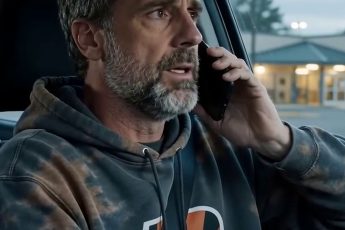
He sprinted toward the bus stop, wallet in hand, earbuds bouncing against his chest. And I watched the woman turn, startled, because there was suddenly a six-foot-two man in a gray hoodie bearing down on her, and I watched her face change from fear to confusion to recognition as he held the wallet out to her, breathing hard.
She started to cry. Right there on the sidewalk, with the bus driver honking and people pushing past. She put her hand on Marcus's arm and said something I couldn't hear, and Marcus stood there looking uncomfortable, the way he always does when people thank him for things, the way he did when the Chihuahua lady tried to give us twenty dollars and he refused to take it.
The bus left without her. She was still standing there, holding the wallet with both hands, talking to my brother.
I went back to restocking vitamins.
That night, I met Marcus at the pizza place on Fifth and Carroll. He was in a good mood, which annoyed me, because I'd been thinking about that moment by the window all afternoon and I couldn't stop.
"How'd it go with the espresso?" he asked.
"The espresso was fine. I missed my bus."
"Man, you're always missing buses. Get a bike."
"Marcus," I said. "I saw you on Court Street today. I was at work. I saw the wallet."
He went quiet. The pizza sat between us, getting cold.
"What about it?"
"I saw you standing there. Before you ran."
He picked up a slice, put it down, didn't take a bite. "What's your point?"
I could have said a lot of things. I could have said, "I've been watching you my whole life and I've never seen you hesitate before." I could have said, "Were you going to take it?" I could have said, "What was in your head for those fifteen minutes?"
Instead I said, "She give you a reward?"
He shook his head. "She offered. I told her no."
"Of course you did."
"Meaning what?"
"Nothing."
He looked at me across the table, and for a second I thought he was going to push it, but then he just reached for the pizza and started eating. And I realized something about my brother that I'd never understood before. The reason he's always been the one people hand things to isn't because the universe loves him. It's because he's spent his whole life being the guy who gives things back. And somewhere along the way, it stopped being an instinct and started being a performance. He has to do the right thing now, because that's who he is to everyone – to the Chihuahua lady, to the purse-snatching victim, to the woman at the bus stop, to me. He's the hero.
But heroes don't hesitate.
Heroes don't stand on a sidewalk for a full minute, weighing a stranger's wallet against their own unpaid rent.
I don't know what would have happened if the bus hadn't come when it did. If the woman hadn't been about to step on and disappear. I don't know if my brother would have opened that wallet and taken what was inside. I don't know if he'd have dropped it in a mailbox, ID intact, cash gone, telling himself the cash was a finder's fee and the owner, she'll be grateful, she'll cancel the cards, bad things happen to people every day, this time it wasn't so bad.
I know that I watched him pick up that wallet and I didn't see a hero. I saw a man who was tired and broke and who, for fifteen minutes, was two different people at once.
Here's the thing I can't let go of. When I was twelve, I stole a pack of baseball cards from the bodega on Vanderbilt. Marcus found out. He made me walk back there, put the cards on the counter, and apologize to Mr. Lopez, who'd known us since we were kids. Then he bought the cards for me with his own money, five dollars, and told me that if I ever stole anything again, he'd take me back there himself and let Mr. Lopez call the cops.
That's who my brother is. That's the version of him I've carried around for twenty years.
The guy on the sidewalk with the wallet in his hand and a stranger's bus pulling up to the curb – I don't know who that version is. But I know he looked at that bus, and then he ran.
Three weeks later, Marcus called me from work. He was on his lunch break, I could hear the hardware store in the background, someone asking about paint colors.
"I paid you back," he said.
"What?"
"Your six hundred. I sent it. Check your account."
I checked. The money was there.
"Where'd you get six hundred dollars?"
He was quiet for a second. "I sold the espresso machine."
I didn't say anything.
"Some guy came into the store last week looking for one. Actually, you know what? Forget it. Doesn't matter. The money's yours."
"Marcus."
"What?"
"Did you take anything out of that wallet?"
The line went silent. I could hear the paint customer in the background, a woman with a sharp voice, asking about eggshell finish. Then Marcus said, "I have to go. My break's over."
He hung up.
And I was left standing in my apartment on Dean Street, holding my phone, knowing that no matter what the answer was – yes, no, maybe, almost – it would never be enough. Because the answer I really needed was about the fifteen minutes before the bus came, and nobody, not even Marcus, could tell me what had happened inside them.
I still don't know what my brother was going to do with that wallet. Maybe he doesn't either. But I know what he did with the espresso machine. He sold it for four hundred and ten dollars, and he sent me six hundred, which means he already had some money put aside. Which means maybe he wasn't as broke as I thought.
Or maybe it means something else.
I don't ask Marcus about that Tuesday anymore. But sometimes, when I'm restocking the vitamin aisle at Rite Aid, I look out the window toward the payday loan place, and I see him standing there in my mind, the wallet on the ground, the bus coming. And I wonder if the reason he ran wasn't because he wanted to be a hero.
Maybe he ran because he knew I was watching.