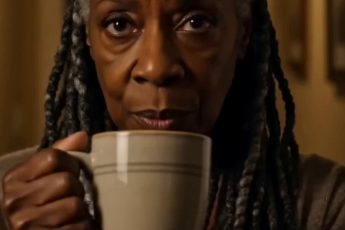
The smell hit Kathleen Doyle before she even parked the rental car — ripe pears, warm from the August sun, drifting over a split-rail fence off Route 9. She sat there with the engine ticking, both hands still on the wheel, and thought: twenty-three years, and my body still remembers this before my brain catches up.
She was turning fifty in four days. That was the whole reason she'd flown back to Grandview Bend, the small Missouri river town she'd left at twenty-seven with two suitcases and a one-way ticket to Rome.
Rome had been good to her. She managed the front office of a private clinic near the Spanish Steps, had her own apartment with a wrought-iron balcony, made her own espresso every morning at six-fifteen before the tourists clogged the streets below. People there respected her — Signora Doyle, always on time, always composed. Nobody in Rome knew about the pear tree.
It had stood in the Whitfields' backyard, three doors down from where she grew up, and when she was nine years old, Marcus Whitfield — fourteen, tall for his age, already the kind of boy grown women in town called "a good one" — used to boost her over the fence so they could steal pears together and eat them sitting on the tailgate of his father's Ford, juice running down their wrists. He was five years older. To her he was the entire world.
By twenty, Kathleen believed she'd marry him. She had the dress on layaway at the bridal shop on Main. She'd stood in front of the three-way mirror there so many times the owner started calling her by name. Invitations were mailed. The reception hall — the old Grange building out by the county fairgrounds — was booked. Seven days out.
Then Marcus showed up at her parents' porch one evening in June and wouldn't come inside. He stood at the bottom of the steps with his hands jammed in his pockets, looking at the porch light instead of her.
"Katie. There isn't going to be a wedding."
She laughed, at first — thought it was some kind of joke gone wrong. It wasn't. While she'd been dress shopping and picking centerpieces, Marcus had been seeing another girl, and that girl was pregnant.
"I love you, Katie. I do. But I can't walk away from my own kid. I have to marry her. I'm sorry — if you can even forgive me for it."
He walked off into the dark and left her sitting on the porch steps with her whole future in pieces around her feet.
Grandview Bend turned into a small hell after that. Everybody in a town of four thousand knew everybody's business, and half of them found a reason to bring it up to her at the Piggly Wiggly or after church. Marcus married the girl within the month. A daughter came seven months later. Kathleen would see him pushing a stroller down Elm Street and go back inside her parents' house and sit on the edge of the bathtub, silent, asking nobody in particular what she'd done to deserve it.
Seven years of that. The ache dulled but never left. She turned down every man who asked her to the movies, every setup her mother arranged after Sunday dinner. Then one January morning she looked at herself in that same bridal-shop mirror — she'd taken a part-time job there by then, steaming veils for other women — and understood that if she didn't leave, she'd just keep going quiet and gray inside this town until there was nothing left of her.
She didn't go to Italy for money. She went for the distance. She needed an ocean and a language and a whole different alphabet between herself and Marcus Whitfield.
The first two years in Rome nearly broke her worse than the porch steps had — a language she couldn't order coffee in, a walk-up apartment with no elevator, cleaning jobs before she found the clinic position. But the work saved her, the way work does. She sent money home too; she and her mother eventually paid off the mortgage on the house in Grandview Bend and put in a new roof. By her late thirties, Kathleen had her own place near the Spanish Steps, paid outright.
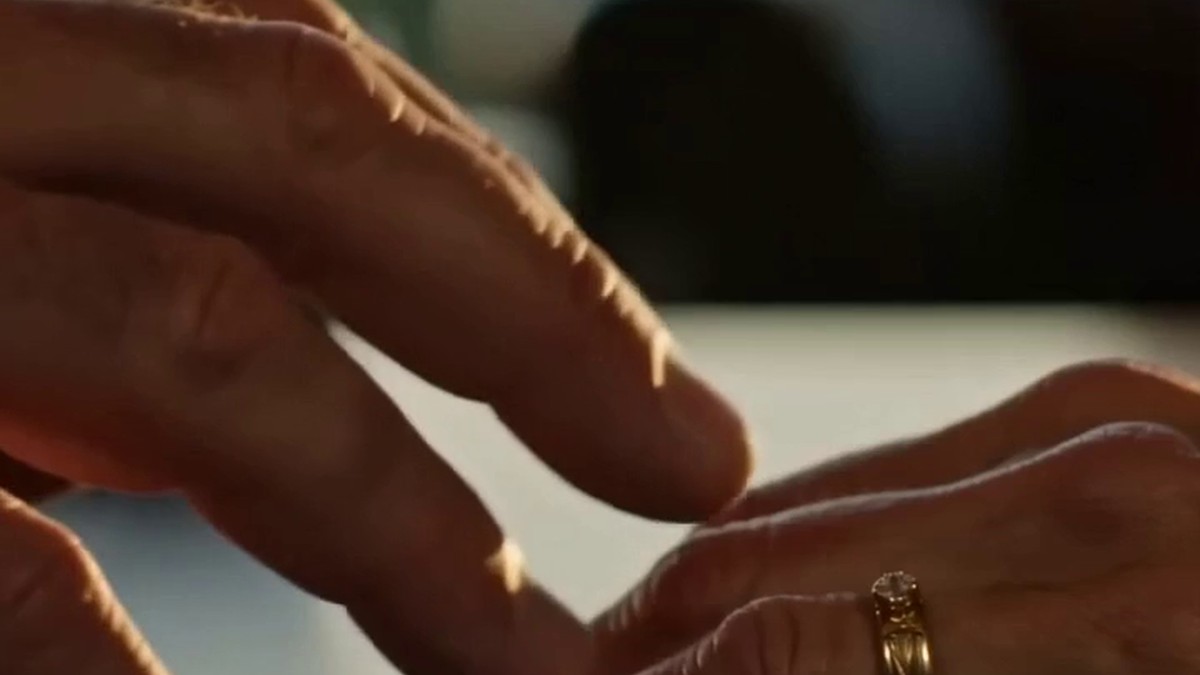
That was when Andrea Ricci came into the picture. A pharmacist two floors down from the clinic, patient in a way Marcus never had to learn to be, because nothing had ever been taken from him. Andrea didn't push. He didn't demand. He was simply there — for eleven years, through her mother's hip surgery and his own father's funeral and a hundred ordinary Tuesdays. He proposed more than once. Once with a ring at a rooftop restaurant on the Gianicolo, the whole city lit up gold below them. Kathleen always found the same door out of it: "We're happy as we are. Why complicate it with paperwork? Let's wait a little longer."
She never told Andrea the real reason. Twenty-three years, a different country, a different language, an entire second life — and Marcus Whitfield still had a room in her somewhere she hadn't managed to lock.
So now here she was, fifty years old, parked on the shoulder of Route 9, breathing pear-scented air she hadn't smelled since she was twenty. She drove the rest of the way into town with the windows down.
She walked Elm Street the next morning like she used to as a girl, past the Baptist church with its new vinyl siding, past the diner that used to be a Rexall drugstore, and she kept glancing over fences, looking for one thing. The tree. It was still there behind the Whitfields' old lot — bent low now, bark gray and cracked, but alive, heavy with fruit nobody had bothered to pick. She put her palm flat against the trunk and stood there a long moment, feeling the rough grain under her hand, and something in her chest gave way like a held breath finally let out.
She'd decided to hold her birthday dinner at the Elk Creek Lodge, the banquet hall out past the fairgrounds that had replaced the old Grange building. Her sister mentioned, almost in passing, over sweet tea on the back porch, that the Lodge belonged to Marcus now — had for years.
After that, Kathleen couldn't settle. She knew he was still married. Knew he had a grown daughter. None of it mattered against thirty years of not being able to fully let go of a boy under a pear tree.
She drove out to the Lodge anyway and asked about booking the small banquet room for her fiftieth. The woman behind the reception desk flipped through a paper calendar, apologetic.
"That whole weekend's taken, hon. Owner's got a big family thing — marrying off his only daughter."
Something in Kathleen's chest folded in on itself. His only daughter. The same child whose existence had ended her engagement thirty years ago.
She thanked the woman and had her hand on the door when a voice came from the hallway behind the check-in counter — a voice she would have known in the dark, at eighty, underwater.
"I'll be damned. Katie Doyle? Is that really you?"
She turned. Marcus was already crossing the lobby toward her, moving faster than a man his age should. Time had done its work on him — gray through the temples, lines fanning out from his eyes, shoulders a little heavier than they used to be. But it was him. Same brown eyes that used to make her forget what she'd been about to say.
"Katie." He pulled her into a hug before she could decide whether to let him. Her heart was doing something it hadn't done in a decade.
He walked her back to his office, told someone to bring coffee, and sat across from her studying her face like he was trying to make up for thirty years of not looking.
When she mentioned the banquet room, he waved it off immediately. "Don't you even think about going somewhere else. We'll figure something out for you. This is your fiftieth, Katie."
They sat there until the light outside the window went orange, then blue. Coffee turned into sweet tea, then into two glasses of wine from a bottle he kept in a desk drawer. They talked about the tree, about high school, about the years in between that neither of them had lived through together. And when the porch light — literal, this time, through his office window — came on across the parking lot, the conversation finally went where both of them had been circling for hours.
Marcus set his glass down and admitted, quietly, that he hadn't been happy. Not really, not in a long time. He and his wife had lived like two people sharing a house rather than a marriage — cold dinners, separate bedrooms some years, nothing left to fight about because there was nothing left to fight for. He'd stayed for his daughter. Now she was getting married. Once the wedding was done, he told her, he was filing for divorce.
Then he put his hand over hers on the desk and looked at her the way he had at nineteen, at the fence, at the pear tree.
"Katie — what if this is just late? What if this is the timing we were supposed to have all along?" He didn't wait for her to answer. "I'm not letting you get on a plane back to Italy. I want you here. I'll marry you, if you'll still have me. I never stopped loving you, Katie. Not for one day of it."
It was the exact sentence twenty-year-old Kathleen used to pray for at night, word for word, thirty years too late.
She slid her hand out from under his.
"Marcus. I need to think."
She walked the mile and a half back to her sister's house that night instead of calling for a ride. In the guest room, she finally checked her phone. Three messages from Andrea. He missed her. Asked if the flight had been smooth. Mentioned the cornetti place near her apartment, said he'd bought two that morning out of habit and eaten them both alone. Said he'd be there when she landed, whatever day that turned out to be.
She sat on the edge of the bed a long time with the phone lit up in her lap.
The next morning she didn't call Marcus. She called her sister's neighbor instead — a man named Roy Castellano who did small legal work out of a storefront office on Route 9 and had drawn up her mother's will years back. She asked him one question: how fast could a durable power of attorney and a property deed be pulled up if she needed her name off something before she flew home.
That afternoon she drove to the Elk Creek Lodge one last time — not for the banquet room. She asked to see Marcus in his office, and when the door was shut, she set a folded piece of paper on his desk: the receipt from the bridal shop on Main, kept for thirty years in the bottom of a jewelry box, yellowed at the folds. She'd found it packing the night before.
"I kept this a long time thinking it meant something was owed to me," she said. "It doesn't. Nobody owes me the last thirty years back, Marcus, and I'm not going to spend the next thirty trying to collect."
He started to reach for her hand again. She stood before he could.
"Enjoy your daughter's wedding. Tell her congratulations from me."
She left the paper on his desk.
Three days later, on her actual birthday, Kathleen sat at a folding table on her sister's back porch with a store-bought cake and six people she'd known her whole life, and she called Andrea on video from her phone, propped against a mason jar of sweet tea. She told him yes — not with fireworks, not under any stars, just sitting on a porch in Missouri with cake frosting on her fork.
"Book the courthouse for October," she said. "I don't want the rooftop this time. Just us and a piece of paper, done properly."
Andrea, four thousand miles away, laughed so hard he had to set the phone down.
Kathleen flew back to Rome nine days later. She never went to Marcus's daughter's wedding. She never went back to the Lodge at all. The last thing she did before leaving Grandview Bend was drive out past the old Whitfield lot one more time, park on the shoulder, and pick exactly one pear off the low branch — heavy, warm, sweeter than she remembered — before getting back in the car and pulling onto Route 9 toward the airport.