The chalk had been worked into the grain of the wooden chair seat like grout into tile. I saw it the moment I stepped past the doorway: a dense white smear across the dark oak, painted on thick, almost artistic. Somebody had taken their time.
Sixth grade. First period. Twenty-seven faces all very busy studying their desktops.
I set my canvas tote on the floor, found a damp rag folded over the windowsill, and wiped the seat in long slow strokes. The rag came away chalky and wet. A boy in the back row made a sound into his fist—air escaping from a bicycle tire. I didn't give him the satisfaction of turning around.
Forty minutes on comma rules. I wrote the day's objective on the board, called on students, diagrammed sentences. The room smelled of floor wax and someone's strawberry lip balm. A wasp knocked against the window above the radiator, again and again, too stupid to find the crack at the bottom.
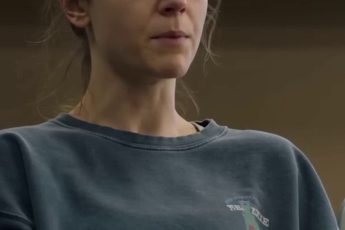
When the bell rang, the class drained out in a rush of backpacks and scuffed sneakers. One boy stayed behind. Skinny, maybe eleven, with a flannel shirt washed so many times the pattern had gone pale as a scar. Top button done up tight against his throat.
"Miss," he said, "they ain't bad. They're just checkin' to see what you'll do."
He told me about a student teacher the year before who'd sat on a thumbtack and screamed loud enough to hear from the gym. The way this kid explained it, I'd passed some kind of test by not losing my head over chalk dust.
His name was Cody Pemberton. He lived three houses down from me on Bluebird Lane, and he offered to carry in firewood or fix the drip under my kitchen sink if I ever needed. Said his daddy wouldn't mind.
That conversation—thirteen words from a fifth-generation farm kid in a too-tight collar—carried me through October.
—
The weeks folded into one another. I learned the town's rhythms: diesel buses idling in the lot at 7:10, the power flickering during storms when the mountain got slick with rain, the woman at the Dollar General on Route 19 who asked about my students by name. The other teachers turned out all right—two sisters who ran the fourth grade, a shop teacher who kept a jar of peanuts in his desk for kids who missed breakfast.
Then there was Wyatt Coffman.
He sat by the window in my sixth-period language arts class and never raised his hand. His spelling was rough, and he read aloud like someone who'd learned from road signs and feed sacks. But one afternoon in late September, during a unit on Appalachian ballads, I played a recording of "Barbara Allen" on the old CD player next to the fire extinguisher.
Wyatt's head came up.
Not like a kid interested in a lesson. Like a dog hearing a whistle.
I asked if anyone wanted to try the next track. Most of the class found their shoes very interesting. Wyatt's mouth opened and what came out stopped my hand over the CD player.
It wasn't a child's voice. It was something older and wider, with an ache folded into it that didn't belong to a twelve-year-old. He sang "Shady Grove" like he'd been carrying it in his chest since the day he was born, eyes half-lidded, fingers rapping a rhythm on the desktop. The room went so still I could hear the fluorescent lights humming above the chalkboard.
When he finished, he dropped his head back over his notebook like nothing had happened.
That night I made my decision. The county youth talent showcase was coming up in November at the high school auditorium over in Fairhaven. First place came with a scholarship to a summer arts program at the state university, plus an audition for a regional choir. The flyer had been taped to the bulletin board in the teachers' lounge for two weeks.
I called Wyatt's father the next morning.
Ray Coffman answered on the third ring. "Yeah."
"Mr. Coffman, this is Jenna Delacroix from Tanner's Ridge Middle School. I have Wyatt in my language arts class."
Silence. Metal clanging somewhere in the background.
"He has an extraordinary voice," I said. "I'd like to enter him in a county showcase next month. He could win a scholarship."
Another silence. Then: "I'll come by this afternoon."
The line went dead.
—
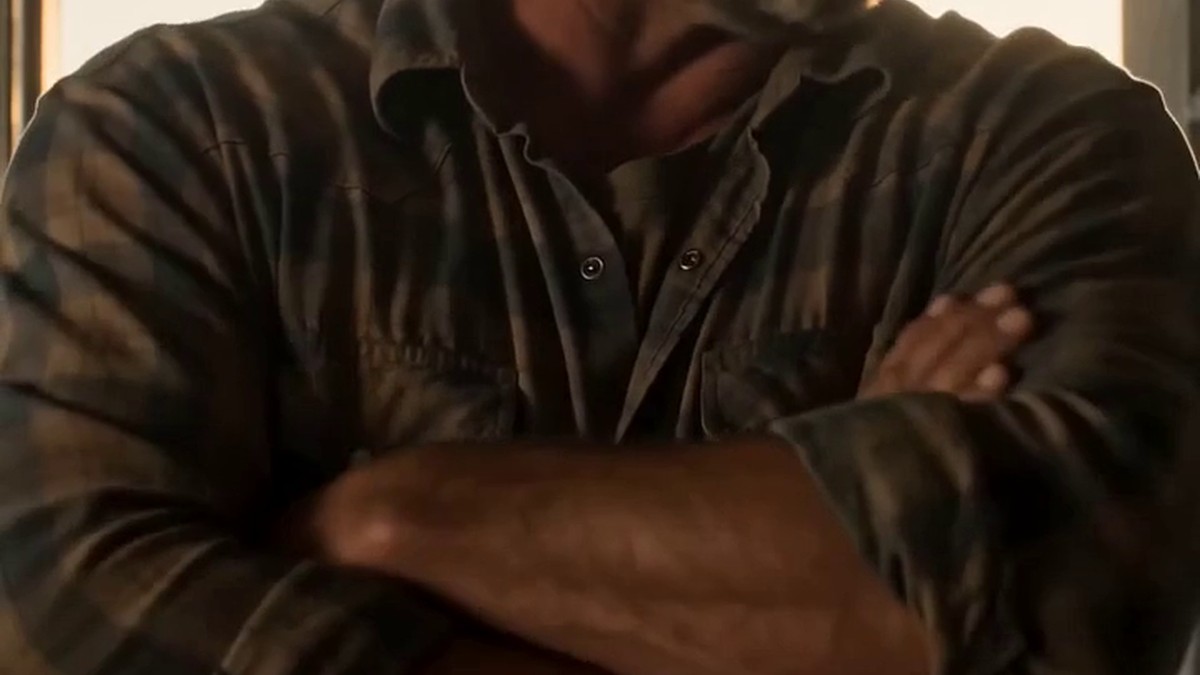
He came through my door at 3:15, work boots still on. Red clay dusted the toes. Tall, maybe six-two, with forearms like fence posts and a jaw that hadn't seen a razor in three days. He didn't sit when I offered.
"Miss Delacroix." He pronounced my name like an accusation. "You been fillin' my boy's head up with singing."
I folded my hands on the desk. "I've been trying to give him an opportunity."
"Opportunity." The laugh had no heat in it. "You know what opportunity means for a boy like Wyatt? It means he gets ideas. Stops seein' what's in front of him. I got forty acres needs work before first frost. I got a tractor with a busted transmission sitting in the barn and two hundred bales of hay to get under cover. You think some singing contest is gonna fix that?"
"Mr. Coffman, your son is twelve years old."
"That's old enough to know his place."
The words hung between us. I could smell the woodsmoke on his clothes, mixed with diesel from whatever he'd been wrenching on.
"His place," I said, "doesn't have to be a sentence."
He moved closer to my desk—not threatening, just not used to being challenged. "You from somewhere else, Miss Delacroix?"
I didn't answer.
"Let me tell you something. My granddaddy worked those forty acres. My daddy worked those forty acres. I've worked 'em since I was nine years old, driving fence posts in the rain. And you know what singing ever did for any of us?"
He waited.
"Nothing," he said. "Singing don't put food on the table. Singing don't patch a roof."
I wanted to argue. I wanted to tell him about every study I'd read, every kid I'd seen walk out of a place like this because someone believed in them. But I'd been at this school for seven weeks, and I wasn't stupid. Arguing wasn't going to move a man who came ready to fight.
So I asked him a question instead.
"Mr. Coffman, did you ever have something like that?"
"What?"
"Something that made you feel bigger than the work. Bigger than the farm."
The change was small—a twitch in his jaw, a pause before he answered. "That don't matter."
"I think it does."
He stood there, boots planted, weighing something behind his eyes. Then he said, "I used to draw. When I was about Wyatt's age. Had a sketchbook hidden under my mattress. My daddy found it. Drove out to the burn pile and set it on fire in front of me. Said it was makin' me soft."
I kept my eyes on him. "Did it?"
He made a sound in his throat—half laugh, half growl. "I don't know."
Then he turned and walked out. The door clicked shut behind him, gentler than it should have been.
—
I drove to the Coffman place the next Saturday. Six miles out of town, down a gravel road that climbed into the hills until the pines closed in on both sides. A rusted mailbox leaned at the end of the drive, COFFMAN painted in flaking white letters. A brindle dog chained near the barn set up barking before I killed the engine.
Ray came around the side of the house. Wrench in one hand, gray smudges under his eyes. He didn't look surprised.
"You're a persistent one," he said.
"Can we talk?"
He wiped his hands on his jeans. "Got chores."
"I know. That's why I'm here."
I took a single sheet of paper from my bag. I'd typed it the night before on the school library's ancient computer, the one that sounded like a helicopter taking off every time you hit print.
He took it. Eyes scanning.
WYATT COFFMAN — SCHEDULE
• Monday–Friday: Farm work 3:30–6:00 PM
• Schoolwork: 6:30–7:30 PM
• Music practice: 7:30–8:00 PM
• Saturday: Farm work all day. Music practice 1 hour after dinner.
• Sunday: Church, family time. No music.
Below the schedule, in smaller type: *Entry fee for county showcase: $75. Paid in full by J. Delacroix. Transportation to and from rehearsals: provided by J. Delacroix. Wyatt maintains a C average or above: required. If grades drop, music time is cut in half.*
I'd signed it. Left a blank line for him.
He read it twice. The paper shivered in his hands.
"You already paid the seventy-five dollars," he said.
"Yes."
"What if I still say no?"
"Then I'll stay out of it. But I won't stop believing Wyatt deserves a chance to be more than what's sitting right in front of him."
He didn't say anything for a long moment. The dog had gone quiet. Somewhere beyond the barn, a crow called out, harsh as a knife on stone.
"You think that program's gonna fix him?" Ray asked.
"I don't think he needs fixing."
That landed. I saw it in the way his jaw tightened, then loosened—something inside him unclenching after years of being held shut.
He looked at the paper again. Then he reached into his breast pocket and produced a pen—a cheap Bic, the cap chewed to a stump.
He signed his name. Ray Coffman. Square, careful letters, like a man who'd taught himself to write and never quite trusted it.
"There's one more thing," I said.
"What's that?"
"I want you to hear him. Before the showcase. I want you to hear him sing."
Ray's eyes flicked toward the barn. "Wyatt don't sing around me."
"Maybe he doesn't know you'd listen."
Ray folded the schedule, slid it into his back pocket next to the wrench. "Saturday," he said. "Come back Saturday, after chores."
—
The following Saturday, I drove back to the Coffman place as the sun dropped behind the ridge. The sky had gone the color of a bruise—purple and yellow fading to gray. The porch light was on, a single bulb humming over the door.
Ray met me in the yard. He'd cleaned up: work boots still on, but a fresh shirt, untucked. "He's in the barn."
We walked together. The path was muddy from an early rain, and I had to watch my footing in the dark. The barn door stood open, a wedge of yellow light spilling across the wet grass.
Wyatt sat on an overturned bucket near the hay bales. Eyes closed. He hadn't seen us come through the door.
Then he started to sing.
It was "Shady Grove" again—but not the careful classroom version. This was raw and private, sung to no one. His voice filled the barn, bounced off the rafters, rose through the hay-scented air like it had always lived there.
Ray stopped two steps inside the door. His whole body went still.
Wyatt sang about a girl with blue eyes and a rose in her hair, and his voice carried something old and wounded and beautiful—something that had no business coming out of a twelve-year-old boy in a drafty barn.
When he finished, the echo hung in the air a long second, then faded.
Wyatt opened his eyes. He saw us. His face went through a quick sequence—caught, then confused, then afraid.
Ray said, "Your granddaddy used to sing that one."
Wyatt's voice came out small. "I know. Mom told me."
The light from the single bulb above the hayloft fell across Ray's face. Something wet moved down his cheek, disappearing into the stubble along his jaw.
He cleared his throat. "I signed your paper. You can do your singing."
Wyatt's eyes went wide. He looked from his father to me, then back.
"For real?"
"For real. But chores don't get skipped. And Miss Delacroix says your grades don't drop."
The boy's hands gripped the sides of the bucket like it might lift off the ground.
Then Ray walked over and sat on a hay bale next to his son. He didn't say anything else. He just sat there.
After a minute, he took the folded schedule from his pocket, smoothed it across his knee, and reached it toward Wyatt.
"This here's a contract," he said. "Like grown men sign. You understand what that means?"
Wyatt took the paper. He read it, his lips moving over the words. Then he lifted his head.
"It means I keep my word," the boy said.
Ray gave one sharp dip of his chin. "That's right."
He put his hand on Wyatt's shoulder—quick, awkward, like he wasn't sure where it was supposed to rest. It stayed there for maybe three seconds. Then he stood.
"Come on," he said. "Your mother's got biscuits and gravy on the table."
He walked out of the barn and didn't look back. The paper was still in Wyatt's hands.
The boy turned to me. His eyes were bright.
"I get to sing," he said.
"You get to sing."
I followed him out into the yard. The porch light threw long shadows across the wet grass, and somewhere up the hollow, the dog was barking at something in the dark.
Ray was waiting at the kitchen door. He didn't wave or call out. He just opened the screen and let it slap shut behind him, leaving the door open for his son to come inside.