I remember the exact moment the music stopped mattering.
The ballroom at the Hermitage Hotel had never looked more expensive than it did that night in late November. Three hundred guests in black tie, a forty-thousand-dollar string quartet, and enough champagne to fill a swimming pool. My husband Daniel had spent six weeks on the seating chart alone. Our son Oliver was supposed to be in bed by nine, but Daniel insisted he make an appearance for the photo with the mayor.
I should have listened to my gut.
The string quartet was between movements when I heard Oliver's shoes hit the marble. He'd been fidgeting next to Daniel near the donor wall, tugging at his bow tie, complaining about the shoes I'd bought him. I'd told him to stand up straight for one more photograph.
Then he was gone.
I turned in time to see him running across the center of the ballroom, past the ice sculpture of the hospital wing we were naming, past the silent auction table with the signed Titans jersey that had already hit eleven thousand dollars.
Straight toward the service station near the east wall.
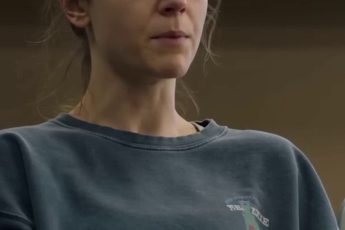
Toward a woman in a gray catering uniform holding a silver tray.
Thea Bennett.
My fingers went cold around my champagne glass.
She was standing exactly where she should not have been. Where she had no right to be. After everything — after the payout, after the legal team, after the instructions that were perfectly clear — she had somehow found her way back into my son's line of sight.
Oliver slammed into her waist so hard she stumbled half a step. His arms locked around her, his face pressed into that gray uniform, and a sound came out of him I had not heard in months.
"Mama Thea."
Not mother. Not mommy. Mama Thea. The name he'd used for her since he was small enough to fit on her hip, the woman who'd sat with him through every ear infection, every nightmare, every thunderstorm.
I set my champagne glass on the edge of the donor table. My hand shook, but I'd had years of practice hiding that.
What happened next unfolded like it was underwater.
I crossed that ballroom. Past board members I needed for next year's capital campaign, past donors whose checks kept the pediatric wing running, past my husband, whose face had gone the color of bone. I walked like a woman who owned every square foot of that room, because I did. Or I had. Everything in that room existed because Daniel and I had willed it into being.
Thea did not back away.
She stood there with my son attached to her waist, and she looked at me with something that was not fear. It should have been fear. Four months ago I'd paid her six hundred thousand dollars to disappear from our lives forever, and she'd taken the money. She'd signed the agreement. A lawyer's office downtown had notarized every page.
So why was she standing in my ballroom, letting my son call her Mama?
"Oliver." My voice came out harder than I meant it to. "Come here."
He tightened his grip on her.
"Oliver. Now."
"I want Mama Thea," he said into the fabric of her uniform. "She said she'd come back. You told me she wouldn't. But she's right here."
Something shifted in my chest. Not guilt. I didn't have room for guilt. I had a foundation to run, a son to raise, a marriage that was already cracking in places I didn't let anyone see.
But I'd told Oliver? I hadn't told him anything. I'd told him Thea had to leave for family reasons. I'd told him she would write. I'd told him all the gentle lies a mother tells when the truth is too sharp for an eight-year-old.
I'd never told him she took money. I'd never told him she abandoned him.
Daniel had handled that conversation.
"Now you're lying to my son." I heard my own voice like it belonged to someone else. "As if you didn't sign the agreement and take every cent."
Thea's face changed. Something cracked in it — genuine confusion, or a close enough imitation that I couldn't tell the difference.
"What agreement?"
The word hit harder than it should have. What agreement?
The room had gone quiet. The string quartet had stopped playing. Three hundred people were watching the Hollis family fall apart in front of an ice sculpture of a children's hospital wing.
"Mrs. Hollis." Thea kept her voice low, careful, the same voice she'd used during those first terrible weeks after Oliver was born, when I couldn't stop crying and Daniel was in Singapore for eighteen days straight. "I never signed anything. You fired me. Had me escorted out through the service entrance. My final paycheck came eleven days late. My insurance ended at midnight that same day. And no agency in this city would return my calls after that."
She paused.
"I've been picking up three catering shifts a week just to keep my apartment off Charlotte Pike. The one I've lived in for nine years."
That apartment. The one with the window unit that rattled and the neighbor who played gospel too loud on Sunday mornings. I'd been there once, years back, when Oliver spiked a fever during an ice storm and I drove out at two in the morning because I couldn't reach anyone else.
I remember thinking, standing in that cramped living room while she packed a bag, that she had nothing. A twin bed in the corner. Photographs stuck to the fridge with magnets. A mug on the windowsill that said World's Okayest Nanny.
And I'd paid her six hundred thousand dollars to sign a document saying she'd leave quietly?
That didn't sound like Thea. But it also didn't sound made up — not the paperwork my lawyer had shown me four months ago, with her signature at the bottom of every page.
"Someone showed me a signed agreement," I said.
"Then someone forged my signature."
The words hung there.
I looked at her. The gray uniform. The sensible shoes. The tray still balanced in her left hand.
She should have looked pathetic. Defeated.
She didn't.
She looked like the woman who'd stayed up with my son through croup while I was at a donor dinner. Who'd taught him to ride a bike when Daniel was too busy. Who'd noticed, before any doctor did, that Oliver needed glasses.
She looked like the person my son trusted more than me.
I don't know how long I stood there. Long enough for the room to blur at the edges. Long enough for Daniel to cross the floor and put his hand on my arm.
"Kate." His voice had the same flat tone he'd used the night he told me there was a problem with Thea. "We should do this somewhere private."
I looked at him. At the way he was not looking at Thea. At the set of his jaw. At his fingers, digging into my arm a little too hard.
Something cold slid down my spine.
"You told me she signed it," I said.
"Kate—"
"You told me she took the money."
"Can we please—"
"You told me she asked for more." My voice climbed, in a way I never allowed in public. "You showed me the document. You told me the lawyer verified it."
Daniel opened his mouth. For one second, his eyes flicked toward Thea.
And in that second I saw something I'd seen a hundred times over eighteen years of marriage but had never once put a name to.
I saw him calculating.
"Where's the original?" I asked.
"The lawyer has it."
"The original. Not a copy. Where is it?"
Daniel's hand dropped from my arm.
The ballroom was so still I could hear the ice sculpture dripping into its tray.
"Kate." Thea's voice had changed. Softer. Sadder. "That's what I've been trying to tell you. I've called. I've emailed. I sent three letters certified mail."
I never saw them.
Daniel handled the mail. Daniel handled the lawyer. Daniel handled everything to do with Thea leaving.
Because I was too busy. Because I was running a foundation. Because I trusted my husband, the way I always had.
I turned to my son.
"Oliver." I knelt right there on the marble floor, in front of three hundred people. My dress pooled around me. My hair came loose from the clip. I didn't care. "Baby, what did Daddy tell you about Thea?"
Oliver's face stayed pressed against Thea's side. He didn't want to look at me. But he answered.
"He said she took money to go away."
"Did he say how much?"
Oliver's small shoulders moved under the tuxedo jacket.
"A lot. He said she didn't want to see me anymore."
I closed my eyes.
And then I did the thing I should have done four months ago. I pulled out my phone, right there in front of three hundred donors, the mayor, the string quartet.
I called the lawyer.
"Dominic? It's Kate Hollis. I need you to bring me the original agreement from the Bennett matter. Not a copy. The one with the wet-ink signature."
Dominic started to say something about it being a Saturday night. I didn't let him finish.
"I'm at the Hermitage. Twenty minutes. If you can't bring it, send someone who can. And Dominic — if you tell my husband I called, you're fired before you hang up the phone."
I ended the call.
Daniel's face went very, very still.
"Kate, what are you doing?"
"The agreement's at the office," he said. "It's eleven o'clock. You can't just—"
"Watch me."
The quartet started playing again, ragged, like they weren't sure they were allowed to. Someone near the back laughed a nervous laugh. A waiter passed with a tray of champagne, thought better of it, and veered off.
Thea still had her arm around Oliver. She hadn't moved from that spot, in her gray uniform, in my ballroom, in front of everyone, while my marriage cracked open on the floor like an egg.
I should have been angry at her. I had been, for four months.
But standing there, watching my son cling to her, watching the confusion on her face and the fear starting to show through the cracks in my husband's, I understood something I'd been refusing to look at for a long time.
I hadn't been angry because she took the money.
I'd been angry because she left at all. Because after nine years — after the nights she put Oliver to bed while Daniel was on a plane, after the times she'd covered for Daniel when he came home at midnight smelling like someone else's perfume and I pretended not to notice, after all of it — she was gone, and I was alone with a child who wouldn't stop crying and a husband who wouldn't stop lying.
But she hadn't left.
She'd been erased.
The lawyer showed up at 11:22 PM in jeans and a Titans hoodie, carrying a beige document box.
He set it on a round table in the donor lounge — the room where we'd planned to close three major gifts before midnight. Unmarked box. A white label with a case number: 4-7-8-9-3-2.
"Open it," I said.
Dominic looked at Daniel. Daniel looked at me. I looked at the box.
Dominic opened it.
Inside was a stack of papers. The agreement. The release. The confidentiality clause. The tax forms.
And at the bottom of every page, the same signature.
Thea Bennett.
Except it wasn't. I'd seen her handwriting a hundred times — permission slips for field trips, the little notes she'd leave on the counter about what Oliver had eaten for lunch. Her signature had a particular loop on the last letter of her name, a habit from some handwriting class decades ago she used to joke about.
This signature had the right name. It did not have her hand.
"Who prepared this?" I asked.
Dominic's face had gone pale.
"Mr. Hollis requested the document. We drafted it at his direction."
"And the signature?"
"He brought the executed pages back to the office. Said Ms. Bennett signed in his presence."
I turned to Daniel.
He looked at the floor. At the ice sculpture through the doorway. At the ceiling. Anywhere but at me, at Oliver, at Thea.
Then he said, so quiet I nearly missed it:
"She knew things. About me. About where I was those nights I said I was working."
I stared at him.
"So you erased her instead of the problem."
He didn't answer that. He didn't have to. His silence was the answer, the same silence he'd given me a hundred times when I asked why he was late, why his phone was face-down on the counter, why he showered the second he walked in the door.
I'd told myself it was paranoia. Thea had apparently needed no telling at all. She'd just seen it — the way nannies see everything, the way the person who's actually in the house sees what the person who built the house misses.
And rather than face what she knew, he'd made her disappear. Forged her name. Blacklisted her with every agency in the city. Told our son she'd taken money and didn't want to see him.
The room tilted. I put my hand on the edge of the table to steady myself.
"Mama." Oliver's voice came from the doorway. Thea stood behind him, one hand on his shoulder. She'd heard all of it.
I turned to my son. He looked small in his tuxedo, bow tie crooked, eyes red.
I reached into my bag and pulled out my checkbook, right there in front of the lawyer, my husband, the woman who'd raised my child.
"I'm going to write you a check," I said to Thea. "Not six hundred thousand. That was never real. The exact amount you earned. Every week. Every overtime hour. Every missed holiday."
She opened her mouth to say something.
I raised my hand.
"And then I'm calling every agency, every family I know, and telling them what happened. Starting Monday."
Daniel made a sound in the back of his throat.
"Kate, you can't—"
"I can. And I'm taking Oliver home, and I'm filing for divorce before the sun's up."
Dominic stood very still, like a man realizing he'd been complicit in something that was going to cost him his license.
"Mrs. Hollis, I had no idea—"
"You'll have plenty of time to explain that to the bar association."
I looked at Daniel one more time. Eighteen years. A house we'd never finish paying off in the way that mattered. A son we'd raised together, badly, in ways I was only now starting to count.
Then I wrote the check. Four hundred eighty-two thousand dollars — I knew the number because I'd signed off on her salary for nine years and never once thought about what that added up to, what it cost her.
I wrote the letter on the back of a banquet program, six minutes, longhand, my handwriting getting worse the angrier I got. I signed it. I dated it. I handed it to her.
Thea looked at the check. At the letter. At me.
She didn't say thank you. She didn't say anything.
She folded the paper carefully and tucked it into the pocket of her uniform.
Then she crouched down to Oliver's level and said something I couldn't hear, something that made him finally let go of her.
She walked out through the service exit — the same one they'd marched her through four months ago.
I watched her go. Then I looked at Daniel.
"Get out."
He didn't argue. He gathered his coat, his keys. He walked past me without a word. Past Oliver without a word. Past the ice sculpture of the hospital wing we would never finish building together.
When he was gone, I picked up my son. He was heavy, too heavy to carry really, but I carried him anyway — out of the ballroom, through the lobby, past the doormen, into the cold November night.
I stood on the corner with him in my arms and didn't know where to go. The house wasn't mine anymore, not really. It was a crime scene now. A place where a man had erased a woman because he couldn't stand what she knew about him.
Oliver's arms were around my neck, his face wet against my shoulder, still in the tuxedo I'd bought him.
"Mommy," he said. "Where's Mama Thea going?"
I pulled him closer.
"She's going home, baby."
And then, finally, the thing I should have said four months ago.
"I'm sorry."
Oliver didn't answer. He just tightened his arms around my neck, and somewhere behind us, through the doors, the string quartet kept playing like nothing in the world had happened at all.