The call came at 4:12 in the afternoon. It took me six hours to find my son.
I was at the kitchen table in our old Craftsman house off West End Avenue, helping the Burkhalter kid from two doors down with his phonics. On my left sat a stack of worksheets; on my right, the silver Timex I got when I graduated from MTSU back when tuition was still four figures and you could gas up for a dollar and change. The hospital called from Vanderbilt. Henry had collapsed at the shop on Charlotte Pike. Massive cardiac event, the nurse said. They needed me right away.
He'd been gone by the time I hit the traffic on West End. 5:03 pm.
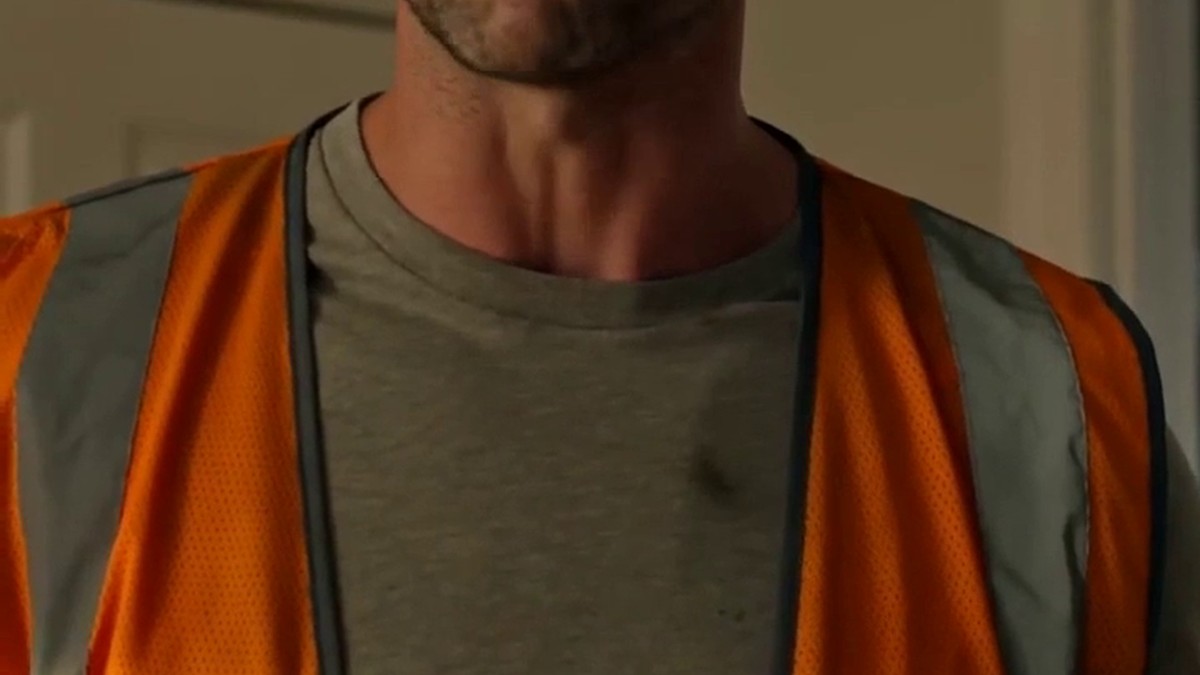
I called Jason eleven times. Straight to voicemail each time, his phone off. I told myself he was on a job site, maybe somewhere in the county where the signal drops near Percy Priest Lake. His work vest from Moreland Construction still hung in my laundry room from the last time he'd bothered to visit, orange and reflective, crusted with drywall dust.
Megan showed up with Lily. The waiting room TV had a Predators game on mute — St. Louis up three to one in the second. Lily wore her tiny Nashville Ballet t-shirt and climbed into my lap with a half-eaten bag of Goldfish. Megan's hands wouldn't stop twisting the strap of her purse. She'd left work at the Green Hills clinic early, had to pick up Lily from the preschool at Park Avenue United Methodist before they gave her spot away to a kid from the waitlist.
At 11:47 that night, Jason walked in. Reflective vest, dust in his hair. He went straight to the front desk and said, "Whitfield. Henry. What room?"
The nurse told him there was no room. He turned to me. "So what are we looking at? A week? Because I've got a concrete pour scheduled for Thursday."
"Your father died six hours ago, Jason."
That's when his phone lit up. He'd dropped it on the chair next to my coat when he came in. The lock screen glowed. A woman's name: **Rachel**. And a message beneath it.
*"The seller accepted! We're doing this! ❤️"*
I did not unlock the phone. I did not need to. The notification laid it out for me as plain as a blue tarp over a wreck.
I looked at my son. He was typing something back. He didn't ask how Henry felt at the end. He didn't ask if I was all right. He was buying a house with someone named Rachel while his wife sat three chairs down with their four-year-old asleep across her lap.
I said nothing. I kept my mouth shut and my hands folded over the strap of my purse, and I memorized that lock screen like it was a photograph I would need to pull out later, in a courtroom, or at a kitchen table, or in front of a man with a notary stamp.
The funeral was three days later, out on Highway 100 at Harpeth Hills. Ninety-four degrees, the chapel air conditioning groaning like an eighteen-wheeler on the old Cane Ridge grade. Henry would have made a joke about the cold snap.
Rachel sat three rows back from the front, left side, where no one knew her. Black dress. Large sunglasses. And gloves. Black leather gloves, in July, in Tennessee. Like she'd read about funerals in a novel set in Chicago.
Megan leaned over and said, "Who's the one with the gloves?"
"Nobody, honey. Just someone from work."
After the service, I drove to Tom Neville's office on West End. Tom's been handling Henry's legal work since they graduated from David Lipscomb High School together. Henry updated his will six months ago. I was there when he signed it.
"Carol," Tom said, "Henry didn't know about any Rachel. But he knew Jason wasn't who he used to be."
The will left the house and the cars to me. The business — three Whitfield's Auto & Diesel shops scattered from Charlotte Pike to Donelson — was to be liquidated. The proceeds would go into a trust for Lily. And a codicil. Henry added it after Father's Day, when Jason skipped their Preds game and left his father sitting alone in section 118, seat fourteen, with an extra ticket in his pocket and a text that said, *"Running late, go without me."*
The codicil said if I determined, in my sole discretion, that Jason was not maintaining a stable family home with Megan and Lily, then I had the legal authority to sell the shops and place all proceeds in trust for Lily's education and Megan's support. Jason would get nothing until Lily turned thirty, and even then only with my written approval.
"Henry trusted you to make the call," Tom said.
Two weeks later, on a Sunday, Jason came to the house. He pulled into the driveway in his F-150, and the neighbor's golden retriever, Buck, raised his head off the front yard and let out one low bark. Jason didn't knock. He walked in like he still lived there.
The sale agreement sat on the kitchen table. Dale Harmon Auto Group out of Knoxville had agreed to buy all three shops for two million, three hundred and eighty thousand dollars. A fair price by Tom's estimate. The document was already signed by Harmon. I just had to sign as executor.
Jason pulled out a chair. It scraped against the linoleum — the same linoleum Henry and I put down the summer Jason was seven, before the business took off, before the money showed up and the arguing got worse. "I've been with Tom. Mom, you can't do this. I'm his son."
I didn't answer. I laid the papers flat, lined up the edges with my thumb.
"Rachel is a friend from work," Jason said. "We flip houses on the side. That's it."
I uncapped the pen. It was a Bic ballpoint, the same kind Henry used to keep in the glove box of his truck for signing work orders. He went through a dozen of them a year. I used to buy them in packs of ten at the Kmart on Nolensville Road before it closed.
"I saw the lock screen, Jason. You left your phone on the chair. I saw her name, and I saw what she said. 'We're doing this.' So don't sit at my kitchen table and tell me about legacy."
I signed my name. Neat cursive, the same signature I'd put on six hundred report cards over thirty years of teaching. Then I signed the trust documents underneath. I pulled a yellow sticky note off the pad by the fridge and wrote: *Megan — trust docs in the safe. Call Tom if needed.* I pressed it to the front of the stack.
I slid the papers across the table. They stopped just short of his elbow.
"The shops are sold. The money goes into a trust for Lily. You get nothing until she's thirty, and only if I sign off. That's what your father wanted."
Jason stood up so fast the chair tipped over behind him, hit the floor with a crack that echoed off the ceiling fan. He was shouting now, saying he'd contest it, saying he'd tie it up in court for years, saying I couldn't just erase him.
I didn't raise my voice. I looked at my son, the man who didn't answer his phone for six hours. "The difference between you and your father, Jason, is that he would have answered."
He slammed the door. The walls shook. Outside, the rocking chair on the front porch tipped over, the one Henry bought me at the Hillsboro Village craft fair the year we got married. Buck got up and barked twice, then settled back down in the grass.
I didn't cry. I called Megan and said, "Sweetheart, come over. We need to talk about Lily's future."
Then I went out to the porch, righted the rocking chair, and sat down. Buck came over and lay at my feet. I checked my Timex. Four-twelve on a Sunday afternoon. A week since Henry died, almost to the minute.
I sat there and watched the neighbor kids ride their bikes down the hill, past the house, past the shop, past all of it. And I thought about a baby girl in a ballet t-shirt, asleep across her mother's lap while the world rearranged itself around her.