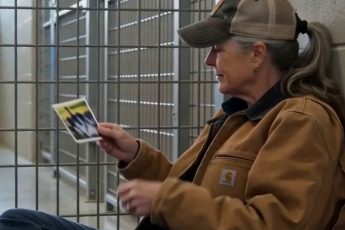
The town of Millbrook, out past Ashland in the Ohio hill country, smelled of woodsmoke and wet leaves come September. At Barbara Yarrow's place, a small farmhouse on the edge of town, you almost couldn't catch that smell at all — the kitchen had chicken broth simmering since morning, and geraniums lined the windowsill, planted by Barbara's mother-in-law before the Korean War, back when she was a young bride working the same stove.
Barbara was forty-two, married to Ted, with three kids of her own and two grandbabies from her oldest boy, Mark. The house rattled with people from sunup to bedtime. And yet, when the neighbor from the far end of town, old Sue, passed away and left behind an aunt of her husband's — a distant, almost unknown relation — it was Barbara and Ted who spoke up. We'll take her.
"Remember when Sue sat up with you the whole night Annie had pneumonia?" Barbara said to her husband, drying her hands on her apron. "Nobody asked her to. She just showed up."
Ted didn't say anything back. He just went out to grab the toolbox and clear space in the attic. Nobody needed more explanation than that.
The aunt's name was Geneva. Eighty-six years old, blind for the last ten, and — putting it plainly, the way folks in town put it — "not quite all there anymore." She forgot names, mixed up morning and evening, cried sometimes for no reason anyone could figure. Couldn't get a spoon to her own mouth. Nobody would've blamed Barbara for sending her to the nursing home over in Ashland — she was a distant relative, not a mother, not a grandmother. But Ted just waved off that kind of talk from the neighbors.
"A person's not a stray dog you hand off," he said at the supper table, and that settled it.
They brought her belongings over in a paper grocery bag — three housedresses, a worn rosary, a photograph of some man in an Army uniform. They bathed her, dressed her in a clean housecoat, tied a scarf under her chin. Above the bed they hung a picture of deer in the woods, even though Geneva couldn't see it at all. Barbara had just decided a bare wall was no way to leave things.
And then ordinary life set in: chicken and dumplings and pinto beans for supper, sometimes a box of mac and cheese for the kids, sweet tea with three spoons of sugar because Geneva liked it that way. Walking her to the bathroom, changing her, washing up. And listening to her ramble on, in a thin, shaky voice, about things that made no sense at all.
Then one evening, with the weather report playing on the kitchen TV and Ted putting away tools after a day's work, Geneva sat straight up on the bed and said:
"There's a thief in the shed. Go on, Teddy."
Ted laughed, but he went. In the shed he found their neighbor Cal, drunk, loading potatoes and two jars of pickles into a feed sack. Cal begged him not to call the sheriff, said he'd pay it back, and Ted let him go with a warning — but the incident traveled fast in a town that small, and by Sunday half of Millbrook had heard some version of it. Ted told himself it was a lucky guess. Cal had been sniffing around that shed before; anybody paying attention might've called it. Coincidence, dumb coincidence, that's all.
Maybe two weeks later, Geneva sat on the bed working the rosary beads between her fingers when she suddenly went stone-still and reached out, feeling for Barbara's sleeve.
"Don't let Ricky drive into town. That car's going to wreck."
Ricky, the youngest son, was supposed to drive Saturday with his buddy Dale to a concert down in Columbus, in Dale's old Honda Civic — the one they always rode together in, Ricky always up front in the passenger seat. Barbara hesitated. Ted said it was nonsense, but he looked at his wife's face and something there stopped him cold. Ricky stayed home, furious, slamming the door so hard the window rattled in its frame.
Dale went alone. Sunday morning the phone rang — he'd hit the guardrail out on Route 42, at the exact spot, the exact time they would've passed through together. The car was crushed on the passenger side, the front seat, right where Ricky always sat. Dale ended up in the hospital with a broken arm and a concussion. Nobody in the house said it out loud, but everybody thought the same thing: if Ricky had been in that seat, they'd be planning a funeral instead of counting their blessings.
After that, nobody called Geneva's talk nonsense anymore, not even to themselves. Sure, she still mixed up the days of the week, still forgot she'd eaten lunch an hour ago, still couldn't find her own mouth with a spoon. But they started listening, and word of it started to travel — the way word does in a town of six hundred people with nothing else to talk about.
By October, half of Millbrook knew there was a blind woman out at the Yarrow place who could see things before they happened. Some folks thought it was the Devil's work and said so at church. Others started showing up at the door asking Barbara to ask Geneva about a sick husband, a missing dog, a will that hadn't been found. Barbara turned them all away, but the talk didn't stop, and neither did the looks she got at the grocery store.
Geneva herself got fixed on wanting a lottery ticket. She said it every day, in that thin voice, tugging at Barbara's sleeve: buy a ticket, buy a ticket. Barbara put her off a week, then another, uneasy about where all this was heading — first a thief, then a wreck, now money. It felt like pushing a gift too far, like asking a well for one more bucket than it had to give. Finally Ted, out running errands for planter parts, stopped at the gas station in Ashland and bought one Ohio Lottery Powerball ticket for two dollars — more to quiet her down than out of any belief in it.
The ticket sat on the sideboard three days before anyone bothered to check the numbers. Their daughter Annie checked it on her phone and screamed loud enough that Ted dropped his fork on the floor.
They'd won four hundred twenty thousand dollars.
That was when the trouble really started.
Within a week, a cousin of Sue's nobody had heard from in a decade called asking why "some stranger" was living in the house Sue used to visit, spending money that ought to go to family. A woman from the county aging office showed up unannounced, saying somebody had phoned in a concern — an elderly, incompetent relative, possibly being taken advantage of, ought to be evaluated for placement in Ashland. Barbara stood in her own kitchen and answered questions about Geneva's diet, her medications, who signed for the lottery money, while the woman from the county wrote everything down on a clipboard.
"They think we're keeping her for the money," Ted said that night, low, so the kids wouldn't hear. "They think we filled out that ticket knowing."
"Did we?" Barbara asked, and hated herself for asking it.
Ted didn't answer right away. He sat at the kitchen table with his hands flat on the wood, and for the first time since they'd brought Geneva home, Barbara saw him look like a man deciding something instead of a man who'd already decided.
The county woman came back a second time, said the case would go before a judge if the family couldn't show the placement was in Geneva's best interest and not the family's. Ted's brother, over for Sunday dinner, said straight out that maybe it was time to let the professionals handle her, now that there was money enough to pay for good care, real care, not a spare room over a farmhouse kitchen. Barbara didn't answer him either. She went upstairs and sat with Geneva a long while, the old woman's hand dry and light as a sparrow in hers.
That night, with the county paperwork still spread across the kitchen table and Ted staring at it like it might rearrange itself into something easier, Geneva called Barbara's name from the bedroom, clear as she hadn't sounded in months.
Barbara went and sat on the edge of the burgundy bedspread. Geneva's clouded eyes moved toward her the way they always did, aimed a little off, at her collarbone instead of her face.
"They're going to ask you to give me up," Geneva said. "Don't."
"Aunt Geneva, there's a woman from the county—"
"I know who's coming and I know what she'll say before she says it." Geneva's fingers found Barbara's wrist and closed around it, surprisingly strong. "You didn't take me in for money. I was here before the money, and I'll be here after it's spent. That's the only thing that judge needs to hear, and it's the only thing that's true."
Barbara sat with that a long moment, the TV murmuring downstairs, Ted's chair creaking under him as he read the same page of paperwork for the tenth time. Then she went down, gathered the papers off the table, and told Ted they weren't hiring a lawyer to fight to keep Geneva — they were hiring one to make sure nobody ever asked them that question again.
The hearing never happened. The county closed the file inside a month, once the visiting nurse's reports came back showing a woman well fed, well kept, and, by every account, content. The cousin of Sue's stopped calling. Ted's brother didn't bring it up again at Sunday dinner.
With the money that was left after the lawyer, they paid off the mortgage, bought Mark a used pickup for his delivery route, and got Geneva a new floral robe, a box of the pecan pralines she loved, and that burgundy bedspread with the gold stitching, which somebody in town said was a foolish thing to buy a blind woman.
"She sees it a different way," Barbara told them, and didn't say another word on it.
Now, almost a year later, with the evening soap opera playing after six and the smell of cut grass and a neighbor's bonfire drifting through the window, Geneva sits on that burgundy bedspread, in a clean housecoat and a starched scarf, still as a doll. She works the rosary between her fingers, rocks a little, murmurs something good-natured in that thin voice — nobody bothers trying to make out the words anymore, they just sit with her, whoever's got the time.
She still doesn't remember she's had lunch. Still can't find her own mouth with a spoon. But every evening Barbara sits down beside her on the edge of the bed, takes her hand, and asks the same question.
"Well, Aunt Geneva, got anything else to tell us?"
Most nights Geneva just smiles and says nothing, and Barbara lets it be. But one evening in late August, with the crickets going outside the window, Geneva turned her clouded eyes toward the sound of Barbara's voice and said, quiet and matter-of-fact, like she was reading off a grocery list:
"One more. Not yet, though. You'll know it when it's you I'm talking about."
Barbara asked her what she meant. Geneva only patted her hand, the way you'd settle a child, and went back to working the rosary beads, and never said another word about it — not that night, not since. Barbara still thinks about it most evenings, sitting on the edge of that bed, waiting to find out which of them it's for.