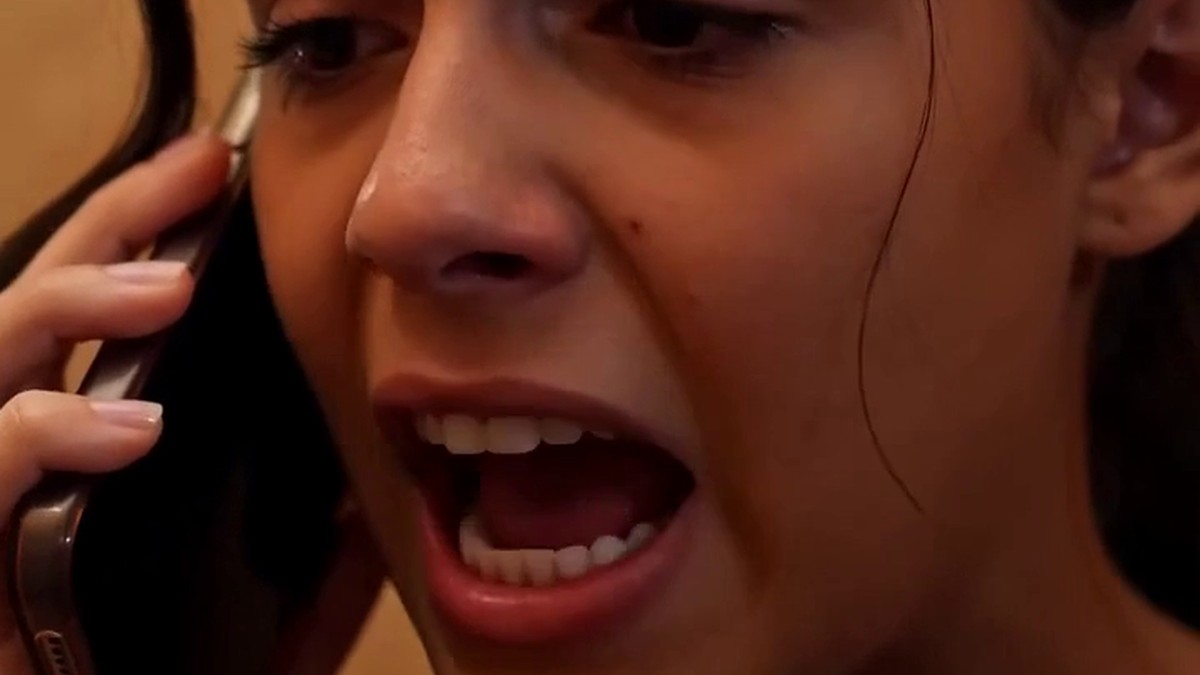
Tanya set the phone down on the kitchen counter and pressed her palm flat against the cool tile. Her sister-in-law’s words were still ringing in her ears. “What kind of people are you? Both of you. Forget you ever knew me.”
She hadn’t argued. What was there to say?
Eleven years ago, she’d stood in this same kitchen with a different phone in her hand, listening to her brother Vadim explain, in that soft reasonable voice of his, that he needed a favor. Just for a while. Just until things settled down at home.
“What things?” she’d asked.
“You know. Yulia’s been having a hard time adjusting. Tamara’s at the end of her rope. It’s a lot, with the two girls.”
“The two girls. Right. One of them is your daughter, Vadim. The one who keeps getting called a stray.”
He’d sighed into the receiver. “Don’t start, Tan. I’m not asking for a lecture. I’m asking for help.”
And because he was her big brother, and because his voice had that ragged edge of someone who hadn’t slept properly in months, she’d said yes.
She remembered the day Olesya arrived. Seven years old, a backpack slung over one shoulder, a stuffed bear with one missing eye clutched to her chest. Vadim didn’t even come inside. He’d pulled into the driveway, walked her to the front steps, kissed her forehead, and handed her over like a package he was done carrying. The car door slammed and he was gone before Olesya could finish saying “papa.”
Tanya had crouched down to the girl’s level. The child’s face was pale, her dark hair pulled back too tight, and there was a smear of something—maybe chocolate, maybe dirt—on her sleeve. She wasn’t crying. That was the worst part. She’d already used up all her tears.
“Hey, little one. You hungry?”
Olesya had looked past her, up at the screen door, then back at the empty driveway. “Tetya Tanya, will you send me away too?”
Tanya ran a daycare center in a strip mall off Route 9. Twelve years, two locations, three thousand diapers changed, and she’d never once had a parent drop off a child with that look in their eyes. She saw it in Olesya. The girl didn’t ask for anything—not snacks, not attention, not a turn with the remote. She sat in corners and folded her hands in her lap, waiting to be told she could exist.
It took two years before Olesya stopped flinching when a door opened too fast.
It took three before she stopped asking, every night at dinner, whether she was staying.
By year four, Tanya’s daughter Katya was calling her “my sister” at school and the teachers were all under the impression they’d been born four months apart. Tanya’s husband Nikolai taught Olesya to ride a bike and signed her permission slips and once, when a boy at the middle school made a crack about her not having a real family, he’d driven over there and sat in the principal’s office for two hours until the kid’s parents showed up. Olesya had called him “papa Kolya” ever since.
Vadim called once a year. Usually on Olesya’s birthday, which he always got wrong by a few days. Tamara sent money—three hundred and forty dollars every month, regular as a utility bill. No note, no letter, no call. Just the automatic transfer, like child support for a kid she’d decided not to raise.
Tanya didn’t block the payments. She put them in a separate savings account. Every single deposit, from the first month to the last. She never told Olesya about it.
The first few years, she’d expected someone to show up. A car in the driveway, a knock at the door, a parent with tears and apologies and open arms. She’d rehearsed the conversation. What she’d say, how she’d handle it, whether she’d make them sit down and actually look at the girl they’d abandoned.
But nobody came.
Yulia sent Olesya a birthday card when they were eleven. Inside was a five-dollar bill and a note that said, “Sorry we’re not able to visit. Dad’s really busy.” No mention of the stuff Yulia had said, the names she’d called her, the door she’d slammed. Just three lines in careful cursive, like it was written by somebody’s mother.
Olesya had read it twice, folded it back along the same creases, and buried it in the bottom of her sock drawer. She’d kept the five dollars.
When she was applying to colleges, Tanya watched her write the essay three times. The first draft was about her father. The second was about her mother. The third—the one she submitted, the one that got her a partial scholarship—was about a girl with a one-eyed bear who learned that family isn’t what you’re born into.
She went to Arizona State. Too hot, she said, but the program was good. Tanya and Nikolai drove her down, helped her set up her dorm room, and left her with two grocery bags of snacks and a card with three hundred dollars in it. She called every Sunday, because Tanya had asked her to.
Vadim texted her once that year. “Congrats on school. Proud of you.”
She didn’t answer.
The phone call came on a Tuesday evening, right around dinnertime. Tanya was in the kitchen, and the smell of Nikolai’s garlic bread was filling the house. She picked up without checking the number.
“Hello?”
“Tanya? It’s Tamara.”
She almost hung up. Her hand actually moved toward the button, her thumb hovering there, all the accumulated years pressing down on her chest. But something held her back. The voice on the other end didn’t sound like the Tamara she remembered. It was thin, sanded down, like it had been dragged across something rough for a long time.
“I’m calling because—I know you don’t want to hear from me. I know. I just—Olesya’s graduating. I saw it. Online. Her name, I mean. In the university list. Is that—is she okay? I mean, she’s doing okay, right?”
Tanya leaned against the refrigerator. The door was cool through her shirt. She could hear Nikolai in the other room, laughing with Vanya, their son, about something on the television.
“Eleven years, Tamara. Eleven years, and you call to ask if she’s okay?”
Silence. Then, softer: “I know.”
“Do you? Because I’m not sure you do. You and my brother—you didn’t just walk away. You drove her to somebody else’s doorstep and made it someone else’s problem. You sent money every month like that made it fine. Like parenting is a subscription service.”
“I—she’s an adult now, I thought maybe we could talk.”
Tanya shut her eyes. The ceiling fan clicked overhead. The old linoleum creaked under her feet. “You want to talk to her? Call her yourself. She has a phone. She’s had the same number for four years. You could have called that number any time.”
The silence stretched out. Tanya could hear Tamara breathing, ragged and uneven.
“Do you have a message for her? I’ll pass it along.”
“I don’t know what to say.”
“Then don’t call again.”
Tanya pressed the red button and set the phone face-down on the counter. Her hands weren’t shaking. That surprised her. She felt something closer to exhaustion, the kind you feel when you’ve been carrying a weight so long you forgot what your body felt like without it. She stood there in the warm kitchen, with the smell of garlic and butter and her husband’s laughter, and she thought about the little girl on the front steps eleven years ago, holding her bear and waiting for someone to come back.
They’d saved the money. All of it. Tanya had checked the balance that morning. Four hundred and forty-six months of deposits, with interest—just over fifty-two thousand dollars. Tamara’s guilt, sitting in a high-yield account at a credit union in Tempe, doing nothing.
Olesya was graduating in May. Tanya had always planned to give her the money then. A nest egg. A down payment. The kind of thing real parents scrape together for their kids, the thing Tamara had been paying into like a layaway plan for a clean conscience.
But after that phone call, Tanya started thinking about it differently.
She called her own daughter that night. “Hey. Do you think Olesya needs that money?”
Katya paused. “What do you mean?”
“The money from Tamara. I’ve been saving it. Do you think she needs it?”
“Mom, she works thirty hours a week at a campus coffee shop to afford rent. She once ate rice and ketchup for an entire month because her textbook cost four hundred dollars. What do you think?”
Tanya made the transfer the next morning.
She didn’t tell Olesya where it came from. She sent a text that said, “Something came through for you. Check your account. Call me later.” And she waited for the phone to ring.
Olesya called at lunchtime. Tanya pictured her, standing outside the student union in the Arizona heat, phone pressed to her ear, those same dark eyes staring at a bank balance that had five figures in it for the first time in her life.
“Mom,” she said, and her voice cracked a little. “What is this?”
“It’s yours. It’s always been yours. I was just holding it for you.”
Olesya was quiet. Then she whispered, “Is this from them?”
Tanya didn’t lie. She’d promised herself a long time ago she would never lie to this girl. “Yes.”
“I don’t want it.”
“Okay.”
Another pause. Tanya could hear the wind in the background, the sound of a campus full of students going about their day, and somewhere a bird. She wondered if it was one of those little desert birds that sat on the fence in the morning.
“Actually,” Olesya said, and her voice had changed, the way it did when she’d made up her mind about something. “Send me the transaction history. I want to see it.”
Tanya did.
Olesya graduated on a Saturday in May. Nikolai drove them out—Tanya, Katya, Vanya, all of them crammed into the SUV like always, with snacks and a cooler and forty-eight hours of road-trip playlists. They sat in the bleachers at Sun Devil Stadium, and when Olesya’s name was called, Tanya stood up and clapped until her palms stung, and she didn’t even notice that she was crying until Katya pressed a tissue into her hand.
They were at the celebratory dinner—a cheap Italian place with sticky tables and garlic knots the size of tennis balls—when Olesya’s phone buzzed. She glanced at the screen and her whole body went still.
“It’s my father.”
The table went quiet. Nikolai lowered his fork. Katya reached under the table and put her hand on Olesya’s knee.
“Don’t answer it,” Tanya said. “Not tonight.”
But Olesya was already standing up. Her chair scraped against the linoleum, and she walked toward the back of the restaurant, near the restrooms, where the noise of the place dropped off.
She came back five minutes later. Her eyes were red, but dry.
“He said congratulations,” she said. “He said he’s proud of me.”
“That’s it?” Katya asked.
“That’s it.”
“What did you say?”
Olesya picked up her fork. “I told him I know. And then I hung up.”
The restaurant was loud around them. Somebody at another table was singing. A birthday, maybe. Tanya watched Olesya push her pasta around her plate, her face unreadable.
“I’m not going to call them again,” she said quietly. “Either of them. I’m done.”
Tanya reached across the table and covered her hand. “Good.”
There’s a part of this story I don’t know how to explain without making it sound like a lesson, and I don’t want it to be a lesson. It’s just something I’ve seen, over and over, in all these years of watching families try and fail: some people have children because they can’t imagine not having them, and some have them because they can’t imagine something bad enough to stop them.
But I’ll tell you one thing. Olesya and her mother have coffee once a year now—just once, in a diner somewhere neutral, never at anybody’s house. I don’t ask what they talk about. I’m not sure Olesya knows herself. She keeps the receipt from each one in a desk drawer, along with a dried corsage from her graduation and a five-dollar bill she’s never spent.