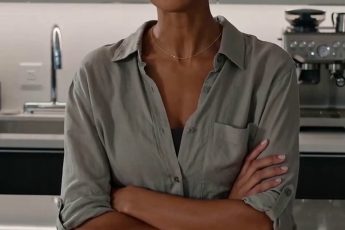
The woman in the fluorescent yellow visor planted herself directly in June’s path on the boardwalk, one hand on her hip, the other pointing an accusatory finger at the abandoned beach chair.
“Ma’am, that spot’s been empty for two hours. Just a paperback and a pair of sandals. We’ve got people from Portland driving three hours to get a view like this, and you’re holding a front-row seat for your footwear.”
June didn’t argue. She scooped up her worn-out Birkentocks dusted with sand, tucked the dog-eared novel under her arm, and folded the low-slung beach chair, the aluminum frame clacking in protest. The Oregon coast in August was supposed to be a refuge of salt air and silence. Instead, it felt like navigating the world’s most passive-aggressive DMV line, only with more seagulls and the constant, low-grade hum of other people’s anxiety.
She walked back toward the little inn set back from Highway 101, past the hand-painted signs for saltwater taffy and the fresh seafood market where the owner stood outside, smoking a clove cigarette and muttering at the clouds. The whole town of Newport had a rough, unpolished charm, a place where the fog horn was the real town clock and the sun felt like a rumor that occasionally proved true. June liked it because no one here expected her to be anyone in particular. She was just a woman in her early forties in a faded OSU hoodie, a week into a solo vacation she’d booked on a whim after putting down her fifteen-year-old golden retriever. The grief had been a quiet, heavy thing, and she’d needed a landscape that matched it: vast, gray, and unbothered.
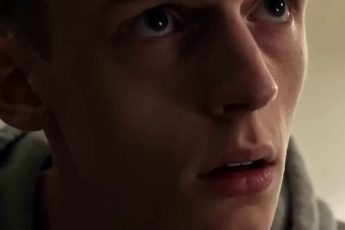
On the porch of the “Captain’s Rest” inn, a man was leaning against the cedar siding, wiping the rain spray off a pair of expensive sunglasses. He wore a navy blue quarter-zip that looked absurdly clean and brand-new Timberland boots that had clearly never seen mud. He was tall, with a runner’s lean build that was starting to soften around the jawline, the temples threaded with a shock of white hair.
When he turned and saw her, his hand froze mid-polish on the lens.
June felt the air leave her lungs, a physical vacuum forming in her chest. It wasn’t a metaphor. The blood drained from her face so fast she felt dizzy. Eighteen years. It had been eighteen years since Kyle Donovan had stood in a rented tux in his parents’ backyard in Bend and told a screaming match of aunts and uncles that he just “couldn’t do this,” before walking to his pickup truck and driving away two hours before the ceremony was supposed to start. He hadn’t left a note on a ktichen counter. He’d left a voicemail on her father’s landline, and she’d had to play it on speakerphone in a room full of her bridesmaids. The memory was a specific, sharp-edged piece of shrapnel she’d long thought she’d bled out.
Now the ghost in the quarter-zip was walking toward her, a practiced, sheepish smile spreading across his face.
“June. Oh my god, June. I thought I was seeing things in the coffee shop this morning. I told myself, ‘No way, she lives in Boise now.’ But look at you. You look fantastic. Exactly the same.”
She didn’t feel fantastic. She felt like a specimen pinned under glass. “Kyle.”
Room 5 of the Captain’s Rest was a snug space with a lumpy, quilt-covered bed and a window that framed the moody, churning Pacific. The radiator ticked in a maddeningly random rhythm. An hour after the porch encounter, a knock came, three soft, polite raps that she knew were coming.
He was holding a brown paper bag from the wine shop down the street, a bottle of Pinot Noir sticking out the top.
“I asked the lady at the front desk which room was yours. Hope you don’t mind. Told her I was an old friend from high school.” He stepped inside, filling the small room with the scent of cedarwood cologne and damp wool. He looked around, his gaze catching on the dog-eared book on the nightstand, the bottle of generic ibuprofen. “Cozy.”
“I was about to take a nap.”
“No, you weren’t.” He sat down in the only armchair, leaving her to perch stiffly on the edge of the bed. He poured the wine into the hotel’s two cheap plastic cups without asking. “Look. I know that… I know what I did was a nuclear-level disaster. I’m not here to pretend it wasn’t. I’ve run that day through my head a thousand times. What I’d say if I ever saw you again.”
He leaned forward, elbows on his knees, turning the cup in his hands. “I was a kid. My dad was breathing down my neck to take over the dealership, his partner was trying to screw us on the buy-in, there was talk of a lawsuit. It felt like the walls were caving in. I genuinely, in my stupid twenty-three-year-old brain, thought I was doing you a favor. That I was a sinking ship and I was cutting you loose to save you.” He gave a rueful little laugh, a dry, empty sound. “Heroic, right?”
June just watched him. The rain had started again, streaking the glass in long, distorted rivulets. The arrogant, charismatic boy she’d been head-over-heels for had become this… middle-aged man, doing a polished performance of regret. The lines on his face were deep, but his eyes had the same restless, searching look, the look of a man always scanning the room for the better deal.
“The next day, at the salon,” June said, her voice low and even, “my mother had a full-blown panic attack. They had to call an ambulance. I was still in my slip. I rode with her to St. Charles, holding her hand, while my maid of honor stayed behind to call the guests. One hundred and twenty people, Kyle.”
His face flickered, a brief, genuine crack in the smooth façade, but he recovered quickly. “I know. I know, June. You can’t fix the past. I can’t. But I can do everything in my power to make the future right. Let me. I’m not the screw-up I used to be. The string of dealerships is solid. I just finalized my divorce. No alimony, no kids, it’s all clean. I’ve got a house in Bend with a view of the mountains that’ll knock your socks off. I’m here for a week, at the big resort up the road. A suite. I can have another one next to mine by tomorrow morning.”
He stood up and walked to her, crouching down so he was just below her eye level, a gesture so practiced it looked like a scene from a movie he’d directed. “Come on. One dinner. That’s all I’m asking. Let me prove to you that people can change.”
The next day, the lady who ran the pastry shop on the corner, a stout, booming woman named Dottie who wore a different animal-print fleece every day, cornered June by the napkin dispenser.
“So a little bird told me you got a secret admirer,” Dottie said, not even trying to hide her grin as she boxed up a marionberry scone. “Black Range Rover, shiny enough to blind you. All the ladies at the Quilt Shop were talking about it. He asked Irene down at the front desk if you were single. He’s a persistent one, isn’t he? Good for you, honey. A man doing that much chasing in this day and age? That’s a rare find. You should grab that with both hands.”
June paid for her scone with a tight-lipped smile and walked outside into the weak, watery sunshine. The whole town, with its harmless gossip and well-meaning nudges, was already writing the happy ending for her. The lonely, sweet woman rescued by the wealthy, handsome ex with a heart full of gold. It was a neat little story. It just wasn’t hers.
Kyle intercepted her that afternoon at the marina, where she’d been watching the fishermen unload their catch. The sea lions barked on the docks, a chaotic, guttural chorus. He stepped out of his pristine Rover, blocking her path.
“I’m not taking no for an answer,” he said, a harder edge in his voice now, the charming smile a little too tight. “I flew my Cessna up just for this. Just to see you. Dinner tonight, at the Clearwater. It’s the only four-star place within fifty miles. I have a table on the patio.”
“And if I’d rather eat takeout in my room and watch a movie on my laptop?” June asked, her grip tightening on the straps of her backpack.
His smile faltered for a fraction of a second, a flash of genuine, cold annoyance in his eyes before he smothered it. “Then you’d be doing it to punish me, not because you want to. You always did this, you know. Took something simple and made it a test. A moral stand.” He shook his head, the gesture dripping with condescension. “Let’s just… stop. Let’s just stop living in the past. I’m offering you a life. A real, substantial, comfortable life far away from this.” He gestured dismissively at the fishing boats and the rusty metal barrels.
That was the moment the last ghost of doubt in June’s mind vanished.
—
On their penultimate day, the fog had finally rolled back, leaving a crisp, brilliant blue sky over the coast. The small inn was quiet, the other guests having gone on a whale-watching tour. June was sitting on the back patio in an Adirondack chair, a mug of tea cooling in her hand. She heard the crunch of tires on gravel. The black Range Rover swung into the parking lot.
Kyle got out, this time without the wine or the charming smile. His movements were brisk, officious. He walked over to her and stood there, blocking the sun.
“I’m leaving tomorrow morning,” he said, his voice stripped of its practiced warmth. “Last chance. No games. No dinner if that’s too much pressure. Just a simple answer. Are you willing to look forward, or are you going to spend the next two days here and then go back to your… quiet, empty house in Boise and pretend you’re better than a second chance?”
June unfolded herself from the chair and stood up to face him. She felt remarkably calm, as if a long, low-grade fever had finally broken.
“I have thought about it, Kyle,” she said. “Here, let me show you what I came up with.”
A flash of triumph sparked in his eyes. He thought he’d won. “That’s my girl.”
“Don’t,” she said, the word so sharp and sudden it froze him mid-step. She reached into the pocket of her hoodie and pulled out her phone, but she didn’t unlock it. She just held it, a prop. “You didn’t do me a favor, you didn’t ‘save’ me from a sinking ship. You were a coward who couldn’t face a difficult conversation and you paid for your own peace of mind with my total humiliation. You didn’t leave a note. You left a voicemail with four words: ‘I can’t do this.’ Click.”
He opened his mouth, but she kept going. “So I spent eighteen years building a life. Not a loud one, not a flashy one. But a life that was mine. I have a career I’m proud of. I have friends who would drop everything and drive three hours if I called. I bought my own house, Kyle. A tiny two-bedroom Craftsman with a porch swing and a garden where I planted a dogwood tree over Ollie’s ashes. It’s a good life. It’s solid. And you can’t just pull up in your Range Rover with a bottle of wine and a rehearsed apology and expect to be handed a seat in it. You are not a missing piece. You’re a loose cannon.”
His face had gone very still, the mask finally, truly off. The charming, remorseful prodigal son was replaced by an icy, impatient man who was not used to being told no. “You’re really going to do this? Stand here in this no-name town at your age and let your pride talk you out of a life of comfort? You’re being a fool, June.”
“No,” she said, her voice soft but unbreakable. “I was a fool twenty-three years ago when I said yes to you. I’m not making that mistake again. Goodbye, Kyle.”
He stared at her for a long, heavy moment, his jaw working. Then he gave a short, mirthless laugh, shook his head, and turned on his heel. The Range Rover’s engine turned over with a quiet, powerful roar, and he was gone, kicking up a spray of gravel that settled slowly in the still air.
—
The morning of her departure, the fog had returned, soft and quiet. Irene from the front desk, Dottie from the bakery, and a rotating cast of other inn guests had spent the last day giving her looks ranging from pity to outright disbelief. She’d heard the whispered “missed her chance” and “so picky” more than once.
June didn’t care. She packed her small suitcase, the same one she’d arrived with. She stripped the sheets from the bed, a habit from a lifetime of not wanting to be a bother, and left the key on the desk.
Before walking to her Subaru, she took one last walk down to the beach. The tide was out, leaving the sand slick and perfectly smooth, reflecting the pale gray sky. The air was sharp and clean, smelling of cold salt and deep ocean. She walked to the water’s edge and just stood there, her hands in her pockets, no phone, no book, nothing.
A little boy in a bright yellow raincoat was running nearby, chased by a golden retriever with a graying muzzle who bounded with the clumsy, joyful energy of a much younger dog. The boy tripped and fell, landing on his hands and knees in the wet sand. The dog immediately stopped, trotted back, and licked the boy’s face, tail wagging furiously, until the boy’s teary wails turned into giggles.
June watched them for a long time. Then she turned and walked slowly back up the wooden steps to the parking lot, the fog closing in behind her. Her life in Boise was waiting for her. Quiet, solid, and full of space for what was yet to come.