My wife Kate and I were at my parents’ house in Columbus, Ohio for my mom’s sixty-fifth birthday. I’d spent the whole drive over rehearsing how to bring it up. Not because I was nervous about what my dad would say. I was nervous about Kate.
She was in the kitchen with my mother, dicing onions the exact size I like them. That’s Kate. No matter what’s going on, she does the small things right. My mom was perched on the stool by the counter, sneaking spoonfuls of the gravy she wasn’t supposed to be making on her own birthday. Through the doorway I could see the two of them moving around each other like they’d been doing it for twenty years, not ten.
My brother Danny was in the living room, talking too loud about his new truck. His wife Jenna kept checking her phone. The whole family around one table, the way my dad likes it.
I waited until the roast was served.
“Where’s your sister?” Dad asked, cutting into his meat.
“She couldn’t make it,” I said.
Jenna snorted. “What’d she break this time? A nail?”
“Jenna,” Danny muttered.
“She’s got some things going on,” I said, keeping my voice even.
My dad set his fork down. “What kind of things?”
That was my opening. I’d told myself I’d say it plain and quick, like pulling off a bandage. But when I opened my mouth, what came out was worse than I’d planned.
“She owes money. A lot of it. The bank’s calling, and some of those calls aren’t from the bank anymore.”
The table got quiet. You could hear the ceiling fan squeak in the hallway.
“How much?” Dad asked.
“A hundred and ninety thousand.”
My mother made a small sound in her throat. I couldn’t look at her.
“I co-signed on the business loan,” I said.
“You what?” That was Kate. I hadn’t heard her come in from the kitchen. She was still holding the serving spoon.
“I co-signed. Two years ago, when Vicky was trying to open the boutique.” I turned to face her. “I thought it would be fine.”
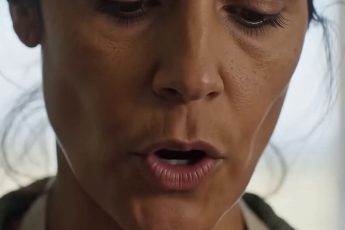
“You never told me,” Kate said. Her voice wasn’t loud. That was the thing. When Kate gets really angry, she goes quiet, like all the air leaves the room.
“Because I knew you’d worry,” I said. “And it was fine. Until it wasn’t.”
My dad leaned back in his chair. “How bad is it really?”
“The business failed,” I said. “The building’s being sold at a loss. The lender is coming after me because Vicky’s got nothing left. If we don’t settle in the next two months, they’ll take it to court and garnish my wages.”
“Garnish your wages,” Kate repeated, like she was testing the words to see if they were real.
I turned back to the table. “There’s a way out. We sell the rental.”
Kate’s grandmother’s condo. On the north side, near the river. Two bedrooms, one bath, a view of the parking lot, and a window box where her grandmother’s geraniums still came back every spring no matter how badly the tenants treated them. Kate grew up in that condo. It was the only thing she had left from her mother’s side of the family. After we got married, she refused to sell it. Rented it out instead and put every penny toward our mortgage.
“That’s not ours to sell,” Kate said.
“It’s our family’s,” I said. “You, me, the kids. And right now our family’s the one on the hook.”
“No.” She was already shaking her head. “Your name isn’t on that deed. It’s not ours. It’s mine.”
“Kate.”
“Don’t ‘Kate’ me in front of your parents.”
I looked at my dad, but he was studying his plate like it held the answer to the national debt. My mom had both hands wrapped around her wine glass.
“I already told Vicky I’d help,” I said.
“Then help her. Get a second job. Sell the boat. Sell the damn truck you just bought yourself for Christmas.” She was pointing at me now with that spoon. “But you are not selling my grandmother’s home.”
“It’s a condo,” I said. “And we haven’t lived there in eight years.”
“You think that matters?” Her voice cracked. “That’s the last piece of my family. The only thing left with their name on it. You want to take that away so Vicky can walk away clean from another one of her disasters?”
“She’s my sister.”
“And I’m your wife.”
That landed. The whole room went still. I could feel the roast turning to lead in my stomach.
Vicky. Three years younger than me. The baby. Mom always said she was born two weeks late because she didn’t want to come into the world before she was absolutely ready. Nothing’s changed. She breezes in, burns through money like birthday candles, and breezes out again. The boutique was the fourth thing she’d started and abandoned. Before that came the catering company. Before that, the yoga studio. Before that, the online crafts store where she sold hand-painted birdhouses.
Every time, she’d called me. And every time, I’d jumped.
Why? Because when we were kids, I broke my arm falling out of the oak tree in our backyard, and Vicky sat with me in the emergency room for four hours while Dad was stuck in traffic on I-71. She was nine. She told me knock-knock jokes until the pain medicine kicked in. I remember thinking: this is what you do for people you love. You sit with them. You show up.
I carried that into every bad decision she ever made. I showed up. I co-signed.
And now I was sitting at my mother’s birthday dinner, watching my wife look at me like I was a stranger who’d just asked for her bank password.
“We need to talk about this at home,” I said.
“No,” Kate said. “We need to talk about this now. In front of your parents, since you decided to bring it up here.” She put the spoon down on the table, right next to my plate. “Tell them the rest.”
“There is no rest.”
“Tell them what you told me when we got married.”
I couldn’t remember. Honestly couldn’t.
“You said,” Kate went on, “that her grandmother’s place was off-limits. That it was her legacy. That you wouldn’t touch it even if we were broke.” She turned to my parents. “That was the night we signed the prenup for the condo.”
The word prenup hung in the air like a smoke alarm going off. Nobody moved.
“You signed a prenup?” my mom asked.
“Kate’s grandmother’s lawyer insisted,” I said. “The condo stays in Kate’s name. It’s hers. I agreed. I didn’t think it would ever come up.”
“It’s come up,” Kate said.
The thing is, she was right. I’d made that promise. Not because I imagined a day like this, but because at twenty-eight years old, I wanted to be the guy who said yes. Yes to keeping her safe, yes to respecting the one thing her family left behind. Saying yes felt good. It cost nothing.
Now it cost everything, and I was trying to get out of it.
“The bank doesn’t care about promises,” I said. “They care about a hundred and ninety thousand dollars.”
“Then take it out of your name,” Kate said. “Go to Vicky and tell her to refinance. Tell her to get a job. Tell her to sell that Lexus she leased last fall.” Her voice was shaking. “You want me to pay for your sister’s choices. That’s what this is. You want me to take the one thing my grandmother built and hand it over to a woman who’s going to lose it anyway.”
My dad cleared his throat. “Nobody’s decided anything yet.”
“Oh, he’s decided,” Kate said. “He was just waiting for the roast to cool down before he let me know.” She pushed her chair back. “Excuse me.”
She went back into the kitchen. I could hear water running, the clatter of dishes. My mom gave me a long look, then got up and followed her.
Danny was already pulling out his phone. “I’m not getting in the middle of this.”
“You’re already in it,” I said. “She’s your sister too.”
“I know. But I’m not the one who signed a piece of paper that could wreck his marriage.” He looked up at me. “Why didn’t you tell Kate back then?”
“I didn’t think it would blow up.”
“Right. Because Vicky’s never blown anything up.”
I heard the back door open, then close. Kate was outside. I went after her.
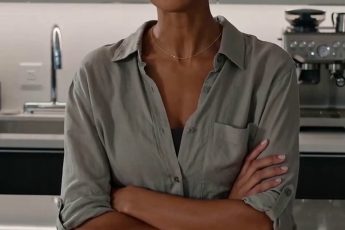
She was standing on the patio, arms crossed, looking out at the garden my mom’s been keeping alive for thirty years. Tomato plants staked in neat rows. Peppers. That ugly ceramic frog my dad bought at a yard sale in 1997. The air smelled like cut grass and charcoal from the neighbor’s grill.
“I’m not trying to take your grandmother’s legacy,” I said.
“You literally asked me to sell it.”
“I asked you to help save us from losing everything else. The house. The kids’ college fund. My paycheck.”
“Then we sell the boat,” she said. “We sell the house before we sell that condo.”
“The house is underwater. The boat’s worth eight grand, maybe. It doesn’t even make a dent.”
She turned to face me. “Then we go to the bank and tell them we need more time. We refinance. We do something that doesn’t involve my grandmother’s name being erased from this town.”
“Her name’s not on the condo. That’s the point. It’s an asset. It’s just an asset.”
“It’s not just an asset.” Her voice cracked. “You think I haven’t thought about this? You think I don’t know what it’s like to be the one who ruins family? My dad walked out when I was six. My mom worked double shifts at the hospital in Grandview. That condo is the only thing she ever owned. She said it was the one thing nobody could ever take from us.” She took a shuddery breath. “And here you are, trying to take it.”
That stopped me cold. Her mother. The way she’d say it, with that half-smile, whenever she visited: *This is the one thing they can’t take.* I’d heard her say it a dozen times. Kate’s mother died four years after our wedding. Lung cancer. Kate took a semester off to take care of her.
And I was asking her to sell the only thing her mother had left behind.
But the bank didn’t care about any of that. Neither did the collection notices, which were now coming addressed to me. The last one had said *final notice* in red letters, like something from a bad movie.
I told her about the letter.
“Show me,” she said.
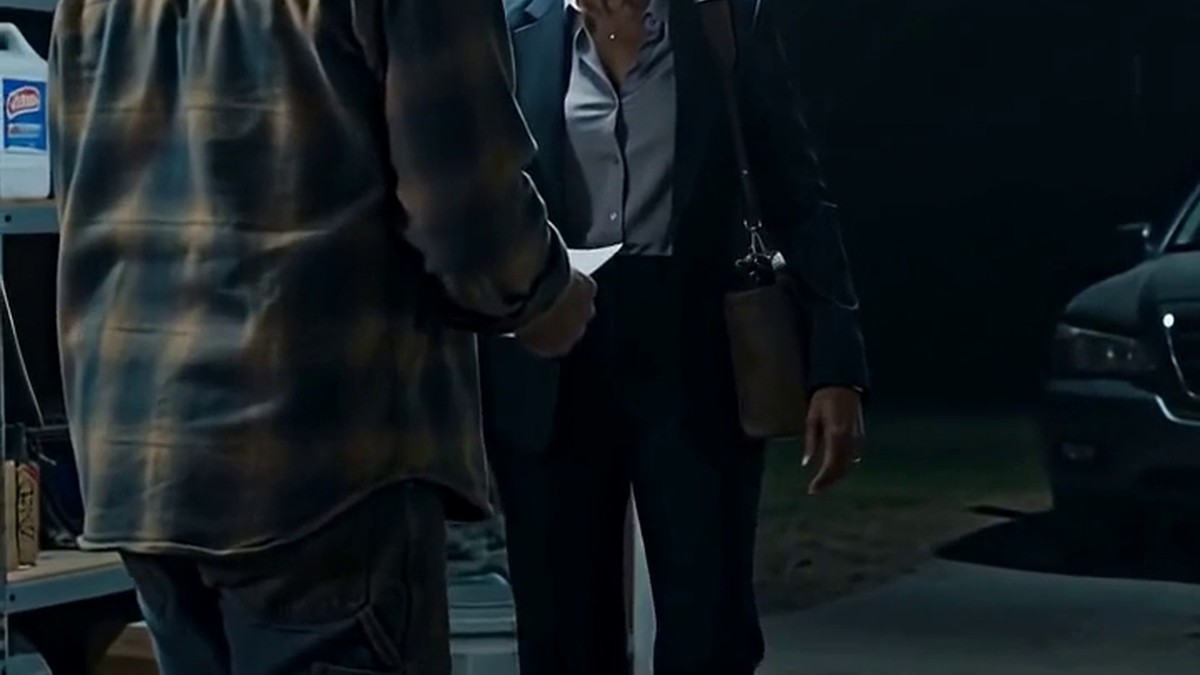
“It’s in the truck.”
“Then we go to the bank on Monday,” she said. “Together. And we figure out what’s real and what’s just Vicky panicking.”
“I already know what’s real.”
“No, you know what Vicky told you. There’s a difference.” She pulled the screen door open. “I’m going back inside. It’s your mother’s birthday.”
She walked past me. And I stood there on the patio, next to that ugly ceramic frog, realizing that the two of us were now living in two completely different movies. In mine, the house was on fire and I was trying to put it out with whatever I could grab. In hers, the fire was my idea.
By the time I got back to the table, everyone had moved on to cake. Vicky texted me around nine: *Did u ask them yet?*
I didn’t answer.
That night, Kate slept in the guest room.
On Monday, Kate didn’t go with me to see Vicky. She went to see a lawyer.
I didn’t know that then. I found out later, after the papers came.
The papers arrived on a Thursday afternoon, in a plain manila envelope. I was in the garage, trying to finish a cabinet I’d promised my dad I’d help him install. The mail carrier pulled up, beeped, and handed me the envelope along with the usual stack of bills.
I ripped it open right there, sawdust on my fingers.
It was a legal notice. Kate was filing for separation. Not divorce — not yet — but a formal separation, with a request for a temporary order protecting the condo from “marital disposal.”
She’d also included a copy of an email exchange.
Vicky had written to Kate three weeks before the birthday dinner. I didn’t know they were in contact. In the email, Vicky asked Kate to “please consider” selling the condo to cover “our shared family emergency.” Kate replied: *It’s not ours. It’s mine.* Vicky wrote back: *If you loved my brother, you’d do this.*
Kate forwarded the whole thread to her lawyer. To her credit, she included me on the BCC.
All this time, I thought I was the only one Vicky was calling. I thought I was shielding Kate. Turns out Vicky had been working both ends, pushing Kate when I wasn’t looking, and telling me how patient she was being.
I sat in the garage for a long time. The cabinet door I’d been sanding had a crack in the corner. I kept running my thumb over it, like if I pressed hard enough, it would close up.
Eventually I called Vicky.
“The papers came,” I said.
“What papers?”
“Kate filed for separation.”
A pause. Then: “She’s bluffing.”
“She’s not.”
“Paul, come on. She loves you. She’s just trying to scare you into backing down.”
“She already backed me down, Vicky. She’s not selling the condo. The court just made sure of it.” I squeezed the phone. “And you and I have a problem.”
Vicky’s voice changed. It always did when the charm stopped working. “What do you mean?”
“The hundred and ninety thousand. You haven’t been honest with me.”
“I’ve been perfectly honest.”
“You told me the debt was 190. The lawyer pulled the lien. It’s 276.” I flipped through the pages from the envelope. “Two hundred seventy-six thousand, four hundred and twelve dollars. With your lease payment on the Lexus still coming out of the business account.”
Silence. The good kind.
“You told me it was 190, Vicky.”
“It was, before the penalties.”
“And the Lexus? You told me you sold it.”
She took a breath. “I was going to.”
That was the moment. Not the big explosion. Not the shouting match. Just a quiet Thursday afternoon, in the garage, with sawdust on my jeans, holding a legal notice in one hand and my phone in the other, realizing that my sister had lied to me about how much she owed, lied about the car, and had been quietly pressuring my wife behind my back. And I had been ready to burn my marriage down to keep her warm.
I said, “I’m going to the lawyer tomorrow. I’m finding out how to get my name off this loan.”
“You can’t just take your name off a co-sign.”
“Then I’ll declare bankruptcy. It’ll ruin my credit for seven years, but it won’t gut the condo.”
“Paul.” Her voice went sharp. “You’re not serious.”
“I’m exactly that serious,” I said. “I’ve got a wife who filed for separation because I backed the wrong person. I’ve got two daughters who ask me every night why Mommy’s sleeping in the spare room. You want to know what 276 thousand feels like? It feels like the guest room door closing at midnight.”
She hung up.
I didn’t call her back.
The next morning, I drove to Kate’s lawyer’s office in Dublin. The one off Sawmill Road, next to the old Bob Evans. I remember the smell of coffee in the waiting room. I sat there for twenty minutes, staring at a fake potted fern, going over it again and again in my head.
When the lawyer came out, he shook my hand like I was a client instead of the problem.
“I want to put something on the record,” I said.
He listened. I told him everything: the co-sign, the lie about the balance, the Lexus, the emails to Kate. I signed an affidavit. I said I would not contest the separation. I would not touch the condo. I would cooperate with any restructuring of our finances that protected Kate and the girls.
Then I drove to Vicky’s place. She lives in a two-bedroom in Westerville, near the reservoir. The Lexus was in the driveway. It wasn’t sold. It was clean, like she’d just had it detailed.
I knocked.
She came to the door holding a bowl of those little goldfish crackers, the kind we used to eat on the couch watching cartoons after school. For a second, she almost looked like my sister.
Then she said, “You’re not taking your name off that loan. You can’t. They’ll come after me if you do.”
“That’s what happens when you don’t pay,” I said.
“I don’t have the money.”
“Then sell the car. Move back in with Mom and Dad. Get a job at Meijer. Do something besides calling me every time you need a rescue.”
Her face went hard. “You promised.”
“I promised to help my sister. I didn’t promise to disappear into her debt while my family falls apart.”
I didn’t step inside. I stood on the front porch, and I said what I’d practiced in the parking lot of the Bob Evans: “The loan is yours now. All of it. I’m filing to be removed as co-signer, and if the bank won’t do it, I’ll take the bankruptcy and take my name off everything else too. What happens to you after that is up to you.”
I watched it land. I watched her understand that the safety net was gone.
She didn’t cry. She didn’t yell. She closed the door in my face, very slowly, like she wanted me to see it happen.
I stood there for a minute. A blue jay was going crazy in the pine tree by the driveway. The sprinklers came on across the street. Somewhere a kid was practicing trumpet, same three notes over and over.
Then I got in my truck and drove home.
Kate was in the kitchen when I walked in. She was at the counter where she’d been that night at my mom’s, dicing onions. Same exact spot. This time she didn’t turn around.
I set the manila envelope on the counter next to the cutting board. Inside was the signed affidavit, the bankruptcy paperwork I’d started, and a cashier’s check for eleven thousand dollars.
“What’s this?” she asked.
“The boat,” I said. “Sold it this morning. Put it toward the loan.”
She put the knife down.
“I’m not asking you to sell the condo,” I said. “I’m not asking you for anything. I’m telling you what I did today.” I paused. “I went to your lawyer. I made a statement. I’m not fighting the separation. I’m not touching the condo. I’m taking the bankruptcy, and I’m getting my name out of Vicky’s mess.”
The kitchen was so quiet I could hear the neighbor’s dog two houses over, got a bark like a rusted swing.
Then Kate turned around. Her eyes were red, but she wasn’t crying. She was done crying. She’d moved past it to something colder.
“Paul,” she said, “you don’t get to fix this by selling the boat.”
“I know.”
“You don’t get to fix it at all. Not like that.”
“I know.”
“You hid a quarter-million-dollar obligation from me for two years. You told your sister’s side of the story before you told me. And then you came to your mom’s birthday dinner and asked me to sell the only thing my mother ever owned.” She took a breath. “I filed those papers because I couldn’t trust you. And I still don’t.”
“Then let me earn it back,” I said. “Whatever that looks like. I’m not going anywhere.”
She looked at the check. Eleven thousand dollars. The boat I bought when I turned thirty, named *Second Wind*. I used to take the girls out on the Scioto every July. The boat was my favorite thing I owned.
The condo was hers. The boat was mine. I sold the boat.
Kate picked up the envelope and the check. She walked past me to the hallway closet and got down the fire safe, the one where we keep the birth certificates and the deed to her condo and the title to my truck. She opened it, put the envelope inside, and locked it.
Then she put the key back on the hook above the door.
“The lawyer’s office called me,” she said. “They told me you came in.”
I waited.
“They said you signed an affidavit. That you weren’t contesting anything.” She was facing the closet door, not me. “They said you told them the bankruptcy wouldn’t touch the condo because it’s in my name. Protected.”
“That’s right.”
“Why’d you do that?” Now she looked at me. “After everything you said at your mom’s.”
“Because you were right.” I said it like it was the most ordinary thing in the world. “It was the one thing your mother said nobody could ever take. And I was about to be the one who took it.”
She didn’t say anything. But she left the key on the hook. And that night, when I got into bed, there was a cup of tea on my nightstand, still warm.
That was eleven weeks ago. The bankruptcy case is still moving through court. Vicky ended up selling the Lexus. She’s living over by the reservoir, working the early shift at a Home Depot in Hilliard, and our mother won’t loan her money anymore after I told her the whole story. We talk now maybe twice a month, and it’s mostly about our parents’ appointments and whose turn it is to bring the potato salad to the Fourth of July cookout.
Kate and I are still in the same house, but we’re not all the way back. Some nights she sleeps in the guest room. Some nights she doesn’t. She hasn’t worn her wedding ring since the separation papers were filed. But last week, I heard her on the phone with her sister, and she said, “He sold the boat.”
And then, after a long pause: “I know.”
On Saturday, she asked me to help fix the window box at the condo. The tenants were gone. The place was empty for the first time since her grandmother died. We stood in the living room where she used to do her homework on a fold-out table, and she started telling me about her mother. How she used to sit by that window and watch the cardinals in the oak tree. How she’d leave the radio on all night because she couldn’t sleep alone. How her grandmother’s geraniums never died, no matter who was renting the place.
I didn’t try to fix anything. I just listened.
When we left, Kate locked the door behind her with a key she carries on a chain around her neck. She hasn’t given me one. That’s fine. I can wait.
Some things are hers. Some things she keeps. And some promises, it turns out, are exactly as strong as the day you make them.