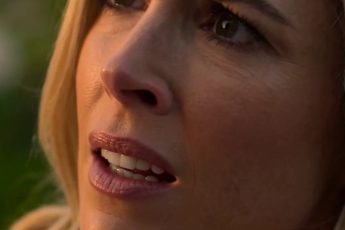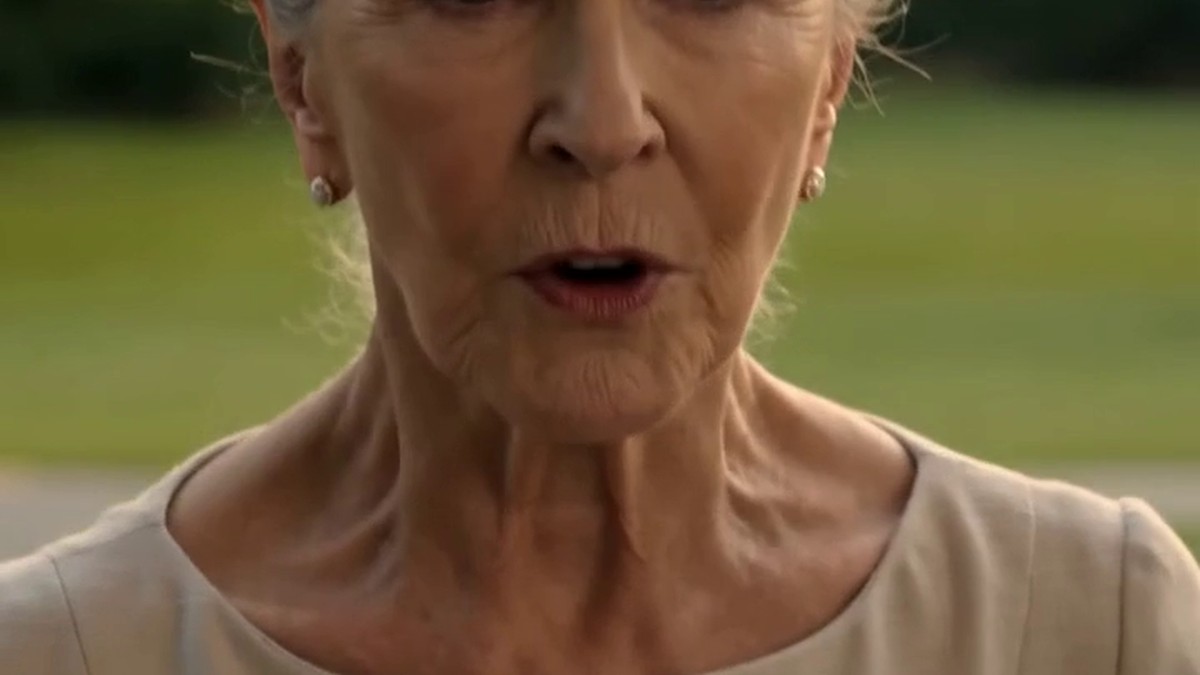
The Georgia sun spilled across the sprawling lawn of the Prescott estate like honey, but Eleanor Prescott hadn’t felt its warmth in over a decade. From her wheelchair on the flagstone patio, she watched the Spanish moss sway in the live oaks and felt only the familiar ache of a life stolen. Her legs had been useless since the stroke, and her heart had turned to stone somewhere along the way—stone that now cracked at the sight of the child standing before her.
The girl couldn’t have been more than seven. Faded floral dress, bare feet caked with red clay, hair a wild tangle of dark curls. She’d wandered up the long drive an hour earlier, and the housekeeper, Ida, nearly shooed her away before Eleanor, desperate for any reprieve from the silence, told her to let the child be. Now the girl stood inches from the wheelchair, her huge brown eyes fixed on Eleanor with a calm that didn’t belong to someone so young.
“If you can heal me,” Eleanor said, her voice cracking like old leather, “I will leave you everything. The house, the land, the money—all of it. I swear.”
She expected the child to flinch at the weight of the offer, maybe smile or turn greedy. Instead, the girl simply tilted her head, a tiny furrow between her brows. Then she spoke, her voice soft as rain on cotton.
“You don’t need to give me anything. Just get up.”
The words hung in the humid air. At the French doors, Ida pressed a hand to her mouth, her lined face a mask of shock. Eleanor’s throat tightened. Get up. As if it were that simple. As if a thousand nights of praying and a hundred specialists hadn’t told her she’d never walk again. But something in the child’s gaze made her believe—just for a heartbeat—that maybe simple was exactly what it took.
Trembling, Eleanor gripped the arms of the wheelchair. Her knuckles went white. She pushed, her whole body straining, and for one glorious moment she felt her thighs tense, her knees bend. She rose six inches before her legs buckled and she crashed back into the seat, gasping.
“I can’t,” she whispered, tears slipping down the creases of her face. “There’s no use.”
But the little girl didn’t even blink. She stepped closer and wrapped her small, grimy fingers around Eleanor’s hands. A sudden warmth flowed through the old woman’s palms, up her wrists, into her chest. It was like sunlight pouring into a room that had been dark for years.
“Try again,” the girl said. “And don’t doubt. Not even a little.”
Eleanor drew a ragged breath. She thought of her late husband, Charles, who’d wheeled her through this garden and whispered that one day she’d walk among the roses again. She thought of the daughter she’d lost to pneumonia when the girl was just this child’s age. And she thought of the countless nights she’d begged God for a sign. This child, barefoot and strange, felt like that sign.
She pushed again.
This time, her legs held. Her body, so long a prisoner, obeyed. Eleanor rose like a woman shedding chains, and when she stood fully upright, the little girl beamed up at her with tears that matched her own. Ida let out a strangled sob from the doorway. The garden seemed to hold its breath, and then the cicadas started their hum again, as if the world had simply continued after the miraculous.
The moment shattered like glass when a car door slammed in the front drive.
Ida hurried inside, and the little girl’s smile faded just a fraction. Eleanor, still standing on her own two feet, grabbed the child’s hand. She knew that sound—the aggressive thud of her son Harrison’s Land Rover. He visited only when he wanted something, and lately he wanted her declared incompetent so he could take control of the assets.
Harrison Prescott stormed through the house and burst onto the patio, a tall man in an expensive polo shirt, his face already flushed. He stopped dead when he saw his mother standing.
“What the hell?” He blinked, then recovered with a lawyer’s quickness. “What kind of stunt is this? Who’s the kid?”
Eleanor’s voice was steel. “This child healed me. I’m walking, Harrison. You can see it.”
Harrison laughed, a harsh bark. “Healed you? Mom, you’ve fallen for a scam. This little grifter probably hypnotized you or something. I’m calling Dr. Sanders, and then we’re calling the police. She’s trespassing.”
The girl said nothing, but her hand tightened around Eleanor’s. That’s when Eleanor noticed the child’s skin had gone clammy, her face pale. Whatever power she’d given drained her, and she swayed on her feet. Eleanor scooped the girl up—her arms remembered how to hold a child, even after all these years—and cradled her against her chest.
“Back off, Harrison,” Eleanor said, her voice low and dangerous. “You take one more step toward this child, and I will write you out of everything right now. Don’t test me.”
His eyes narrowed. “You’re not in your right mind. You gave a stranger your word about the inheritance? That’s exactly what the competency hearing will examine. I’m your son, the only family you have left. I’m trying to protect you.”
“The only family I have left?” Eleanor repeated bitterly. “You haven’t visited me in six months except to thrust legal papers under my nose. This girl looks at me and sees a person, not a bank account.”
The child stirred, and her dark eyes fluttered open. She looked from Eleanor to Harrison and back, her expression still that eerie, bottomless calm. “Don’t be afraid,” she whispered to Eleanor. “He can’t hurt you if you don’t let him.”
Harrison sneered, pulling out his phone. “That’s it. I’m calling the sheriff. We’ll see what a judge thinks about a magical street urchin and a woman who’s clearly having a breakdown.”
Eleanor felt the old panic rise—the terror of being wheeled away, of losing her voice, of being locked in a facility while Harrison sold the house she’d built with Charles. But then she looked down at her own legs, solid and planted on the flagstones. She felt the weight of the girl in her arms, a living reprieve. She had already walked out of the tomb; she wasn’t crawling back in.
She didn’t wait for the call to connect. With the child still in her arms, Eleanor took one deliberate step toward her son, then another. The motion was a miracle each time, but she didn’t stop. She walked right up to Harrison, close enough to smell his cologne and see the sweat on his upper lip.
“You listen to me,” she said quietly. “I will walk into that sheriff’s station myself. I will tell them you’ve been trying to steal my estate for years. I’ll show them the papers you had me sign while I was on pain medication. And then I’ll tell them the truth—that I was healed by this child, and that you tried to take her away from me. What do you think they’ll believe? A woman who can stand, or a greedy son with a stack of legal threats?”
Harrison’s face went through a dozen ugly expressions. The phone slipped from his fingers and clattered to the stone. For the first time in his adult life, he had no argument, because the evidence was walking toward him with fire in its eyes.
“Get off my property,” Eleanor said. “Now. And if I see you again without my invitation, I’ll have you arrested.”
He opened his mouth, then shut it. Finally, he turned and stomped back through the house, tires screeching a minute later.
Ida reappeared, wringing her hands. “Miss Eleanor, are you all right? Should I call a doctor? The child—”
Eleanor looked down. The girl was asleep, her breath steady, her color returning. “She’s exhausted, Ida. Help me get her inside. Put her in the blue room, the one with the window seat. Let her sleep as long as she needs.”
For three days, the child slept. A local doctor checked her and found nothing wrong, just profound fatigue. Eleanor sat beside the bed, able to walk now, able to care for someone else instead of being cared for. On the third morning, the girl’s eyes opened, clear and bright, and she smiled.
“You didn’t have to give me everything,” she said. “I only wanted you to be okay.”
Eleanor laughed, the first real laugh she’d had since Charles died. “You saved me from a prison I’d accepted for too long. The inheritance is yours if you want it, but I hope you’ll stay because you want to—not because of money.”
The girl’s name, it turned out, was Lily. She’d been living in a group home two counties over, and she had slipped away, following a feeling she couldn’t explain. Eleanor contacted the authorities, and after a long, complicated process that tested her newfound strength, she was granted custody. Harrison contested it in court, but he couldn’t compete with a woman who walked into the hearing on her own legs, tears in her eyes, speaking of a second chance at motherhood.
Lily never asked for the Prescott fortune. She cared more about the garden, where she planted sunflowers and talked to the bees. Eleanor watched her from the patio, standing tall, every morning a quiet miracle. Some neighbors gossiped, some pitied her for losing her son, but Eleanor had never felt more alive.
One evening, as they sat on the porch swing, Lily leaned her head against Eleanor’s shoulder. “Will you teach me to read?” she asked.
“Of course,” Eleanor said, and she realized that the greatest miracle wasn't the walking—it was the love that grew in the garden, where a child had simply said get up, and the world, for once, listened.