The number 51 bus was running late that Thursday, and the air inside smelled like wet wool and somebody's leftover meatloaf. MaKayla pressed her palm against the cold window and watched Baltimore slide past in gray slush. Seven months pregnant, feet swollen inside boots she'd bought two sizes too big at the thrift store on North Avenue, and her back was already sending little electrical complaints up her spine.
She had just settled into one of the front seats when the doors wheezed open at the light on Charles Street.
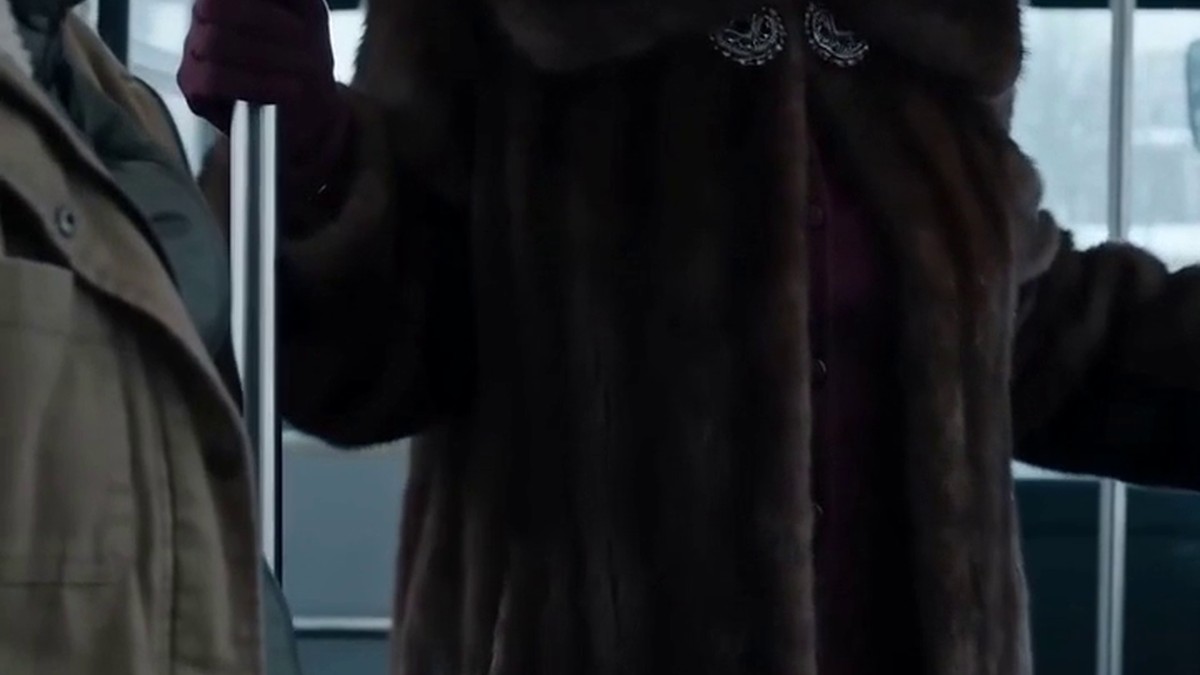
An older Black woman in a long fur coat and a burgundy church hat climbed aboard, gripping the rail with hands that had seen decades of work. The bus lurched forward. A teenager with earbuds kept his head down. A man in a security uniform pretended to be asleep. Nobody moved.
MaKayla sighed and stood up.
"Here you go, ma'am."
The woman turned to look at her. Not a quick glance — a long, searching look, the kind that makes a person check their own face for crumbs. Her eyes were dark and wet and full of some recognition MaKayla couldn't place.
"You're a good child," the woman said. Her voice had gravel in it, like an old Motown record. "You got your grandmother's heart."
MaKayla had never seen this woman before in her life.
They rode without talking. When the bus pulled up near Mercy Medical Center, the woman rose, touched MaKayla's shoulder with a gloved hand, and stepped off into the snow without another word.
Three stops later, MaKayla noticed the bulge in her coat pocket. She reached in and pulled out a small velvet pouch the color of a bruised plum. Inside was a brass key with a number etched into it — 447 — and a business card for a law office on St. Paul Street, with a single line written on the back in shaky cursive: *Ask for Mr. Okafor. Tell him the woman on the bus sent you.*
No check. No explanation. Just a key and a stranger's handwriting.
MaKayla sat on that rattling bus seat and thought about the two girls waiting for her at home.
Tiara and Tamara. Her twin nieces. The reason she'd never gone to community college, never taken the nursing job in Silver Spring, never let a man stay longer than a season.
She'd been twenty-two when her sister Deena crashed her car into a guardrail on I-95. Cops found a pipe in the cupholder. The girls were four years old, sitting on a neighbor's porch in matching pajamas, holding plastic ponies.
"Somebody's gotta take them," the social worker had said.
MaKayla had looked at the two small faces. She'd been twenty-two, working doubles at a diner on Eastern Avenue, renting a one-bedroom with a radiator that clanged like a church bell. But she'd signed the papers anyway. She'd become their guardian, their mother in every way that mattered.
Fourteen years she'd given them. Every Christmas, every school pageant, every fever at three a.m. She'd learned to braid hair from YouTube videos at midnight. She'd skipped dental appointments to pay for their dance lessons. She'd turned down a proposal from a decent man named Marcus because the girls "weren't ready."
Now they were eighteen. Seniors at Dunbar High. And three weeks ago, on a Friday night, they'd sat her down at the kitchen table with a sheaf of papers and a notary.
"We love you, Auntie Kay," Tiara had said, her long nails tapping the table. "But we're adults now. We need our space."
The paper was a quitclaim deed. They wanted her to sign over the row house on Ashland Avenue — the one she'd scraped together every paycheck for twelve years to buy, the one she'd put in their names "so you'll always have something."
"Just until we get on our feet," Tamara added, but she wouldn't meet MaKayla's eyes.
The next morning, MaKayla had found their Instagram stories. Tiara, laughing on camera: "About to be homeowner boo. Auntie finally getting the message."
It wasn't about space. Their boyfriends needed a crash pad. MaKayla knew it in her bones the way you know a storm is coming before the first drop.
So when the bus dropped her off that Thursday, she didn't go straight home. She took the twenty-minute walk to St. Paul Street, the velvet pouch clutched in her fist.
The law office was small, three rooms above a dry cleaner. Mr. Okafor was a narrow man in his sixties with reading glasses pushed up into gray hair. He looked at the key, then at the card, and something in his face went still.
"You're MaKayla," he said. It wasn't a question. "Mrs. Whitfield described you exactly. Down to the boots."
"You know her?"
"I represent her estate." He gestured for MaKayla to sit. "Mrs. Whitfield has been a client of this firm for eleven years. Two months ago, she came in and added a codicil to her will. A specific bequest, contingent on a condition she wouldn't fully explain — only that she'd know the right person when she saw one, and that person would receive a key to a safe deposit box at the Pratt Street branch."
MaKayla's mouth had gone dry. "Two months ago."
"She was already sick then. Pancreatic cancer, stage four. She told me she wanted to spend what time she had left riding buses around the city, looking for someone." He folded his hands. "She passed on November second. Her instructions were that if the intended recipient came forward with the key within ninety days, the bequest would be honored — no matter who else contested it."
"Someone's contesting it?"
Mr. Okafor's expression tightened. "A young woman filed a claim two weeks ago. Says she's a relative. We're reviewing it, but I'll be honest with you — the claim looks thin. Mrs. Whitfield had no children. Her only relatives died with her husband's side of the family in Ohio, and none of them have set foot in Baltimore in thirty years."
"What's the claimant's name?"
He checked a file. "Tiara Jackson."
MaKayla sat very still.
"You know her," Mr. Okafor said.
"She's my niece."
The lawyer took off his glasses and rubbed the bridge of his nose. "Then I'd say Mrs. Whitfield's instincts were better than most people's legal advice. Come with me to the bank. I'll need to verify your identity against the codicil, but if the description matches — and Mrs. Whitfield was very specific — this should move quickly."
At the bank, with Mr. Okafor's letter and MaKayla's driver's license laid out on the counter, a bank officer walked them both back to the vault. MaKayla slid the key into box 447. Inside lay a single manila folder.
Stock certificates. Municipal bonds. A deed to a small rental property in Fells Point, held jointly in Eleanor's name and her late husband's — the last piece of real estate she still owned outright. And a letter, handwritten in the same scratchy cursive as the business card, three pages long.
The letter explained everything.
The woman on the bus was Eleanor Whitfield. She'd ridden that route for weeks after her diagnosis, when the doctors told her she had maybe four months and she decided she'd rather spend them looking than waiting. She'd seen MaKayla give up her seat on five separate Saturdays. Seen her buy a sandwich for a man sleeping on a bench, seen her kneel down to retie a stranger's little boy's sneaker. Seen her at the laundromat, folding clothes for an elderly neighbor.
"I have no children," the letter read. "My son died in Desert Storm. My husband went two years later. I watched you and thought — there. Right there. That's the one my mama would've picked, if my mama were still around to pick anybody."
MaKayla stood in that cold vault room, fluorescent light humming, and pressed the back of her wrist against her mouth to keep quiet.
Eleanor's final paragraph changed everything.
"You carry other people's weight like it's your job," she wrote. "But you can't carry liars and thieves. Not even blood ones. Not forever. Mr. Okafor has instructions. Trust him."
MaKayla folded the letter along its worn creases and slid it back into the folder.
"She never said a check," MaKayla said quietly. "No cash?"
"Mrs. Whitfield believed cash disappears," Mr. Okafor said. "She wanted you to have something that couldn't be spent in a weekend. Something you'd have to learn to manage. She left instructions for me to help you do that, if you wanted the help."
MaKayla thought of the girls' faces the night they'd asked her to sign. "I want the help."
Within the week, Mr. Okafor had filed the paperwork to formally oppose Tiara's claim, backed by the bank's key-issuance record, the codicil, and a signed statement from the bus driver, who — it turned out — remembered Eleanor Whitfield boarding that route nearly every day that month and remembered MaKayla too, the pregnant woman who always gave up her seat.
That night, MaKayla didn't go home right away. She sat in a booth at Miss Shirley's on Cold Spring Lane and ordered a crab cake benedict she couldn't afford before and now, suddenly, might be able to. She ate slowly and watched families come and go.
At nine-forty, her phone rang. Tiara.
She let it ring eleven times before answering.
"Auntie Kay? Where you been? Tamara said you were at some law office downtown."
"I was."
"You signing the house over or what?"
MaKayla wiped her mouth with a napkin. "No, baby. I wasn't there about the house."
A pause. Tiara's voice sharpened. "Look, we need this. You said you'd always take care of us."
"I did take care of you." MaKayla's voice stayed even. "From the night your mama crashed that car on I-95. Fourteen years, Tiara. I'm still taking care of you."
Another pause. Then Tamara's voice came on, brittle and cold: "You can't just decide to keep the house, Auntie. It's in our names."
"That's right," MaKayla said. "It is. And I'm not touching it."
She let them sit with that.
"But I'm done paying for it. And Tiara — I heard about the claim you filed. On a dead woman's estate. A woman you never met."
Silence stretched long enough that MaKayla thought the call had dropped.
"That ain't — how do you even know about that," Tiara finally said.
"Because she was on my bus, baby. She was looking for me."
The next morning, MaKayla closed the joint account she'd shared with the girls for their school fees and emergencies. Four hundred and eleven dollars and some change. She moved it into a new account, sole owner, at a credit union on North Avenue.
Then she did what she should've done years earlier. She called a real estate attorney Mr. Okafor recommended — a woman named Dana, with a voice like a calm lake. MaKayla laid out everything: the house in the girls' names, the money she'd paid into it, the quitclaim deed they'd tried to get her to sign, the woman from the bus, the estate.
Dana listened without interrupting. When MaKayla finished, there was a soft click of a pen.
"I'll need your payment records," Dana said. "And that unsigned quitclaim deed. If they tried to pressure you into signing away equity you built, that matters. They can't force out the person who paid the mortgage for twelve years. Not that quick, and not like this."
MaKayla opened her bag. She had the payment records — every single one, printed and stored in a folder she'd been keeping since the first winter she made the down payment. She had the quitclaim deed, still unsigned, still nearly blank. She was learning to be the kind of person who keeps proof.
The legal fight took six weeks. Six weeks of court dates and certified mail and Tiara's phone calls that never once asked how the pregnancy was going. Six weeks of Tamara posting on Facebook about family loyalty and snakes in the grass. Six weeks of Mr. Okafor quietly working through Eleanor's estate on a separate but parallel track, gathering the driver's statement, the bank's log, a neighbor of Eleanor's who remembered her saying, over the fence, "I found her. The one on the bus."
In probate court, the judge reviewed the codicil, the bank's key-issuance record dated weeks before Eleanor's death, and the bus driver's sworn statement. Tiara's claim — built on a mailed letter from a company that scraped county property records for names that might connect to unclaimed estates — dissolved inside twenty minutes. She wasn't related to Eleanor Whitfield at all. She'd simply seen the surname on a public notice and gambled.
The judge dismissed the claim with something close to irritation in his voice.
In the separate title dispute over the row house, Dana was thorough. The court found the quitclaim deed had never been signed or recorded, and that MaKayla's twelve years of mortgage payments — documented, dated, complete — gave her equitable standing the girls couldn't simply vote her out of. The title was corrected. MaKayla's name went onto the deed as sole owner, with a small trust fund set aside for the twins that neither of them could touch until they turned twenty-five, funded from the sale of the Fells Point property, which had never belonged to the twins at all.
By late February, MaKayla stood in the bedroom she'd slept in for fourteen years and packed a single suitcase.
She was eight months pregnant now, the baby dropped low, her daughter — she'd already decided to name her Eleanor — pressing hard against her ribs some nights and low against her hips on others.
Behind her, the front door banged open. Tiara's voice, shrill with disbelief: "You're just gonna leave?! This is your house!"
MaKayla zipped the suitcase. She turned.
Tiara stood in the doorway, Tamara hovering behind her. The two of them looked like they'd just bitten into wax fruit.
"It's not going to be empty," MaKayla said. She picked up a folded document from the nightstand. "I'm donating it. There's a foundation Mrs. Whitfield set up years ago — the Whitfield Foundation, it houses refugee families while they get on their feet. A family's moving in the first week of March. Six kids. They got here in the fall with two suitcases and a grandmother who lost her leg to a landmine."
She handed Tiara the paperwork.
Tiara read the first page. Her lips moved, but no sound came out.
"The Foundation will hold the title in trust," MaKayla said. "This house is done being a war zone. You'll want to be out by the first. The movers come at nine."
"You can't do this," Tamara whispered.
MaKayla pulled on her coat. "Already done. Signed this morning. Notarized and recorded at the clerk's office on Calvert Street."
Tiara let out a ragged sound, more frustration than grief, and grabbed for the suitcase. MaKayla stepped aside, and the girl stumbled into the dresser, knocking over a framed photo of the three of them at the twins' eighth-grade graduation. The glass cracked.
MaKayla didn't pick it up.
She walked out of the house she'd bought with twelve years of double shifts and missed meals. She walked past the living room where she'd taught two little girls to read. Past the kitchen where she'd made birthday cakes with box mix and store-brand cocoa.
Outside, the February air bit her cheeks. A black car idled at the curb, Mr. Okafor's driver behind the wheel, engine running against the cold.
MaKayla got in.
As the car pulled away, she saw Tiara on the sidewalk, arms out, mouth open, shouting something the cold swallowed whole.
MaKayla leaned back against the seat and placed both hands on her belly. Under her coat, against her collarbone, the small brass key hung from a chain — 447, worn smooth already from the number of times she'd rubbed her thumb across it.
"Almost there, little one," she said.
The house on Ashland Avenue stood empty for a week. Then the Afghan family arrived with the Foundation's caseworker, and by afternoon the grandmother was out in the half-frozen yard, sleeve pinned at the knee, dragging a stick through the dirt to mark out where she meant to put marigolds once the ground softened.
MaKayla used the bonds from box 447, cashed with Mr. Okafor's help, to put a down payment on a smaller place in Lauraville — room enough for a nursery and a porch.
She kept riding the number 51 bus most Thursdays, out of habit more than hope, and she never saw the woman in the fur coat again. But every time the bus slowed at the light on Charles Street, her hand found the key at her throat without her telling it to, and she sat there with her palm against the brass, waiting for her stop like everyone else.