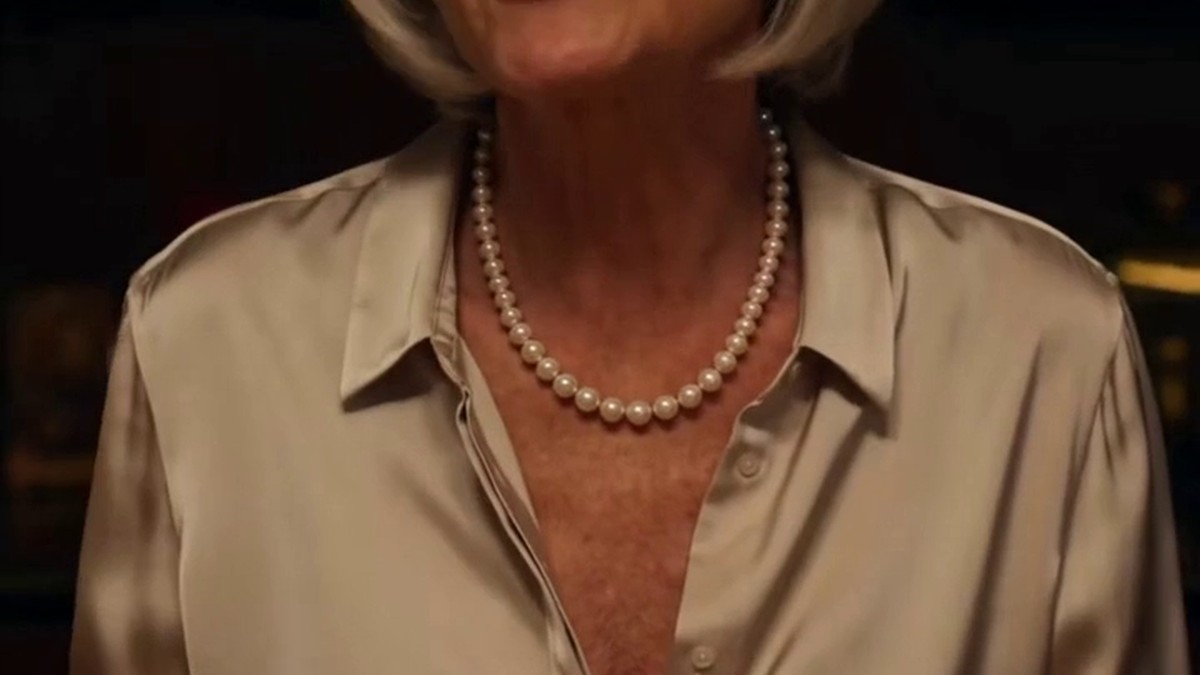
Marianne always made her entrance like she was inspecting a crime scene she’d personally been called in to solve.
She’d step through our front door, purse clutched to her chest like a shield, and her eyes would do this slow, deliberate sweep of the living room. Baseboards. Ceiling corners. The gap between the fridge and the counter. She wasn’t looking for dust. She was looking for evidence. Evidence that her son, Mark, had made a catastrophic mistake six years ago when he put a ring on my finger.
That Thursday night, we were celebrating Mark’s fortieth birthday. I’d spent the better part of two days pulling together a spread that would’ve made my late Italian grandmother weep with pride. The dining table in our Denver bungalow was loaded. A whole roasted chicken with lemon and thyme, skin crackling and golden. A cast-iron skillet of cornbread. Charred Brussels sprouts with bacon. My great-aunt’s recipe for baked mac and cheese, the top crusted with buttery breadcrumbs. I’d even ironed the cloth napkins, which, in hindsight, was probably a sign I was trying way too hard.
His mother, Marianne, settled into her chair at the head of the table—the chair I hadn’t assigned her, by the way, she just claimed it, like a cat choosing the sunniest spot on the rug. His sister, Carla, parked herself to Marianne’s left, already pouring herself a third glass of the Malbec I’d bought.
Mark was at the other end, leaning back, a lazy grin on his face. He was in that blissful, oblivious zone where a man looks at a table full of food and family and convinces himself this is proof of universal harmony. I was clearing the salad plates, my feet already aching from a nine-hour shift at Denver Health. I work the trauma bay. I’ve dealt with gunshot wounds, compound fractures, and a guy who tried to glue his own finger back on with superglue. None of it prepared me for the psychological warfare of a family dinner with my mother-in-law.
“You know, Mark, I was just reading this article,” Marianne announced, tapping her fork against her wine glass. “It’s all about the modern woman. How they don’t have the same… staying power. Their commitment threshold is just fundamentally broken. It’s a chemical thing. Cortisol.”
She pronounced it “corti-zole,” like it was a brand of discount tile grout.
“Mom, please,” Mark mumbled, reaching for the chicken.
“I’m serious, sweetheart. A friend of mine from my book club—her son’s wife just walked out. Cleaned out the bank account and vanished. No warning. Twenty-two years of marriage, gone.” She shook her head, a picture of tragic sympathy that didn’t quite reach her eyes. “You just never know when a woman is going to decide she’s… bored.”
Carla nodded, her mouth full of sprouts. “It’s true. I see it all the time on the neighborhood app. Divorces everywhere. Usually, it’s the wife who initiates.”
I kept my expression neutral, the same face I use when a patient is screaming about a pain level of ten while scrolling Instagram. I was tired. Bone-tired. I’d run a Code Blue at two in the morning and I’d been on my feet ever since. I was really not in the mood for a TED Talk on female duplicity from a woman who once called the police because her cable went out.
Marianne took a bird-like bite of mac and cheese, then laid her fork down with surgical precision. She looked directly at Mark, her voice dropping into a conspiratorial register that was still loud enough for the neighbors to hear. “The point I’m trying to make, honey, is that you have to protect yourself. Wives… they come and go. It’s a sad fact of life. Today it’s her, tomorrow it’s someone else. But a mother?” She placed a hand over her heart. “A mother is forever.”
The silence that followed was thick enough to spread on a cracker.
Carla looked at me with this tiny, smug smile, like she was watching a reality show she’d already seen the finale of. Mark stared at his plate, his jaw working slowly. He didn’t say a word. He just gave me that quick, pleading side-eye that translated to: *Please, honey, don’t. She’s old. She’s lonely. She doesn’t know what she’s saying.*
I’d received that look maybe five hundred times over the course of our marriage. It was our secret language. A language of surrender.
This time, I didn’t surrender.
I didn’t yell. I didn’t argue. I learned a long time ago that you can’t win a logic battle with someone who brought a shovel to a chess match. Instead, I placed my own fork down very carefully, the sound a soft chime against the porcelain. I stood up.
I reached for the platter with the roast chicken. It was heavy. The scent of thyme and garlic hit me as I lifted it. Then I picked up the cast-iron skillet of cornbread.
“Jenna?” Carla’s voice was confused, a little high-pitched. “Uh, what are you doing? We’re not done.”
“Oh, I know you’re not done,” I said, my voice perfectly pleasant. The kind of voice you’d use to tell a neighbor her dog got loose again. “But the meal is.”
I turned and walked into the kitchen. I set the chicken and the cornbread on the counter by the microwave, then I came back.
Marianne’s eyes were narrowed. “Excuse me? This is incredibly rude. We have guests.”
“You’re not guests,” I said, picking up the mac and cheese next. “You’re visiting dignitaries, remember? You made that very clear during the Super Bowl party last year. You’re here to *inspect*. And the temporary staff has decided to close the buffet.”
I took the mac and cheese. Then the Brussels sprouts. Then the pitcher of iced tea. With every trip to the kitchen, the table grew barer. With every trip, Carla’s jaw dropped a little lower, and Marianne’s face flushed a deeper shade of brick red.
On my fourth trip back, my mother-in-law shot to her feet. The chair scraped against the hardwood floor with a shriek. “This is beneath you, Jenna! Absolutely beneath you! I am your husband’s mother. I made a general observation about the state of the world, and you’ve decided to throw a tantrum like a child who didn’t get the right color pony at her birthday party.”
I set the bread basket down on the kitchen counter. Then I turned around to face her. I was very calm. My pulse was probably about sixty-eight. It’s a trick you learn in the ER. Panic is contagious. Calm is a weapon.
“Marianne, I’m just being consistent,” I said, leaning against the doorframe between the kitchen and the dining room. “You said wives are temporary. You said it right here, at my table, in my house. I’m just showing you what *temporary* looks like. The food was provided by the temporary wife. The table setting was done by the temporary wife. The wine you’ve been guzzling for the last hour? Purchased by the temporary wife. And I forgot to mention…” I pointed to the floor. “The roof over your head? The one that’s not leaking because I paid a roofer three thousand dollars in April? Yeah. This entire house was purchased by the temporary wife two years before I even swiped right on your son.”
Marianne’s mouth opened and closed. No sound came out. It was like watching a fish that’d just been pulled through a hole in the ice.
Carla stood up, her chair wobbling. “Mark, are you seriously going to let her talk to Mom like that? Say something!”
Mark still hadn’t moved. He was staring at the empty table. At the water rings where the serving dishes used to be. At the single forgotten butter knife.
He looked up, but not at his mother. He looked at me. Something in his face shifted. It was like watching a fog lift off the highway, the road suddenly clear and sharp. He pushed his chair back and stood.
“Carla. Mom. Get your coats.”
Marianne recoiled as if he’d slapped her. “I beg your pardon?”
“You heard me. Get your coats. The party’s over.” His voice wasn’t shaking. It was low and steady. A voice I’d never heard him use with his mother before. “Actually, you know what? The party was over the second you decided to insult my wife in her own home. I should’ve shut it down right then, and I didn’t. I’m sorry for that.” He looked at me. “I’m really, really sorry.”
Marianne’s face crumpled into a mask of theatrical devastation. “I am your *mother*. I gave you life. And you’re going to throw me out for this… this… overreaction?”
“I’m not throwing you out for her overreaction, Mom. I’m throwing you out for your disrespect. I’m done letting you treat her like she’s on a probationary period that never ends. Get your purse. I’ll call you an Uber.”
The next five minutes were a symphony of slammed cupboard doors, hissed insults, and the dramatic flapping of a trench coat being yanked on with maximum indignation. Carla refused to meet my eyes. Marianne muttered something about “knowing this was a mistake from the beginning,” just as Mark gently but firmly closed the front door on them both.
The deadbolt clicked into place. The sound echoed through the now-silent bungalow.
Mark stood in the hallway for a moment, his forehead resting against the wood of the door. Then he walked back into the dining room where I was already pulling the chicken out of the kitchen.
“Wait,” he said. “Before you put that back down.”
I froze. “What?”
He walked up to me, took the heavy platter from my hands, and set it on the table. Then he pulled me into a hug that smelled like cedar and wine and the faint trace of the garage. “I’m so sorry,” he whispered into my hair. “I should’ve said that years ago. I just… I didn’t know how.”
“You figured it out,” I said quietly.
“I did.” He pulled back, looked at the empty chairs, and let out a long, shaky breath. It was the breath of a man who’d just set down a weight he’d been carrying for forty years. “Okay. Now. Let’s reheat this bird and actually enjoy my birthday. Can we do that?”
I laughed. It was the first real laugh I’d had all day.
Twenty minutes later, we were sitting across from each other, plates full. The mac and cheese was even better the second time. The Malbec tasted less bitter. Just as Mark reached for a second helping of cornbread, my phone buzzed on the table.
A text from an unknown number. A local area code, but not one I recognized.
I opened it, expecting a spam message or a wrong-number photo. Instead, I saw a single, strangled sentence.
*This is Carla. Don’t tell Mark. Mom just locked herself in my bathroom. She says if Mark doesn’t call her and apologize and agree to marriage counseling with HER, she’s going to… take an entire bottle of Tylenol.*
I stared at the screen. A cold, slithering knot tightened in my stomach. I’d seen Tylenol overdoses in the ER. It’s a horrific way to go, and an even worse way to try to die. Liver failure doesn’t happen fast. It happens over days, painfully, while you’re wide awake.
And in a flash, I knew. This wasn’t a real threat. It was a performance. A final, desperate hand grenade tossed into our living room to prove that she still controlled the pin. But my medical training doesn’t let me dismiss that kind of message, performance or not. You always have to treat the threat as real, because the one time you don’t, you’re wrong.
I closed my eyes for a second. Then I stood up, grabbed my keys from the hook by the door.
Mark looked up, a forkful of chicken halfway to his mouth. “Jenna? What’s wrong? You’re white as a sheet.”
This was the moment. The moment that could snatch us right back into the chaos. A clear, hard choice. I could show him the text, let the panic flood in, let his guilt pull him back into his mother’s orbit, and watch him spend the next two hours on the phone, begging, pleading, negotiating with a woman sobbing on a bathroom floor. She’d win. She’d get her hook back in him.
Or I could end this, right now, on my terms.
“Nothing, babe,” I said, slipping my phone into my jacket pocket. “A friend from work just needs a hand with something. Stupid shift swap mix-up. I’ll be back in forty-five minutes, tops. Finish your dinner.”
He hesitated, searching my face. “You sure?”
“I’m sure. Just hold the fort. And save me some cornbread.”
I was out the door before he could ask another question. The engine of my old Subaru turned over as I pulled up Carla’s address on my GPS from an old email chain about a shared Christmas gift. The drive over was a blur of streetlights and the thumping of my heart in my ears. I wasn’t going there as a daughter-in-law. I was going as a trauma nurse.
I hadn’t called 911 yet. I needed to assess the scene first. If I walked in with flashing lights and a woman who’d only taken two Advil for a headache, the whole thing would feed her narrative for the next decade.
I pulled into the apartment complex parking lot. Carla was waiting for me at the front door, her face blotchy and swollen, her earlier smugness completely evaporated. “Oh thank God, Jenna, she’s locked the door and she won’t answer me anymore, I don’t know what to do, you have to do something—”
I held up a hand to silence her. I walked through Carla’s cluttered, beige living room to the hallway bathroom door. I knocked. Firm. Professional. Three sharp raps.
“Marianne? It’s Jenna. I’m here alone. Mark’s not with me.”
Silence. A faint, pathetic sniffle.
“Go away. This is all your fault. I have nothing left to live for. My own son hates me.”
“Marianne, I have a med kit in the car. I’ve managed a hundred overdoses in my career. I know exactly what a Tylenol overdose protocol looks like. You don’t just take the pills and fall asleep. You get severe nausea. You vomit. The pain in your abdomen is excruciating. And the antidote, the one we have to administer within eight hours, is a brutal cocktail that takes hours to drip. It’s not a quiet, romantic exit. It’s messy, and it hurts, and I personally don’t want to have to call my colleagues at Denver Health to pump your stomach tonight. So I’m going to ask you one time. Did you swallow any pills?”
The silence stretched. Five seconds. Ten.
The lock on the bathroom door clicked.
The door creaked open. Marianne was sitting on the closed toilet lid, mascara streaked dramatically down her cheeks in two perfect rivulets. On the counter next to the sink was an unopened, factory-sealed bottle of Extra Strength Tylenol.
She looked up at me. Her expression wasn’t that of a suicidal woman. It was the defeated, whiny pout of a child caught in a lie. “You were supposed to bring Mark.”
And there it was. The whole messy, manipulative script, laid bare.
I leaned against the doorframe. I didn’t feel anger anymore. Just a deep, tired pity. “No, Marianne. I wasn’t. The game ends here. Not with a tragedy, not with a dramatic rescue, and not with me handing your son back to you on a silver platter. It ends with a very boring, anti-climactic truth.”
I picked up the sealed bottle, held it up to the light so the white pills rattled. “This is what you have. Unopened. You’re not a patient. You’re a hostage-taker without a weapon. So here’s how this is going to go. You’re going to sit here and think about what you want the next decade of your life to look like. A decade where you might occasionally get to see your son, on our terms, if you can be respectful. Or a decade spent alone, in this apartment, re-enacting your greatest hits for a captive audience of zero. Your choice.”
I turned and walked out of the bathroom, past a slack-jawed Carla, and out the front door.
I got home fifty minutes later. The bungalow was quiet and warm. Mark was on the couch, a baseball game on low, a plate of cornbread covered in foil on the coffee table.
“Hey,” he said. “Everything okay?”
I kicked off my shoes, walked over, and crumpled onto the cushion next to him. I picked up a piece of cornbread and took a bite. It was cold, but it was the best thing I’d ever tasted.
“Yeah,” I said, my head resting against his shoulder. “Everything’s handled.”
He didn’t ask for details. He just reached over, turned off the lamp, and pulled a blanket over both of us. Outside, the first real snow of December started to fall, covering the city in a quiet, forgiving white.