Claire and Mark got married in a courthouse downtown on a Tuesday, because waiting for a Saturday wedding felt like a waste of time when you already knew you wanted to spend the rest of your life with someone. She was a pediatric nurse and he was a contractor who framed houses by day and built her a window seat for their apartment by night. On their first anniversary, they sat in that window seat, eating takeout Thai and talking about names. They had a list pinned to the fridge: girls on the left, boys on the right, a few wildcard unisex options in the middle for fun. They were twenty-eight, healthy, and absolutely certain this would happen fast.
A year passed. The list yellowed and curled at the edges. Claire tracked her cycles in three different apps and knew exactly when the pharmacy restocked pregnancy tests. She bought them in bulk, the cheap strip kind that came in a plain white box, not the fancy plastic ones with the digital screen. Less wasteful. The apps pinged, she tested, and every month she stared at a single line so hard her vision blurred. She told herself she saw a faint second one. She never did. Mark started taking on more overtime. He said it was for the college fund they’d need someday, but Claire noticed he stopped asking when she was ovulating.
Another year. Claire’s younger sister Maya had a baby shower in a rented hall in Beaverton with a balloon arch and a cake shaped like a stork. Claire helped set up, tied ribbons on favors, smiled so hard her face ached all the way home. She drove back to Portland in silence, radio off, and when Mark met her at the door with a question in his eyes she just shook her head and went straight to the shower. She sat on the tile floor and let the water hit her back until it ran cold.
The thing was, they didn’t talk about it. Not really. They talked around it. Mark would say, “Maybe we’re just stressed,” and Claire would nod and say, “Yeah, probably just stress.” But at three in the morning, when they both lay awake pretending to sleep, the truth sat in the room with them like a third person neither wanted to acknowledge. The truth was that one of them might be broken, and they were both terrified to find out which. Claire ran through worst-case scenarios in her head while she charted vitals at work. If it was her, if her body just couldn’t, would Mark stay? He’d say yes. But she’d see the disappointment behind his eyes every Christmas, every birthday, every quiet Sunday morning for the rest of their lives. And if it was him—she hated herself for even thinking it—but she didn’t know if she was strong enough to carry that for both of them without it turning into resentment.
Four years. Five. They got a cat, a fat orange tabby Mark found in a parking lot behind a hardware store. Claire named him Mochi because he was round and squishy and sweet. Mochi slept on Claire’s pillow and followed Mark to the bathroom and knocked cups off the counter just to watch them fall. He was the closest thing to a baby either of them had held in years, and they poured themselves into him like a substitute. Claire bought him a heated bed. Mark built him a cat tree that took up half the living room. On Mochi’s adoption anniversary they threw a party with two friends and a tuna cake.
One night in January, after six years of marriage, Claire sat at the kitchen table and poured herself a glass of wine. She didn’t even want it. She just needed something to do with her hands. Mark was on the couch, scrolling his phone, and the silence between them had become the normal kind—the comfortable kind that comes when you’ve given up on difficult conversations.
“I want to get tested,” Claire said. Not loud, not dramatic. Just a statement, flat as a vital sign reading.
Mark’s thumb stopped moving on the screen. “Okay.”
“Both of us.”
“I said okay.”
He looked up and met her eyes, and for the first time in years, neither of them looked away. The fear was still there, raw and ugly, but ignoring it hadn’t made it smaller. It had just made them smaller, made their life smaller, squeezed everything bright and hopeful into a tight little box labeled “maybe someday.”
The clinic was in a medical park off I-5, next to an orthodontist and a urgent care. They went together on a Thursday morning with rain spitting against the windshield. Mark held Claire’s hand in the waiting room. Her palm was clammy. So was his. They didn’t speak.
Dr. Okonkwo was a younger woman with cropped hair and a way of talking that was direct without being cold. She asked questions, took notes, ordered blood work and an ultrasound and a cup from Mark that he filled in a bathroom with a magazine rack and a sign taped to the mirror that read *Please label with name and date of birth*. Mark wrote his name so carefully the pen tore the sticker.
Two weeks. That’s how long the results took. They were the longest two weeks of Claire’s life, and she’d once done a seventy-two-hour shift during an RSV surge that left her hallucinating from exhaustion. This was worse. At least during that shift she knew it would end.
The call came on a Tuesday at 2:17 PM. Claire was in the break room, picking at a salad she didn’t want. She answered on the first ring.
“Mrs. DeMarco? Everything came back normal.” Dr. Okonkwo’s voice was calm, professional. “Your labs look great, ovarian reserve is strong for your age, no structural issues. Mr. DeMarco’s numbers are solid across the board. You’re both healthy. There’s no medical reason you shouldn’t be able to conceive.”
Claire said “thank you” and hung up and sat perfectly still for thirty seconds. Then she called Mark.
“We’re fine,” she said when he picked up. “Both of us. Everything works. There’s nothing wrong.”
Silence. Then Mark let out a sound that was half laugh and half choke. “So what the hell have we been doing wrong?”
“I don’t know,” Claire said. “I guess… nothing. We just haven’t gotten lucky.”
Six years of waiting, and the answer was that there was no answer. They were perfectly healthy, perfectly functional, perfectly unlucky. Claire didn’t know whether to laugh or cry, so she did both, sitting in the break room while her salad wilted and her coworkers politely pretended not to hear.
That night they talked more than they had in years. Real talk, the scary kind, the kind where you admit you’ve been terrified of being the problem. Mark confessed he’d nearly backed out of the fertility test three times. Claire admitted she’d rehearsed a conversation where she told him she understood if he wanted to leave and find someone who could give him children. They held each other on the couch and cried and laughed and felt, for the first time in nearly seven years, like they were on the same team again.
“So we just keep trying,” Mark said. “And if it happens, it happens.”
“And if it doesn’t?”
“Then we figure that out together. But at least we’re not carrying this alone anymore.”
The relief was enormous. It was also, as it turned out, short-lived. Because knowing you’re healthy and still failing month after month is its own special kind of torture. The hope would flare up, bright and painful, and then the period would come and extinguish it. Claire stopped buying pregnancy tests. She stopped tracking. She told herself she was letting go, surrendering to fate, but really she was just too tired to keep hoping and getting crushed.
Mark threw himself into projects. He built a deck for their rental house, then a pergola, then a raised garden bed Claire didn’t ask for. She planted tomatoes and basil and mint that took over everything. Mochi got fat on treats and lazy in the sunbeams that fell across the living room floor. They were, by all outward measures, fine. Content, even. The gray had faded into a kind of acceptance—not happiness, exactly, but not misery either. Just life.
Eight years. Nine.
Mochi got sick in September. He stopped eating, then stopped drinking, then stopped moving from his spot on the window seat. Claire took him to the vet on a Friday afternoon. The vet did blood work and felt his abdomen and said the words nobody wants to hear: “advanced renal failure.” They could try fluids, medication, a special diet. But the vet’s eyes said what her mouth didn’t, which was that they were buying weeks, maybe days.
They tried anyway. Claire gave Mochi subcutaneous fluids every night, the bag hanging from a hook Mark screwed into the ceiling above the couch. Mochi tolerated it with the patience of the very sick, lying still while the liquid pooled under his skin. Claire would stroke his head and talk to him about nothing—work gossip, the weather, a funny thing Mark said at dinner. Mark would sit nearby, pretending to read, jaw tight.
Mochi died on a Sunday morning, curled in his heated bed, tail covering his nose. Claire found him when she got up to make coffee. She didn’t scream, didn’t cry, just stood there in her bare feet staring at the small orange body that had been the center of their world for three and a half years. Mark came up behind her and wrapped his arms around her chest and buried his face in her hair. They stood like that until the coffee maker beeped and kept beeping and neither of them moved to turn it off.
They buried Mochi under the mint plant in the garden box because he’d always liked to chew the leaves. Mark dug the hole. Claire wrapped him in his favorite blanket, the fleece one with the fish pattern. They didn’t say words. There weren’t any words. Mochi had been their child substitute, their furry little emotional support animal, and losing him ripped open a wound they’d spent years carefully bandaging. The apartment felt cavernous. Claire kept expecting to hear the jingle of his collar, the thump of his paws on the hardwood. The silence was unbearable.
For two weeks, Claire could barely eat. Food tasted like cardboard, and anyway, her stomach was in knots. She figured it was grief. She’d heard people lose their appetite after a death, and Mochi’s death had hit her harder than she’d ever expected. Harder than some human deaths, if she was being honest.
Then the nausea started. Not just loss of appetite, but active, rolling nausea that hit worst in the mornings and whenever she smelled coffee brewing. Mark’s coffee. The same coffee she’d been drinking for years without a problem. She’d walk into the kitchen, catch a whiff, and have to sprint to the bathroom.
“You should see a doctor,” Mark said after she’d spent the fourth morning in a row dry-heaving into the toilet.
“It’s stress,” Claire said, wiping her mouth. “Grief, stress, whatever. It’ll pass.”
It didn’t pass. It got worse. At work, the smell of the hospital—antiseptic and latex and the faint metallic tang of blood—made her dizzy. She had to step outside during rounds, leaning against the ambulance bay wall and breathing through her mouth. One of the other nurses, Jamila, caught her looking green around the gills and raised an eyebrow.
“Girl, when was your last period?”
Claire opened her mouth to say *that’s ridiculous* and then closed it. She couldn’t remember. She’d stopped tracking months ago. Years ago, really. She counted backward in her head, ran through the weeks since Mochi died, since before that, and the numbers didn’t add up. They didn’t add up at all.
“I don’t know,” she said. Her voice sounded very far away.
Jamila grabbed her by the wrist and marched her to the employee health office and sat her down in a chair. “You’re going to take a test,” she said. “Right now. I’ll wait.”
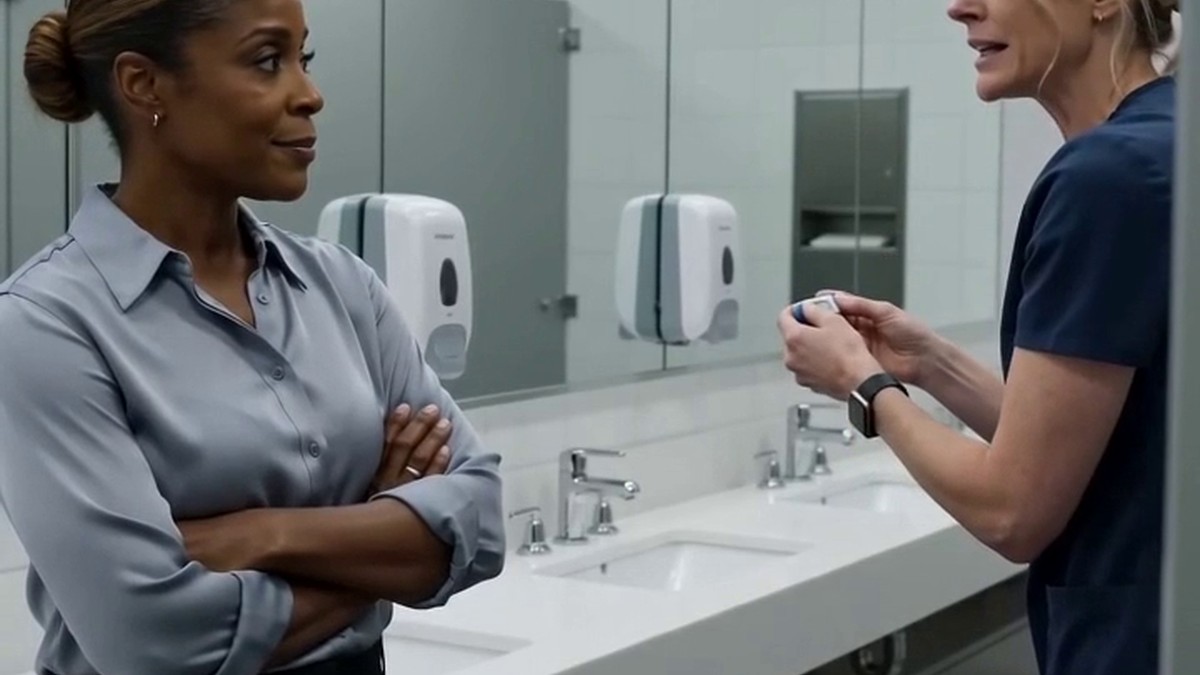
Claire took the test. It was the expensive kind, the digital one, because that’s what the employee health office stocked. She sat in the bathroom stall and waited the three longest minutes of her life, which was saying something because her life had been full of long minutes.
The word appeared on the little screen. *Pregnant.* Just like that, in clean block letters, like it was the most ordinary thing in the world.
Claire stared at it. She didn’t cry. She didn’t laugh. She just stared, because her brain had stopped processing input. Pregnant. She was pregnant. After nine years of nothing, after giving up, after burying her cat and losing her appetite and assuming she was falling apart from grief—she was pregnant.
Jamila knocked on the stall door. “You okay in there?”
Claire unlocked the door and held up the test. Jamila’s face broke into the widest grin Claire had ever seen on a human being.
“I’m going to be sick,” Claire said.
“Yeah, that tracks,” Jamila said. “Morning sickness.”
“It’s noon.”
“Honey, morning sickness is a lie and a scam.”
Claire called Mark from her car in the parking garage. She didn’t plan a special moment. She didn’t buy a onesie or wrap a gift or wait until dinner with candles lit. She just sat in the driver’s seat with the engine off and the windows fogging and dialed his number.
“Hey,” he said. He sounded tired. He’d been tired for nine years.
“Mark.” Her voice cracked on his name. “I’m at the hospital.”
Immediate panic. “What? What happened? Are you hurt?”
“No. No, I’m not hurt. I’m…” She took a breath that shuddered all the way down. “I’m pregnant. I took a test. It’s positive. I’m pregnant, Mark.”
The silence on the other end stretched for an eternity. Claire thought the call had dropped. She pulled the phone away from her ear to check the screen, and then she heard it: a sound like all the air leaving a man’s body at once.
“Claire.” His voice was shredded. “Claire, tell me you’re serious. Tell me this isn’t—”
“I’m serious. I swear on Mochi’s grave. I’m pregnant.”
She heard him start to cry. Mark didn’t cry—not at movies, not at funerals, not when Mochi died. But he was crying now, big gulping sobs that came through the speaker and filled her car and filled her chest until she was crying too, both of them blubbering into their phones in the middle of a Wednesday afternoon like their lives had just been ripped open and remade.
“Stay there,” Mark said when he could speak. “Don’t move. I’m coming to you.”
“I’m in the parking garage.”
“I don’t care. Stay exactly where you are.”
He got there in twenty minutes, which was impossible in Portland traffic, but he managed it somehow. He parked his truck crooked across two spaces and ran to her car and pulled her out and held her so tight she felt her ribs creak. He was shaking. She was shaking. They were just two shaking people in a parking garage, holding on to each other and a secret that was barely the size of a sesame seed.
Dr. Okonkwo confirmed it two days later with an ultrasound. Eight weeks. Claire had been pregnant for two months and had no idea. All the symptoms she’d blamed on grief—the nausea, the exhaustion, the food aversions—had been her body quietly building a human while she wasn’t paying attention.
“Sometimes,” Dr. Okonkwo said, moving the wand and squinting at the screen, “the body needs to stop trying. The stress hormones, the constant monitoring, the pressure—it can interfere in ways we don’t fully understand. When you finally let go…” She shrugged. “Nature finds a way.”
Claire looked at the screen, at the tiny flickering heartbeat, and thought about Mochi. About how he’d come into their lives when they needed something to love, and how he’d left just as something new was beginning. She wasn’t a spiritual person. She’d seen too much science, too many cold hard facts in too many hospital rooms to believe in signs and fate and cosmic trade-offs. But sitting there on that exam table with gel on her stomach and tears running into her ears, she thought maybe some things didn’t need to be explained.
They didn’t tell anyone for the first trimester. Not their parents, not their friends, not even Maya. Claire guarded the pregnancy like a secret too fragile to expose to daylight. She stopped drinking coffee entirely. She took her prenatal vitamins with religious precision. She held her breath at every appointment and only exhaled when she heard the heartbeat, strong and steady, a galloping rhythm that never failed to make Mark’s eyes go wet.
At sixteen weeks they found out it was a girl. At twenty weeks Claire started to show, a small firm bump that Mark couldn’t stop touching. He’d rest his hand on her belly while they watched TV, while they cooked dinner, while they fell asleep. He talked to the baby every night, whispering promises into Claire’s navel—promises about camping trips and bike rides and never, ever making her feel like she had to be perfect.
They moved out of the apartment and bought a small house in Milwaukie with a big backyard and a crabapple tree. Mark built a nursery. He framed the walls and hung the drywall and painted it a soft sage green that Claire picked out after three trips to the hardware store. He built the crib himself, from plans he found online, sanding every rail until it was smooth as silk. He installed blackout curtains and a mobile with felt stars and a rocking chair that Claire’s mother shipped from Iowa.
On a rainy Thursday in late spring, seven weeks before the due date, Claire came home from work to find Mark in the backyard. He had a shovel in his hand and a hole in the ground beneath the crabapple tree.
“What are you doing?” she called from the porch.
He turned, face streaked with dirt and rain. “I’m moving Mochi.”
“Moving him?”
“From the old place. I dug him up this morning. I wanted him here.” He looked suddenly uncertain, like a kid caught doing something he wasn’t supposed to. “Is that weird?”
Claire walked across the wet grass, her belly leading the way, and stood beside him. In the hole was Mochi’s blanket, faded and muddy, still wrapped around what remained of their fat orange cat.
“It’s not weird,” she said. She took Mark’s hand, muddy shovel-calloused fingers and all. “He should be here. He was part of this.”
They buried Mochi together under the crabapple tree. Mark filled the hole and tamped down the earth. Claire found a flat stone from the garden bed and wrote *Mochi* on it with a Sharpie, and underneath, in smaller letters, *Best boy*.
“I want to get another cat,” Claire said as they walked back to the house. “After the baby comes. When things settle down.”
Mark slung his arm around her shoulders. “Yeah?”
“Yeah. I don’t want her to grow up without one.”
Mark kissed the top of her head. “Two cats.”
“Two?”
“At least. A whole army of cats.”
Claire laughed, and the sound surprised her—bright and full and uncomplicated, the kind of laugh she hadn’t made in a decade. In seven weeks she would be a mother. After nine years of emptiness, of silence and fear and slow gray surrender, she was about to have everything she’d ever wanted. Not because she’d earned it or manifested it or finally cracked some biological code. Just because. Just because life was weird and unpredictable and sometimes, when you stopped strangling it with your expectations, it handed you something you’d given up hoping for.
Their daughter was born on a Tuesday, at three in the morning, after eleven hours of labor and one harrowing moment when the heart rate monitor dipped and a team rushed in and Mark went white as drywall. But she came out screaming, pink and furious and perfect, seven pounds four ounces with a full head of dark hair. Claire held her against her chest and thought about all the years of nothing, all the negative tests and empty cribs and silent dinners, and how none of it mattered now. None of it mattered at all.
The day they brought her home, Mark carried the car seat up the front steps like it contained explosives. Claire walked behind him, sore and exhausted and happier than she’d ever been. She paused on the porch and looked at the crabapple tree, at the flat stone beneath it.
A single orange cat was sitting on Mochi’s grave.
It wasn’t their cat. They didn’t own a cat. It was a stray, thin and scrappy, with a notch in one ear and eyes the color of amber. It regarded Claire with the calm indifference of an animal that has seen everything and fears nothing.
“Mark,” Claire said.
He turned, one hand on the door. “What?”
The cat stood, stretched, and trotted toward the porch. It wound around Claire’s ankles once, purring like a motorboat, then darted past Mark through the open door and into the house.
“Did that just—” Mark started.
“Yeah.”
They looked at each other. Their daughter made a small snuffling sound in her car seat.
“I guess we have a cat now,” Claire said.
Mark opened his mouth, closed it, and then laughed—a deep, helpless, disbelieving laugh that echoed across the quiet street. “I guess we do.”
They named her Clementine, after the color of her fur, and she slept in the nursery windowsill every night for the next fifteen years.