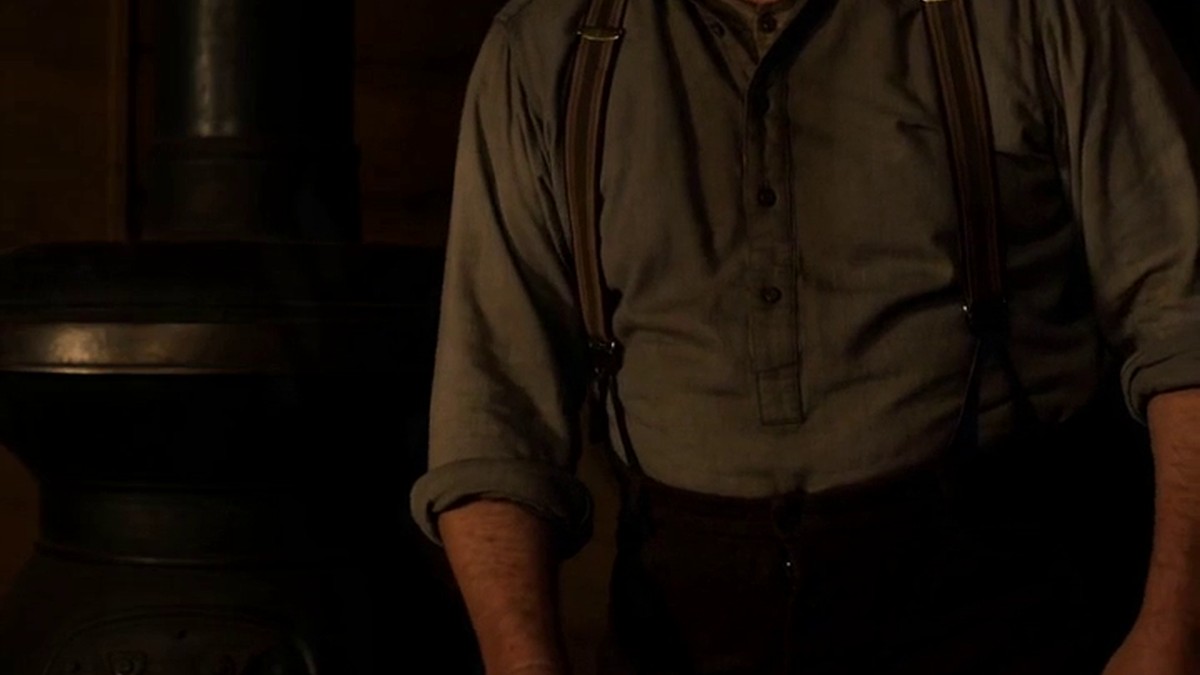
The night they came for Del Cole, he was writing on the blackboard in the mess hall with a piece of chalk no longer than a man's thumb. Outside, past the rain-streaked window, a line of lanterns moved through the clear-cut, twelve points of light coming up the skid road. The foreman stood by the stove with one hand on the dog's head.
"Del." He said it like a man trying to wake someone from a bad dream. "There's forty of them."
"I know."
"Company brought in the marshal. They got rifles."
Del kept writing. The chalk made a sound like a saw blade biting into wet cedar.
—
Two years before that night, Delbert Cole was just the teacher at Ten Mile, Oregon, a logging camp in the Coast Range south of the Umpqua. He was twenty-five, back from France not long enough for the twitch to leave his hands, boarding in a one-room house near the school. He taught fractions and the dates of the presidents, and on Friday nights he stayed late to teach grown men how to read their time slips.
The camp belonged to the Pacific Cedar and Spruce Company out of Portland. The men belonged to the camp, if you asked the company. They were paid in scrip, rented their shacks from the company, bought their flour and tobacco at the company store. The store had a black ledger book with a name on every page. If a man got hurt, the ledger said what he owed. If a man died, the ledger kept the arithmetic going, like a clock left running in an empty room.
The arithmetic killed eight men on the fourth of December, 1919, when a spar tree snapped in the rain and brought half the hillside down on the crew. The company said it was an act of God. The men said the cable was bad and everybody knew it.
Del walked into a meeting the next week. He had a list of names in his hand, eight names, and he read them out loud. Then he turned the blackboard around in the schoolhouse, the good side, and he wrote one question in block letters:
HOW LONG DOES A DEAD MAN PAY?
That was the start.
The strike took the camp in ten days. The men refused to go back into the woods. Their wives carried the scrip ledgers out of the company store and burned them in the road. Somebody found a black flag and a needle, and one of the men's wives, a woman from the Siletz, stitched a silver stripe across it with thread pulled from a miner's lamp filament. The Silver Line, the men called it.
And Del became the teacher of the Silver Line, not because he wanted to lead anything, but because he was the one who could write down what they were trying to say.
The company brought in the National Guard, and the Guard came by rail from Roseburg in the rain and stood around for two weeks while the men of Ten Mile stood on the other side of the creek with their rifles across their chests. Nobody fired. The Guardsmen went home. The men went back to the strike.
By the spring of 1920, the Silver Line controlled forty miles of logging road. Its meeting places were a chain of schoolhouses and mess halls, each one with a blackboard and a lamp in the window. The men had a greeting now: "The lamp stays lit." It meant you were not alone in the valley.
Del had three brothers. Harold Cole, twenty-one, and the twins, Jesse and Walt, nineteen. All four of them worked the line together. In the photograph that one of the strikers kept tacked inside his coat, they are sitting on a rail fence near the Alder Creek camp, all of them with their sleeves rolled and their hats pushed back. Harold is holding a dog by the ribcage. The dog's name was Pants.
The company went after the family. That was no surprise. The people who run things always go after the family when the argument stops going their way.
In June, Harold was shot in the chest at a roadblock near the old mill site. The bullet came from the trees, and the man who fired it was a hired deputy from Coos Bay who had never before set foot in Ten Mile. Del and the twins carried Harold down the hill in the rain. He died on the floor of the schoolhouse, his blood soaking into the boards, his hand closed around the dog's collar. Del buried him near the cedar grove behind the school and wrote his name on the blackboard every day for a month, because he could not afford a stone.
The twins died a year later, in the fight at the Douglas County courthouse, where the company tried to get a judge to sign evictions against every striking family. A group of strikers went to town to deliver witness statements, and the sheriff's deputies were waiting. The twins were the last ones to the wagon. When they fell, the crowd in the street was singing the old song, the one about the preacher and the slave, and some of the men said later that the singing never stopped.
After that, Del changed. He took the black flag with the silver stripe and rode it up and down the valley himself, from one camp to the next, his roan mare Sal picking her way over the deadfall and the stumps. The men said he did not sleep. The women said he wore his coat inside out, the way a man does when he does not want to be recognized on the road.
The company put a price on his head: three thousand dollars. That was a fortune in a place where a logger made thirty dollars a month in scrip, when he was paid at all. The reward notice had a drawing of Del's face that looked nothing like him. The men in the camps kept copies of it folded in their pockets, because it made them laugh.
His own people were doing the watching. That's the part of the story the men do not like to tell. A timekeeper named Elroy Simms, a little man with a nervous laugh who handled the pay slips at the railroad depot in Drain, had been talking to the company for months. The company had promised him a job in Portland and enough money to leave the valley for good. The last thing Simms did before the raid was turn his lamp on and off in the window of the depot three times, one time for each brother.
Del suspected. That is the awful thing about the story. He suspected, and he went to the meeting anyway.
The meeting was at the Longview mess hall, where the camp ran along the south fork of the Umpqua. It was meant to be a planning session in the aftermath of the defeat at the courthouse—what to do next, which families to move first, how to get the children out of the valley before the snow closed the roads. Sixteen men came. Some of them brought their wives, and the wives were the ones who cooked the beans and set the coffee on the stove. One of the wives, a woman named Ada Wren, had a piece of chalk in her apron pocket. She gave it to Del when he came in.
"Write something worth keeping," she said. "They're scared."
Del wrote across the blackboard:
THE LAMP STAYS LIT.
And then the door smashed open.
The marshal and his men had surrounded the mess hall while the meeting was still getting started. Simms had given them the times, the roads, the number of men inside. The first shot came through the window and hit the blackboard in the lower left corner, chipping a piece of the slate away. Del picked up the piece of slate and put it in his pocket without thinking. His hands were already doing things his mind had not caught up to yet.
The men inside put the tables on their sides and fired back through the windows. Ada Wren loaded rifles until her fingers bled. Elroy Simms was standing out in the rain, watching it happen, and when he saw the company men fall back to regroup, he ran to the marshal's side and pointed to the woodshed.
"There's a door!" he shouted. "There's a back door!"
Del was running. He had Ada Wren under one arm and a young striker, a boy of eighteen, under the other. The rain was coming down in sheets. The dog, his brother's old dog Pants, was running beside them, and when the boy stumbled, the dog stopped and came back for him, and that was the last Del saw of either of them until the next morning, when the boy's body was found in the brush and the dog was gone.
They fled up the ridge, away from the lights. Del could hear the marshal's men behind them, and he could hear the sound of the shots, and he kept moving. Ada Wren was hit in the shoulder, and she did not make a sound. The men who reached the top of the ridge said they could see the fire in the valley below, and they could see the lights of the company cars coming up the road.
At the top of the ridge, Del did the thing that has never been settled one way or the other: he turned his roan around and went back down. Alone.
The others begged him not to. One of them, an older man named Franklin Cole, who was no relation, caught hold of the bridle. Del's hand was on the stock of his rifle, and he did not have to move his hand at all for Franklin to let go.
Del rode down into the dark, into the noise of the gunfire, and he was not seen alive again.
Ada Wren got out. The boy did not. The rest of the sixteen made it to the head of the valley by morning, and they were met there by a group of women who had come from as far as Glide. The women brought wet blankets and hot stones and a bottle of iodine. The children had been sent ahead to the sawmill at Cottage Grove, and some of them never came back to the valley at all.
The company combed the ridge for Del's body. They never found it. The men said different things: that he'd gotten clear and gone to California, that he'd been captured and hung from the railroad trestle, that the river had taken him. In the camp, they did not talk about it directly. They said, "He went into the fog."
The company found something else. In the wet meadow below the south fork, where the deer come down in the first light, they found his roan, Sal, standing with her reins dangling. She had come back for him. She was standing over a piece of black felt from the flag, and in the felt there were three silver threads, and a small piece of slate.
The next year, the company turned the schoolhouse into a company store. They whitewashed the blackboard first. But when the rains came, the whitewash ran, and underneath it, plain as the day it was written, in a teacher's careful block letters, was the message Del had left:
THE LAMP STAYS LIT.
The words had been written with such pressure, the chalk had bit into the board. The company painted over it three more times, and each time the message came back through.
The company's store did not last. The railroad pulled out of Ten Mile in 1924, and the camp emptied out, and the trees grew over the clearcut. By 1940, the only people left in the valley were a few families too stubborn to move, and a woman named Ada Wren, who had gone back to teaching. She took the old schoolhouse over again, and she refused to let anyone touch the blackboard. She said it was a chalk drawing, same as the children did, only bigger.
But it was more than that. The story says that on certain nights in the winter, when the fog came down off the ridge and across the river, the lamp in the schoolhouse window would light itself, and the fog would carry it up the valley, from one ridge to the next, a chain of lights moving through the clear-cut, and every one of them would stop at the same blackboard and leave a mark.
In 1948, a federal man came through, taking a survey of abandoned company towns. He knocked on the door of the schoolhouse, and Ada Wren came out with a piece of bread in her hand. She did not know his name. He did not know hers. He had a clipboard, and a pencil, and a map.
"What happened here?" he asked.
Ada Wren looked at the blackboard. Then she looked at the road, where the dog, the old dog Pants, was lying in the sun. He had come back the next morning after the raid, with a gunshot across his haunch and a child's shoe in his teeth. He never left.
"Everything worth remembering," Ada said.
She closed the door.
And the lamp in the window stayed lit.