The place I remember most wasn’t a club. It was a diner. The Solstice, on the corner of Main and Ash, in a town called Ellsworth, Nebraska. Population maybe nine hundred on a good day. You’d miss it if you blinked on the way to Lincoln.
The Solstice had a horseshoe counter with red vinyl stools, a jukebox that leaned a little to the left, and a cook named Frank who wore the same corduroy cap for twenty years. Every Friday night, the high school kids filled the booths, ordered baskets of fries and cherry Cokes, and dropped quarters into the jukebox until the floor hummed. Sometimes there was a fight in the parking lot. Sometimes somebody’s dad showed up to drag somebody home. But mostly it was just talking. Laughing. Girls fixing their hair in the chrome reflection of the napkin dispenser. Boys pretending they weren’t nervous.
The diner closed eleven years ago.
Frank’s widow, Joanie, locked the door on a Tuesday afternoon and never opened it again. The insurance got too high. The regulars had either moved away or started eating at home. Somebody stole the letter “S” off the sign, so for years it just said “OLSTICE,” and then somebody stole the rest.
Now the building sits there like a bad tooth.
A real estate investor from Omaha came through last spring in a black Cadillac Escalade. I know because my aunt Patty still lives on Ash, right across the street. She called me to say he’d walked around the property with a clipboard, kicked the tire of a rusted bicycle rack, and made an offer on the lot. The whole thing. Sight unseen, he said. He wanted to tear it down and build a car wash. Six bays, drive-through, no-touch.
When my aunt told me that, I drove back to Ellsworth on a Wednesday morning. I hadn’t been home in two years. I had a job in Des Moines, an apartment, a fiancé named Marcus who thought Nebraska was just a long stretch of corn between here and Colorado.
I stood on the corner of Main and Ash and looked at the Solstice.
The windows were fogged with dust on the inside, like the building was sweating through some long fever. The door had a chain and a padlock the size of my fist. There was a flyer taped to the glass, curling at the edges, for a band that had played there in 2009. “The Rusty Sprockets,” it said. I remembered that night. My sister Beth had made me go. She wanted to dance with a boy named Cody because she’d heard he danced with everyone, and she liked that. As if dancing with everyone made you proof of something.
I hadn’t thought about Beth in a long time.
She moved to Topeka right after graduation. Married a guy who worked in a tire shop. Had two kids. Called Mom every Sunday. I was the one who left and didn’t call.
So when my aunt told me about the developer and the car wash, the first thing I did wasn’t call the real estate office. It was call Beth.
She answered on the second ring. Her voice had that three-seconds-of-silence thing, like she was deciding whether to pick up at all.
“They want to tear down the Solstice,” I said.
“I know.”
“So what are we going to do about it?”
There was a pause. Then a small, tired laugh. “Kaye, I live in Topeka. I have a PTA meeting tomorrow. What do you want me to do, chain myself to the napkin dispenser?”
That was Beth. She always made me feel like caring too much was a character flaw.
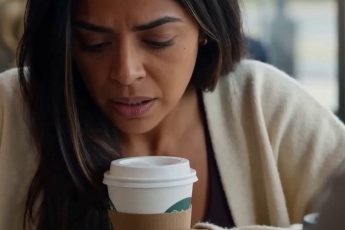
The next morning, I went to see Joanie. Her house was behind the diner, a little blue bungalow with a ramp for her walker and a wind chime made of old spoons. She invited me in, made coffee, and set out two mugs with the diner’s logo on them: a sun that looked like an egg yolk.
We sat at her kitchen table. The radio was on, low. A weather report. Chance of frost.
“I’m not against progress,” Joanie said. She had a voice like a gravel road, soft and rough at the same time. “But I served that town for thirty-one years. I know who sat where. I know who was lonely and who was just bored. I know which boys ordered milkshakes to share and which ones ordered them to show off.”
She picked up a spoon, turned it over in her hands. Her fingers were bent at the joints, but steady.
“They offered me one hundred and forty thousand,” she said. “For the diner and the lot. They’d pay back taxes, too. Everything. Walk away with a check.”
“That sounds like a lot.”
“It is,” she said. “It’s also what I’d get if I sold the building to somebody who wanted to keep it as a diner. But there isn’t anybody like that. People don’t want diners anymore. They want drive-throughs.”
I didn’t say anything for a minute. The wind chime outside made a sound like someone stirring a drawer of cutlery.
Then Joanie set the spoon down.
“I told my son about the offer,” she said. “You remember Danny.”
I did. Danny had worked the grill with Frank for two summers before he left for Colorado. He was a year ahead of me in school.
“Danny told me to take the money. He said the building was a hazard. That some kid could break in and cut themselves and then the family would sue me for everything.” She shook her head. “He said it like he was doing me a favor. Like he’d been worrying about that all these years. Except he hasn’t been back here since his father’s funeral.”
Another pause. The clock on her stove clicked over a minute.
“I found out last week,” Joanie said, “that Danny called the developer himself. Before they ever came to me. Gave them my number. Told them I’d be reasonable.”
I looked at her.
“He stands to get a finder’s fee,” she said. “Seven percent. If the deal closes.”
That was the part where something in my chest went very still.
Because I remembered Danny. Not as the kid who worked the grill, but as the older boy who used to sit in the corner booth with a leather jacket and a smirk, watching people dance like he was above it. He used to call the diner “a relic” even back then. A relic. His own family’s diner.
And now he was out in Colorado, making seven percent of one hundred and forty thousand. Nine thousand eight hundred dollars. To sell the place where his father had worked until the day he died.
I didn’t tell Joanie what I thought. I just asked her one question: “What do you want?”
She looked out the window toward the diner. The sun was coming up behind it, and for a second the whole building looked lit from inside, like the jukebox was still playing, like the coffee was still hot.
“I’d like to die knowing the sign still says Solstice,” she said.
So that’s when I did the thing.
I went back to Des Moines, sold my grandmother’s pearl earrings — the only thing I had from her, the only thing I owned that had any weight to it — and I got eleven thousand four hundred dollars. Not enough to buy the diner. But enough to do something else.
I called a lawyer. Her name was Madeleine something, an older woman with a voice like a math teacher. I told her the situation. She listened. Then she asked if I’d ever heard of a “leaseback option.”
I hadn’t.
Two weeks later, Joanie and I sat in Madeleine’s office in Lincoln, signing a thing called a Purchase Option Agreement. It didn’t buy the diner. It bought time. Six months. Enough to prove the place could still make money.
Joanie had to put up two thousand of her own, and I put up the rest. If we didn’t exercise the option by the end of six months, she’d get her two thousand back, but I’d lose mine. The agreement said so in bold on page three.
I remember standing outside the building after we signed. It was the first warm day of March, and the snow was melting off the diner’s roof in long, thin streams. Joanie held her walker and looked at the sign.
“You’re going to be poor,” she said.
“I was already poor,” I said.
What I meant was that I’d been poor in a different way. Poor in the spot where the Solstice used to be.
Marcus didn’t see it that way. He came home that night and found me at the kitchen table, eating microwave popcorn and making a list of people I could call: old classmates, the Rotary Club, the chamber of commerce that hadn’t met in four years.
“You bought a dying diner in a town you don’t live in,” he said. “With money from your grandmother’s earrings. Am I getting that right?”
“I bought six months,” I said. “And I’m going to need to be there. At least on weekends.”
He leaned against the counter. Crossed his arms. The way he did when he was measuring out how much blame to hand me.
“And what happens if it fails?”
“Then it fails.”
“No,” he said. “What happens to us?”
I didn’t answer. Because I knew. The same thing that happened to every couple who wants different things in different places.
I moved back to Ellsworth at the end of March.
Beth said I was insane. My aunt Patty said she was proud of me. Joanie said the fryer still worked if I knew how to light it with a match.
The first month, I cleaned for sixteen hours a day. Scrubbed the checkerboard floor with a wire brush. Wiped down every vinyl stool with saddle soap. Dragged the old jukebox away from the wall and nearly knocked myself out when it tipped. Spent forty dollars on extension cords.
Then the donations started.
Not money. Things. Somebody dropped off a chrome pie case. Somebody else brought four gallons of white paint. A retired firefighter from two towns over donated an outdoor ice machine he’d had in his garage. My aunt Patty found the old “S” from the sign in her shed — she’d taken it years ago, she said, for safekeeping.
What I learned in Ellsworth was this: a town doesn’t forget a place. It just forgets that it’s allowed to still want it.
We reopened on a Saturday in May. The Solstice Diner, three nights a week. No big menu. Coffee, burgers, fries, and whatever pie Joanie felt like baking. She couldn’t stand long enough to work the grill, so we gave her the corner booth and a radio, and she talked to customers while they ate. That was her job. Knowing who sat where.
Danny called in June.
I was behind the counter, wiping down the coffee machine with a rag. My phone buzzed. I saw his name on the screen and for a second I considered not answering.
I picked up.
“Kaye,” he said. His voice was too bright, like a salesman. “Heard you all are making a go of it. That’s great. Really. I mean that.”
I said nothing.
“Listen,” he said. “I talked to the developer. The Omaha guy. He’s still interested. I mean, he’s been patient. But his offer won’t last forever. You understand.”
I turned off my phone’s speaker and put it to my ear. There was a family in the far booth, splitting a slice of cherry pie between four plates. The jukebox was playing something slow.
“Danny,” I said. “Your mom put up two thousand dollars of her own money to stop your deal.”
He went quiet.
“That’s not nothing for her,” I said. “That’s three months of her medications.”
A pause. Then, quieter: “I didn’t know that.”
“No,” I said. “You didn’t.”
There was a long breath on his end. I could hear a car pass, the faint click of a seatbelt. I wondered if he was driving through Colorado with the windows down, listening to me in his nice car, in his nice life.
“I’ll tell you what,” I said. “If you want to make this right, you’ll come back for the Fourth of July. We’re doing a thing. Burgers on the house for anybody who worked there. Frank’s recipe. Your mom’s serving pie.”
He didn’t say yes. He didn’t say no.
He just hung up.
The Fourth came. We’d strung lights across the parking lot, white and blue and red. My aunt Patty brought a grill from her backyard and parked it next to the rusted bicycle rack. Somebody from the library brought a portable sound system and played oldies until almost midnight. Beth came from Topeka with her kids and her husband. She stood by the counter and watched me flip burgers, and for a long time she didn’t say anything.
Then she said, “You’re still insufferable.”
“That’s the nicest thing you’ve ever said to me.”
She laughed and hugged me, and I nearly burned my arm on the grill.
Danny didn’t show.
But somebody else did.
Around ten o’clock, a black Escalade pulled into the lot. The Omaha investor. He was younger than I expected, wearing a polo shirt and sunglasses even though it was dark. He went inside, ordered a coffee, and stood by the jukebox with his arms crossed, reading the little cards that listed the songs.
Joanie came over and told him the jukebox only took quarters.
He fished in his pocket and put one in.
The song that came on was “At Last,” the Etta James version. A weird choice for a car wash. He stood there a minute, tapping his thumb on his arm.
Then he walked over to me at the register.
“I don’t get it,” he said. “You’re in the middle of nowhere. You’re open three nights a week. You’re selling burgers for five dollars. Even if you pack this place to the walls for a year, you won’t make what my offer’s worth.”
“That’s true,” I said.
“So why?”
I didn’t have an answer. Not one I could explain to a man who saw numbers and land and foot traffic.
But then Joanie eased up beside me with a pot of coffee and refilled his cup, even though he hadn’t finished the first one.
“Because some of us,” she said, “remember what it feels like to be young and not know it yet.”
He looked at her. Then at me. Then at the jukebox, which had moved on to something by Sam Cooke.
He stayed for another hour. Ate a cheeseburger. Bought a second slice of pie. Left his card on the counter and said, “If you ever decide to sell, call me first.”
I put the card in my pocket.
The next morning, I threw it away.
It’s been a year now. The Solstice is open Friday through Sunday, May to September. In the fall, we shut down for two months and deep clean every inch. Joanie still comes in with her walker and tells stories about Frank and the corduroy cap. The jukebox still leans to the left. The sign still says Solstice, whole now, every letter repainted white.
And me? I live in the blue bungalow behind the diner now. Joanie moved in with her sister in Lincoln, and she sold me the house for what she owed in property taxes. Four thousand three hundred sixty dollars. I paid with the last of my savings and a loan from my aunt.
My name is on a piece of paper now. It says I own a diner in Ellsworth, Nebraska. It says the building can’t be torn down for commercial development without my signature. It says I have the right of first refusal if the lot ever goes up for sale.
Marcus and I didn’t make it. He’s in a new apartment in Des Moines now, with a new girlfriend who, I hear, is very reasonable. Beth still calls me every Sunday, from Topeka, and sometimes we just listen to each other breathe while the coffee cools between us.
And when I walk to the corner of Main and Ash in the morning, before the sun comes up, the windows of the Solstice catch the light. For a second, the whole place looks lit from inside, like the coffee’s already on.
Which it is.
I turn the lock, step inside, and the little brass bell above the door rings once.
It sounds exactly like it did when I was seventeen.