The name on the screen said “Frank Kowalski,” and I nearly dropped my phone into the sink. Fifteen years of marriage. Fifteen years of Sunday dinners at that house on Sycamore Street in Pittsburgh. And not once—not a single time—had the man ever called me.
Not after the wedding. Not when I had pneumonia for two weeks. Not even when his own grandson was born, for that matter.
But now, three days after the divorce was finalized, there he was. Calling my number.
I let it ring. The phone buzzed against the edge of the cutting board, rattling a butter knife. I stood there with both hands gripping a pot of chicken noodle soup—Evan's favorite, which I'd started making out of pure muscle memory before remembering he didn't live here anymore. The call dropped.
What could Frank Kowalski possibly want?
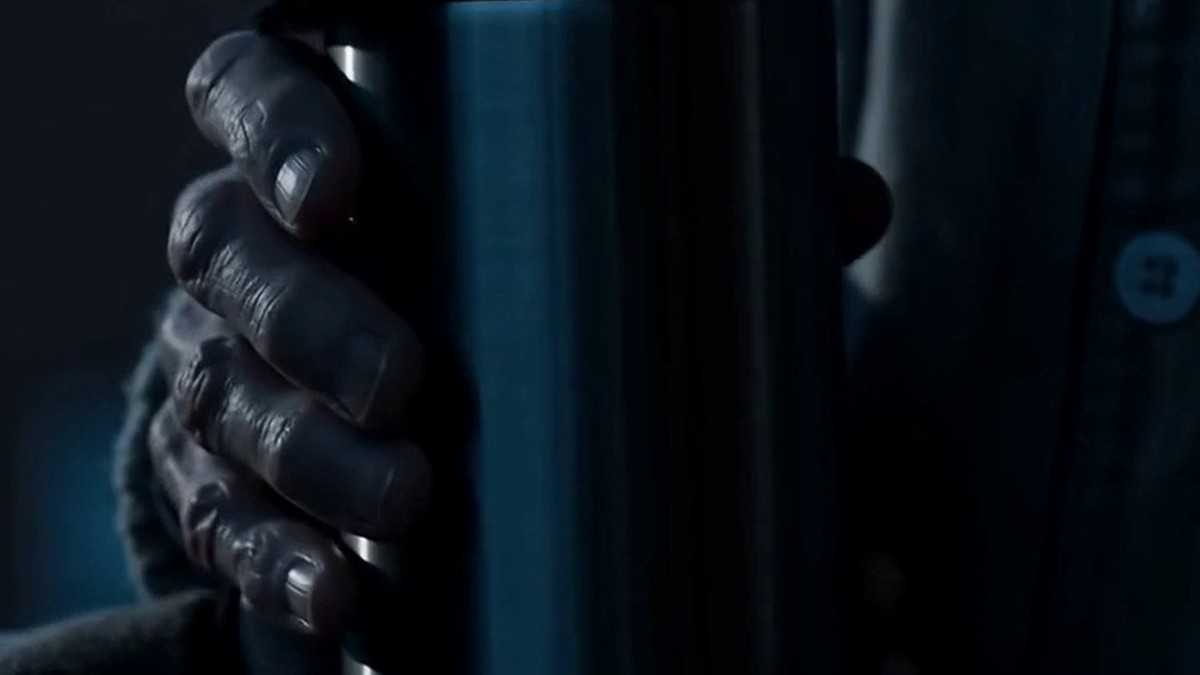
The man barely spoke. In the fifteen years I'd been married to his son, I'd heard maybe twenty full sentences out of him. Maybe fewer. At our first meeting, when Evan brought me over to introduce me as his girlfriend, Frank sat in the corner of the living room with a carburetor in his lap and a rag in his hand, wiping down the same piece of metal for an hour. Tall, wiry, with knuckles like tree roots and the permanent stoop of a man who'd spent forty years on construction sites. He didn't look up once.
His wife, Darlene, did all the talking. She gave me a once-over that felt like a dental exam, then announced to the room: “Well, at least she's not skinny. Skinny women are always so high-strung.” Frank said nothing. I figured I was about as interesting to him as wallpaper.
The phone buzzed again. Same name. Second call in ten minutes.
I picked up.
“Hello?”
Silence. Then rough breathing, with a wheeze under it that hadn't been there before.
“Frank? Is that you?”
A long pause. Then his voice came through, cracked and labored, like each word cost him something: “Diane… forgive me for all those years.”
Four words. That was it.
I stared at the cabinet above the stove. My eyes started doing that thing where they burn and blur, and I pressed the heel of my hand against one eye socket until it stopped.
“The stool back then… well…” he started. Then he stopped. The line went dead.
I stood in the kitchen for a long time with the phone limp in my hand. Outside, the 61B bus swung past on Murray Avenue, throwing yellow light across the wall and then taking it away.
The stool.
I lowered myself onto a kitchen chair, because my knees had stopped cooperating.
That Sunday dinner. Maybe eight, nine years ago. I'd picked up a shift at the UPMC warehouse, packing medical supplies from seven in the morning until three. My feet were so swollen I'd kicked off my shoes in the car and driven home in socks. We went straight to the in-laws' house, because Sunday dinner at the Kowalskis' was like a shift you couldn't call out of. Darlene was in full command, directing traffic, putting me to work carrying platters and clearing dishes. Her own daughter, Evan's sister Melissa, sat on the couch scrolling her phone the whole time, but Melissa was blood, and I was the woman who'd married her precious son, so I was the one who got to slice the bread and haul the roasting pan.
When dinner started, there was nowhere to sit. Every chair taken. Evan was already eating. Darlene was up and down, so it didn't matter for her. But I'd been on my feet for eleven hours, and the backs of my knees were burning, and I was shifting my weight from one foot to the other like a restless horse, trying not to be seen doing it.
And then Frank got up. Ducked into the laundry room. Came back carrying a wooden step stool—the kind with two steps and a little handle cutout. He set it down next to me at the end of the table. Didn't look at me. Didn't say a word. Just sat back down and picked up his fork.
I remember thinking: well, that was decent of him. And then I sat down and ate, and the stool became just another piece of furniture.
Now I was sitting in my kitchen, alone for the third night in a row, and that step stool was all I could think about.
So I started going through it. All of it. Every thing I'd spent fifteen years telling myself meant nothing.
The night Evan slammed his fist on the bathroom sink and the faucet started leaking from the base. He never got around to fixing it. Two days later, Frank showed up at our door with a canvas bag full of wrenches and plumber's tape. He grunted at me, went straight to the bathroom, and worked for forty minutes. When he left, he paused in the hallway, looked at me from under those eyebrows that were always one second from a scowl, and gave me a single nod.
I'd told myself: his son's useless with tools, so the father came and did it. Nothing more to it.
But then I remembered the mushrooms. I'm allergic to them—not deathly, just enough to feel sick for a night—but Darlene took personal offense at anyone who didn't eat what she made. “You never touch my mushroom casserole,” she said once, loudly, at the table. “Honestly, Diane, I don't know what I do wrong.” I tried to explain, but the look she gave me made me wish I hadn't opened my mouth.
And yet, every Sunday after that, the casserole dish was placed at the far end of the table. As far from my plate as physically possible. At Frank's end. Every single time.
Evan never noticed. My own husband watched me push food around my plate for fifteen years and never once asked why.
Frank noticed.
The Mandarin orange. I was still in my chair in the dark kitchen now, and that memory landed like a punch. Last Christmas before Evan left. The table was crowded with dishes, everyone passing things, talking over each other, and I was sitting at the edge with an empty plate, waiting for the chaos to settle so I could serve myself. I turned my head to say something to Melissa, and when I looked back, there was a clementine on my plate. A perfect one, bright orange, still cold from the pantry.
I looked up. Frank was already looking somewhere else, at some point across the room, unwrapping a roll of butter. He'd put it there. I peeled that clementine. The smell of the peel stayed on my fingers through the whole meal. I had thought, at the time, that I'd imagined him doing it.
And the toast. Our fifth anniversary party. We were all at the big table in Darlene's dining room, and she was giving one of her toasts—“my wonderful son,” “the treasure we raised for you, Diane”—while everyone raised their glasses. Everyone except Frank. He turned his glass in his fingers. A small circle, clockwise, then back. Then he set it down. Never lifted it. After the toast, he went out to the back porch and stood with his hands in his pockets, staring over the yard.
I'd thought: he can't even be bothered to drink to our marriage.
But now I thought: he wasn't going to drink to it. Because he knew.
He knew his son stayed out late and came home smelling like someone else's perfume. He knew Darlene humiliated me at the table. He knew I was erasing myself, a little at a time, every Sunday. He sat through all of it because Darlene ran that house, and Frank was a man who'd spent sixty-some years learning to keep his mouth shut.
But he could fix a sink. He could carry a stool. He could slide a bowl of mushrooms to his end of the table so the wrong daughter-in-law wouldn't get sick. He could drop a clementine on an empty plate.
The man was illiterate when it came to words. But he'd been saying things to me for fifteen years, and I'd been translating every one of them as silence.
I sat in that kitchen until the streetlights outside turned fully on. Then I did something I never would have done three days ago.
I got in my car and drove to Sycamore Street.
Darlene's car wasn't in the driveway. Thursday nights she had her bridge club thing. I knew the rhythm of that house like my own: lights in the kitchen would be on, the front door unlocked until nine.
I knocked anyway. Waited. The porch light was off, but I could see a shape moving behind the living room window. It took a while—I heard the shuffle before the lock turned.
Frank opened the door. He looked older than he had two weeks ago, thinner in the face. He was wearing the same gray cardigan he'd owned since before I met him, the one with the patched elbows. Darlene kept trying to throw it away. He kept pulling it back out of the donation bag.
We stood there for a second. Neither one of us spoke. The man was eighty-one years old and had a son who didn't visit and a wife who filled every silence, and he'd probably rehearsed those four words for about as long as I'd been hurting.
I held out what I'd brought. A thermos. The soup.
“It's chicken noodle,” I said. “The kind with the thin egg noodles.”
He looked at the thermos. He had not expected that.
Maybe he'd expected me to cry, or to ask him why now, or to say it was too little after all those years. But I'd already done the math on the way over. Fifteen years of seeing. Fifteen years of small, wordless acts in a house run by a woman who acted like I was an unpaid catering temp. Forgiving Frank wasn't a feeling. It was a thing I could carry up those porch steps and hand over.
“Darlene says you've been sick,” I said.
He grunted. “She talks.”
“I noticed.” I pushed the thermos toward him a little. His hands came out from his sides, those big, lumber-saw hands. He took it.
“The stool,” I said. “It's still at my place. I'm keeping it.”
A pause. Then one corner of his mouth lifted, not even a half-inch.
“Good,” he said.
That was it. Frank Kowalski's whole vocabulary, and it meant more than every toast Darlene ever gave.
I didn't go in. I didn't kneel at the altar of the family that had treated me like a coat rack. I got back in my car and pulled away from the curb, and I watched him in the rearview mirror, standing in the doorway with the thermos cradled in both arms, until the 61 bus came between us with its bright yellow lights, and then he was gone.
But the stool is still in my kitchen. I use it now to reach the top shelf where I keep the nicer china—the stuff Darlene never let me touch. It turns out it's exactly the right height.
Frank's story ends the way all the Kowalski men's stories probably end: in silence. Mine doesn't. Mine ends with a step stool under my feet, and a man three miles away who knows he's still saying things to me, even when he never picks up the phone again.