Every October, when the leaves finally give up on Miller Road, that pear tree at the edge of what used to be the Hendricks place still drops fruit onto the gravel like it's got somewhere to be. I drive past it twice a day — used to be my route to the diner in Millbrook before I picked up the closing shift instead, but I still cut through that way out of habit. The house behind it has been empty eleven years now. Roof's caved in on the north side. Somebody stripped the copper pipes a while back, you can tell by the plywood over where the basement window used to sit. The porch steps rotted through in '19, I remember because that was the year of the bad ice storm.
But the tree doesn't know any of that.
I knew Dolores Hendricks a little, back when she still lived there. Everybody around Millbrook did, at least the older folks. She ran that house alone after her husband Walt passed — heart attack, out in the garage, sometime in the nineties, before I even had my license. She kept chickens for a while, then just the tree and a garden that shrank a little more every year as her knees got worse. My mother used to send me over with casserole dishes on Sundays, and Dolores would send me back with a bag of pears, still hard, telling me the same thing every time: "Don't let your mother bake with those yet, they need another week."
Kids from the block used to climb the fence to check on that tree before it was ripe. She'd holler from the kitchen window, and we'd scatter laughing into the ditch, then come back an hour later and sit on her porch steps, eating pears we weren't supposed to have yet, juice running down our wrists. Nobody thought about the house falling down or Dolores getting old. It just seemed like that porch, that tree, that particular slant of afternoon light would keep going, the way things do when you're eleven.
She died in a nursing home outside Dayton, I found out later, some years after her son Ray put her there and stopped coming around much himself. The house sat. Taxes went unpaid, or maybe the county just lost track. Either way, nobody tore it down, nobody mowed it, and the tree kept doing what it always did.
Last Tuesday I saw a real estate sign staked into the weeds by the mailbox — a new one, bright yellow, LOT FOR SALE printed across it, and under that, in smaller red letters: BUILDABLE. CLEARED PARCEL AVAILABLE UPON SALE. I sat in my truck on the shoulder a long time reading those words. Cleared meant the tree too. I knew that the way you know a diagnosis before the doctor says it out loud.
I called the number on the sign that night. A man named Petrov, works for a developer out of Springfield, told me the county had finally auctioned the property for back taxes and a builder had picked it up — four new houses going in, starts as soon as the permits clear, probably before Thanksgiving. I asked him, straight out, if there was any way to keep the tree. He laughed, not unkindly, and said nobody had ever asked him that before. Said he'd pass it along to the site crew but he wasn't making promises, a mature tree that close to a foundation line was going to be in somebody's way no matter how you drew the lots.
I thought about Ray then, Dolores's son, and how I hadn't seen him at a funeral or anywhere else in years. I found him through my mother, who still had a Christmas card list going back to 1994. He was living in Beavercreek, selling insurance. When I called him about the tree he went quiet on the line for a second, and then he said his mother used to can pear preserves every fall and mail a jar to him at college, even after he stopped writing her back regularly. He said he still had four unopened jars in a box in his garage, hadn't been able to eat them and hadn't been able to throw them out either.
I asked him if he wanted to come get some fruit before the crew showed up. He said he would.
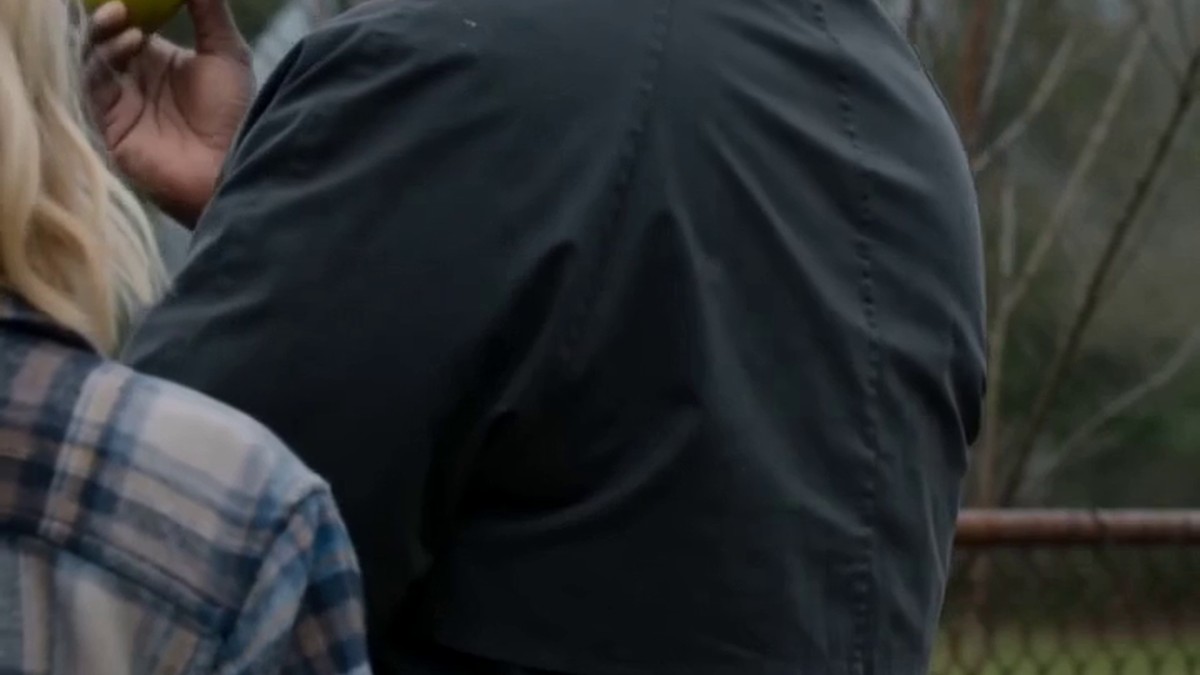
He drove out that Saturday morning, and we stood together at the fence line — the same fence we'd climbed as kids, though he was older than me and I only knew him a little, mostly by his mother's stories about him. He didn't say much. He picked pears anyway, filling a grocery bag, testing each one in his palm the way his mother must have taught him, checking for the give right below the stem. At one point he stopped, held one up to the light, and said, "She never let anybody bake with these too early. Drove my wife crazy the one time she visited."
Before he left, he walked over to the trunk and pressed his hand flat against the bark for a second, the way you'd check a fever, then got back in his car.
I went home and told my wife everything — the sign, Petrov, Ray, the four jars sitting unopened in a garage in Beavercreek. She didn't say much either. She just started peeling the pears I'd brought, a whole sink full, and that night we made a crisp — cinnamon, oats, the works — and ate it on the back steps while the porch light drew moths.
Petrov called me back on Monday. Said the site plan came in and, as it turned out, the tree sat close enough to the property line that it could stay, might even end up in somebody's future backyard once the lots were staked. Not a promise, he said again. Just how the numbers fell.
I drove past this morning on my way to work. The house is gone now — knocked flat over the weekend, nothing left but a rectangle of churned dirt and a dumpster full of lumber. But the tree's still standing at the edge of it, pears scattered in the mud around the roots, same as always. I didn't stop this time. I just slowed down enough to see it was there, and then I kept driving.