I manage the building at 214 Larchwood Court in Dayton, Ohio — twenty-six units, mostly young families and a few retirees who've been here since the place still had a coin laundry instead of the card machine we've got now. Part of my job is knowing who lives where, who's on which lease, and who's just crashing. So when Unit 4B started having problems, I noticed before anyone told me anything.
The lease was in one name: Renee Castellano. Thirty-four, works billing at Kettering Health, drives a gray Honda CR-V with a parking pass I renew every March. Her husband, Paul, moved in about two years back — never went on the lease, which I only knew because Renee came to my office and asked me straight out not to add him. I didn't ask why. Not my business, as long as rent clears on the first.
What became my business, eventually, was the smell of Marlboros drifting under my office door from the stairwell, twice a week, sometimes more. Then it was two suitcases parked by the mailboxes for four days running. Then it was Paul's mother — heavyset woman, always in a cardigan even in July — asking me at the mailboxes if 4B had a pull-out couch, because she and her husband might be staying "a little while."
I told her I didn't know the layout of every unit and she should ask her son.
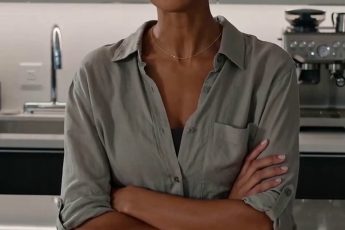
Turned out they'd been sleeping in the living room for going on three weeks. Paul's parents had lost their place in Springfield — some dispute with their landlord, never got the full story — and Paul brought them in without asking Renee first. I know this because Renee eventually told me herself, standing in my doorway in her scrubs from a half shift, arms crossed like she was holding herself together with them.
"They eat like there's four of us," she said. "They use the good towels. His mother rearranged my kitchen cabinets on a Tuesday like she lives here."
I said the obvious thing, that if they weren't on the lease, she had every right to decide who stayed and for how long. She said she knew that. She said knowing it and doing it were two different things when you'd been married eleven years and the man crying about it was still, somehow, the one you loved.
I didn't see the fight. I heard part of it, actually — my office shares a wall with the stairwell, and voices carry when the building's this quiet at ten at night. I heard Paul's mother say something about "family sticking together," and I heard Renee's voice go flat and even, the way people get right before they stop negotiating.
The next morning I found Renee at my office at 7:40, before her shift, asking me for two things: a spare key cylinder from the maintenance closet, since she wanted her locks changed that day, and a copy of her original lease, the one with just her name on it, notarized when she and Paul got married and she kept the apartment under her name alone — some arrangement from before I took this job, apparently her idea from the start, because her mother had warned her once about putting everything under a joint name too fast.
I gave her both. I changed the lock myself that afternoon while she was at work — she'd asked me to do it before Paul got home, and legally, since it's her name on the lease, that's entirely within her rights as tenant. Two hundred and forty dollars for the cylinder and my time, which she paid out of pocket without blinking.
I was in the hallway checking a leak in 4C's bathroom ceiling when Paul came home around six. I watched him try his key three times before he understood. He knocked. Renee opened the door on the chain first, then all the way.
I wasn't trying to listen. But the hallway's narrow and I had a wrench in my hand and nowhere polite to disappear to.
"Anka — I mean, Renee," he said, catching himself on some old nickname, "what is this?"
"Where are your parents staying tonight?" she asked him.
"They found a motel. I'm asking about us."
"There is no us in this apartment right now," she said. "You brought two people into my home without asking me. You let your mother move my dishes. And when I said something, you told me I was being cold to family."
He said he'd fix it. He said whatever needed fixing, he'd fix it, if she'd just let him in to talk. I saw him actually get down, one knee on the hallway tile, right there in front of 4C's door with the leak dripping behind me, saying her name over and over like it was the only word he had left.
She didn't yell. She didn't cry, either, not that I could see. She held the door with one hand and her phone with the other — screen still lit from something, maybe the locksmith's receipt, maybe nothing, I couldn't tell from where I stood.
"I already emailed the building office," she told him. "You're not on the lease. That means legally I don't need your consent for anything happening in that unit. I'm having your things boxed by Sunday. You can pick them up from the storage room downstairs."
Paul stayed on that tile a long moment after she shut the door. I finished with my wrench and didn't say anything to him. What was there to say. He knocked twice more, softer each time, then went down the stairs I'd know his footsteps from for weeks afterward — slower going down than they'd ever been coming up.
Renee filed for divorce six weeks later; I know because the paperwork needed my signature as landlord to confirm sole tenancy for her file. Paul's boxes sat in our storage room for eleven days before he sent his brother to collect them, since he apparently couldn't come himself. His parents never came back to the building. I still see Renee most mornings, badge clipped to her scrubs, walking to that gray CR-V like nothing about the last two years happened in that stairwell at all. She waved at me yesterday, matter-of-fact, the way you wave at someone who fixed your lock once and never mentioned it again.