I've cashed checks at that credit union on Route 9 in Bethlehem, Pennsylvania for eleven years, and you learn to read people through the little window slot. Most folks come in, sign, leave. But you remember the ones who come in on the same day every month, like clockwork, like it's church.
Mrs. Doris Kellerman came in on the third of every month at nine-fifteen, right when we opened, smelling like the lavender hand cream she kept in her coat pocket. Seventy-one years old, silver hair always pinned the same way, and she'd slide her deposit slip under the glass without a word about the amount — three hundred dollars, every time, into an account she'd opened for her grandson, Caleb.
I knew the story in pieces, the way you learn anything from a regular: small talk while the printer chugs, a sentence here, a complaint there. Her son, Caleb's father, had walked off when the boy was four — remarried in Ohio, sent a birthday card some years and not others. Doris had raised that boy from the time he could hold a spoon. Packed his lunches, sat through his Little League games at the field off Illick's Mill Road, cosigned his first car loan on a used Honda Civic when he turned seventeen because his mother's credit was shot from the divorce.
The savings account was for his college. Twenty-eight thousand dollars by the time he turned eighteen — I know because I processed half those deposits myself, and once, when a new teller mixed up the account number, I had to pull the ledger and saw the whole history laid out like a diary.
Caleb got into Kutztown University. Doris cried at my window the day she came in to withdraw the tuition money, said it was the proudest morning of her life since her own wedding.
Then, about a year and a half ago, she stopped smelling like lavender and started coming in smelling like the inside of a hospital waiting room. Her hands shook signing the slip. I asked, careful, if everything was all right. She told me — flat, like she was reading someone else's mail — that Caleb's mother, Renee, had moved back into the picture. Renee had gotten herself straightened out, she said, gotten a job at the Sands Casino down in Bethlehem, and Caleb, now twenty, had gone to live with her three weekends a month "to bond."
I didn't think much of it. Kids do that. But then Doris stopped coming in on the third of the month.
She came in on the ninth instead, and told me — again flat, like reading someone else's mail — that Renee had convinced Caleb she should be added to his checking account "in case of emergencies," since Doris "wasn't getting any younger." Then, three weeks later, Doris needed forty dollars from her own overdraft line, which she had never once used in eleven years of banking with us, because — and this she did tell me with her voice cracking, not flat at all — Renee had taken Caleb to Atlantic City for his birthday and put four hundred dollars of "his" money on a hotel room and a boardwalk buffet, out of the account Doris still, out of habit, still fed every third of the month.
I didn't say anything. It isn't my place. I stamp deposit slips; I don't referee families.
The last time I saw Doris was the second week of July. She didn't come to my window. She came to see Marisol, our branch manager, and sat in the little glass office by the door for forty minutes. I only know what happened because Marisol told me after, once it was already done, since by then it didn't need protecting anymore.
Doris had brought a folder. Inside it: the original custodial account paperwork from when Caleb was a baby, the car loan cosignment, every deposit slip she'd kept copies of for thirteen years in a shoebox — and a letter from an elder law attorney over on Main Street in downtown Bethlehem. Caleb had turned twenty-one that spring. The account, the one Renee had gotten herself added to, was legally his and only his now — not Doris's, not Renee's. Doris couldn't take money out of it anymore. But she could stop putting money into it.
She closed the recurring transfer that had run for thirteen years. Then she opened a new account, in her name only, and moved what she called her "real savings" — sixty-one thousand dollars, most of what she had left after her husband's pension and a small inheritance — into a trust with the attorney's help, naming her church's scholarship fund as the beneficiary if anything happened to her, and Caleb as beneficiary only if he could show two consecutive years of full-time enrollment somewhere. Not Renee. Not a checking account Renee could touch.
Marisol said Doris didn't raise her voice once, the whole forty minutes. She just signed where the attorney's letter told her to sign, folded the folder shut, and asked if that was everything.
I saw Renee once, at the window, maybe five weeks after that. She came in asking why the automatic transfer into Caleb's account had stopped, whether it was a bank error. I pulled up the account like I'm supposed to — she wasn't authorized to close it or reroute it, just to see the balance — and told her, the way I'm trained to tell anyone, that the account holder would need to contact us directly with any changes.
She stood there a second, tapping her thumbnail against the counter, the kind of sound that fills up a whole lobby when nobody's saying anything. Then she asked if Doris Kellerman still banked here.
I told her I couldn't discuss another customer's accounts.
She left without buying a money order, which is the only reason she'd ever come in besides that.
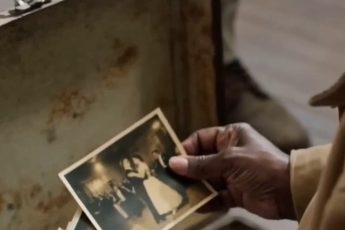
I still see Doris every third Wednesday, same time, same coat. She doesn't slide a deposit slip toward Caleb's old account anymore. She opens a savings passbook with her own name on it, deposits whatever the trust throws off that month, and asks after my daughter, who's starting nursing school this fall. Last week she brought in a photograph — Caleb, in a cap and gown, Kutztown class ring on his finger, standing next to a woman I didn't recognize. Not Renee. A professor, Doris said, who'd helped him switch his major back to education after "some trouble" that spring.
She didn't say what the trouble was. I didn't ask. I slid her receipt under the glass, and she folded it into her coat pocket, right next to where she still keeps that lavender hand cream, and told me she'd see me next month.