THE SHEPHERD'S SECRET
Sister Marta Kovalenko had kept the ledger locked in the bottom drawer of her desk at St. Sophia's Ukrainian Cultural Center in Chicago for eleven years before she found the courage to open it in front of witnesses.
"You need to see what your grandfather actually did," she told Peter Wozniak, sliding the cracked leather book across the table. "Not what the family story says. What he did."
Peter had driven four hours from Milwaukee expecting a pleasant afternoon — a donation ceremony, his grandfather's name read aloud, maybe a plaque with his name on a brass plate. Instead he found himself in a converted rectory office that smelled of candle wax and mildewed paper, staring at columns of names written in a hand he didn't recognize, dated 1942 and 1943.
"My grandfather was a parish priest in Lviv," Peter said. "He baptized babies. He buried people. That's the story I got."
"That's the story he gave everyone." Marta tapped the ledger with one knuckle. "One hundred fifty-three names in here. Jewish children. Your grandfather and eleven other clergy hid them — monasteries, convents, some family's spare room — under baptismal certificates that weren't real. The man running the whole operation was Metropolitan Sheptytsky, worked it right out of the cathedral. Your grandfather carried papers for him. A courier, basically."
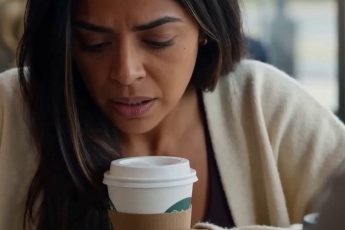
Peter's coffee had gone cold in its paper cup — he hadn't touched it once. He'd grown up on stories of the old country delivered in fragments at Christmas dinners, a village, a war, a boat to New York, but never this. His grandfather, Father Illia Wozniak, had died when Peter was nineteen, a quiet man who flinched at slammed doors and never once raised his voice, not even the summer Peter put the family Buick into a ditch.
"Why didn't he ever say anything? Not once. Sixty years and — nothing."
"Because that generation thought silence was part of what you owed for it." Marta shrugged, a small, tired motion. "And because afterward — for decades — nobody wanted Sheptytsky's name said out loud. The Soviets hated him, he'd fought them from the pulpit. And some of our own people weren't crazy about him either, because at the start of the war he welcomed the Germans in, called them liberators from Stalin — before he understood what that liberation actually looked like. Try building a monument to a man with a first chapter like that."
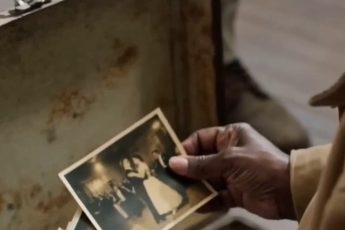
Peter turned a brittle page. A child's name — Ester Grynberg, age six — sat beside a false name, Oksana Blahodatna, and a convent address in pencil so faint it had nearly vanished. Someone had drawn a small cross next to it, decades ago, in a different hand.
"Is she — is any of them still alive?"
"One is, that I know of. That's why I called you instead of putting a folder in the mail. Woman in Skokie. Ninety years old. She was that little girl — Ester Grynberg. Six years now she's been trying to find out whose signature is under her false name. She's had the certificate the whole time. Never had the man."
Marta pulled a second document from a manila envelope — a photostat of a baptismal certificate, water-stained at one corner, the signature at the bottom rendered in the same slanted hand as the ledger.
Peter recognized it before she'd even flattened the paper out. He'd seen that same loop on the "P" in birthday cards for nineteen years.
"That's — that's his hand. That's his signature."
"I know. I've known three years." Marta said it flatly, like she was still apologizing for it. "Didn't call you sooner because I had to be sure — some people, after the war, claimed things that weren't theirs, for the visa paperwork, you understand. Your grandfather never claimed one thing. Never applied for a medal, a plaque, nothing. Nobody in your family even knew to ask. I only got his name because Ester's daughter walked in here looking for help, and the archive in Lviv had just finished scanning the old parish letters. Three months earlier and I wouldn't have had it."
Peter turned the photostat over in his hands, thumb catching on the softened corner where the paper had gone thin as cloth. He was thinking about his grandfather's hands at eighty — how they shook pouring coffee, how he still wouldn't let anyone else light the Sunday candles, waved off Peter's mother every single week like it was an insult to be helped.
"I want to meet her," he said. "Ester. If she'd see me."
"She's been asking since the day I found the name. She's got something for your family. Twenty years, and no one to give it to."
Three weeks later Peter sat in a small sunlit living room in Skokie, across from a woman with sharp eyes and hands spotted with age, folded in her lap like she was waiting for a photograph to be taken. A small wooden box sat on the side table between them.
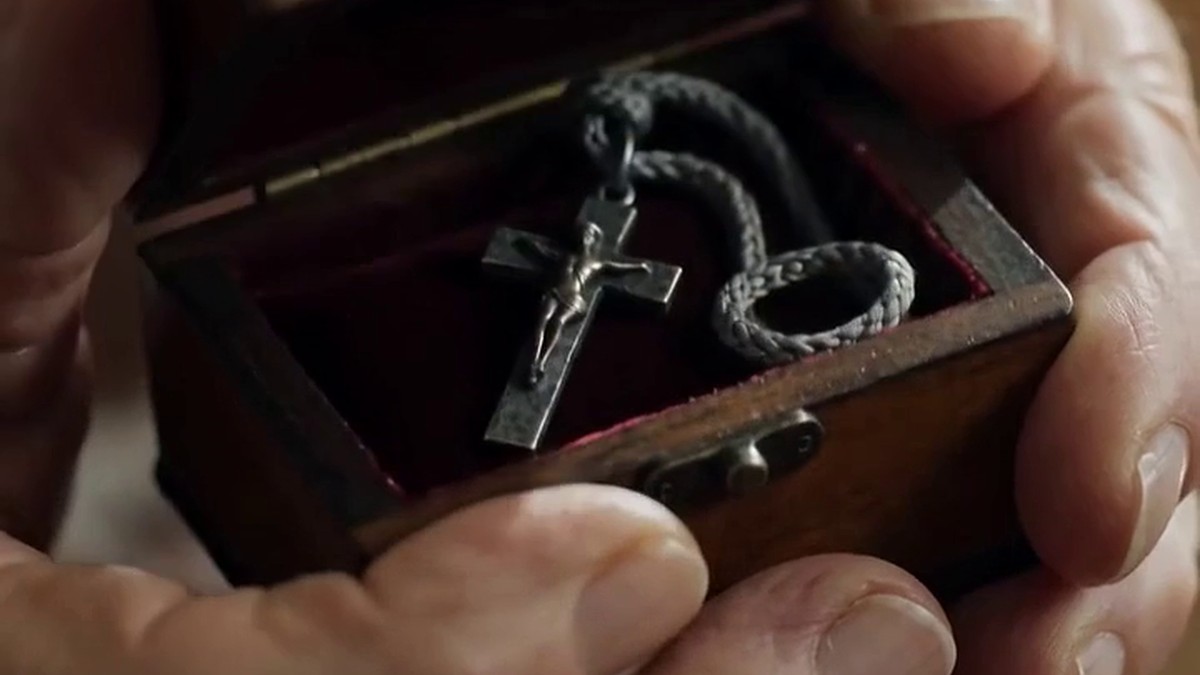
"Your grandfather's boss — the Metropolitan — he called his priests his hands." Ester's English still carried the shape of another language underneath it, vowels a half-second slow. "He used to say — I cannot reach them, my hands don't go that far, so I will grow more hands. Your grandfather. One of the hands." She opened the box. Inside lay a small silver crucifix, black with tarnish, on a cord gone gray. "The night they moved me to the convent, he put this around my neck himself. Cold, I remember it was cold, his fingers. He said, this will remind you God did not look away. Even when it looked like He did." She turned the box slightly, so the cross caught the window light. "Eighty-four years I wore this. I want you to take it. It belongs with his name now. Not mine."
Peter didn't reach for it. His hands stayed flat on his knees while she held the box out, waiting, and the clock on her mantel — one of those old wind-up ones — ticked through maybe fifteen seconds before he moved.
"You keep it," he said finally. "You wore it longer than he did." He closed his hand over hers, over the box, and pushed it gently back toward her. "But tell me the rest. Everything he never told us."
She told him. Three different houses in one week, once, when someone in the village started asking questions. The Metropolitan himself — paralyzed by then, nearly blind — sitting up in his study at the cathedral demanding to know each child's real name, even as false ones were being inked into the parish books downstairs. He died in 1944, she said, a year before it ended, never knowing the final count. Not one hundred fifty. Not two hundred. The archive, much later, put the number near eight hundred — a network built, she said, "out of nothing. Out of stubbornness and a church."
Driving home that night, Peter stopped at a gas station outside Kenosha and sat in the lot with the ledger's photocopy on the passenger seat, engine ticking as it cooled, a moth banging itself against the sodium light overhead. He thought of the word his grandfather said at the end of every meal, in a language Peter had never learned properly — dyakuyu — and how the old man had always said it a beat too long, like he was talking past the food.
The following spring, St. Sophia's unveiled a plaque in the courtyard — a plain bronze rectangle, clergy names on one column, children's names on the other, Ester Grynberg printed beside the false name she'd worn for three years of her childhood. At the reception after, someone handed Peter a taper to light the memorial candle, and his hand — he noticed it only after the wick had caught — was shaking too hard to get the flame away clean, so that the first match went out, and he had to strike a second one, and nobody in the small crowd said anything at all.