Every morning at six-forty I unlock the side door of Marnie's Diner on Sunset, and every morning the same regulars are already lined up outside like it's a bread line in an old newsreel. Cliff, who takes his eggs over medium and never tips more than twelve percent. The two hairstylists from the salon next door who split a plate of hash browns and argue about reality TV. And for about four months last year, a man who told everyone to call him Gary.
I've waited tables at Marnie's for nineteen years. I've served actors before — this is Los Angeles, you can't avoid it — the kind whose faces used to be forty feet tall on a screen at the ArcLight before it closed. You learn to spot them. Something about the posture, like they're still being watched even when nobody's watching. Gary didn't have that. Gary shuffled in wearing a Dodgers cap pulled low, three hundred pounds if he was an ounce, breathing hard just from the walk to the corner booth. He ordered the Grand Slam and black coffee and left a five on a fourteen-dollar check without saying much of anything.
It was Roz, one of the hairstylists, who figured it out. She squinted at him over her coffee one Tuesday and said, low, "That's — oh my God, that's him. From that movie. The one where he jumps off the parking garage." And it was. A name that used to fill theaters, a jawline that used to sell magazine covers, buried now under all that weight like a photograph left too long in a drawer.
Nobody said anything to him directly. That's the code at Marnie's — you serve people, you don't gawk. But I noticed things a stranger notices. He always sat facing the door. He always paid in cash. And one morning in March, he came in with a manila folder tucked under his arm, thick as a phone book, and asked if he could sit in the back booth instead of his usual spot by the window.
I brought his coffee and he was staring at that folder like it might bite him.
"You want cream today?" I asked, because that's what you say. You don't ask a man why his hands are shaking over a stack of papers.
He looked up. "Black's fine, Denise." He'd learned my name from the tag on my apron sometime around week three. "You ever have somebody you loved take something from you? Not steal it exactly. Just — decide it was theirs to have."
I set the coffee down. "My ex-husband took the good blender in the divorce. That count?"
He almost laughed. Almost. "Bigger than a blender."
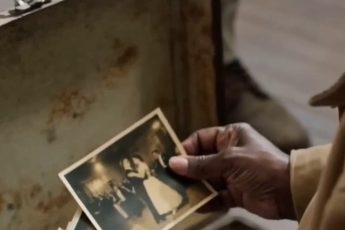
Turned out — and this came out over weeks, in pieces, the way real stories come out, not all at once like in a movie — Gary had a brother, younger by six years, named Dale. Dale had managed Gary's money for the better part of a decade, ever since Gary's career started sliding after some tabloid trouble and two flops back to back. Dale set up the accounts, handled the mortgage on the house up in Los Feliz, signed for the storage unit where Gary kept props and wardrobe from his best years — a leather jacket from that cop movie, a watch some director gave him as a wrap gift.
Somewhere in there, Dale had also put his own name on the deed to that Los Feliz house. Gary didn't notice for three years because Gary wasn't looking. Gary was busy disappearing into takeout containers and a recliner, watching his own old films at two in the morning with the volume too loud, weighing two hundred, then two-fifty, then past three hundred, while his brother filed paperwork downstairs in what used to be Gary's home office.
"He kept telling me it was for my protection," Gary said one Thursday, pushing his hash browns around without eating them. "Said with everything going on — the drinking, before I quit — that it made sense for him to hold things in his name for a while. A while turned into six years, Denise."
The folder wasn't paperwork he was signing. It was paperwork he'd finally gone and gotten himself — copies of the deed, bank statements he'd requested directly from the branch on Hillhurst, a letter from a real estate attorney named Priya Anand whose office was two blocks from the diner. He'd been walking there after breakfast three times a week and sitting in her waiting room, working up the nerve to go in.
"So go in," I told him, refilling Cliff's coffee two booths down without looking away from Gary. "You're already sitting outside her door. That's the hard part. Walking in's easy after that."
He didn't, not that week. Or the next. I watched him carry that folder in and out of Marnie's for almost a month, like a man practicing a phone call he can't make. Roz started saving him the corner booth even when it wasn't busy. Cliff, who I don't think ever clocked who Gary really was, started nodding at him like they were old army buddies. Small kindnesses, the kind this city doesn't get credit for.
Then in April, Dale showed up.
I knew something was wrong before I knew what. Gary was in his booth, folder open for once, actual reading glasses on, when a lean man in a blazer that cost more than my car came through the door and scanned the room like he was casing it. He found Gary and walked over without waiting to be greeted.
"You're not answering your phone," Dale said. No hello. He didn't sit.
"I've been busy." Gary closed the folder, but not fast enough — Dale had already seen the letterhead.
"Is that Anand's office? Gary. Gary, look at me. Whatever she's telling you, it's not that simple. There are tax implications, there's the refinance from 2019, there's —"
"There's my name," Gary said, and this time he didn't push his food around. He set his fork down flat on the table, a small sound, metal on ceramic, that somehow cut through the whole diner. "My name should be on my house, Dale."
"It was never about the house."
"Then whose house is it?"
Dale didn't answer that. Roz had gone very still with a coffee pot in her hand. Cliff had stopped chewing. I stood by the register pretending to count receipts, close enough to hear, the way you do when a scene is happening in your dining room and you can't not watch.
"I've been carrying you," Dale said, quieter now, which was worse than the shouting would've been. "For six years I dealt with the lawyers, the tabloids, the DUI, all of it. I put the house in my name so the creditors couldn't touch it during the bankruptcy scare. You'd have lost everything."
"And now that it's not in trouble anymore, you never gave it back."
The diner had gone the particular quiet that isn't silence at all — forks stopped, but the fryer still hissed, a car alarm went off somewhere out on Sunset. Gary stood up. He wasn't a small man even now, and standing, folder in hand, he took up the doorway of that booth like he used to take up screens.
"I have an appointment with Priya Anand at eleven," he said. "You're welcome to come. Or you can go back to Los Feliz and start packing whatever's yours, because everything else is getting deeded back into my name by the end of the month."
Dale's jaw worked like he wanted to argue the number, argue the timeline, argue anything. What came out instead was smaller. "You're really doing this over breakfast."
"No," Gary said. "I did this over four months, in that booth, by myself, because you never once asked how I was actually doing. You just made sure the paperwork said what you needed it to say."
He left a twenty on the table — more than double the check — and walked out with the folder under his arm, past Dale, who stood there a second too long before he followed him onto the sidewalk. Through the window I watched them argue on the curb for maybe ninety seconds, Dale gesturing at the diner like it was somehow the diner's fault, and then Gary just turned and walked the two blocks to Priya Anand's office. Alone. Dale did not follow him in.
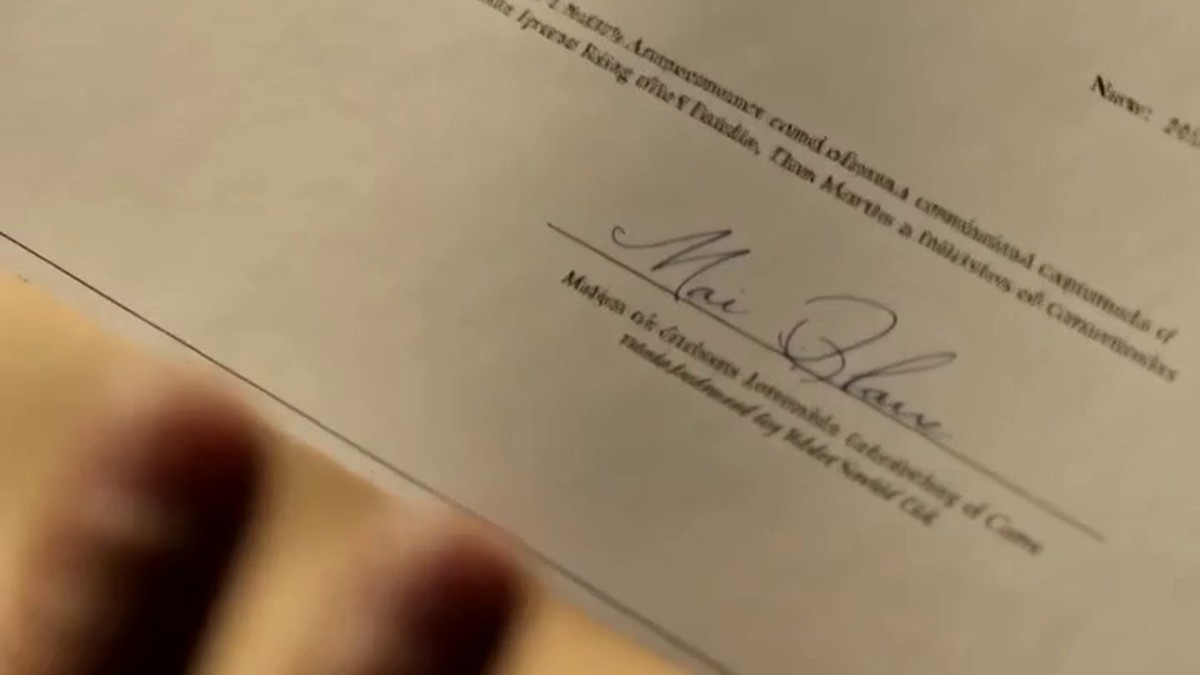
I found out the rest the way you find out most things at a diner — over months, in installments, from a man who'd started ordering egg whites instead of the Grand Slam and had lost, by my rough count, close enough to sixty pounds by that August. The refinance took eleven weeks. The house — worth just under one point one million on paper — went back into Gary's name alone in June, with Dale's signature notarized on a document he clearly hated signing, according to Priya, who Gary quoted more than once with something close to relish. Dale kept a rental car business he ran on the side, the one thing that actually had been his the whole time, and Gary let him keep every dollar of it without a fight, because Gary said the point was never to take something from Dale. The point was to stop letting Dale hold something of his.
Dale hasn't been back to Marnie's. I don't imagine he will.
Gary still comes in most mornings, though not every day anymore — he joined a gym on Vermont, some kind of walking group with three other guys from the neighborhood, and some mornings he's there instead. When he does come in, he sits by the window again. Faces the door out of habit, I think, more than fear. Orders black coffee, sometimes the eggs, sometimes just toast. Leaves eighteen, twenty percent now instead of the flat five.
Last week he brought in a picture — printed at the CVS on Hyperion, not framed, just tucked in his jacket pocket — of the house with a new lockbox on the door and a locksmith's van still parked out front. He didn't say much about it. Just set it on the counter for a second while he paid, like he wanted a witness, and then put it back in his pocket and told me he'd see me Thursday.