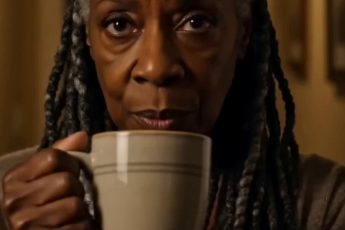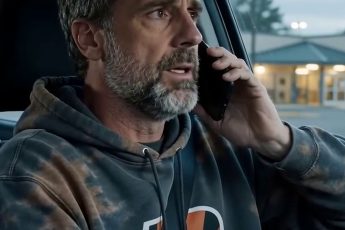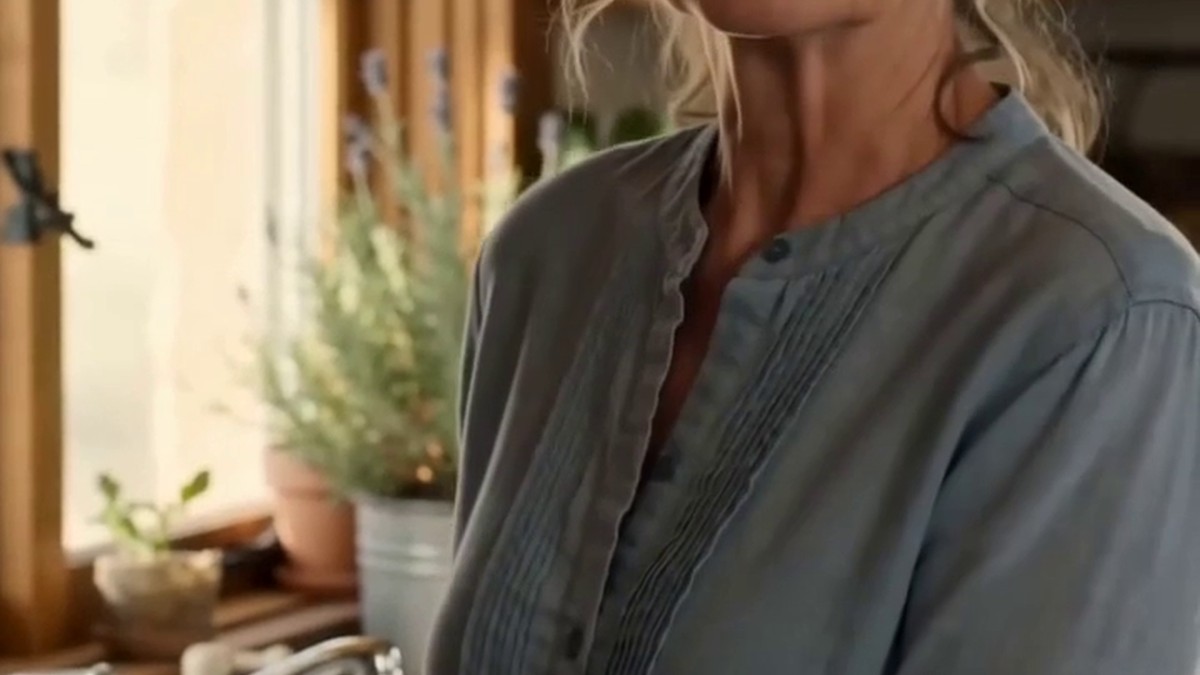
The Chevy Suburban idled outside the Wilshire ballroom while a valet in a maroon vest waved it toward the curb, and Marlene Ashford checked her lipstick in the visor mirror one more time before she let her husband open the door for her. It was a Tuesday evening in downtown Los Angeles, the kind where the marine layer hadn't burned off yet and the air still smelled faintly of eucalyptus from the median strip. Marlene was sixty-one. Her husband, Rex Callahan, was sixty-six, a character actor most people recognized from a decade of supporting roles nobody could quite name the show for. Tonight they were at a fundraiser — a hybrid rose named after a country singer, proceeds going to a children's food-assistance program — and Rex, ever the showman, announced to the room that he'd be buying ten of the rose bushes at sixty dollars apiece. Six hundred dollars, cash from his money clip, half the bushes earmarked as gifts for Marlene's college roommates.
It got a laugh. A photographer caught it. And if you'd shown that photo to strangers, they'd have assumed this was simply a wealthy older couple enjoying a charity gala, nothing more.
They would have missed the whole story.
Because twenty-two years before that rose garden fundraiser, Rex Callahan had not wanted to go anywhere near a party.
It was February 2004, and his agent, a wiry, chain-smoking man named Sol Getz, had been badgering him for a week about an Oscar-week event he needed a date for. Rex had just wrapped a recurring role on a network drama and had zero interest in showing up alone to a room full of publicists. Sol had an idea: he knew a woman, recently widowed, who hadn't been out in over a year. Her name was Marlene Ashford, and she'd spent nineteen years married to a documentary filmmaker named Curtis Ashford before pancreatic cancer took him in the spring of 2002.
Rex almost said no. He hated blind setups — hated the performance of it, the small talk, pretending interest in someone's life story over rubber chicken. But Sol wouldn't drop it, and eventually Rex agreed, mostly because he didn't have a better excuse.
He picked her up outside a Spanish Revival bungalow in Los Feliz. There was a wind chime on her porch that never stopped moving, even when there was no wind that he could feel, and a neighbor's terrier barking somewhere down the block the entire time he waited at her door. Marlene came out in a green dress that didn't match anything she'd usually have picked — she told him later she'd bought it that afternoon because everything else in her closet still smelled like Curtis's cologne, and she couldn't stand it anymore.
They didn't talk much in the car. Rex kept adjusting the radio. Marlene kept her hands folded in her lap like she was bracing for something.
"You don't have to make conversation," she finally said, somewhere on Los Feliz Boulevard. "I know how these things work."
"I wasn't trying to," Rex said. "I just don't know what to say to someone who's still in it."
That honesty did something neither of them expected. It cracked the evening open. By the time they reached the party, they'd talked for twenty minutes about nothing — his mother's meatloaf recipe, her husband's habit of leaving cabinet doors open, a movie they'd both hated for different reasons — and something had loosened between them that had nothing to do with romance and everything to do with relief.
There was no lightning-bolt moment. Marlene would say later that what she felt that first year wasn't passion so much as ease — the sense that she could sit across from this man in total silence and it wouldn't feel like a failure. Rex, for his part, had come into it braced for awkwardness and instead found someone who made him laugh without trying.
They didn't rush anything. Rex had a modest spread out past Ojai — three acres, two dogs, a rescued mule named Biscuit who'd outlive several of his career highlights — and Marlene started spending weekends there, then most weeks, then all of them. Their life wasn't built around premieres or step-and-repeats. It was built around coffee at six in the morning, arguments about whether the mule needed new shoes, Marlene reorganizing his garage every spring whether he asked her to or not, and the two of them falling asleep most nights to the same rerun of a home renovation show neither of them would admit to liking.
Seventeen years passed like that. No engagement, no ring, nothing formal — just two people who kept choosing to stay.
Then came 2020.
Rex got sick that April — not with the virus everyone was terrified of, but with a bout of pneumonia bad enough to land him in a hospital in Ventura for eleven days, no visitors allowed. Marlene sat in the parking lot in her car for six of those days, talking to him through a nurse's cellphone propped against a pillow, because that was the only contact the hospital would permit. When he finally came home, thinner and quieter than he'd left, they didn't talk about it much. But something had shifted.
In November of that year, in the backyard under the oak tree Rex had planted the year he bought the property, they got married. No caterer, no guest list beyond four people — Sol Getz, now retired and half-deaf, stood up as witness. Marlene wore the green dress, altered slightly at the waist, the same one from that first Oscar-week party. Rex told the small group gathered that he didn't want 2020 to only be remembered as the year that took things from people. He wanted one thing that year to have given something back.
Fast forward to that Tuesday evening at the rose gala in 2026. Rex, hair fully gray now, counting out cash for ten rose bushes while Marlene stood next to him, arms crossed, trying not to laugh at how seriously he was negotiating with the volunteer at the folding table over whether he could get a discount for buying in bulk.
"You don't need ten rose bushes, Rex."
"Four are for you. Four are for your book club ladies. The other two are for the mule's grave someday, don't ask."
She swatted his arm. The volunteer, a college student working her first fundraising shift, watched the exchange and would later tell her roommate she'd witnessed "the cutest old couple ever," with no idea she'd just watched the tail end of a twenty-two-year story that started with a widow in a green dress and a reluctant blind date neither of them had wanted to go on.
What nobody at that gala knew — what Marlene herself hadn't fully processed until eighteen months earlier — was the paperwork sitting in a manila folder in the top drawer of her home office desk. Because in early 2025, Rex's estranged nephew, a man named Desmond Ashford-Callahan whom Rex hadn't spoken to in over a decade, had shown up at the Ojai property with a lawyer and a claim: that as Rex's only living blood relative, he was entitled to a stake in the ranch should anything happen to his uncle, regardless of what any will said, on the grounds that Marlene's marriage had come "too late" to count under some theory his lawyer had cobbled together about California community property and prior estate documents Rex had drawn up as a bachelor in the 1990s and never formally revoked.
It wasn't really about the law. Desmond hadn't called in eleven years, not for a birthday, not when Rex was in the hospital in 2020. He'd shown up because a real estate agent friend had mentioned the Ojai land was now worth close to $2.1 million, and he wanted a piece of it before anyone died.
Marlene didn't scream at him. She didn't cry in front of him either, though she wanted to. She sat across the kitchen table from Desmond and his lawyer, the same table where she and Rex ate breakfast every morning, and she listened to the whole pitch without interrupting once.
Then she stood up, walked to her office, and came back with the folder.
Inside was the updated trust document she and Rex had quietly finalized eight months earlier with an estate attorney in Santa Barbara — one that named Marlene as sole beneficiary of the ranch, superseding every prior document Rex had ever signed, drafted specifically to close off exactly the kind of challenge Desmond's lawyer was trying to raise. She slid it across the table.
"This was recorded with the county in October," she said. "You're welcome to have your attorney review it. But I'd suggest checking the filing date before you drive back down here."
Desmond's lawyer read two pages and stopped talking. Desmond himself sat there for a long moment, jaw working, before he stood up without a word and walked out to his car. He never called again. Rex, who'd been out at the barn during the entire conversation, came in afterward and asked how it had gone. Marlene just handed him the folder and put the kettle on.
She never told him how much the estate attorney's fees had run — just under nine thousand dollars, money she'd pulled from an account of her own that Curtis had left her years earlier, money she'd been saving for nothing in particular until she found a particular reason to spend it.
That's the part nobody photographs at a rose garden gala. Not the six hundred dollars in cash for rose bushes, not the easy laughter, not the gray-haired man teasing the volunteer about a bulk discount. Just a woman who, when it mattered, closed a folder, slid it across a table, and went back to putting the kettle on.