The first thing Ray did after the funeral was put a lockbox on Mom’s back door. Not even six hours. The flowers from the service were still in the back of my Subaru, wilting in the Albuquerque sun, when he showed up with his real estate agent.
“She told me the house was mine,” he said. He had a piece of paper with him—the back of a gas bill, with a pencil scratch that looked like Mom’s handwriting. It said: “Ray can have the house. He is my son.”
I turned the paper over. It was a PNM bill from March, the month after her stroke. No notary, no witness, no date.
Ray took a key out of his pocket. “I changed the locks.”
That first week, I slept in my car one night because I couldn’t stand to go back to my apartment. I kept waking up thinking I needed to call Mom about the tree roots in the sewer line.
I had moved home six years before, after Dad’s kidneys failed. That’s the kind of sentence that sounds simple and isn’t. I left a job in Phoenix and a rental house with a pool. Mom had a casita behind the carport, and for the last four years a single mother named Alicia had rented it for six hundred dollars a month. Mom said Alicia paid on time and brought her menudo when the weather turned cold.
I did the unglamorous stuff. The pharmacy on San Mateo knew my name. I sat in the kidney clinic waiting room with the torn vinyl chair every Tuesday for three years. I paid the property taxes in April and November from my checking account. Ray called from Tucson on Sundays and said he might visit when the dust settled. The dust never settled.
Ray’s paper might have been real, but it wasn’t a will. I knew Mom kept her important things in odd places. The deed to the house had been inside the freezer, wrapped in a bread bag, for at least a decade. So I went to the garage.
The overhead bulb had been dead since before Dad got sick. I used the flashlight on my phone. The shelves were covered in pine dust and empty plant pots. A neighbor’s chihuahua, Oso, barked at the fence until his owner called him inside.
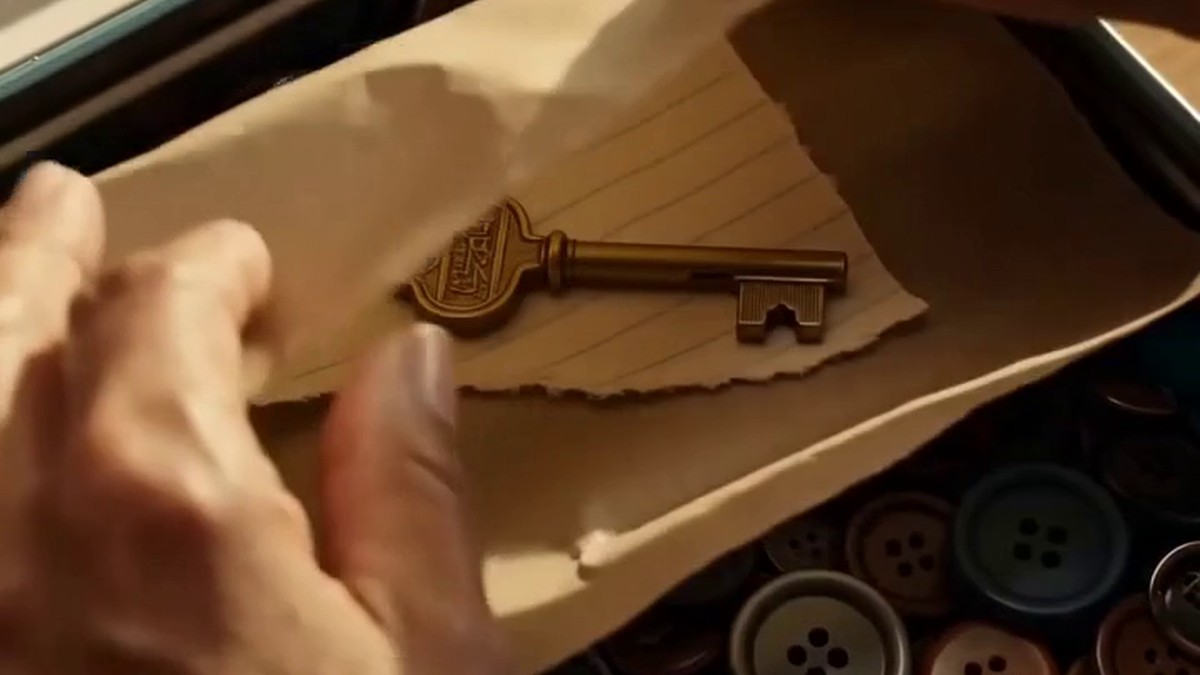
I found the cookie tin on top of a stack of Albuquerque Journal newspapers from 1998. It was a blue Danish butter cookie tin. Inside were buttons—white, blue, a few shaped like ladybugs. And under the paper lining, taped flat, a little brass key.
The note was folded into a ziplock, the kind Mom used for buttons.
“Melinda. Box 82 at Fourth Street.”
My hands were shaking when I drove to Rio Grande Credit Union. I told the teller—Yesenia, with silver hoop earrings and a turquoise ring—that my mother died last Saturday. Yesenia didn’t say anything. She led me to the vault.
Box 82 held a manila envelope. A real last will and testament, notarized by a mobile notary named Bernadette. It left the house to me. It left the Ford F-150 to Ray.
There was a note in Mom’s blue ink, the same blue she used for her grocery lists:
“Mija, you came on Tuesdays. Ray can have the truck. Don’t let him sell the cottonwoods.”
I didn’t cry in the bank. I did that later, in the car, while a city bus idled at the corner and a man in a Stetson got off carrying a guitar case.
I called my lawyer from the parking lot and filed the will that same afternoon. The clerk stamped it with a time that felt too still.
Ray showed up Saturday. I had already changed the locks again. He walked across the porch and pushed his key into the door. It didn’t turn. The realtor was behind him, a tablet and a lockbox in her arms.
I opened the screen door. On the table next to Mom’s dented tea kettle I had set a copy of the will inside a plastic sleeve. I slid it across the threshold, the way you’d leave mail for a neighbor.
“That’s not valid,” he said.
“It’s notarized,” I said. “The one you found is a gas bill.”
“I’ll fight you.”
“Go ahead.” I didn’t raise my voice. “I’ve got a lawyer. The estate won’t pay for yours.”
He stood on the porch with the sun hitting his face. The cottonwoods behind the fence dropped leaves onto the hood of his Silverado. Barbara, the realtor, asked if this was a family matter. Ray told her to wait in the car.
To be honest, I expected him to try something. Break a window, shove past me. But he just looked at the key in his hand, then walked down the steps.
The house went through probate. It took eleven months. Ray contested, but a judge threw it out. In the hearing, he tried to say I’d turned Mom against him. My lawyer asked him when he’d last driven her to a doctor’s appointment. He didn’t answer.
When it was over, I had the title company draw up a deed. I sold the house to Alicia for $178,000, owner-financed—$6,000 down and nine hundred a month. She signed the papers in the back room of a title company on Louisiana. Her two kids sat on the floor eating crackers from a plastic cup.
I handed her the keys: the new deadbolt key, the back door key, and the key to the garage. I kept the cookie tin.
Ray drove by while they were moving in. I saw him from the front window. His truck idled at the curb for maybe two minutes. He didn’t get out. Alicia’s son waved at him from the porch. Ray put the truck in gear and left.
I sat at Mom’s kitchen table one last time, in the chair where she used to drink her coffee and watch the birds at the feeder. The strings on the blinds were still knotted the way she left them.
The house doesn’t belong to me anymore. That’s fine.
Mom left me the tin and the little brass key. And she left me the house long enough to hand it to the person who brought menudo when it got cold.