The desk sergeant didn’t even bother to read the paper. He took one look at the old man in the worn trench coat, rolled his eyes at the rookie, and crushed the complaint in his fist. Then he tossed it into the trash can like a used napkin.
“Come back when you’ve got something worth our time,” he said.
The old man didn’t move. His left hand hung at his side, fingers trembling just enough to make the sleeve of his coat tap against the counter. The precinct smelled like burnt coffee and wet boot rubber. Somewhere behind the bulletproof glass, a phone rang four times and stopped.
The sergeant was young—maybe thirty—with a shaved head and a jaw that worked a piece of gum too hard. He turned to the officer beside him and muttered something. The other one laughed, a short ugly bark.
Outside, the February wind pushed snow against the precinct window. The old man could hear it, a low hiss under the heater’s rattle. He could still hear the music from his neighbors’ apartment too, the bass line vibrating through the wall like a second heartbeat.
He had come to the station because he had not slept in three nights. Because the couple in 4B had decided that Tuesday at two a.m. was the right time for a party. Because his chest ached, and his doctor had told him in November—three months ago, right before Thanksgiving—that stress would kill him faster than his arteries would.
He had written everything down. The address. The times. The names he’d heard through the door. He had dated it and signed it, and the desk sergeant had thrown it away.
“Excuse me,” the old man said. His voice was dry, not loud. “That’s a legal document. I want it filed.”
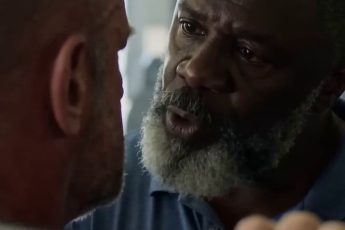
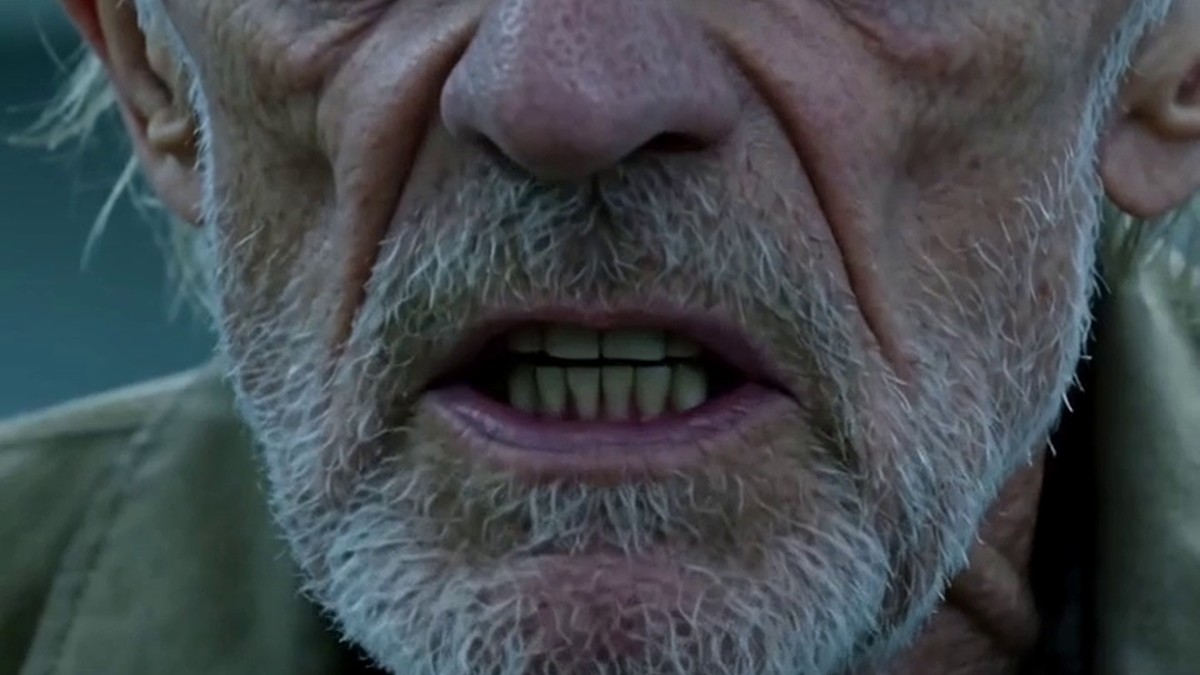
The sergeant stopped chewing. He looked the old man up and down, from the scuffed shoes to the gray stubble on his jaw.
“Sir,” he said, dropping the word like a coin into a gutter, “we don’t run a babysitting service for senior citizens. If your neighbors are loud, call 911. Wait. You did. Three times. And each time, by the time the unit got there, the music was off. That’s what the log says. Nothing we can do.”
He turned back to his screen.
The old man stood there. Behind him, the precinct door wheezed open and shut, letting in a blast of cold and a swirl of snowflakes. A woman with a black eye walked past him and sat down on a bench, hugging a plastic bag full of clothes. A man in a lime-green safety vest argued with someone at the far end of the counter about a stolen bicycle.
The old man took a step closer to the glass.
“I’m not leaving until I see the captain,” he said.
The sergeant didn’t look up. “Captain’s in a meeting. Until maybe next week. Go home, Grandpa.”
The rookie snickered.
The old man didn’t remember deciding to stay. He only knew that his legs were suddenly heavy, and the room tilted sideways, and a pain like a hot wire shot up through his chest into his left arm. He grabbed the edge of the counter, but his fingers slipped. His coat swung open. Something white fluttered out of his inside pocket and landed on the floor.
It was a photograph.
The old man went down on one knee. Not for the photo. His body just gave out. He heard a chair scrape. The rookie said, “Whoa, hey—” and the sergeant said something else, but the words blurred into the ringing in his ears.
He clawed at his chest, then remembered his pills. The bottle was in his right front pocket. He got it out, twisted the cap, dry-swallowed two. His hand was shaking so hard he dropped the cap. It rolled under the bench where the woman with the black eye sat.
Then the door to the captain’s office opened.
Captain Daniel Reyes stepped out. He was a solid man in his late forties, with a gray crew cut and a face that looked like it had been carved from the same granite as the building. He saw the old man on the floor, saw the photograph, and his whole body went still.
The room got quiet in the way a room gets before a storm.
Reyes walked over. He didn’t say anything. He bent down, picked up the photograph, and held it in both hands, like it might shatter. The photograph showed a young soldier in dress blues, smiling at the camera, his arm around two other men in the same uniform. One of them was Reyes. Twenty-two years younger. Both eyes open. Alive.
The captain turned the photo over. On the back, in faded blue ink, someone had written: *To Dad. Don’t worry. I’ll be home for Christmas. —Jake.*
Reyes looked at the old man. Then at the photo. Then at the old man again.
“Jake Harlan,” he said. The name came out almost as a whisper.
The old man, still on his knees, looked up. His eyes were wet, but he wasn’t crying. He was just tired.
“You knew my son.”
It wasn’t a question.
Reyes didn’t answer right away. He reached down and helped the old man to his feet. His grip was firm, but not rough. He led him to a chair by the wall, the same bench where the woman with the black eye sat. She slid over without a word.
Then, in front of the desk sergeant, the rookie, and two detectives who had stopped what they were doing to watch, Captain Daniel Reyes knelt down on one knee in front of the old man.
The sergeant’s gum stopped mid-chew.
“Sir,” Reyes said, and his voice cracked on the word. “Your son saved my life. Not once. Twice. The second time, in Kunduz, he threw himself on a grenade. We were ten men in that room. All ten of us walked out. Every single one of us is alive today because of him. I have a daughter, a mortgage, a bad knee—all of it because your son—” He stopped. His jaw worked. He pressed the photo against his chest.
The old man sat very still. His hands rested on his knees. Outside, the wind had died down, and the snow fell in slow, thick flakes against the dark window.
“I didn’t come here for a ceremony,” the old man said.
“I know,” Reyes said. He stood up, still holding the photograph. “I know you didn’t.”
He turned to the desk sergeant.
“Where’s his complaint?”
The sergeant’s face had lost all its color. He opened his mouth, closed it, then pointed a shaky finger at the trash can.
Reyes didn’t raise his voice. He didn’t need to.
“Get it,” he said.
The sergeant walked over, bent down, and pulled the crumpled paper out of the can. He smoothed it on the counter with both palms, leaving smudges of ink and a stain from a coffee cup. His hands were shaking.
The old man watched. He didn’t smile. He didn’t gloat. He just watched, the way you watch a receipt you already know is wrong.
“Read it,” Reyes said.
The sergeant’s mouth opened again. He stared at the paper, then up at the captain.
“Sir, I—” he began.
“Read it. Out loud. So every person in this room hears why this man came in at two o’clock in the morning.”
The sergeant swallowed. He read the complaint, his voice unsteady. The address. The time. The names of the neighbors—a woman named Brittany and a man named Kevin, who lived in 4B. The three nights of noise. The request for a formal report.
When he finished, the room was silent except for the soft hum of the fax machine.
The old man reached into his coat. He pulled out a pen—an old, engraved pen with a silver clip. It had belonged to his son. Jake had won it in a spelling bee in seventh grade. The old man never went anywhere without it.
He stepped up to the counter.
“Give me a clean form,” he said.
The sergeant didn’t move. Reyes nodded at the rookie, who scrambled to find a blank incident report. He handed it over with both hands, like it was a holy object.
The old man put the form on the counter. He clicked the pen. The sound was very small, but in that quiet it carried.
He wrote his name: Arthur Harlan. His address. His phone number. His date of birth—August 3, 1945. He wrote the same information he had written on the first form, the one that had been crumpled and thrown away.
Then he signed it.
He slid the paper across the counter to the desk sergeant.
“Now file it,” he said. “And give me the report number.”
The sergeant looked at the captain. Reyes gave him one nod.
The sergeant typed something into the computer. The printer whirred. A number appeared on the screen: 2025-01478.
“Report number 2025-01478,” the sergeant said.
The old man wrote the number on the back of his hand with the pen.
Then he turned to Reyes.
“I’m not asking for special treatment,” he said. “I’m asking that when my neighbors throw a party at two a.m., a car comes. Not because I’m a hero’s father. Because I pay taxes. Because I deserve to sleep. Because it’s the law.”
Reyes didn’t answer. He just held out the photograph.
The old man took it. He tucked it back into his inside pocket, next to the pill bottle.
“Sergeant,” Reyes said, “you’re off desk duty. You’re on foot patrol in this man’s neighborhood for the next thirty nights. Every shift. You’ll walk past 4B at least twice. If you hear so much as a vacuum cleaner after eleven p.m., you knock on the door. Understood?”
The sergeant opened his mouth, then closed it. He nodded.
“And you’ll write him a personal apology,” Reyes added. “Handwritten. On department letterhead. By the end of your shift. I want it on my desk before you leave.”
The sergeant’s face was the color of old dishwater.
The old man didn’t say anything. He picked up his pen, capped it, and slid it into his pocket. He picked up the crumpled first complaint from the counter where the sergeant had left it. He folded it neatly, once, then twice, and tucked it into the same pocket as the photo.
Then he walked toward the door.
Reyes called after him.
“Mr. Harlan.”
The old man stopped with his hand on the push bar.
“Thank you,” Reyes said. “For raising him.”
The old man didn’t turn around.
“You were there,” he said. “You came home. He didn’t. That’s all the thanks I get.”
He pushed the door open. The cold hit him like a clean page. The snow whispered under his shoes as he walked down the steps.
Inside, the precinct stayed quiet for a long time after the door swung shut.