The night we buried Brian, the house sat in that deep stillness where every tick of the radiator sounds like a door unlatching. I lay in our bed with the lights off, one hand still going to his side of the mattress every few minutes out of sixteen years of muscle memory. Then the door eased open and Chloe padded in, barefoot on the oak floor, holding a small pine box against her chest.
“You need to know,” she said. Her voice was low and frayed at the edges. “He made me promise to wait until now. But you deserve the truth about who I was to him.”
I pushed myself up against the headboard and didn’t speak. Two months of questions had burned a hole in my stomach: why Brian had asked me to take in a girl I’d never met, why he’d refused to explain, why the tenderness between them felt like something I was intruding on every time I walked into a room. Now the answer was five feet away, in a teenager’s unsteady hands.
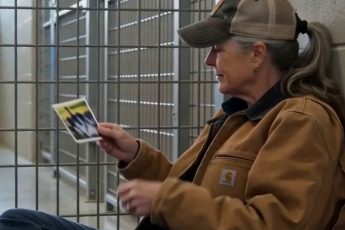
The day Brian showed me the photo, he could barely lift his head off the hospice pillow. His fingers wrapped around mine, cold, the bones pressing through the skin.
“Her name’s Chloe,” he said. “She’s sixteen. I need you to adopt her. Before I go.”
I pulled my hand back. “Brian. Is she your daughter?”
He closed his eyes for a long moment. When he opened them again they were wet. “Not the way you’re thinking. Please, Jess. Just bring her home. One day you’ll get the whole story.”
One day. That was his answer for everything those last weeks. I choked down every ounce of doubt because the man had six weeks to live and I wasn’t going to spend them interrogating him. But in the back of my mind I already had a picture: some long-ago affair, a child he’d hidden, and now a guilty conscience cashing in at the very end.
Chloe arrived on a Thursday afternoon in a downpour, carrying a single duffel bag and wearing jeans that were too short. My kids—Emma, fourteen, and Jake, sixteen—circled her like she was a new puppy. Within three days Emma was braiding her hair at the kitchen table, and Jake was showing her how to play his video game, and Brian, for the first time in months, was laughing. I’d walk past the bedroom and see Chloe perched on the edge of the mattress, holding his hand, and something inside me would twist. Not anger, exactly. A kind of deep, nameless ache that had nowhere to go.
It got worse when I noticed how the conversations stopped the moment I neared the door. Once I heard her say, “I can’t keep lying to her.” And Brian answered, “Just a little longer, sweetheart. Please.”
Later that week I found her in the laundry room with one of his flannel shirts pressed to her face, crying without making a sound. I knelt down and asked her straight: “Was he your father?” She shook her head and said, “I promised him I wouldn’t say anything. I’m sorry.” Then she slipped past me and locked herself in the guest room.
Three days after that, Brian was gone.
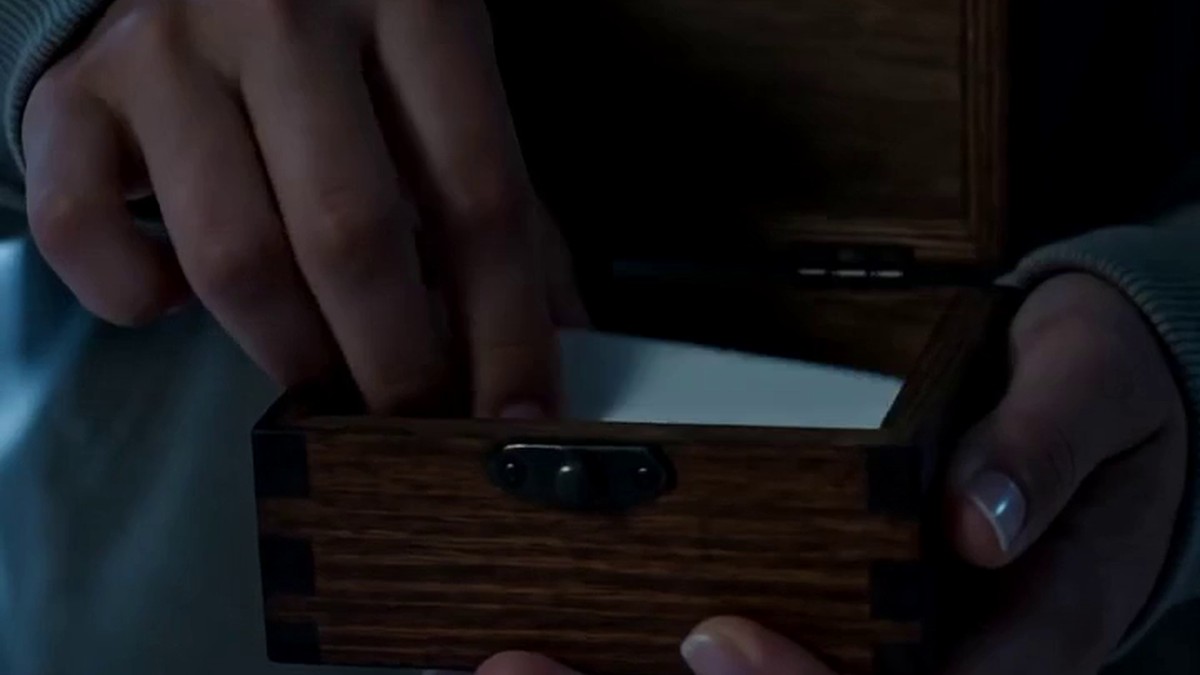
On the night of the funeral I had no more tears left. I was hollow, and I was bracing for whatever secret was about to land. Chloe sat on the edge of my bed and lifted the lid of the pine box. She drew out a folded letter, two military dog tags, and a creased photograph, and handed the letter to me.
The handwriting was Brian’s—compact, neat, the same script that had filled a hundred grocery lists on the refrigerator door.
*Jess,*
*I know you’ve been living with a question you were too gracious to ask me. I’m sorry I couldn’t give you the answer when I was alive. I was afraid that if you knew the whole thing, you’d feel roped into it out of duty, and I needed to know that you’d do it out of love. For me. And that’s a coward’s way, I see that now.*
*Chloe is the daughter of my best friend, Luke Rivas. Luke and I served together in Afghanistan. He pulled me out of a burning Humvee outside Kandahar in ’09. Five weeks later he took a round that was meant for me. Before he died, he made me swear I’d look after his little girl if anything ever happened to his wife. I told him I would, and I put it out of my mind for a decade.*
*Then his wife, Dana, passed from ovarian cancer five years ago. Chloe was eleven. I couldn’t dump her into foster care, Jess. I couldn’t bring her home either, not without telling you the whole ugly story, and Luke made me promise I wouldn’t burden our family with it. He didn’t want anyone to know the money was coming from us. So I did the only thing I could think of: I paid for a boarding school in Oregon, I set up an account in her name, I visited her when I traveled for work. I kept her hidden for five years.*
*When the doctor gave me my timeline, I knew I’d run out of hiding places. The only choice left was to bring her into the light. I’m sorry I made you carry my secret for two months without the map. I’m sorry I put you through that.*
*The dog tags are Luke’s. The photo is the three of them the year before Dana got sick. Chloe knows everything I just told you. She’s been protecting me and my promise all this time. Please don’t be angry at her. Be angry at me. And please, Jess—love her. She’s been carrying this alone for too long.*
I read the last line three times before I could lift my eyes. Chloe hadn’t moved. She held out the dog tags, and I took them. The metal was cool and heavy. The photograph showed a younger Brian, arm slung around Luke’s shoulders, both in fatigues, and a little girl with pigtails between them.
“He was the only father I remember,” Chloe said. “He came to every school thing. Every birthday. He’d call me from his truck on the way home so you wouldn’t hear.”
I opened my arms and she folded into them, and we stayed like that for a long time in the dark, no one saying anything, just the radiator knocking and the pine box lying open on the comforter between us.
The next morning my sister-in-law Debra showed up at nine with a man in a gray suit. I saw them through the front window before I’d finished my coffee. Debra had been sniffing around since the funeral, dropping comments about “that stranger living in my brother’s house.” I knew what she wanted, and I knew what I was about to do.
I met them on the porch. Debra had a sheaf of papers in her hand—she’d already been to a probate attorney, apparently, and she was ready to challenge the temporary guardianship I’d filed right before Brian passed.
“I hope you’ve come to your senses, Jessica,” she said, crisp as a new dollar bill. “I’m not letting a mystery girl walk away with my brother’s estate.”
I didn’t argue. I just opened the door and told them to wait in the living room. Chloe was sitting cross-legged on the floor near the fireplace, the pine box beside her, the old Siamese cat Oscar curled in her lap like he’d been waiting his whole life for her to show up. The cat had hated every human being except Brian. That small detail had been nagging at me for weeks, a truth the animal had seen long before I did.
I pulled a folder from the drawer of the secretary desk. Inside was the adoption order, signed by a King County judge at 8:14 that morning, delivered by a courier who had handed it to me on the exact spot where Debra was now standing.
“Chloe Rivas became Chloe Miller at 8:14 a.m.,” I said. “She’s my legal daughter. Brian’s will leaves everything to me, and as of this morning, she’s a joint owner of this house. So there’s nothing to challenge.”
Debra’s face went the color of raw dough. She opened her mouth, but I wasn’t finished. I took a second envelope from the folder and handed it to Chloe.
“Your dad started an account for you five years ago,” I said. “He put in a little every month. It’s at $34,000. I added $16,000 this morning, so it’s an even fifty. That’s your college money, free and clear.”
Chloe opened the envelope and looked at the bank statement. The numbers blurred a little, I think, but she didn’t cry. She just stood up, still holding Oscar, and walked over to Debra. She held out her hand.
“It’s nice to meet you properly,” she said. “I’m Chloe. Brian talked about you.”
Debra didn’t shake it. She spun on her heel, the lawyer trailing after her, and her car peeled out of the driveway scattering gravel. I didn’t watch her go. I was watching Chloe, who had already crossed to the window and was staring out at Brian’s old Chevy Silverado parked under the pine tree.
“He said you’d teach me to drive stick,” she said, not turning around.
I pulled the truck key off the hook by the door and pressed it into her palm.
“First lesson’s in an hour,” I said. “Get the cat off the driver’s seat.”
Oscar flicked his tail and dug his claws into her sweater. Neither of them moved. Outside, the morning sun was burning the fog off the Spokane River, and the house smelled like coffee and cedar and something that felt, after two months of holding my breath, like an exhale.