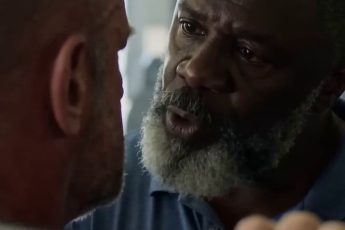
The Stockyard wasn’t the kind of place where you clinked glasses and called it a night—it was an old Chicago steakhouse where deals got cut between courses of dry-aged ribeye, and the scent of charred bone marrow hung in the air like incense. I’d worked doubles there for three years, and by then I could tell which men in the private room were there for the creamed spinach and which ones were counting exits. That night, the private room was closed for a “family gathering,” which in River North usually meant a syndicate dinner. The chandeliers were dimmed, the white tablecloths pressed so stiff you could hear them crack under a wine glass, and the man at the center table was Dominic Castellano.
Dominic ran Castellan Logistics, a company that moved freight from the Port of Chicago to half the Midwest. Everybody knew what else he ran, but nobody said it out loud. He was built like a former linebacker with a tailor on retainer—charcoal suit, fifty years old, eyes the color of wet asphalt. Across from him sat his fiancée, a woman named Avery Prescott, whose father owned five city blocks of downtown real estate and had brokered the merger that would soon make his daughter a mob wife. Avery wore a dress the exact crimson of the velvet rope outside a nightclub, and on her left hand sat a diamond the size of a Chiclet. The ring caught the candlelight every time she lifted her champagne.
I was their server—just a twenty-six-year-old in a black apron, name tag reading “Ellie,” trying to keep my head down and my brother Ben’s thirty-thousand-dollar debt from landing on my doorstep. Ben had borrowed from a loan shark connected to the Moretti crew, a rival outfit that had been gnawing at Castellan territory for months. The guy who held Ben’s paper was a block of scar tissue named Frankie Marconi, and Frankie didn’t just break legs—he’d warned me he had other ways for my family to work off the interest if Ben missed Friday’s deadline. I’d picked up the extra shift hoping the private-room tips would buy us one more week.
I was carrying a bottle of Macallan 25 to Dominic’s table when I spotted the three men at Table 4 near the kitchen door. They’d ordered our most expensive Filet Rossini, but none of them had done more than nudge the food around. They weren’t drinking wine—just Pellegrino, and they kept their overcoats on despite the heat blasting from the vents. One of them shifted to check his watch, and his jacket fell open just enough that the light from a sconce caught the matte black finish of a suppressor threaded onto a Glock.
My stomach turned to concrete. I recognized the man. It was Frankie Marconi.
I took a breath and set the scotch down on a service tray. From between the bottles of premium vodka, I watched Avery dab her lips with a napkin, murmur something sweet to Dominic, and rise to “go powder her nose.” She walked toward the hallway, and when she passed Frankie’s table, she didn’t even break stride. But her chin dipped once—a deliberate, unmistakable nod—and her eyes locked onto his for half a second. Frankie laid his hand flat on the table and tapped his index finger twice.
Confirmation.
My fingers were already at the order pad tucked into my apron. I’d been planning to write a note the moment I saw the gun, but now I knew Avery wasn’t a target; she was the one who’d set the stage. The private room, the missing security detail, the center table right in the crossfire—it all fit. I couldn’t run to the kitchen and pretend I’d seen nothing. If Dominic went down, the Moretti crew would own every route from O’Hare to Lake Michigan by sunrise, and Ben’s debt would become a collection call made with a baseball bat. My brother was a mess, but he was still my brother, and I was tired of watching our lives get crushed under other people’s ambition.
I ripped a guest check slip from my pad and wrote twelve words on the back with a ballpoint pen that nearly slipped through my sweat-slick fingers:
*Your fiancée sold you out. They’re in position, Table 4.*
I folded the slip into a tight square and tucked it under the base of the fresh crystal tumbler I was about to set down. My heart was a jackhammer, but my hands—after a dozen double shifts and a childhood spent in a house where you learned to not react—were steady as I crossed the dining room.
“Your Macallan, sir,” I said, voice neutral.
Dominic didn’t look up from his phone. “Leave it.”
I set the tray on the edge of the table and, as I placed the glass on the linen, I pressed down on its base and slid the folded note just far enough into his line of sight that the edge of the paper poked out from beneath the tumbler. His eyes flicked down. Then up, meeting mine for a fraction of a heartbeat. I tilted my head almost imperceptibly toward the note and walked away toward the service bar without looking back.
Dominic Castellano hadn’t survived three decades at the top by twitching when he got handed a warning. He lifted the scotch, took a sip, and with his free hand covered the note as he set the glass back down. Beneath the table, he unfolded it. I watched from behind the bar as his jaw tightened—just once, the only crack in that stone facade. Then he lifted his phone and typed something without even glancing at the screen.
Avery returned, smoothing her dress and smiling like a perfume ad. Dominic didn’t smile back. He took hold of her hand and didn’t let go. I saw her try to pull free, the smile faltering.
That’s when the front doors blew in like a freight train had hit them.
Matteo was the underboss I’d only heard whispered about—a onetime Force Recon Marine who ran Castellan’s tactical arm. He came through the ruined entrance with his team of eight, all balaclavas and suppressed carbines, moving like water across the room. The sound wasn’t gunfire so much as a series of tight, flat snaps. Frankie Marconi had just cleared his weapon when two rounds caught him center mass and sent him crashing backward across the uneaten steaks on Table 4. Another man near the windows went down before he could even stand. In under forty seconds, the five Moretti shooters were on the floor, and the room smelled of cordite and broken wine bottles.
Avery started screaming, crumpled beneath the table where Dominic had shoved her. Her crimson dress had torn, and mascara streaked her face. Dominic rose, dusted plaster from his lapels, and looked down at her without a trace of warmth.
“You didn’t think I’d find out about the Cayman transfer?” he asked. “Or the call you made to Carmine Moretti this morning to give him your blessing on the ambush?”
Avery sobbed something about her father pushing her into it, but Dominic just gestured to his men. “Take her phone. Leave her at her father’s building with the news that her alliance just cost him every contract he has.”
They dragged her out, and Dominic turned his attention to the wreckage. The cops would be there in minutes—somebody in the neighborhood always called when a restaurant’s front door got blown off. I was still behind the bar, breathing in short gasps and trying not to look at the blood pooling under the overturned chairs.
“You.” His voice cut through the silence. “Come out.”
I stepped over broken glass and stood in front of him. The ruined dining room reflected in his eyes. He looked at my uniform, the name tag, my steady posture.
“Your name.”
“Ellie Vance.”
“You saw coats in a seventy-degree room. You recognized Frankie Marconi.” He said it without accusation—just cataloging facts. “Why didn’t you run?”
I gave him the truth because it was the only thing that ever worked with men like him. “I live in a basement apartment in Bridgeport with a brother who bets on third-rate horses. Frankie came to our place last week and told me if Ben didn’t pay the thirty grand by Friday, he’d break both his legs.” I swallowed. “Then he said the family would find other ways for me to settle the debt. I saw him at that table, saw the nod your fiancée gave him, and I knew I had to act. Not for you—for me.”
Dominic studied me the way you’d examine a piece of machinery that had just performed well above its spec sheet. Then he laughed, a low sound that was more approval than amusement.
“Thirty thousand,” he said. “That’s what it cost you to risk a bullet?”
“No,” I said, voice harder than I intended. “That’s what I’m asking you to wipe out. I don’t want your money. I want the debt gone, and I want no Moretti foot soldier showing up at my door again.”
He pulled a platinum money clip from his jacket, peeling off a stack of hundreds—maybe twelve thousand by the look of it—but I didn’t reach for it. I just stood there, my hands at my sides.
“You’re serious.” He put the cash away. “Tommy Moretti’s crew won’t be a problem after tonight; my men are already moving on their operations. As for your brother,” he said, “his debt died on that floor with Frankie. You have my word.”
Something loosened in my chest. I felt a breath leave me that I’d been holding for a week.
Then Dominic reached into another pocket and produced a card—matte black, a silver eagle embossed on the front, with an address on the reverse. Castellan Global Security Solutions.
“You’ve got an eye that most people pay six figures to train,” he said. “I need analysts who can spot a threat before it puts a gun on a table. Tomorrow, noon. Ask for Matteo.”
He held the card out. I looked at it, then at him. This wasn’t just a job offer; it was a ticket into a world where I’d never have to count change for the bus again, but where every staircase led to a basement or a balcony. I took the card and slipped it into my apron, right next to my order pad.
“I’ll be there,” I said.
Dominic nodded once and walked out through the shattered doorway, into the sirens and the November wind. The police arrived two minutes later, and I gave my statement exactly as instructed: I’d been in the walk-in freezer doing inventory during the whole thing, heard loud noises, saw nothing. They filled out their forms and told me to go home.
The next morning I stood in front of a black glass tower on West Madison Street, the card in my palm. The revolving door spun slowly, exhaling warm, conditioned air. I walked through it, the rubber soles of my work shoes silent on the polished concrete floor. A receptionist with a Bluetooth headset looked up from behind a granite desk.
“I’m here to see Matteo,” I said, and held up the card.
She scanned a tablet, then gestured toward a bank of elevators. “Floor 37. Mr. Castellano is expecting you.”
I stepped into the elevator and pressed the button, and as the doors closed, I caught my own reflection in the polished steel—different from the woman who’d crouched behind a service bar twelve hours earlier. No shaking now. The card was still in my hand, and I was already tucking it into the pocket of my one decent blazer.