The air in courtroom 14B on Spring Street was stale and cold—the AC had been blasting since eight in the morning, and the building's old vents gave it a metallic, almost bloody taste. I'd been a court reporter for eleven years, a woman who turns voices into little black mounds of shorthand on a paper tape, and I could feel the room losing its patience two hours into this mess. Even the bailiff by the side door was shifting his weight from foot to foot.
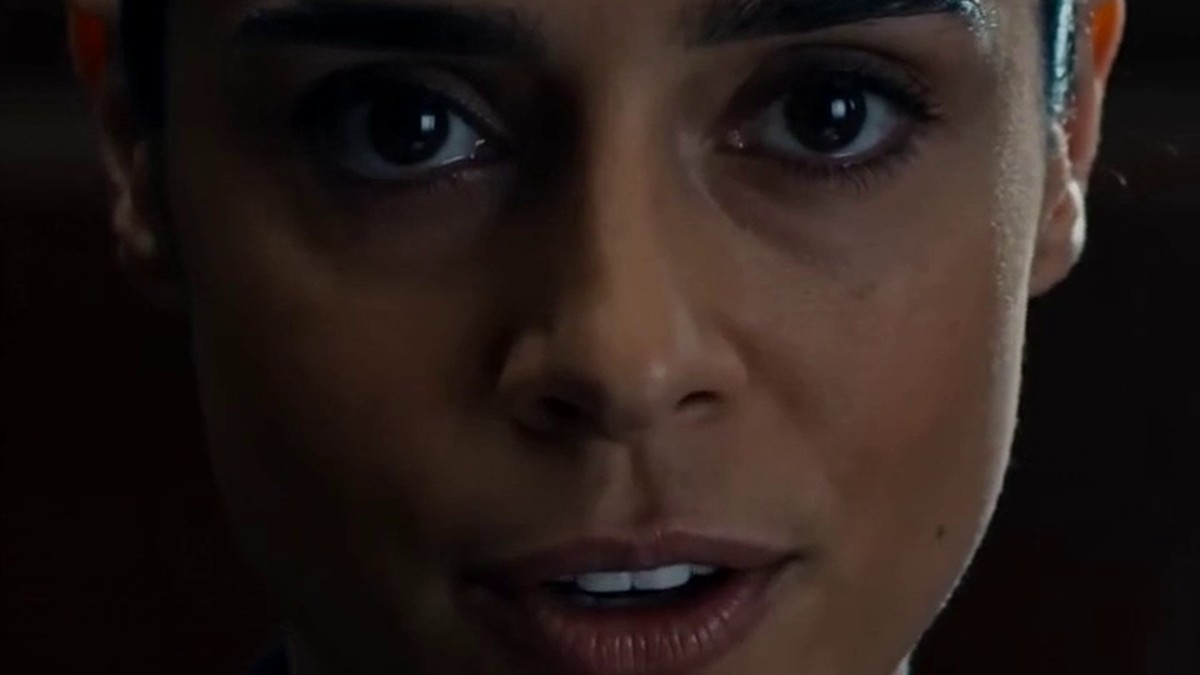
Camila Reyes stood at the defense table with the kind of stillness that makes people nervous. Twenty-six, from Veracruz, a linguist and in-house translator for a commercial construction firm that poured concrete across three states. The charge was wire fraud, conspiracy, and stealing forty million dollars from her employer. If convicted, she faced fifteen years in federal prison and deportation afterward. Her court-appointed lawyer—a man named Kowalski with a tie too short for his gut—had done little all morning except shuffle papers and mutter apologies under his breath.
The prosecutor, Jennifer Albright, had just finished showing the jury a slide of a supposedly doctored contract between Reyes's company and a Chinese supplier. The document had her initials on the bottom corner, right where a critical clause about steel-gauge thickness had been swapped out. The company's losses, the slide told us, were $41,200,000.
Judge Harrington tilted his big head toward Camila. He'd been on the bench since before I started my first stenography job, and he wore his boredom like cologne.
"What exactly is your position at the firm?" he asked.
"I'm a translator," she said. No tremor in the voice. "I have a degree in linguistics."
Harrington made a noise between a cough and a snort. He looked toward Albright, then at the jury, as if to say, *here we go again.*
"And how many languages do you actually speak?" he said. "English and, what, Spanish? Maybe you can order a beer in three more?"
A few people in the gallery chuckled.
Camila lifted her chin. "I speak ten languages fluently, Your Honor. Eleven, if you count Basque."
The judge laughed outright. It was a belly laugh, the kind that invited the whole courtroom to join in. And they did. Albright pressed her hand to her mouth to hide a smile. Kowalski scratched his ear. The juror in seat number five—a bald guy with a plaid shirt—actually slapped his knee.
I remember a hair clip sliding off my lap and clicking onto the tile floor. I ducked to grab it, and when I straightened up, I saw that Camila wasn't looking at the judge anymore. She had turned slightly toward the bench, toward the little evidence monitor, and her right hand was already inside her canvas bag.
The laughter was still dying down when she spoke again. "Your Honor, I'd like to submit a piece of evidence that hasn't been cataloged yet."
Harrington's smile flickered out like a bulb. "What evidence? Your attorney didn't file any motions today."
"It's an audio recording," she said, and pulled out a small silver device, a digital recorder no bigger than a cigarette lighter. "I made it in my office seven months ago, the week my manager, Walter Holden, asked me to 'check the translation' on a supplier contract and initial it as the certifying translator. He handed me a stack of pages and had me sign the cover sheet without letting me review the clause on steel gauge—that page was swapped after I initialed it. I started recording every meeting in his office after that, because I do the same work for the county courts and I know what a paper trail is worth. My cousin runs quality testing at a materials lab in Glendale. I gave her copies of every file the day I made them, with time stamps, so nothing could vanish from my hands. I was afraid I'd already been made the fall person and no one would believe me without proof that couldn't be edited."
Albright was already on her feet. "Objection—chain of custody, authenticity, the defense can't just produce—"
Camila cut in, calm as a caller in a bingo hall. "I am a certified court translator for the Los Angeles County Superior Court. I can provide a verbatim transcript and simultaneous translation right now. The voices on the recording are distinct, and the lab in Glendale ran an independent authenticity analysis on the files last month. If the court allows it, I'll identify the speakers under oath."
A heavy silence fell. Even the air conditioner seemed to pause.
Harrington looked at the recorder, then at Albright. "I'll allow it," he said. "But if this is a stunt, Miss Reyes, I'll find you in contempt before lunch."
She didn't answer. She pressed a button.
The speakers mounted on the wall crackled. A man's voice emerged—raspy, with a South Boston accent that I recognized from dozens of depositions. Walter Holden. But he wasn't speaking English. He was speaking something else entirely, a language built on hard glottal stops and sudden rising tones, each word seeming to catch in the back of the throat before it broke free. The other voice, Mr. Jin's, answered in the same tongue.
People in the gallery looked at each other, faces blank. Harrington leaned forward.
Then Camila began to speak over the recording, her voice clear and perfectly timed.
"Holden says: 'The steel gauge on the contract shows 14. We ship 20-gauge instead. The difference is $41 million. Jin's company gets eight percent, you and I split the rest.'"
She let the recording play another few seconds, then spoke again. "Jin: 'What about the girl? The translator?' Holden: 'She's a nobody. She only speaks Spanish. She signed the cover sheet without ever seeing the real page—that's on record with her initials. If this blows up, she takes the fall.'"
I saw one of the jurors—a woman who'd been stone-faced all morning—bring her hand to her chest, fingers pressing against her collarbone.
"What language is that?" the judge asked, his voice stripped of all amusement.
"K'iche'," Camila said. "It's a Mayan language spoken in the highlands of Guatemala and parts of Southern Mexico. Holden's wife is from Quetzaltenango. He learned it from her family. They never thought anyone else in the company would understand a word of it—or that Holden would explain, on tape, exactly how my initials got onto a page I never read."
She set the recorder on the evidence table. "The forensic report from the Glendale lab is attached to the file I'm submitting. Timestamps, metadata, everything. My cousin there can testify to the chain of custody herself."
The courtroom was not quiet—it was frozen. Albright's legal pad had slipped off her lap. Kowalski looked like a man who just watched someone else defuse a bomb he didn't even know was ticking.
Harrington banged his gavel for order, though no one was speaking anymore. "Miss Albright," he said, "call the U.S. Attorney's office immediately. Mr. Kowalski, I'm giving you twenty-four hours to file for dismissal with prejudice."
They took Holden from his office thirty minutes before the lunch break. I saw the news flash on the courthouse television downstairs while I was buying a stale bagel—a photo of him being led out in a blue suit, wrists cuffed, jaw tight.
Camila walked out of the courtroom at three. The double doors thumped shut behind her, and I noticed she'd left the digital recorder on the defense table, as if it no longer belonged to her—like something she'd carried long enough.
I typed my final shorthand symbol of that session: the brief stroke for *dismissed*—a tiny flick of my right fingers that machine stenographers will recognize as something close to victory.
As she stepped onto Spring Street, a cloud the color of slate moved across the sun, and the temperature dropped maybe three degrees. She didn't put on a jacket. She just stood there a moment, looking at the palm trees, before she climbed into a taxi that already had its meter running.
I went back to the desk to transcribe the day's tapes, and I noticed that the total dollar figure in the indictment—$41,200,000—was still glowing on the projector screen, a number attached to no crime she had ever committed, only to seven months of a woman quietly building the one file no one could argue with.