It was twenty past two in the morning when Tyler Jenkins pushed his cart of cleaning supplies across the polished marble of the Magnolia Grand lobby. The chandeliers were dimmed, the concierge desk abandoned. Seattle’s drizzle streaked the tall windows, blurring the streetlights outside. Tyler’s shoes squeaked softly as he mopped near the piano.
He was twenty-three, worked the graveyard shift as a janitor, and in six months he had learned one thing: at this hour, nobody looked at him. Guests floated through like ghosts, and he was just the guy with the mop.
He heard the cough before he saw the man.
A dry, rattling bark from the seating area near the grand staircase. Tyler glanced over. An elderly man sat hunched on a velvet settee, one hand pressed to his chest, the other gripping a scuffed leather satchel. His coat was worn at the elbows, his tie crooked. He looked like he’d been traveling for days and just stumbled in out of the rain.
Tyler abandoned the mop and hurried over.
“Sir? You okay?”
The man tried to answer, but another cough cut him off. His face was pale, his breathing shallow. He fumbled at his breast pocket, maybe for an inhaler, maybe for a phone, but his fingers trembled too much.
Tyler crouched beside him. “I’ve got you. Take it easy.”
No one else was around. The night clerk had stepped into the back office. The lobby was a cavern of silence.
Tyler eased the man upright, grabbed a bottle of water from his own cart, and unscrewed the cap. “Here, small sips.”
The old man’s hand shook as he accepted the bottle. After a few sips, the coughing subsided into ragged breaths. He lifted his eyes — pale blue, clouded with fatigue but sharp underneath.
“Thank you, son,” he whispered.
Tyler smiled. “No problem. You traveling alone?”
Before the man could answer, a sharp voice cut through the lobby.
“Tyler!”
Brenda Stoltz, the head of housekeeping, strode toward them. She was a sturdy woman in her fifties, with a permanent scowl and a clipboard that was more weapon than tool. She stopped a few feet away and stared at the old man like he was a stain on the upholstery.
“What on earth are you doing?” she demanded.
Tyler stood. “He was having trouble breathing. I think he might need a doctor.”
Brenda’s eyes flicked to the man’s worn coat and scuffed shoes. Her lip curled. “He’s not a guest. I’ve seen him loitering earlier. Probably a vagrant who slipped past the door. You know the policy — no unauthorized persons. Call security and get back to your section.”
Tyler didn’t move. “He could be a heart attack risk. I’m not leaving him.”
Brenda’s voice dropped to a hiss. “That’s not your job. Your job is to mop the floors and not create a liability. Now get away from him before you make this worse.”
The old man watched silently, his breathing steadying.
Tyler looked at the man, then back at Brenda. The manager’s eyes were cold. This was the same woman who’d written him up last month for taking two extra minutes on his break to call his kid sister. The same woman who’d told another janitor to ignore a crying child lost in the hallway because “guest services” would handle it, except here, at two-thirty in the morning, there was no guest services.
He made a decision.
“I’m not walking away,” Tyler said quietly.
Brenda’s face hardened. “Then you can walk right out that revolving door. You’re fired. Collect your things and leave.”
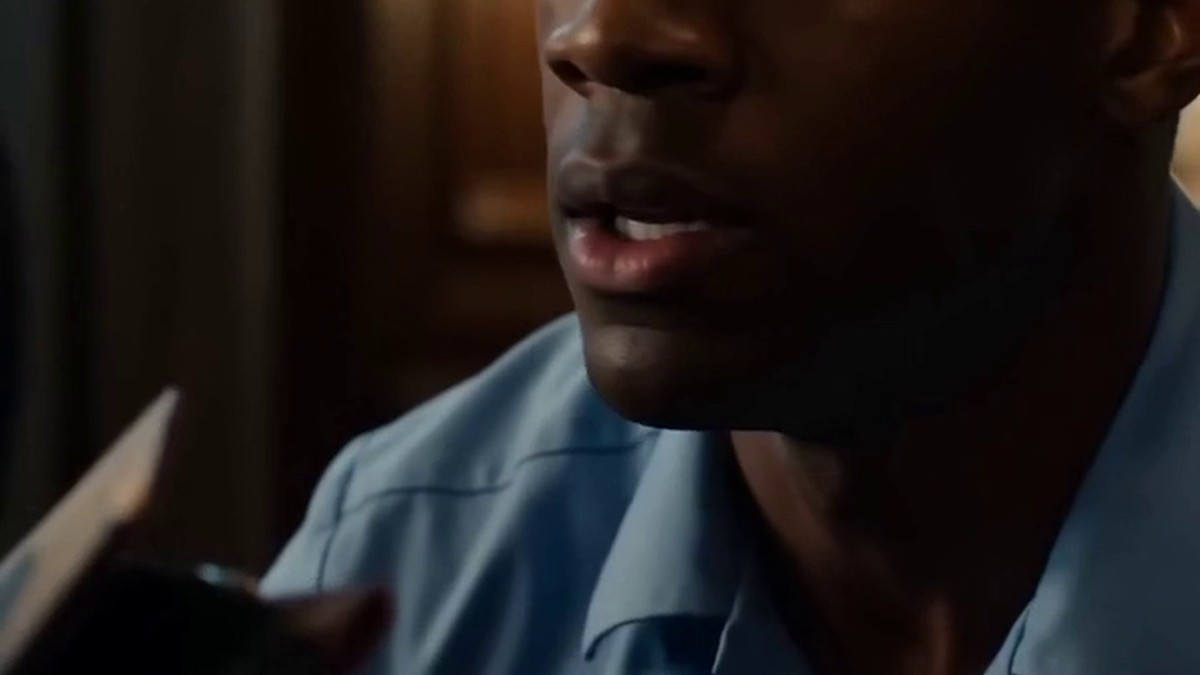
A pause. Then Tyler reached up and unclipped his name badge from the lapel of his blue uniform shirt. He held it for a moment, then set it deliberately on the armrest of the settee, right next to the old man’s satchel.
“If helping him costs me this job,” he said, meeting Brenda’s stare, “then I’m okay with that.”
The lobby went very still. Brenda’s mouth opened, but no sound came out.
Then the old man moved.
Slowly, he reached into his coat. Not for an inhaler this time — he pulled out a slim, silver smartphone. His trembling was gone. He dialed a single digit and lifted it to his ear.
“Charles? It’s Ashford. I’m downstairs in the lobby. Come immediately. And bring the night manager on duty.”
He ended the call and let the phone rest on his knee. His posture shifted, straightening just a fraction. The tattered coat now seemed less a sign of poverty and more a disguise.
Brenda stared. “Who… who are you?”
The old man’s eyes settled on her with a calm, devastating weight. “My name is Arthur Pemberton Ashford. I own this hotel. And every other Magnolia property in the country.”
The blood drained from Brenda’s face. Tyler felt his own heart lurch.
Less than two minutes later, the elevator chimed. A rumpled man in a bathrobe — the general manager, Charles — hurried across the lobby, the night manager trailing behind him. When they saw the old man rise to his feet, they both froze.
“Mr. Ashford,” Charles breathed. “I had no idea you were arriving. I’m so sorry for —”
Ashford cut him off with a raised hand. He pointed at Brenda. “This woman attempted to have an employee abandon me while I was in medical distress. She then fired him for refusing to obey. I want her terminated immediately, and I want a full audit of her department’s conduct.”
Brenda started to stammer something about protocols and security, but Charles’s face had gone stone-cold. “Ms. Stoltz, please gather your belongings. You’ll receive your final check tomorrow.”
She stood frozen for a heartbeat, then turned and walked stiffly toward the service corridor. The clip of her heels faded into silence.
Ashford turned to Tyler. “Young man, what’s your name?”
“Tyler Jenkins, sir.”
“Tyler, you risked your livelihood for a stranger you thought was homeless. You didn’t look at my coat or my bag. You saw a person in trouble and you helped. That’s rare.” He extended a hand. “I’d like to offer you a new position. Not as a janitor. Something that uses that instinct of yours.”
Tyler shook his hand, dazed. “I… I don’t know what to say.”
“Say you’ll have breakfast with me in the tower suite tomorrow morning. We’ll talk.”
——
Fourteen months later, Tyler stood at that same grand staircase in a tailored blazer, a clipboard in his hand — though his was full of guest experience initiatives, not violation forms. He was now an assistant manager trainee under a program Ashford had personally funded. The scuffed satchel had been replaced by a leather briefcase, a gift from the old man on his first promotion.
He still worked the unsociable hours sometimes, but now when he saw a lost or struggling guest, he didn’t have to ask permission to help. He just did. And nobody ever told him it wasn’t his job.
At the top of the staircase, he spotted a young woman in a housekeeping uniform crouched beside an elderly guest who’d lost her way. He smiled and walked over to assist.
That was his job now. And he was more than okay with that.