Union Station was a zoo. Morning rush—commuters jostling for lattes, kids sticky with donut glaze, the PA barking track numbers nobody could hear. I was on the espresso bar, head down, steam wand hissing. My shift had barely started and my wrist already ached.
Then a bony hand clamped onto my forearm.
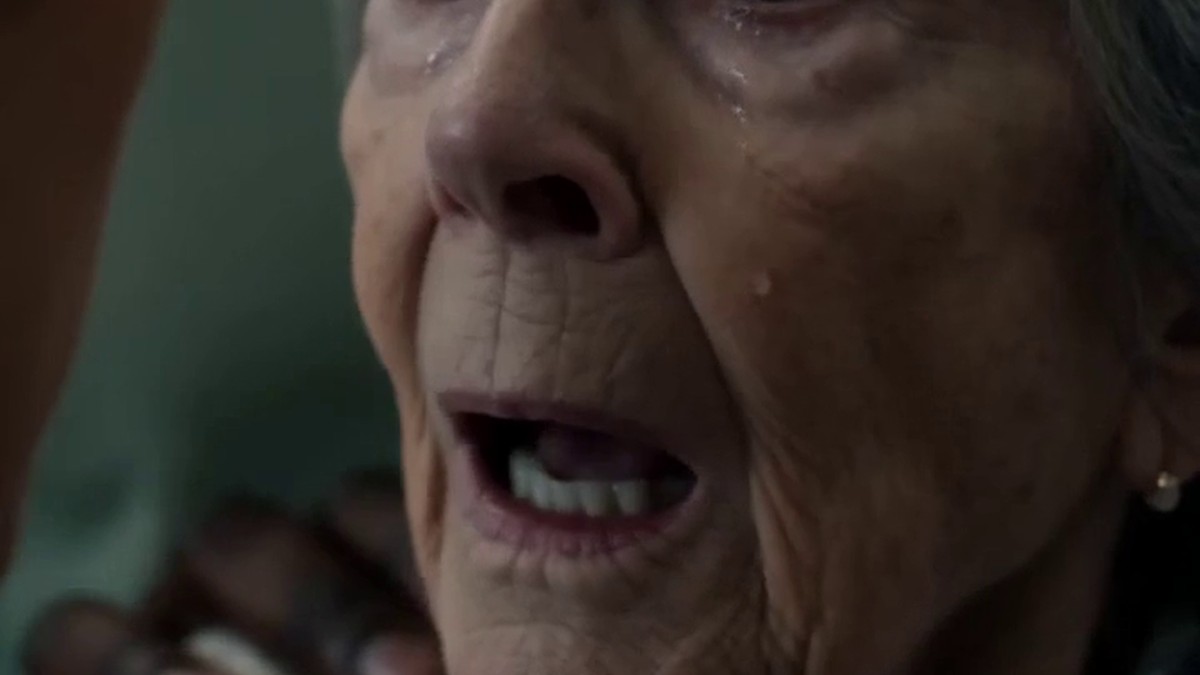
I spun around. An old woman—late seventies at least—was staring up at me with this desperate, hollow look. Her grip was so tight her knuckles went white.
“Help me,” she said. Just two syllables, barely a whisper, but the terror in them cut through the whole shop like a siren.
Two men in matching polo shirts materialized before I could even blink. Sons, they said. Same stiff jaw, same too-bright smile. One of them laughed—a dry, rehearsed kind of laugh—and clamped a hand on her shoulder.
“Mom’s tired, that’s all. Long trip. She gets a little confused after car rides.” He was already steering her away, his fingers digging into the wool of her coat.
The woman shook her head, hard. Tears spilled down her cheeks. “I am not confused.”
The second son stepped closer, blocking my view of her. But I saw past his elbow: a man in a gray suit, standing by the sugar station, hugging a leather portfolio to his chest. Lawyer. You could smell the billable hours on him. The old woman’s eyes flicked to that portfolio and then back to me. “They want me to sign,” she breathed. “My house. They’ve been after me for months.”
The lawyer pretended to check his phone. The sons exchanged a look that made my stomach turn.
I didn’t move. I just planted myself between her and them, one hand still wrapped around hers. “You okay, ma’am? You don’t have to go anywhere you don’t want to.” My voice came out steadier than I felt.
The louder son—the one with the fake laugh—stepped into my space. “Mind your own business, sweetheart. This is a family matter.” He was maybe forty, gym-shoulders, reeking of some expensive woodsy cologne. I felt the heat off him.
My manager, Ruben, was already dialing security. A couple commuters stopped mid-sip, watching. The woman—Edith, I learned later—clutched my hand like I was a life raft.
“I’m not leaving,” I said. I pulled a chair from the back room and sat her down right there by the pastry case, grabbed a fleece blanket from the lost-and-found, and draped it over her shoulders. The sons stood in a huddle near the exit, whisper-shouting at the lawyer. The lawyer just kept clutching that portfolio.
Edith was trembling. She rummaged in her purse—a worn leather thing with a broken clasp—and pulled out a folded piece of notebook paper. The creases were soft, like she’d opened and refolded it a hundred times. She pressed it into my palm.
“I wrote this before they came to pick me up this morning,” she said, voice cracking. “I knew they’d try again. I had to be ready.”
I unfolded it. The handwriting was shaky but deliberate, in blue ballpoint. It wasn’t a note to me—it was a letter addressed to any law enforcement officer, any social worker, anyone who might listen. Two pages. She described months of harassment, calls at all hours, one son showing up drunk and banging on the door, the other intercepting her mail. And this wasn’t just about her house—they didn’t even know the whole truth. She’d already put the house in an irrevocable trust for her granddaughter, Maya, who was in college on a scholarship. The sons had no idea. All they saw was a signature that would “fix” things. The note also had phone numbers: Maya’s dorm, an estate attorney, her neighbor across the street.
I read it twice. My heart was pounding out of my chest. I looked up—Ruben had two station security guys with him now. The sons were still bickering with the lawyer, who suddenly noticed the note in my hand and went pale.
One of the sons lunged. “Give me that—that’s private!”
I stepped back, holding the note above my head. “She wrote this. It’s hers. And it says she wants help.” I yelled toward security: “This woman’s being coerced! Right now! That lawyer’s got documents for her to sign under duress!”
The whole shop went dead silent. You could hear the hum of the espresso machine.
Then everything accelerated. A transit cop came jogging over—Ruben had flagged him down. He read the note while Edith, still sobbing quietly, nodded along. The sons started stammering about how I’d “poisoned her mind,” how she had dementia, how this was a huge misunderstanding. The lawyer was already backing toward the exit, but the cop told him to stay put.
Edith’s voice, surprisingly clear, cut through the noise. “I want them arrested. All three of them. This has been going on since my husband died.” She pointed a steady finger at the sons. “They told me today was just a trip to the museum. Then they brought me here to meet him.” She jerked her chin at the lawyer.
The cop radioed it in. Within ten minutes, two more officers arrived. The sons were cuffed, the lawyer was stoic and silent, and Edith was wrapped in that lost-and-found blanket, sipping a hot chocolate I’d made her—extra whipped cream, because she deserved it.
We sat for almost an hour. She told me about Maya, about her garden, about the cookie tin under her bed where she kept the trust documents along with her husband’s war medals. She’d written that note at 4:30 a.m., sitting at her kitchen table, and tucked it in her purse, just in case. Just in case they didn’t take no for an answer again.
When Maya arrived—a blurry eyed college kid who’d driven three hours after getting the call—Edith stood up, still holding my hand. She pressed a small something into my palm. Not the note. A tiny enamel pin shaped like a hummingbird, from her purse.
“For courage,” she said.
I still have it on my apron. The note, she gave to the police, but I think about it all the time. A handful of lines scribbled in a quiet kitchen, a lifetime of fight folded into a piece of paper. It changed everything.