The security guard's hand found Daniel Miller's arm at the exact moment Sophie's name echoed through the auditorium.
That was the detail Victoria Whitman would carry with her forever.
Not the applause rolling through the rows.
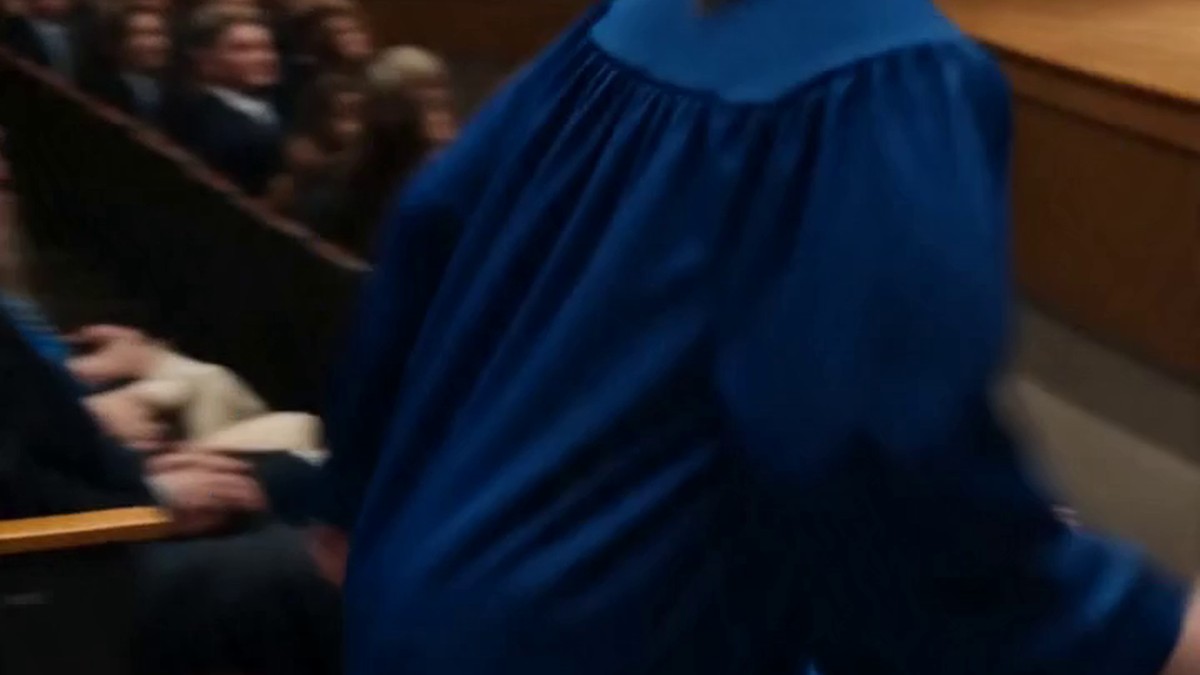
Not the sea of blue graduation gowns.
Not the paper flowers the third-grade teachers had taped along the edge of the stage.
What she would carry was the precise instant her daughter glanced away from the microphone and locked eyes with the man Victoria had spent seven years burying.
Daniel stood near the rear exit of St. Catherine's Academy, a delivery helmet tucked under one arm, a canvas bag hanging loose from his shoulder. His uniform jacket held the wrinkles of a long shift. Rain had soaked through his shoes. He looked weathered, quiet, and entirely wrong for the room — surrounded as he was by polished parents in pressed linen and pearl earrings.
Victoria turned from the front row and felt her lungs empty.
No.
Not here.
Not this day.
She rose so fast her chair shrieked against the floor.
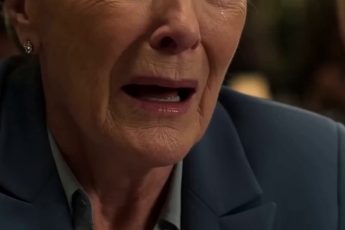
"Remove him," she said.
Barely above a whisper. But precise. The kind of voice that doesn't need volume to draw blood. The parents on either side of her caught every syllable.
The guard stepped toward Daniel.
Daniel didn't resist.
Somehow, that was the worst part.
He simply looked through the guard, past the rows, past the noise, searching the stage for the little girl in the blue cap and gown — the one clutching her rolled diploma in both hands as though it might shatter.
Sophie Whitman.
Seven years old.
Soft brown hair tucked under her cap. Eyes lit up with the particular brightness of a child who believes, with her whole chest, that this is a perfect day.
She had asked that morning whether everyone she loved would be there.
Everyone.
Victoria had told her yes.
She had lied.
"Sophie Grace Whitman," the principal announced warmly into the microphone.
The room applauded.
Sophie stepped forward.
Then she found him.
The smile fell off her face.
For one suspended second she looked the way children look when something deep and wordless inside them stirs — when the heart knows something the life hasn't been allowed to name.
Then, into the hush between claps, she breathed it out:
"Dad?"
It was barely a sound.
It didn't need to be more.
Victoria felt it detonate.
Daniel went still. The guard's hand remained on his arm. Around them, heads began to swivel. A few children on stage leaned sideways, craning to see.
Victoria pressed a smile into her face hard enough to feel it in her jaw.
"Sophie." Her voice stayed soft, maternal, controlled — the voice of a woman who was absolutely not watching her secret walk through the door in a delivery jacket. "Sweetheart. Stay on stage."
Sophie looked at Victoria.
Then at Daniel.
Then she moved.
The principal's hand shot out — too slow. Sophie was already past him, her little gown billowing around her knees, her cap sliding sideways, her diploma rolling free across the stage floor and coming to rest against the microphone stand.
"Sophie—" Victoria whispered.
The child did not stop.
She flew down the stage steps, tore through the center aisle, blew past rows of frozen parents, and flung herself at the man standing in the back of the room.
Daniel's canvas bag dropped from his shoulder.
He caught her the way you catch someone you've caught a thousand times before — without thinking, without hesitating, like a reflex that no amount of time could erase.
For one second, his face came apart.
Not loudly.
Not with drama.
Quietly. The way men collapse when they have spent years building the wall that keeps them from collapsing.
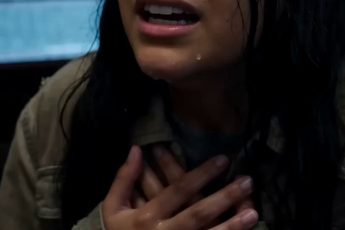
"You came," Sophie wept into his jacket.
Daniel shut his eyes and pulled her close.
"I told you I would, Button."
Several parents looked toward Victoria.
Button.
A father's word.
Not a stranger's word.
Not a delivery man's word.
A father's.
Victoria's hands went cold to the wrist.
The security guard retreated a step, suddenly awkward, embarrassed to have laid a hand on the man at all.
Sophie pulled back just far enough to study Daniel's face. She pressed her small palm to his cheek, the way a child tests whether something is real or only wished for.
Then she turned.
The full auditorium was watching.
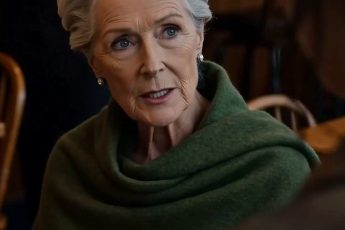
Her eyes moved to the front row. To Victoria. Standing there in cream silk, pearls at her throat, every careful detail of the graceful mother she had constructed over seven years.
But grace has a ceiling. Truth has none.
A woman in the second row whispered, "Oh my God."
"Why did Mom say you weren't my real father?"
The room sealed shut around the question.
Daniel's face changed.
Victoria did not move. Her mouth opened.
Nothing came out.
Then, slowly, the man seated beside her rose to his feet.
Edward Whitman.
Her husband.
The man Sophie introduced at school as Daddy.
The man whose signature was on every tuition check.
He looked at Sophie. He looked at Daniel. Then he turned and looked at Victoria with the particular stillness of someone who has just heard something they cannot unhear.
"What did she just say?"
The color left Victoria's face entirely.
Daniel lowered his gaze, one arm still curved around Sophie like a shield.
Up on the stage, the principal bent down and retrieved the fallen diploma — and noticed something fixed beneath the ribbon.
A folded envelope.
Daniel's name written across the front.
Seven years ago, Victoria had sent it as a warning. *Stay away. Forever. And she will live a perfect life.* She had sealed the envelope herself. She had been so certain it would work.
She had never imagined Sophie would find it.
—
"Sophie." Edward's voice was steady. Too steady. The kind of steady that costs something to maintain. "Come here, sweetheart."
Sophie did not move.
She stayed with her arms looped around Daniel's waist, her face tilted upward at him the way children look at something they have waited for without fully knowing they were waiting.
"Can we go somewhere?" Daniel said quietly.
He wasn't asking Victoria.
He was asking the room — asking the universe, really — for a door out of this particular moment that didn't require anyone else to lose something in public.
Victoria found her voice. It came out smaller than she intended.
"This is not the place—"
"You told her I wasn't her real father." Daniel's eyes moved to her. Not with anger. Somehow that was worse. With the exhaustion of a man who has calculated the cost of every possible response and chosen the one least likely to destroy a child in a graduation auditorium. "When, Victoria?"
The woman in the second row had stopped whispering. No one was whispering. The room was a held breath.
Victoria looked at Edward. His face was doing something she had never seen it do — coming apart at the seams in perfect silence, the way expensive things fail when they finally fail.
"Outside," she said. "We go outside."
—
The hallway of St. Catherine's Academy smelled of construction paper and dried tempera paint. Student artwork marched in two long lines down the corridor walls — wobbly suns, handprint turkeys, one enormous and magnificent purple octopus that someone had titled *ME* in crayon letters as tall as a fist.
The four of them stood beneath the purple octopus.
Victoria. Edward. Daniel. Sophie still holding Daniel's hand, her cap completely sideways now, the elastic lodged under her chin like a lopsided chin strap.
Through the auditorium doors behind them, they could hear the principal gamely announcing the next name, the ceremony lurching forward without its star.
"You told her," Daniel said. Not a question.
"She was four," Victoria said. "She started asking questions and I—"
"She was *four*."
"I know how old she was, Daniel."
"You told a four-year-old child that her father wasn't her real father so that she would stop asking questions."
The words laid themselves out in the hallway like evidence at a hearing.
Edward put his hand on the wall beside a drawing of a yellow house. He was looking at it rather than any of them.
"How long," he said.
Victoria turned.
"How long have you known," Edward said, "that Sophie was his."
A door at the end of the hall opened. A teacher's aide poked her head out, looked at the four of them, read the temperature of the air immediately, and retreated.
"Edward—"
"How long, Victoria."
She lifted her chin.
"Always."
The word fell out of the hallway and went somewhere quiet and permanent.
Sophie looked up at Daniel. She was seven years old and she understood approximately half of what was being said, but she understood the way water understands gravity — without needing to be taught. She pressed closer to his side.
"Are you actually my dad?" she asked him.
Daniel crouched to her level.
He was still in his delivery uniform. There was still rain in the creases of his jacket. He was not the man Victoria had married, not the man whose signature was on the tuition checks, not the man in the front row with the pressed linen and the program in his lap. He was a man who had showed up to this room with nothing but a canvas bag and seven years of kept promises.
"Yes," he said. "I am actually your dad."
"Why didn't you live with us?"
He held her gaze.
"Because sometimes grown-ups make decisions that aren't fair, and then they spend a lot of time trying to find the way back from those decisions." He touched the bill of her crooked cap and straightened it gently. "I never stopped trying."
Sophie considered this with the grave seriousness of a child processing information that will become architecture — the beams and load-bearing walls of who she understands herself to be.
Then she said: "Mom told me you left because you didn't want us."
Victoria made a sound.
Daniel stood up slowly.
"Victoria." His voice was low. Not cruel. But final, the way a door is final when it closes for the last time. "Enough."
"I was protecting—"
"From what?" He turned to face her fully. "From a man who showed up to every school board drop-off point and left letters she never received? From a man who sent birthday cards that went to a P.O. box you controlled? From a father who has driven past this building seventeen times in the last year trying to find a way in that didn't involve a lawyer and a courtroom and this exact scene happening in front of strangers?" His voice never rose. That was the thing. It never rose at all. "You weren't protecting her. You were protecting the story."
Edward stepped away from the wall.
He walked to Sophie. He knelt in front of her with the particular grace of a man who has genuinely loved a child whether or not that love was built on truth. He looked at her for a long moment.
"You know I love you," he said.
"I know," Sophie said.
"Whatever happens next, that doesn't change."
Sophie put her hand briefly on his cheek — the same gesture she had given Daniel in the auditorium, testing for realness. Finding it.
"I know, Daddy."
The word landed in the hallway like a stone in still water.
Edward stood. He looked at Victoria with something beyond anger — something that had moved through anger and come out the other side, gray and final and quiet as ash.
"I need some air," he said.
He walked to the end of the hallway, pushed through the fire door, and was gone into the October afternoon.
—
Victoria and Daniel stood three feet apart beneath the purple octopus.
Sophie was examining a display of third-grade math worksheets with the focus of a child giving two adults the privacy they clearly required.
Victoria spoke first.
"I was twenty-eight," she said. "I was terrified. You had nothing. No apartment, no career, no—"
"I know what I had."
"I made a choice."
"You made a choice for her. Without asking her. Without asking me." He paused. "And then you made her carry it. You handed a four-year-old the weight of your choice and you told her it was a fact of nature. That she was born without a father." His jaw tightened. "That's not protection, Victoria. That's inheritance."
She looked at her hands. The pearl bracelet. The cream silk that had cost more than two months of his delivery shifts.
"What do you want?" she said.
"I want to know my daughter."
"Legally—"
"I'll go through whatever I have to go through." His voice stayed even. "But I'm done disappearing."
Victoria was quiet for a long time.
Through the auditorium doors, they heard applause — someone else's child receiving their diploma, someone else's perfect day proceeding without interruption.
She thought about the envelope. The letter she had written at twenty-eight with the absolute certainty of someone who has never yet had to live with their absolute certainties. *Stay away forever. And she will live a perfect life.*
Sophie was not living a perfect life. Sophie was standing in a hallway in a sideways graduation cap having the foundational architecture of her identity quietly reconstructed.
And she was holding up fine. Better than fine. She was, in fact, already trying to read the purple octopus's signature.
"His name is Mateo," she announced to no one. "He's in third grade."
Victoria looked at her daughter.
Something shifted. Not dramatically. Not loudly. The way tectonic things shift — deep and structural and irrevocable.
"Sophie," she said.
Sophie looked up.
"I owe you an apology." Victoria's voice cracked on the last word and she didn't smooth it out. She let it crack. "A big one."
Sophie studied her mother the way she had studied Daniel — testing for realness.
"Okay," she said.
It was not forgiveness. It was not closure. It was a seven-year-old granting a door that could, in time, become a door.
It was enough.
—
Daniel walked Sophie back to the auditorium himself.
The principal met them at the door, diploma in hand, face arranged in the masterful professional calm of a woman who has managed approximately every crisis a school could produce.
She handed the diploma to Sophie without comment.
She gave Daniel a single, small nod.
He waited at the back of the room for the rest of the ceremony. No canvas bag this time — he'd left it by the door. Just a man in a delivery jacket, standing in the back of the room, watching his daughter walk across the stage and receive her diploma a second time, as if the first time had been a rehearsal.
When Sophie reached the microphone, she stopped.
She looked out at the rows of parents. She found Edward, who had come back in and was sitting quietly three seats from where Victoria had returned to her chair, a deliberate and clarifying distance between them. She found her mother, whose pearls and silk could not quite contain the person who had finally, at some cost, stopped performing.
And she found Daniel, at the back, still wet-shoed and weathered and entirely wrong for the room.
She grinned at him.
The full-chest grin of a child who has gotten something she didn't know how to ask for — who woke up that morning with one kind of perfect day and was ending it with another kind entirely, more complicated and more real and lit from within by something that needed no paper flowers to hold it in place.
Daniel smiled back.
He put his hand over his heart.
She turned back to the microphone, squared her shoulders under the blue gown, and finished what she'd started.