The morning of my wedding, I found out my fiancé had vanished with his lover. While I stood in a suite on the 29th floor of the Hawthorne Regent, a hotel my family owns, Nathan Brooks and my cousin slipped down a freight elevator and into a car idling on 58th Street. They thought they’d won.
Nathan left behind his tux, his watch, and a note. The note was the detail that got me. Not because it hurt. Because he’d written it on hotel stationery, like a man checking out early. One line: *I can’t marry you. Forgive me.*
Forgive him. After the years I’d spent keeping his company alive, fixing his mistakes, convincing my father to move money into Brooks Development when the bridge loan collapsed and his cash flow cratered. One point one million dollars. That was what kept his doors open. That was the investment that let him play real estate developer for another day.
Now he was gone, and the only thing left in that room was the smell of his cologne and an empty bourbon glass on the bureau.
My mother was the first to find me. Victoria Hawthorne doesn’t panic. She reallocates assets. She stood in the doorway in her champagne-colored suit, took one look at the note in my hand, and said, “The florist wants to know if we’re postponing or canceling.”
I folded the note in half. Then in half again. “Neither,” I said. “We’re proceeding on schedule.”
She didn’t ask what I meant. My mother never asks. She just nodded once and shut the door, her heels clicking down the marble hallway like punctuation.
I had about an hour before the ceremony was supposed to start. The ballroom three floors below was already filled with half the business elite of Manhattan. The string quartet was probably warming up. Somewhere in the crowd sat my father, checking his watch, not yet knowing that the man I’d chosen had just made a very public exit through a service corridor.
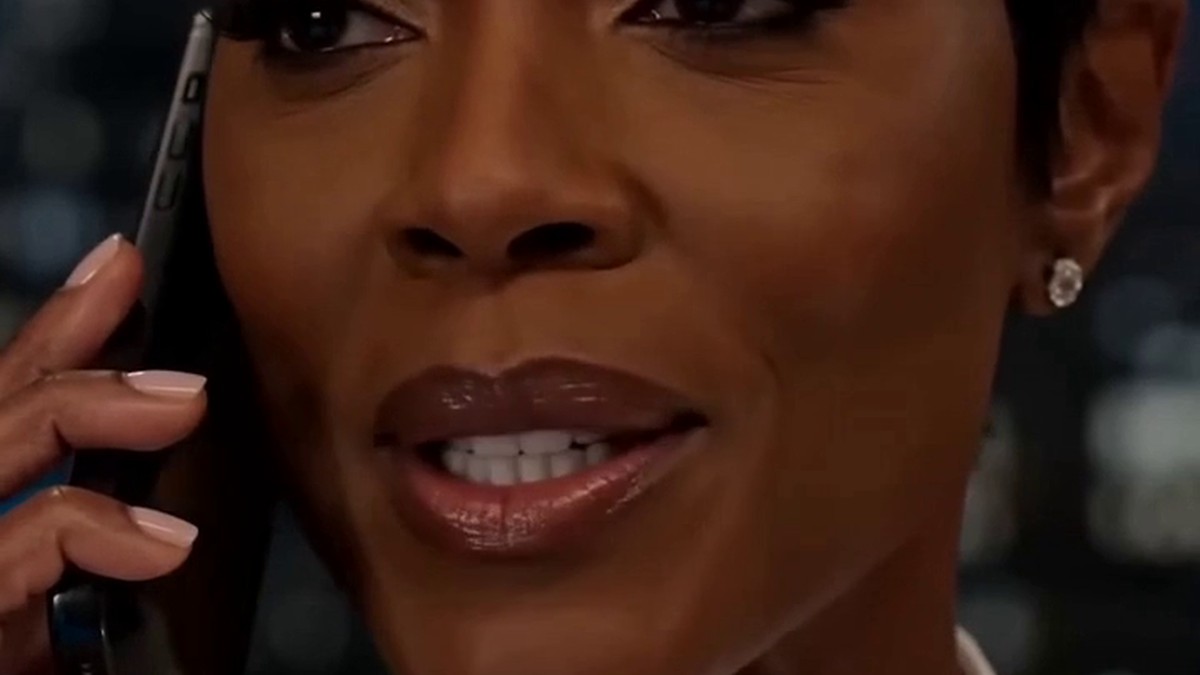
I called the one person I’d avoided inviting.
Daniel Mercer.
He answered on the first ring. Of course he did. Daniel and I had been rivals since boarding school, competitors in business, polite and ruthless in equal measure as adults. He was also the one man in New York who hated Nathan Brooks more than I did. Nathan had undercut him in a deal two years ago, poached a top project manager from his firm, and spread a rumor that Mercer Holdings was overleveraged. A lie that cost Daniel a midtown acquisition.
“Claire.” His voice was flat. “I heard the news. Rumor travels fast in Manhattan.”
“Where are you?”
“My office. Why?”
“I need you at the Hawthorne Regent in forty minutes. I’m getting married today, and the groom isn’t available.”
Silence. Then a short, dry laugh. “You’re asking me to marry you out of spite?”
“No,” I said. “I’m asking you to marry me because you’re the only person in New York who wants to see Nathan Brooks fail as much as I do. And because you’re not stupid.”
Another pause. “What’s in it for me?”
“Nathan’s been living off my capital for three years. You know that. I know that. Today, I cut him off. If you stand next to me in that ballroom, you’ll have access to every door Nathan spent years trying to pry open. You’ll have the Hawthorne name attached to yours. And you’ll have the pleasure of seeing his face when he realizes what he walked away from.”
I heard him breathe out. Then the sound of a chair sliding back.
“Give me thirty-five minutes.”
The wedding happened. I walked down the aisle in a white gown my mother had chosen, carrying white roses I didn’t bother to smell, toward a man I did not love but could trust. Daniel wore a dark suit, not a tux, and his hand was steady when he took mine. The crowd whispered. The flowers were perfect. The photographers got their headline: *Claire Hawthorne marries Daniel Mercer.*
Twelve hours later, Nathan called.
I was in the study of Daniel’s penthouse, still wearing my wedding ring, a gift Daniel had bought from a jeweler on Madison Avenue at 9:15 that morning. The phone buzzed against the desk. I let it ring three times before answering.
“Claire.” Nathan’s voice was hoarse, like he’d been shouting. “What the hell did you do?”
“I got married,” I said. “You’re welcome to send a gift.”
“To Mercer? Of all people, Claire. After everything we had.”
“We had a business arrangement,” I said. “You forgot the invoice.”
I heard someone in the background. A woman’s voice, high and thin. My cousin, Leslie. She’d been at my engagement party. She’d handed me a glass of champagne and told me how lucky I was. Apparently, she spent the following three years proving it.
“You can’t do this,” Nathan said. “I gave you three years. I was loyal.”
“You were funded,” I said. “There’s a difference.”
I let the silence sit. Then I said the one thing I’d wanted to say since I read his note.
“The one million one hundred thousand dollars I moved into Brooks Development. That wasn’t a loan, Nathan. It was an investment. Which means I own a controlling stake in your company. I’ve been on your board twice a quarter for three years. You never noticed.”
The line went quiet.
“You didn’t just leave me at the altar,” I said. “You left before the creditors’ meeting.”
I could hear him breathing. Then, very quietly: “What do you want?”
“I want you to remember this moment,” I said. “Because from today, Brooks Development belongs to me. The Kent Avenue project, the Long Island City site, the Bed-Stuy rezoning. All of it. I’ll keep the staff. I’ll keep the clients. I might even keep the name. But you won’t get a single dollar from it.”
“You can’t just take it.”
“I’m not taking it,” I said. “I’m enforcing the agreement you signed. Look at the paperwork. You might want to start with the document my lawyer filed at nine o’clock this morning.”
I heard paper rustling. Then Leslie’s voice, more urgent now: “Nathan? Nathan, what is it?”
“You’ll hear from my legal team,” I said. “Or you can come by the office tomorrow. I’ll leave your personal effects with security.”
I hung up before he could answer.
The truth is, I didn’t feel triumphant. I sat at Daniel’s desk, in a penthouse that didn’t yet feel like home, and looked at the ring on my finger. My hands were shaking. That’s what anger does. It doesn’t make you cold. It makes every nerve in your body think you’re still in the fight.
Daniel appeared in the doorway, holding two glasses of wine. He didn’t ask who called. He set one glass in front of me and said, “Did you tell him about the Brooklyn deal?”
“I didn’t have to.”
“Good.” He sat in the chair opposite. “Because the takeover’s already done. My lawyers worked through the night. I’ll need your signature on a few things by noon tomorrow.”
I looked at him. This man I’d spent years treating as an opponent. He wasn’t gloating. He wasn’t trying to touch me. He was doing what I’d done for Nathan for three years: fixing the edge before it frayed.
“Why did you say yes?” I asked.
Daniel took a sip of wine. “Because I’ve spent ten years watching you carry men who didn’t deserve your attention. I figured it was my turn to carry you.”
That was the moment I decided the marriage would be real. Not because I was in love with him. Because he was the first man who’d ever shown up when I called.
Three months later, Nathan Brooks stood outside the Hawthorne Group building on Fifth Avenue, holding a cardboard box. The security guard wouldn’t let him past the lobby. His Brooks Development ID had been deactivated at 8:01 that morning. He had 47 dollars in his personal checking account. My accountant confirmed it.
Leslie? She left him two weeks after the takeover. Apparently, she’d only loved the idea of Nathan Brooks the entrepreneur. The man without a company, a building, or a savings account was less romantic.
I watched from my office window on the 30th floor. Nathan looked up, and for a second, I thought he saw me through the glass. Then he turned, walked to the curb, and flagged a taxi he probably couldn’t afford.
I didn’t wave. I didn’t need to. The paperwork in my hands was more satisfying than any gesture.
Daniel came up behind me. “Your father called. He wants to know if we’re keeping the Brooks Development name or rebranding under Hawthorne.”
“Rebrand,” I said. “Something new. Something that doesn’t smell like a bribe.”
He laughed, a low sound that still surprised me when I heard it.
“What about the box?” Daniel asked.
I looked at the cardboard box Nathan had been holding. It was still sitting on the curb, right next to the taxi stand. He must have set it down to open the door and forgotten it. Inside, according to the security guard, were three framed photos, a desk lamp, and a half-empty bottle of mouthwash.
“Throw it out,” I said.
Daniel squeezed my hand once, then let go. That’s the thing about marrying someone who doesn’t need to prove he’s enough. He doesn’t hold on.
The next spring, we hosted the opening of the Mercer-Hawthorne Residences on the site Nathan had always called his “legacy project.” The Kent Avenue lot was now a 34-story glass tower with a courtyard garden and a daycare for residents. The ribbon-cutting was small, just family and a few investors. Our wedding photo sat on the piano in the lobby.
I walked through the model unit, touching countertops, testing drawers. In the master bedroom, I found a note taped to the window. One line, in Daniel’s handwriting: *You built this. I just held the ladder.*
I stood there for a long time, looking at the view of the Manhattan skyline. Then I did something I hadn’t done in years. I laughed. Not the polite, boardroom smile. A real laugh, the kind that comes from somewhere below the ribs.
Outside, a taxi pulled away from the curb. Nathan Brooks was in the back seat. I knew because I’d seen his face in the window. He was going west, toward the Lincoln Tunnel, toward somewhere that wasn’t here.
I didn’t follow.
The building was mine. The city was mine. The man beside me had chosen me without needing to be rescued. And the only cardboard box left on Fifth Avenue had been picked up by sanitation before noon.