The Arcadia had been closed for fourteen years, and I knew exactly where the key was.
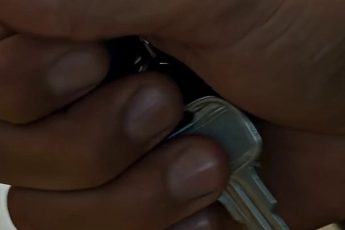
I’m the caretaker for half the empty buildings in Marlowe County, and the old dance hall on Route 9 is one of mine. Every few months, the county pays me to walk through, check for leaks, make sure no kids have broken in. I’ve got a ring in my truck with thirty-two keys on it, and the one for the Arcadia is the brass one with the chip in the shoulder.
The place sits at the edge of town where the soybean fields start, a low cinder-block building with a flat roof and a sign that still says “ARCADIA” in faded script. The parking lot is cracked, weeds pushing through, and the ticket booth window is boarded over with plywood. From the outside, it looks like a place that’s been holding its breath for a decade.
My mother met my father there in the summer of 1978. She told me about it maybe a hundred times. The band that night was a local group called the Tumbling Dice, and she wore a yellow dress she borrowed from her older sister. My father asked her to dance during the second song, and she said his hands were shaking. They married two years later, and I came along a few years after that.
That’s why I haven’t told the county about the letter.
Ten days ago, I got a call from a woman in Columbus. She said her name was Margaret Kowalski, and she was the lawyer for a firm that handled “commercial real estate acquisitions in underperforming rural corridors.” She wanted to know if the county would be open to a discussion about the Arcadia property. She said they were prepared to make a competitive offer. Then she asked if I could let her into the building for a walk-through.
I told her I’d have to check. Then I hung up and sat in my kitchen for a long time, flipping that brass key over and over in my hand.
The thing is, I’m not the county. I don’t decide what gets sold. But I do hold the key, and I do know every inch of that building, and I know what my father built inside it.
My father worked maintenance at the Arcadia for nineteen years. He wasn’t the owner. He wasn’t the manager. He was the guy who swept the floor after the dances, fixed the wiring, replaced the bulbs on the marquee every spring. But when the county was going to tear the place down in 1995, he was the one who went to the zoning meetings with a manila folder full of photographs and spoke for twenty minutes about what the Arcadia meant to the people who lived here. The tear-down failed by two votes. My father came home that night and poured himself a whiskey and said, “They can close it, but they can’t pretend it never happened.”
The next year, the county closed it anyway. The insurance was too high. The roof needed work. There was a leak in the men’s room that would cost eight thousand dollars to fix. The doors were locked, and that was that.
My father kept a key to the place until the day he died. Not the county one I have now. His own. He didn’t have permission. He just kept it.
My mother used to ask him why he’d want a key to a locked building he never went into. He told her, “A thing like that needs a witness.”
I thought about that when Margaret Kowalski called a second time. She wanted to know if I’d spoken to the county. She said her clients were prepared to move quickly. She said the number they had in mind was four hundred thousand dollars for the parcel, and she said it twice, like she wanted to make sure I heard it.
I heard it.
I told her I’d drive out there and take some measurements. She said that would be helpful.
That was yesterday.
This morning, I woke up before sunrise and made a pot of coffee that I never drank. I stood at the sink and watched the sky go from black to a dull gray, and then I put on my work coat and drove out to the Arcadia.
The sun was just coming up over the fields when I parked. The building glowed a little in the pink light, and for a second it looked like the old photos my mother kept in a shoebox under her bed. Photos of people standing in front of the marquee in their best clothes, squinting into the sun, laughing.
I got out of the truck and walked to the front door. The padlock the county put on fourteen years ago was still there, rusted enough that it took me three tries to get the key in. When it finally turned, the sound of it echoed off the empty parking lot.
Inside, the air was cold and still. The power had been off for years, so the only light came through the high windows, dusty and weak. The floor was concrete, with remnants of old tile pattern in places, and my boots made a sound like footsteps following me.
I walked through the main hall, past the stage where the bands used to set up, past the ticket booth with its glass cracked in a spiderweb pattern, past the coat check where a wooden hanger still hung from a hook. The smell was dust and old varnish and something damp underneath, like the building had been holding its breath so long it had forgotten to exhale.
I was supposed to be taking measurements for the county, but I didn’t have a tape measure. I just stood there.
The letter had been in my father’s coat pocket when he died. I found it when my mother and I were going through his things. It was in an envelope with no stamp and no address, just my name on the front in his handwriting.
Inside was a single sheet of paper. This is what it said:
“If anyone ever tries to buy the Arcadia, you take them to the east wall. Look behind the baseboard, three feet from the stage door. You’ll understand.”
I didn’t understand at the time. My father had been dead for two months, and I was still too raw to wonder about it. I put the letter in a drawer with a few other things of his and didn’t read it again until the night Margaret Kowalski first called.
Now I was back in the building, walking toward the east wall.
I found the spot with no trouble. It was the only gap in the baseboard that didn’t line up with the others, like it had been removed and put back so many times it had worn a groove. I worked it loose with the edge of a coin I found in my pocket, and behind it was a hollow space where the cinder blocks didn’t quite meet.
Inside was a metal box, about the size of a shoebox, rusted around the edges but still solid. I sat on the floor and pulled it out, and I have to tell you, my hands weren’t just shaking. They were trembling.
The box wasn’t locked. I opened it.
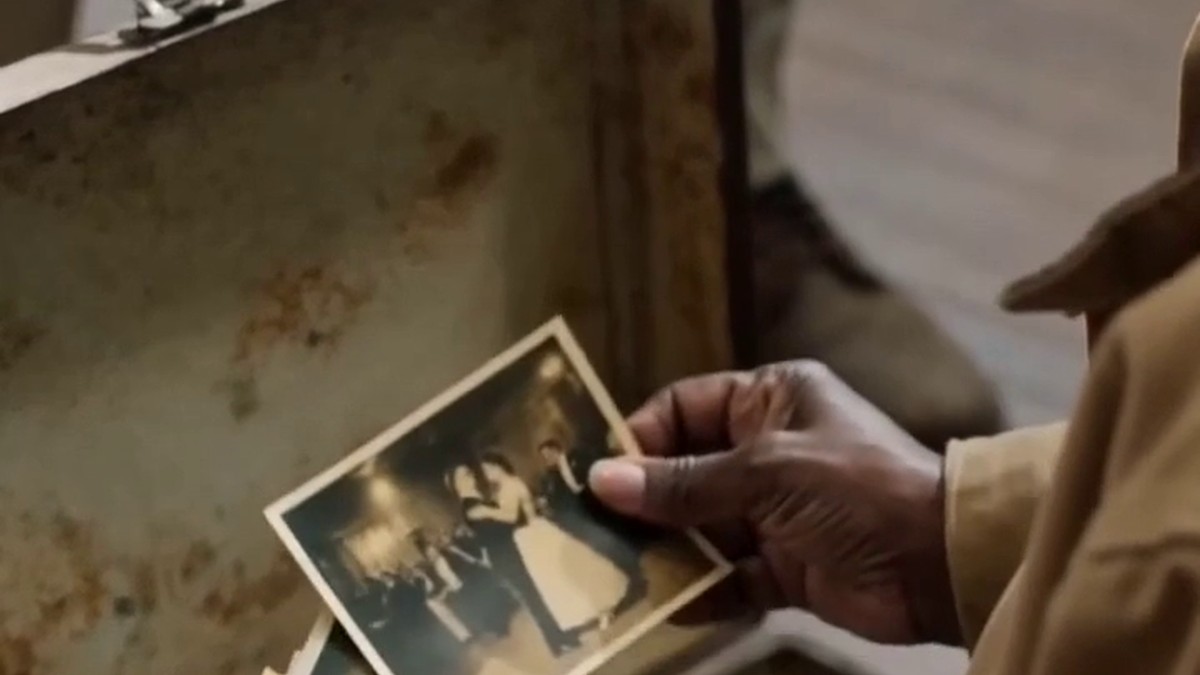
Inside were photographs. Dozens of them, maybe more. Pictures of people dancing at the Arcadia over the years. Young men and women in the fashions of the seventies and eighties, big hair and wide lapels, couples holding each other on the dance floor, people laughing at tables, the bands on stage, the big clock on the wall that always ran five minutes slow. On the back of each photo, my father had written names and dates.
There were also ticket stubs. Hundreds of them. Little yellow and green slips from every year the place was open. And there was a small notebook, its cover worn soft, filled with my father’s slanted handwriting.
I opened the notebook.
It was a list. Not just a list—a record. Every wedding that had its reception at the Arcadia, every anniversary party, every high school dance, every New Year’s Eve. Nineteen years of nights. My father had written down the date, the event, and a note about something that happened. Sometimes it was just a word or two. “Rain, all night, everyone stayed.” “Orville and Laura first dance.” “Flores boy got in a fight, his mother came.” “City inspector came, we fixed the steps.” Page after page.
And at the end of the notebook, the last entry, in the same firm handwriting:
“These things happened. These people were here. If the building goes, don’t let the memory go with it. That’s the real crime.”
I sat on the cold concrete floor of the Arcadia for a long time, the box open in my lap, and I could feel the building around me. It wasn’t scary anymore. It was like the place was still alive in some way, or maybe I was just feeling the weight of remembering.
The next week, Margaret Kowalski came out from Columbus for her walk-through. She was a woman in her fifties with short gray hair and a navy blazer, and she carried a tablet in one hand and a stainless steel coffee cup in the other. She moved through the Arcadia with quick, efficient steps, making little notes as she went, and she kept saying “mm-hmm” like everything was confirming a report she had already read.
She asked about the roof. I told her it was a hundred and twenty thousand dollars to replace, at least, and she said “mm-hmm.” She asked about the water line. I said the county invested eleven years ago in a new water main, but the connection was never activated, and she said “mm-hmm.” She asked about the zoning. I said it was designated for public assembly only, which meant any commercial buyer would need a variance from the town council, and she stopped walking.
“The county hasn’t mentioned that,” she said.
I handed her a copy of the zoning map. I had made six copies at the library the day before, and I folded each one the same way my father used to fold his work orders, into a tight square that fit in a shirt pocket.
She frowned at the map. “This changes the timeline.”
“Yes,” I said. “It does.”
She stayed for another forty-five minutes. When she got into her car at the end, she made a phone call, and I watched her sit in the driver’s seat with the door open, talking for a long time. She didn’t look at the building once during that call. She was looking at her lap, shaking her head.
I knew right then the deal was dead. Not because of me, and not because the place had no value, but because a zoning variance in Marlowe County would take two years and a lot of political capital that no one wanted to spend on a converted dance hall with a broken roof and a rusted padlock.
I let the county know there had been interest. I had to. But I worded it carefully: “Potential buyer asked about the building, said it required more infrastructure than expected, no formal offer submitted.” That was true enough.
And after Margaret Kowalski left, I went to the Marlowe Historical Society and I signed a paper that said the contents of the metal box were now part of the county’s public archive. I gave them every photograph, every ticket stub, every page of that notebook, and I stood in the reading room while they catalogued it all. The archivist was a woman about my age, and she handled each photograph like it was made of something that might crack if she breathed on it.
When she was done, she said, “This is an extraordinary collection.”
I said, “Somebody thought it might be.”
The photographs were scanned and put online. I saw the link on the county’s website last week—a small button that says “Arcadia Memory Project.” Forty-three photographs, as of this morning. Forty-three faces from the summer of 1978.
The building is still there. I drive past it every day. The grass around it is longer now, and the sign has faded a little more in the sun, but nobody has come to tear it down, and nobody has come to buy it.
My father was right about one thing. It needed a witness.
I still carry the brass key on my ring. Every now and then, I park in the empty lot and sit for a while, and I remember the way the place looked with the lights on, and the way the music spilled out into the warm night, and the way people used to stand in that parking lot long after the dancing was done, not wanting to go home, not wanting the night to end.
The county called me last Tuesday. They asked if I’d be willing to take on one more building. The old roller rink off Township Road 18 needs someone to check on it twice a month. I said yes.
But first I drove out to the Arcadia and I unlocked the padlock and I took one last photograph on my phone. It’s grainy and dark, the sun coming through the high windows, and you can see the dust in the air like a slow snow.
I texted it to my mother. She wrote back one word.
“Home.”