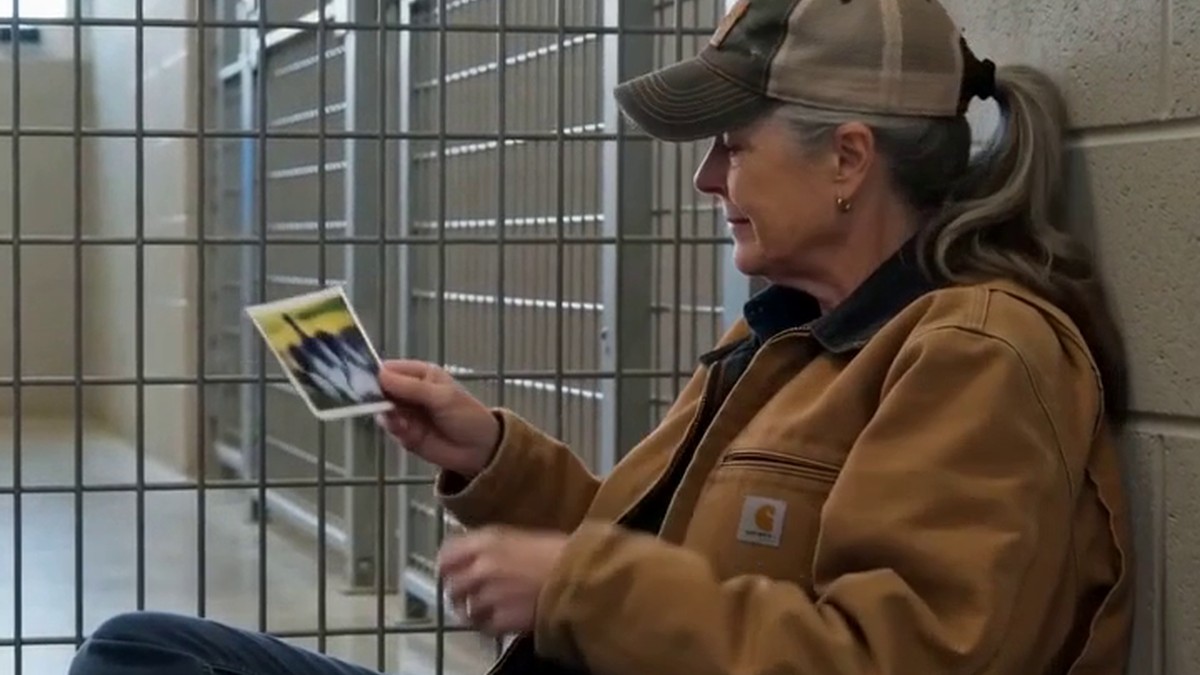
I've mopped the floors at Toledo Animal Services for six years, and I know every dog by the sound they make when I come in at 6 a.m. Most of them start up before I even get the lights on — a wall of barking that bounces off the cinder block until my ears ring. Cage 14 never made a sound.
The intake sheet said his name was Duke, a Siberian husky, three years old, surrendered by his owner in April because of a move that "didn't allow pets." I've heard that line so many times it barely registers anymore. What I remember is the smell of the disinfectant we use on the kennel floors — this sharp lemon smell that never quite covers the smell underneath it — and Duke pressed into the back corner of his run with his nose against the concrete block wall, like he was trying to push himself through it.
He wouldn't turn around when I hosed down the run next to his. Wouldn't lift his head when I dropped kibble in his bowl. One of the vet techs, a woman named Priya who'd been there longer than me, told me the first week he came in he'd flinch every time somebody's shadow crossed his cage door. By the third week he'd stopped flinching. He'd just stopped everything.
I want to be clear — I'm not an adoption counselor. I don't do meet-and-greets, I don't fill out the paperwork, I don't get a say in who takes who home. I clean cages and I walk dogs on my lunch break because the shelter's short-staffed and the dogs need the movement. But I noticed things, working that floor five days a week for six years. I noticed that Duke had stopped waving his tail even at the sound of the food cart, which every other dog in that room reacted to like a fire alarm. I noticed the little half-moon he'd worn into the concrete where his chin rested, day after day, always the same spot.
People came through. A family with two kids looking for something to run with them at the dog park on Bancroft. A retired guy from Sylvania who wanted a lap dog, which a husky was never going to be. A college kid who wanted a husky specifically because of some show he'd watched, and lost interest the second Duke didn't come to the front of the kennel to be petted. Every one of them walked past Cage 14 without stopping. I watched it happen so many times I stopped expecting different.
Then in the second week of August, a woman came in on a Tuesday afternoon — I remember because Tuesdays are when the vet does spay-neuter intakes and the lobby smells like antiseptic and wet dog. She was maybe fifty, work boots, a Mud Hens cap pushed back on her head, and she walked the row slower than most people do. She stopped at Cage 14 and just stood there. Didn't call his name, didn't tap the bars, didn't do any of the things people usually do to get a dog's attention. She crouched down to his level and stayed quiet.
Duke didn't move for a long time. I kept mopping, pretending not to watch, because I've learned dogs like that do better without an audience. But out of the corner of my eye I saw his ear twitch toward her. Just the ear. Then, maybe two full minutes later, his head came up off the concrete — an inch, maybe two — and he looked at her sideways, like he wasn't sure he was allowed to.
She told the front desk she'd lost her own husky, Nika, to old age back in February, after fourteen years, and she wasn't in a hurry to fill the space — she just wanted to see the dogs, she said, most weekends. But she came back Thursday. And Saturday. Each time she sat outside Cage 14 for twenty, thirty minutes, not asking him for anything.
On her fourth visit I was walking past with a mop bucket and I heard it before I turned my head — a soft thump, thump against the kennel wall. Duke's tail. Just barely moving, like he was testing whether it still worked.
The adoption went through on a Wednesday. I wasn't in the room for the paperwork, but I was there when she brought the leash to his run, and Duke stood up on his own — first time I'd seen him stand for anybody — and walked to the gate. Priya cried a little, and she doesn't cry easy. He got in the back of the woman's Subaru without being lifted, and I remember thinking that was the whole thing right there: nobody had to carry him out. He walked out himself.
I don't know what happens after they leave the parking lot. That's not my part of the story. But six weeks later she stopped by to drop off a bag of donated blankets, and she had a photo on her phone — Duke asleep on a dog bed by a window somewhere, one back leg twitching, chasing something in a dream. She said he sleeps through the night now. Says he finally lets the door stay open a crack instead of needing it shut.
Cage 14's got another dog in it now, a shepherd mix who barks at everything, which honestly is easier on all of us. But I still think about that half-moon worn into the concrete, and how long a dog can hold still, waiting to find out if it's safe to want something again.