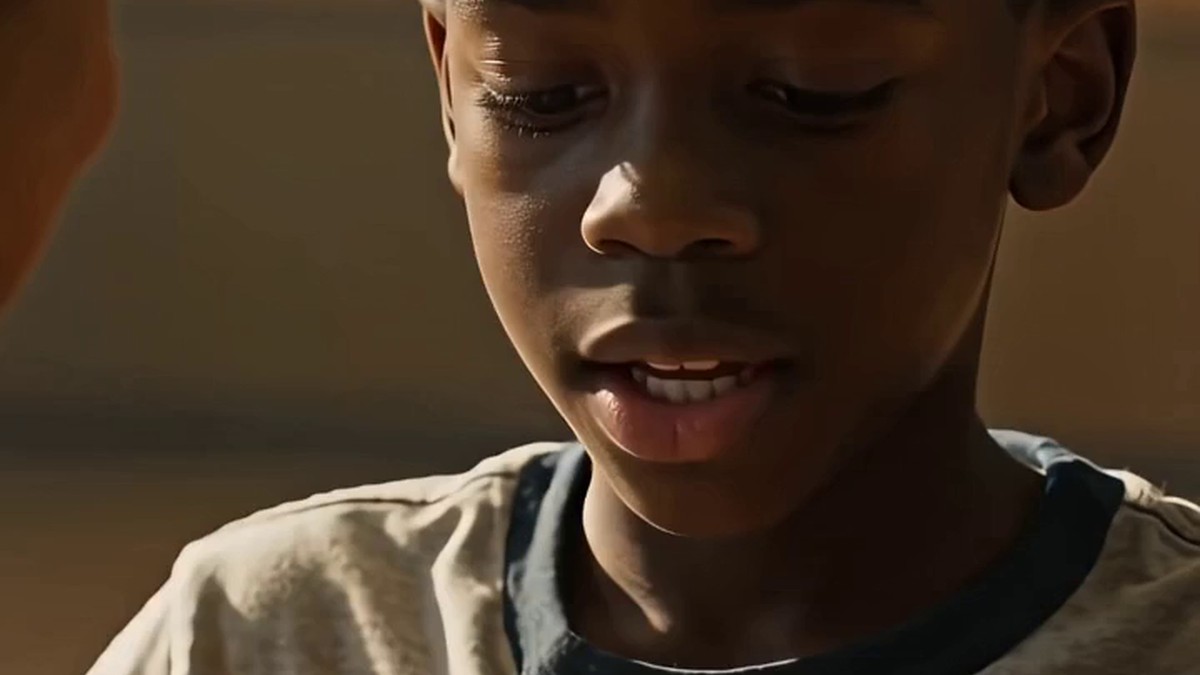
Nobody in Fallon Street Elementary's front office could ever say for certain what day the ceiling tile fell — a Tuesday, everyone agreed on that much, and something about a gas main under the old wing that the county inspector had flagged twice and nobody had fixed either time. What people remembered, when they talked about it at all, was the boy.
Marcus Webb was eight years old that January morning, standing in the east corridor during a fire drill that stopped being routine somewhere around the second bell. His grandmother Dolores had walked him in — his mother worked the early shift at a distribution warehouse off I-75 and couldn't do drop-off that week. Dolores had ducked into the office to hand over a signed permission slip. She was three feet from him when the wall came down.
Marcus opened his eyes twenty-six days later in a room that smelled like antiseptic and cafeteria coffee. The lights were too bright. Something was wrong with his right arm — he could see it lying there on top of the blanket, wrapped and strange, but he couldn't make it move.
"Mom?"
Renee was up out of the recliner before the word finished leaving his mouth. She'd been sleeping in that chair, on and off, for twenty-six nights, and her body had learned to snap awake at the smallest sound out of him — a cough, a shift of the sheets. She leaned over the bed rail so her face was the first thing he saw.
"I'm here, baby. I'm right here."
He blinked at her. His mouth was dry, his lips cracked, and it took him three tries to get the next words out.
"Where's Grandma?"
Renee had known this question was coming. She'd rehearsed a hundred versions of the answer in the recliner at three in the morning, in the shower down the hall, in line for vending machine coffee. None of the rehearsed versions came out. She opened her mouth and nothing arrived for a second, two seconds, long enough that Marcus's eyes started to search her face for whatever she wasn't saying.
"She's not here anymore, Marcus." Renee's hand found his good one, the left, and closed around it. "She didn't make it out of the school with you."
He didn't cry right away. He just looked at the ceiling tiles above his bed — ordinary ones, white, undamaged — and Renee watched his throat work like he was trying to swallow something too big to go down.
"Okay," he finally said, and closed his eyes again, and that was the whole conversation, because that was all either of them could carry that day.
The burns covered nearly half his body. His right forearm had been shattered by a piece of twisted metal shelving, and shrapnel had opened wounds down his side that would need grafts from his thigh, and later, when there wasn't enough of his own skin left to spare, from a donor bank two states away. They moved him to a pediatric burn and reconstruction center in Cincinnati, ninety minutes from home, and over the next eight months he went under anesthesia twenty-two times.
Somewhere around the ninth surgery, a doctor named Feldman caught Renee in the hallway outside the OR doors, still in his cap, and asked if she had a minute.
"I want to be straight with you," he said, not unkindly, keeping his voice low the way doctors do when they've learned that loud honesty in a hospital corridor terrifies people. "The nerve damage in that hand is extensive. We're doing everything we can, and the therapy program here is excellent, but I don't want you walking into this thinking he's guaranteed a full recovery. He may never get back complete use of his right hand."
Renee nodded because nodding was the only thing her body seemed willing to do. She said thank you, or something like it, and walked down the hall to the family restroom, and locked the door, and sat down on the closed lid of the toilet with her phone in her hand, thumb on the stopwatch.
She'd told Marcus fifteen minutes ago that she was stepping out for one minute.
She let herself have eleven.
She watched the numbers climb — forty seconds, ninety, two minutes — and somewhere around minute six she put both hands flat against her thighs and pressed down hard, like she could hold her own ribs together that way. At eleven minutes she wiped her face with the back of her wrist, stood up, ran the cold water for a few seconds and pressed her wet fingers under her eyes, and went back to her son's room smiling like nothing in the world was wrong.
What Dr. Feldman's odds didn't account for was Marcus.
He wore the compression garments — tight, flesh-toned sleeves and a vest, twenty-three hours a day, for over a year, to keep the scar tissue from thickening and dragging his joints tight. They itched constantly. In August they were unbearable, a wet-wool kind of hot against raw skin. He complained about it exactly once, to his physical therapist Angela, during a session in month two.
"It's driving me crazy," he told her, scratching at the edge of the sleeve near his elbow until she caught his wrist. "I want to rip the whole thing off."
"I know, bud," Angela said. "But if you do, it undoes six weeks of what we've built."
He looked at his arm for a second, then pulled his hand back into his lap.
"Fine," he said. "I won't do it again."
He never brought it up again — not because it stopped bothering him, Angela told Renee later, but because he'd apparently decided, at eight going on nine, that complaining wasn't going to make it heal any faster.
By September he was back at a desk at Fallon Street's temporary campus, sitting in the last row of his classroom so the compression garments under his sleeve wouldn't draw stares from the kids who hadn't seen him since January. His teacher, Mrs. Patterson, had talked to the class beforehand — nothing dramatic, just enough that nobody gasped.
That same fall, Marcus asked his mother if he could take piano lessons. His right hand still couldn't fully close around a doorknob.
"Piano," Renee repeated, standing at the stove, not quite turning around. "Marcus, you can barely hold a spoon some mornings."
"I know," he said. "I still want to."
She found him a teacher two towns over, an older man named Dennis Okafor who taught out of his converted garage and specialized in kids coming back from hand injuries. Dennis cut his rate in half the day Renee explained why her son wore gloves sometimes even indoors. For six weeks Marcus played everything with three fingers, slow, deliberate, missing notes he could hear in his head but couldn't yet reach.
He kept showing up anyway.
In the spring, Angela was walking him through a stretching exercise for his shoulder when she said, mostly joking, that ballroom dancing might actually do more for his range of motion than half the drills she had him doing — all that controlled, rhythmic movement through the arm.
Renee expected him to laugh it off. Most eleven-year-old boys would have.
"Can we find someone who teaches that?" he asked instead.
Three weeks later he was standing on the scuffed floor of a community rec center in Kettering, wearing his compression sleeves under a short-sleeved shirt, across from a dance instructor named Priya Raman, learning the box step of a basic tango.
"Weight on your back foot," Priya told him, adjusting his shoulder with two fingers. "There you go. Now step."
He stepped. He was stiff, off the beat, his right hand curled into her palm at an angle that wasn't quite a proper hold, but he stepped.
After that first session, Priya pulled Renee aside near the door, keeping her voice down so Marcus wouldn't hear over the radio someone had left playing.
"I want to help him," she said. "I just don't know that I'm the right person for this. I'm worried I'll hurt him without meaning to — pull on that arm wrong, or push too fast."
Renee thought of a hallway in Cincinnati, of a doctor's careful voice, of eleven minutes on a toilet lid.
"There's no guarantee either way," she said. "So you might as well let him try."
It took four months before he could get through a full routine without stopping to shake out his arm. His grip on Priya's hand stayed weaker on the right for a long time, and she adjusted her lead without saying anything about it. He noticed anyway — he noticed everything people tried not to say out loud around him — but he never mentioned it either, and neither did she, and somehow that unspoken agreement was its own kind of practice.
The recital was in November, in the same gym, folding chairs lined up on hardwood that still carried the ghost lines of a basketball court under the varnish. Renee sat in the third row between her sister and Dennis, who'd come even though it wasn't his event and he had no real reason to be there except that he wanted to be. The only lighting was the gym's regular fluorescents and two portable spotlights clamped near the scoreboard by somebody's father.
When Marcus walked out in his fitted black shirt, the edge of a compression sleeve just visible at his collar, the room went quiet in that particular way a gymnasium full of folding chairs almost never manages. Renee's hands were still in her lap. She noticed that — noticed that they weren't shaking, that her chest wasn't doing the thing it had done in Cincinnati, because she'd apparently used up all of that fear in a hospital hallway two years ago and there wasn't any left to spend tonight.
The music started, something with a slow, deliberate build to it, and Marcus found the beat on the second measure. Priya turned under his right arm — his weaker arm, the one a doctor once said might never close around anything again — and he held her, and he didn't drop her, and he didn't miss the step.
Renee's sister grabbed her hand somewhere in the middle of it. Renee didn't look away from the floor long enough to notice whose grip tightened first.
He dipped Priya at the end exactly the way they'd rehearsed it sixty times in a rec center with a bad speaker system, and for one second the gym held its breath the way a crowd does right before it forgets to be polite. Then it broke — not recital applause, not the kind parents give because they're supposed to, but the loud, ragged kind that comes out of people who didn't know they were holding anything in until it was over.
Marcus didn't bow. He turned straight to the third row and grinned at his mother, wide and unguarded, the same grin he used to have before January, the one Renee hadn't seen in almost two years and had started to wonder if the fire had taken along with everything else.
Two years after the explosion, Renee sat at her kitchen table with a folder from a personal injury attorney in Dayton and signed the settlement papers — three hundred forty thousand dollars, once the county finally put in writing what the inspection reports had shown from the start. She didn't buy a car. She didn't move. She opened a trust account for Marcus at a credit union on Wilmington Pike, locked until he turns twenty-five, and mailed a copy of the paperwork to her sister with a sticky note on top: *for when I'm gone, so nobody argues about it.*
Marcus still wears a thin sleeve on his forearm sometimes, mostly from habit more than need. He dances at the intermediate level now, competitively, with Priya still across from him on the floor. Dennis stopped charging him for lessons somewhere around year two — called it an even trade, and never explained what he meant by that, and never had to.