The sky over Fresno cracked open with rain about ten minutes before they lowered the casket, and all I could think was that Walt Reeder would've laughed at that. Rotten timing was his specialty. A stalled lawnmower was "taking a mental health day." A flooded basement was "the pool we never asked for." He had a joke for everything except, apparently, dying.
My heels sank into the wet grass at Belmont Memorial while four of my siblings stood in a loose, damp line beside me. Priya kept her arms crossed over her chest like she was holding herself together with them. Desmond cleared his throat twice, three times, like something was stuck. Jonah stared at the coffin with his jaw so tight I could see the muscle jump.
None of us shared blood with Walt. All five of us had his last name anyway.
I'm Callie. I was seven when my mother, Renee, died on Highway 99 in a crash that took less than four seconds and left Walt with a kid who wasn't his. My grandparents drove up from Bakersfield to collect me — they figured that was just how it worked, a widower with no blood tie moves on, hands the girl back to her real family. I remember sitting on the plaid couch with a stuffed rabbit missing one ear, and Walt saying, "She's my daughter. That conversation's over." My grandfather started to argue. Walt just said it again, slower.
That rabbit — I'd named her Butterscotch for no reason anyone could explain — sat on my dresser for the next twenty-two years.
Two years after my mother died, Walt adopted Priya and Desmond, twins who'd bounced through three group homes in Tulare County before he signed the papers. Two years after that came Jonah and his little sister Marisol, who arrived through the foster system and, within eighteen months, arrived permanently. Five kids, none of them his by blood, all of them screaming "Dad!" from different corners of a two-bedroom house that somehow expanded to fit us.
Marisol wasn't at the funeral. She was twenty now, and the last time any of us had seen her in person was two years earlier, seven days after her eighteenth birthday, when she packed a duffel bag and left a note that said she needed "to figure out who I am without all of you deciding it for me."
I hadn't expected her to come. I'd called her anyway, standing in the hospital hallway at two in the morning with a Dr Pepper going flat in my hand, my voice cracking on the words "he's gone."
She showed up at the cemetery in a gray hoodie two sizes too big, looking like she hadn't slept since the phone call. Desmond went to her first.
"He waited for you," he said. "Every Sunday he'd call. Left the same voicemail basically — 'just checking in, kiddo, no pressure.' He kept your porch light on every single night since you left."
"You don't know him the way I do," Marisol said, and turned back toward the grave.
That line had lodged in my chest for two years already, ever since she'd said something close to it on the phone the one time she answered. I still didn't know what it meant.
After the service, a man in a charcoal overcoat introduced himself as Mr. Halloran, Walt's attorney. He said Walt had left instructions — all five of us, together, in his office, before anything else happened. Not a reading. A delivery.
His office smelled like toner and old coffee. On the desk sat a small cedar box with a brass clasp, and beside it, five sealed envelopes, each with a name in Walt's blocky handwriting. Inside mine was a letter, and folded inside that, a photograph I'd never seen — Walt, maybe twenty-five years old, standing next to a young woman with Jonah's exact smile.
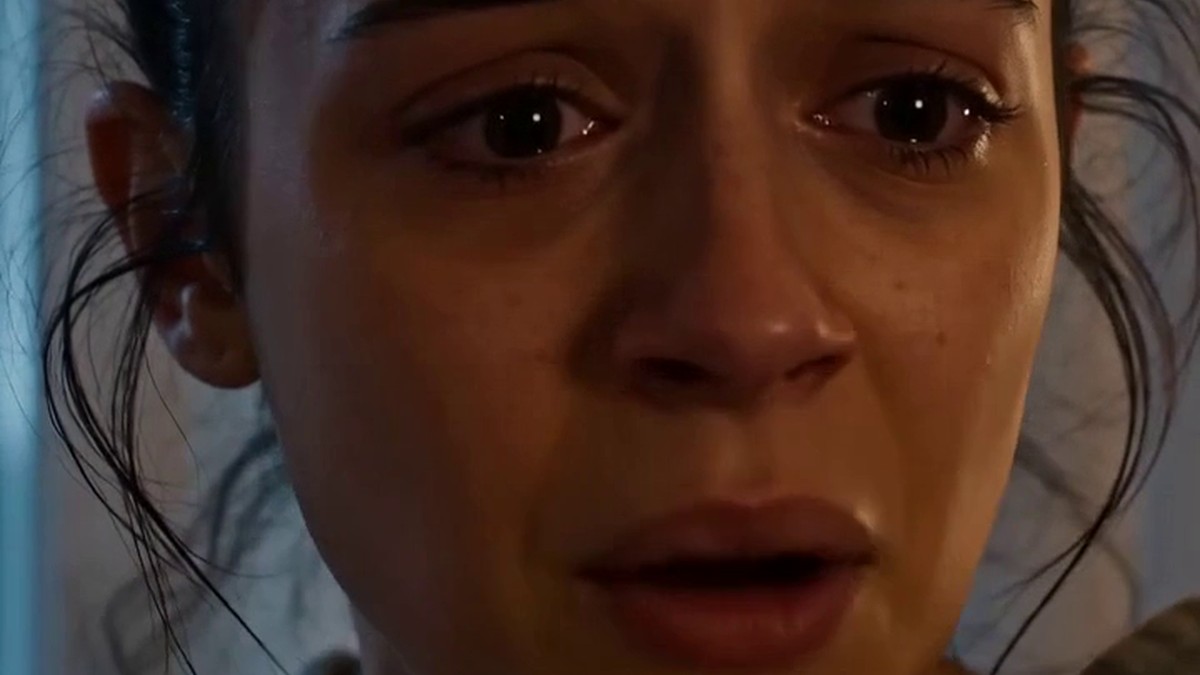
Halloran told us Marisol had already read hers. She was sitting outside on a bench under a jacaranda tree that had dropped purple petals all over the sidewalk, and when I found her, she was sobbing hard enough that her shoulders shook.
"Read it to me," she said. "I can't do it again."
The woman in the photograph was Elise — Jonah and Marisol's biological mother, and, it turned out, the younger sister Walt had lost touch with decades earlier. In the letter, Walt explained that he and Elise had been close as kids growing up in Visalia, before she ran off as a teenager and cut contact with the whole family. Years later, a caseworker had tracked Walt down: Elise was gravely ill, and her two children were about to enter the foster system. Walt started the paperwork to bring Jonah and Marisol home within the month.
He never told them she was family — not officially, not right away. He wanted them to feel like his kids first, not like an obligation he'd inherited. But Marisol had found the locket in his desk two years ago while looking for scotch tape, and she'd assembled her own version of the story: that Walt had had an affair with Elise, abandoned her, and only "took in" her children out of guilt. She confronted him at eighteen, furious, and didn't wait around for an explanation that, frankly, he fumbled trying to give her in the moment.
He hadn't brought them home out of guilt. He'd brought them home because they were his sister's kids, and because — the letter said this almost exactly — "when I love somebody, I don't get to stop just because it's inconvenient."
I found Marisol still crying under the jacaranda and told her to come back to the house with us. "Dad would be furious," I said, "if we found out a family secret and then broke up in a law office parking lot like it's nothing."
That evening, all five of us walked through the same chain-link gate on Bellflower Lane. The porch light was on — a bare yellow bulb Walt had replaced probably forty times since Marisol left, because he refused to switch to LED, said the yellow one "looked more like waiting."
Inside, the house still smelled like him: coffee grounds, cedar shavings from his garage workbench, the cinnamon Altoids he kept in every jacket pocket. On the mantel sat a picture of all five of us in matching flannel pajamas from a Christmas eleven years back, laughing at something off-camera — Walt had insisted the pajamas were "genuine Canadian sleepwear," which none of us believed for a second.
We sat in the living room until almost midnight — the man who fell asleep during every movie and swore he hadn't been snoring, who never missed a single band concert or spelling bee across five kids and roughly forty years combined, who kept a spare pair of work gloves in the truck for anyone who needed them.
Marisol asked, "You think he knew I still loved him? Even when I said all that stuff?"
"He forgave you before you were even out the driveway," Jonah said. "Of course he did. Man would've forgiven you for stealing his truck if you brought it back with an apology and a full tank of gas."
It was the first real laugh out of her in two years, and it came out sounding rusty.
Three days later, the five of us drove back out to Belmont Memorial together. Marisol knelt first, pressed her palm flat against the still-fresh granite.
"I'm sorry," she said. "I'm so sorry, Dad."
I'd brought a small battery lantern from the garage — one of Walt's own, the kind he used during power outages — and set it in the grass beside the headstone. I switched it on. It looked small and stubborn against the gray afternoon.
We walked back to the cars together, the first time we'd done that in two years. Car doors opened, one after another, four dull thuds in the quiet lot. Before she climbed in, Marisol looked back once at the little lantern glowing against the granite, and stood there a second longer than she needed to.
Then she got in, and pulled the door shut behind her.