Derek came home at 6:12 p.m. on a Friday, still wearing his Carhartt jacket, and said the words that ended my marriage before the garage door finished rolling down behind him.
“We need to talk.”
I was at the kitchen island, slicing limes for the Corona I’d already poured. Stood there with the knife halfway through the second lime and knew — the way you know a storm is coming because the light through the window goes yellow — that whatever came next wasn’t going to wash off.
“About Sophie,” he said.
“What about her?”
“She doesn’t look like me. At all. Mom brought it up again at lunch.”
I set the knife down. The lime juice was stinging a paper cut on my thumb — the one I’d gotten that morning opening a box of Cheerios for Sophie’s breakfast. I remember that. The dumbest details stick when everything else is falling.
“She’s five, Derek. Five years we’ve done this. You cut the cord. You were the first person to hold her after the nurse.”
He nodded like I’d just confirmed a fact about the weather and said, “I want a DNA test. Lots of people do it. It’s not an accusation — it’s just science.”
Just science.
That’s what he called it.
—
We’d been married seven years. I’m a loan officer at a credit union in Oklahoma City. Derek’s a firefighter with the Edmond station. We met at a mutual friend’s backyard barbecue in 2013 — he was the guy flipping burgers and arguing with our friend Travis about whether a brisket needed butcher paper or foil. He had a laugh that carried across the yard. Sophie has that same laugh. It comes from him, and he somehow never noticed.
I looked at him standing in my kitchen — our kitchen — and tried to reconcile him with the man who once drove forty-five minutes at 2 a.m. to get Sophie’s special eczema cream because the pharmacy by our house was closed. The man who sat on the bathroom floor with her for two hours during a stomach bug, holding a bucket and playing Peppa Pig on his phone.
That man was married to me.
The one standing by the fridge talking about “just science” had been replaced by someone who took lunch advice from a woman who’d been undermining our marriage since the day I showed up to Thanksgiving with a store-bought pie.
“Fine,” I said.
He blinked. “Fine?”
“Book it. I want this over.” I picked the knife back up and finished the second lime. “But I’m paying. Out of my own account. And you’re going to remember that.”
He opened his mouth, then closed it. For once, nothing.
—
Saturday morning. The lab was in a strip mall off Northwest Expressway, wedged between a Cricket Wireless and a place that sold pool supplies. It smelled like hand sanitizer and new carpet. Sophie wore her yellow rain boots even though there wasn’t a cloud in the sky. She’s been doing that lately — wearing the boots everywhere. Says they make her fast.
The technician, a woman in her twenties with long acrylic nails and a voice like she’d done this ten thousand times, squatted down to Sophie’s level.
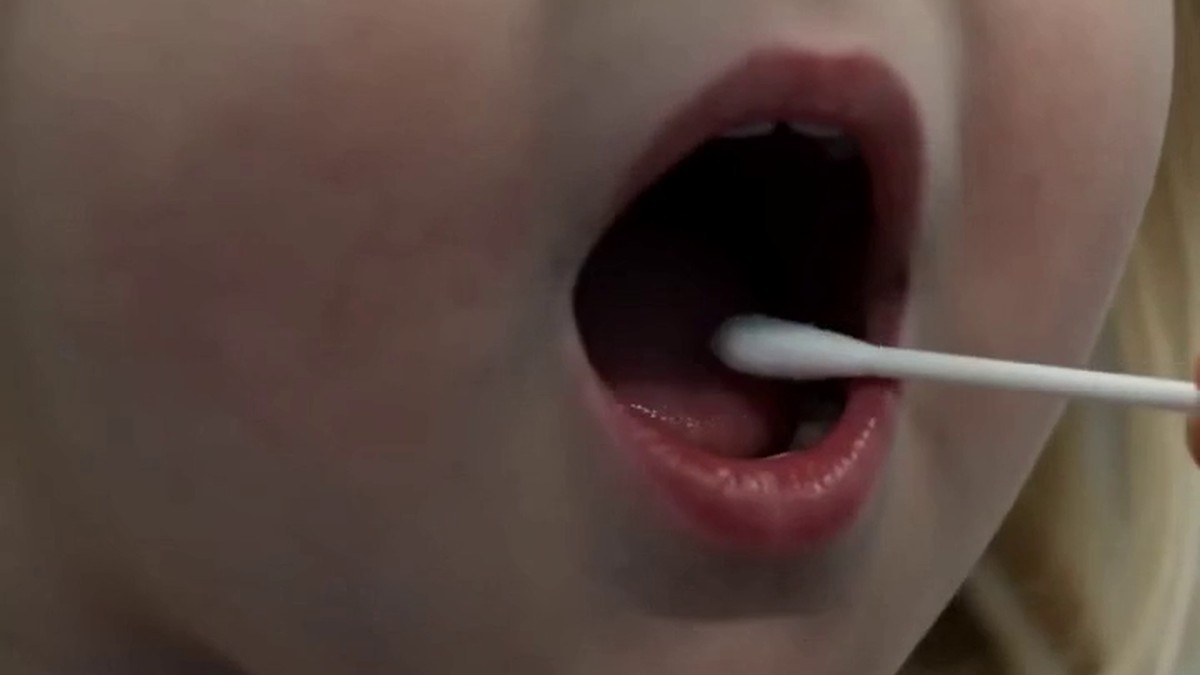
“Sweetheart, I just need to tickle the inside of your cheek with this little cotton swab.”
“Why?” Sophie asked.
“To learn something special about you.”
I thought: she’s going to learn that her father needed a stranger with a cotton swab to tell him what any idiot with eyes could see.
Sophie opened her mouth, and I watched the swab go in, and I didn’t cry. I’d promised myself I wouldn’t cry until I was alone. Derek stood next to me with his arms crossed, jaw tight, looking at the floor like the tiles owed him money.
“Results in three to five business days,” the tech said. “We’ll text and email.”
Derek tried to take my hand in the parking lot. I pulled away and unlocked the car.
—
Sunday was soup day at my mom’s house. She lives in Norman, in a little brick house with too many wind chimes on the porch and a refrigerator covered in Sophie’s drawings. I showed up with two suitcases, one for each of us, and Mom opened the screen door and just said, “Come on in. I made potato soup. It’s weird, I had a feeling I should make potato soup.”
That’s the thing about moms — the good ones, anyway. They know what you need before you can admit you need it.
I told her everything while Sophie played in the spare bedroom with the same Fisher-Price farm set I’d played with as a kid. Mom didn’t interrupt. When I finished, she tapped her spoon against the rim of her bowl twice and said, “So he let his mother climb inside your marriage with her shoes on.”
“Mom.”
“What? Tell me I’m wrong.”
I couldn’t. Derek’s mother, Renée, had been a problem since before the wedding. At the rehearsal dinner she’d pulled me aside and told me Derek “could’ve gone to law school, you know, if his priorities had been different.” Meaning me. I was the detour.
For five years I’d smiled through it. For five years I’d told myself she was just territorial, that she’d soften once the grandkids came.
She didn’t soften. She sharpened.
And on some ordinary Tuesday, she’d planted the seed of Sophie looking “off” — the eyes, the nose, the way she bites her lip — and Derek had watered it with his silence instead of telling her to shut the hell up.
—
The results came on Thursday. Derek texted me a screenshot of the email before I’d even had my second cup of coffee.
Probability of paternity: 99.99%.
Then his call. Then three more calls I let go to voicemail.
Then a voice message: “I knew it, babe. I swear I knew it the whole time. Let’s do dinner tonight. I’ll get that lasagna you like from the place on May Avenue. Sophie can have the garlic bread. We’ll celebrate.”
Celebrate.
I listened to it twice in my mom’s kitchen, standing by the window that faces the bird feeder Mom refuses to take down even though the squirrels have won. There was a dead wasp on the windowsill. I remember that too.
I didn’t call him back.
Instead, I called my lawyer.
—
Here’s what I did while he was picking out lasagna and feeling proud of himself.
I emptied the house on our lunch break. My friend Rachel came with her truck. We got everything important in two hours: Sophie’s dresser, her books, her ridiculous collection of stuffed sloths. My clothes. The kitchen stuff I’d bought before we were married and could prove with receipts.
And I left a note.
It wasn’t angry. That’s the part that still surprises people when I tell this story. There was no fire in it. Just paper, a purple pen, and a list.
Written by the woman who still loved the man she married but couldn’t find him in the man who’d asked for a paternity test on a five-year-old because his mother thought “the nose was wrong.”
—
Derek got home at 5:47 p.m.
He told me later — during the counseling session I agreed to so I could say I tried — that he knew something was wrong before he even opened the door. The house felt hollow. Like walking into a mouth after the tooth’s been pulled.
He found the note on the kitchen island, held down by the Campbell’s soup koozie Sophie made him for Father’s Day.
It said:
*The test was never the problem. You asked me to prove I’d been faithful for seven years because your mother thought Sophie’s chin looked “funny.” And you didn’t defend me. Not once. You sat in that lab with your arms crossed like I was the one on trial. I paid $1,789 for that test. That $1,789 was the cheapest thing you ever made me spend — because the real cost was the seven years you retroactively turned into a lie. Every lunchbox I packed, every bedtime story, every fever I sat through, every Christmas morning I built with my own hands — you just stood there and asked the lab if any of it was real. We’re not coming home. The paperwork is on the counter. Good luck explaining to your mother how the “funny chin” cost her a granddaughter.*
—
At 7:30 p.m., the doorbell rang at my mom’s house.
I knew it was him before I even looked through the peephole. He was holding a white bakery box, and even through the distortion, I could see his shoulders doing that thing they do when he’s trying not to lose it.
I opened the door.
He said, “I bought cheesecake.”
I said, “I know.”
“The one with the strawberries. From La Baguette. It was forty-two dollars.”
“Derek, I’m not in the mood to price your guilt.”
He looked at me, and I saw it then — that he finally understood something, but too late. His hand was shaking around the string of the bakery box. He said, “It’s not about the money.”
“No,” I said. “It never was. It’s about the fact that you couldn’t look at your own daughter and know. You had to ask a lab. And I had to sit there with her in her yellow rain boots and watch a stranger swab her cheek so you could be sure.” I took the bakery box from him. He didn’t resist. “The lab was never going to fix it. Because the problem was never whether she was yours. The problem was that you thought I was the kind of woman who’d do that to you for seven years.”
“Leah, please. I listened to my mom too much, I get it now. I’ll tell her to back off. I’ll do anything.”
“You already did everything,” I said.
Then I closed the door.
And I set the cheesecake on the floor for the neighborhood cat — the orange tom that’s always skulking around my mother’s azaleas. Mom looked after her as the door clicked shut and said, “Forty-two dollars,” she said. “That’s the tuition for this lesson.”
—
That was last March.
The divorce was finalized the first week of December. Sophie’s in first grade now, at a little public school in Norman with a great art teacher. She still wears the rain boots. Derek gets her every other weekend, and last month he dropped her off with a card and a gas station rose, and I said thank you and closed the door.
I’m not angry anymore. That’s the thing nobody tells you about walking away from someone who broke your trust — it’s not the anger that stays. It’s the relief. The quiet of mornings where nobody’s mother is a topic of conversation. The peace of packing a lunchbox without a voice in my head asking if it counts as love.
Renee called once, after everything. She left a voicemail I didn’t listen to. I deleted it in front of my mom, and then I threw the phone on the couch and said, “What do you want on the pizza?”
Some things don’t deserve the last word. Some ghosts you just let fade.
The other day, Sophie asked me why I never wear my wedding ring anymore. I was sitting on the floor of her room, braiding her hair for soccer practice. I thought about lying, then didn’t.
“Because I don’t need to prove anything to anyone anymore,” I said.
She nodded like she understood, then asked if we could stop for a slushie on the way.
I said yes.