"Get off my property, you worthless leech." Dale Merritt's voice cut through the downpour like a slap. Priya Merritt stood on the porch steps of the house in Portland, Oregon where she'd grown up, watching her father's face twist into something she barely recognized. Rain sheeted down the cracked concrete walkway and soaked into the muddy strip of lawn where half her life now lay scattered in ruined heaps.
"Get off my property," he said again. "You're nothing but a parasite."
She knelt in the wet grass in a thin flannel shirt, gathering what he'd thrown out the front door. Waders. Steel-toed boots. A stack of field journals with the leather covers already curling from the rain. A crate of heat lamps she used for injured cormorants. A first-aid kit for animals twice her size. Nine years of handwritten migration notes, the ink already starting to bleed.
Her stepsister Vanessa watched from under the porch overhang, dry beneath a burgundy golf umbrella, sipping something from a Stumptown cup like she was at a parade. "Can you hurry it up?" Vanessa called. "You're making the whole yard look like a Goodwill dumped a truck here."
Beside her, Priya's stepmother Denise leaned into Dale's shoulder, one hand pressed to her chest like she might faint from the sheer indignity of it. "Oh, Dale," she gasped, loud enough for the neighbors two houses down. "My heart. I can't take this stress. She is so toxic."
"Dad, please," Priya said, her voice cracking. "At least let me load the truck right. My rescue gear is getting wrecked out here."
His eyes went flat. "Don't call me Dad." The words landed harder than the rain. "I don't have a daughter. My only daughter is Vanessa. You're a college dropout who plays with dirty animals and lives under my roof like a charity case."
She'd heard some version of this for nine years. Dale ran a mid-size wealth management firm out of a glass office downtown, the kind of man who measured worth in billable hours and law degrees. Priya had left Oregon State at twenty to work marine rescue full-time — seals tangled in gillnets, gulls slicked in bilge oil, sea lions with fishhooks buried in their cheeks. To him, that was proof she'd thrown her life away.
"Get out," he said. "Before I call the cops."
Vanessa laughed, a short, satisfied sound. "Finally. The trash takes itself out."
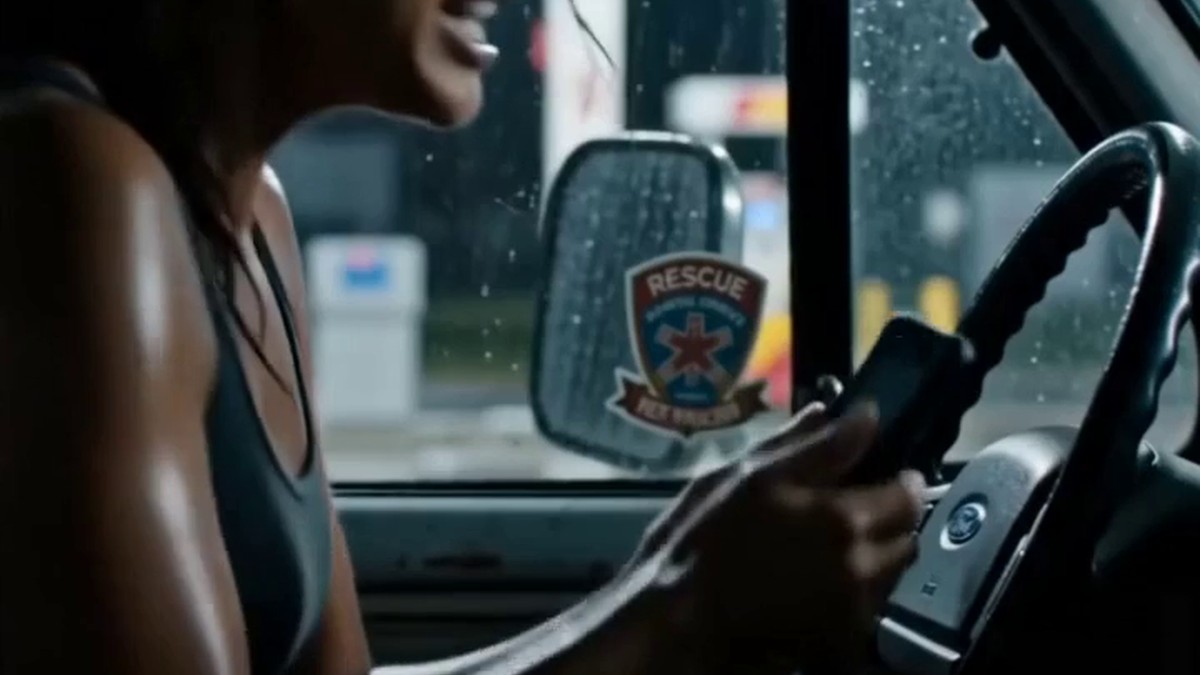
Something in Priya just stopped. She quit asking. She threw the soaked gear into the bed of her ten-year-old Ford Ranger — the one with 190,000 miles and a rescue org's magnet still stuck crooked on the door — and climbed into the driver's seat with rainwater running off her hair onto the wheel. Nobody followed her down the driveway. Not her father, not Vanessa, not the woman who'd spent six months dismantling her place in that house piece by piece.
She drove until the city blurred through tears and windshield wipers. Hours later she pulled into an empty Chevron off I-5 outside Salem, parked under a buzzing sodium light, and put her forehead down on the steering wheel. Twenty-eight years old. Homeless. Soaked through. Disowned. Forty-three dollars in her checking account. Her phone was dead. She found a frayed charging cable jammed in the center console and plugged it in, praying it would hold a charge long enough to call someone.
When the screen finally blinked to one percent, the notifications piled up all at once. Nothing from her father. Nothing from Vanessa. One text came from an unfamiliar 808 area code.
"Ms. Merritt, this is Thaddeus Okafor, lead counsel for the Reyes estate. I've been trying to reach you all evening. The will reading cannot wait. Please call me immediately."
Reyes. Her great-uncle Ignacio Reyes — her late mother's uncle, the family's black sheep, a conservationist who'd vanished to Hawaii decades ago and never came back for so much as a funeral.
Before she could dial, the phone died again. She screamed into the empty cab of the truck. At sunrise she bought a five-dollar charger at a gas station convenience store and called the only person who wouldn't judge her.
Marisol showed up thirty minutes later in her mud-splattered Subaru. She took one look at Priya, pulled her into a hug that nearly cracked a rib, and said, "You're safe now, Priya." For the first time all night, Priya let herself believe someone.
Marisol steered her straight into the shower at her apartment in Salem and told her not to come out until she could feel her fingers again. Under the hot water the cold left her body first. The memories didn't leave at all.
They came in order. Vanessa's law school acceptance party, two years back. The house had been packed with Dale's country-club friends. Priya had shown up late off a twelve-hour rescue shift, still smelling faintly of fish oil from cutting a harbor seal pup out of a crab trap line. When one of Dale's partners asked what she did, her father stepped in front of her and laughed. "Priya does beach cleanup, volunteer stuff," he said. "It's a phase. She never had Vanessa's drive."
Vanessa raised her champagne flute and added, "Don't get too close. She usually smells like dead fish."
Then there was Denise's yoga studio. Six months ago Denise decided the home office that used to belong to Priya's late mother needed to become her "wellness sanctuary." Priya had kept three years of field notebooks in there — waterproof logs of tagging data, injury trends, rehab outcomes she was compiling for a state wildlife board presentation. When she came home that day, the office was stripped bare. Denise stood in the kitchen sipping a green smoothie, not even looking up from her phone.
"I tossed those grubby binders," she said. "They looked unsanitary."
Priya had said nothing that day. She'd swallowed it, the way she'd swallowed everything for nine years, because there was nowhere else to go and because some stubborn part of her still wanted her father to look at her the way he looked at Vanessa. Standing in Marisol's shower now, watching the water spiral down the drain gray with dried mud and salt, she realized that stubborn part of her had finally burned out somewhere on I-5 in the dark.
She called Thaddeus Okafor from Marisol's kitchen table an hour later, wrapped in a towel, her hands shaking around a mug of coffee she couldn't taste. He explained it plainly, the way lawyers do when they've delivered this kind of news before: Ignacio Reyes had died six weeks earlier on the North Shore of Oahu. No children. No spouse. He'd left behind a marine conservation easement, a research boat, and a property on Oahu's windward coast currently valued at eighty-five million dollars — an estate built quietly, over four decades, from land his environmental nonprofit had bought up parcel by parcel before the coastline became unaffordable. He had named exactly one heir.
Priya Merritt.
"He followed your rescue work for years," Thaddeus told her. "Newsletter clippings. Case reports. He kept a whole binder on you, Ms. Merritt. He used to tell me you were the only Reyes who understood what the land was actually for."
Two weeks later she stood on a bluff above Kahuku Point, the wind pulling salt spray up off the rocks, looking at a cedar-and-glass house that seemed to grow straight out of the coastline. A rehabilitated monk seal enclosure sat behind it, empty and waiting. Inside, an entire wall of the library held Ignacio's own field journals — forty years of them, in the same cramped handwriting her mother used to have.
She thought about the crate of heat lamps still sitting, rain-warped, in the bed of her truck back in Marisol's driveway. She thought about Denise's green smoothie. About Vanessa's umbrella. About her father's voice telling her she wasn't his daughter.
She didn't cry. She opened her laptop on Ignacio's old desk and drafted an email to a probate attorney in Honolulu, asking him to formally decline any future claim or contact from Dale Merritt or Vanessa Merritt regarding the estate, and to flag the file permanently. Then she called the Oregon wildlife board and told them she'd be funding their harbor seal rehabilitation program for the next ten years — six hundred thousand dollars, wired the following Monday, no press release, no name attached beyond "a private donor from Kahuku."
Three months later, a letter arrived at the Kahuku property from Dale Merritt. Thaddeus forwarded it, unopened per her instructions, with a note: *Your call on this one.* Priya read it once on the lanai, coffee going cold beside her, the sound of the surf underneath every line. Her father wrote about family, about blood, about how sorry Denise was for the misunderstanding over the notebooks, about how there was surely room to reconnect now that things had "worked out" for her.
She folded the letter along its original creases, slid it back into its envelope, and wrote across the front in block letters: *RETURN TO SENDER — NO FORWARDING ADDRESS.* She walked it to the mailbox at the end of the long gravel drive herself, past the seal enclosure where a rescued pup named Koa was finally strong enough to swim laps on his own, and dropped it in the outgoing slot.
Then she went back inside, sat down at her great-uncle's desk, and kept working on the migration report that was actually due.