The Kennels Behind the Marlowe Body Shop
My name's Russ Kellerman, and my ex-wife tells people I ruined our marriage over a bunch of stray dogs. That's not exactly wrong, but it's not the whole thing either.
I own an auto body shop off Route 9 outside Poughkeepsie, New York — Kellerman Collision, been in business eleven years. Before all this started, I measured my life in cars. I had a '69 Camaro SS I bought for eight grand and put twenty-two into. I had a Ford Bronco I never once took off-road. At my peak I had six vehicles sitting in my driveway and the shop lot, and my neighbor Dave used to joke I ran a used car lot out of my own house.
Then one night in March, coming back from picking up a transmission in Newburgh, I saw something moving on the shoulder of I-84 in my headlights. Small, maybe fifteen pounds, soaked from the rain, walking straight toward the guardrail like it didn't understand what cars were. I pulled over on the gravel, hazards on, semi trucks blowing past me close enough to rock my truck on its springs. It took me four tries to catch her. She bit my thumb hard enough to draw blood, and I still have the scar, a little white line I run my finger over sometimes without thinking about it.
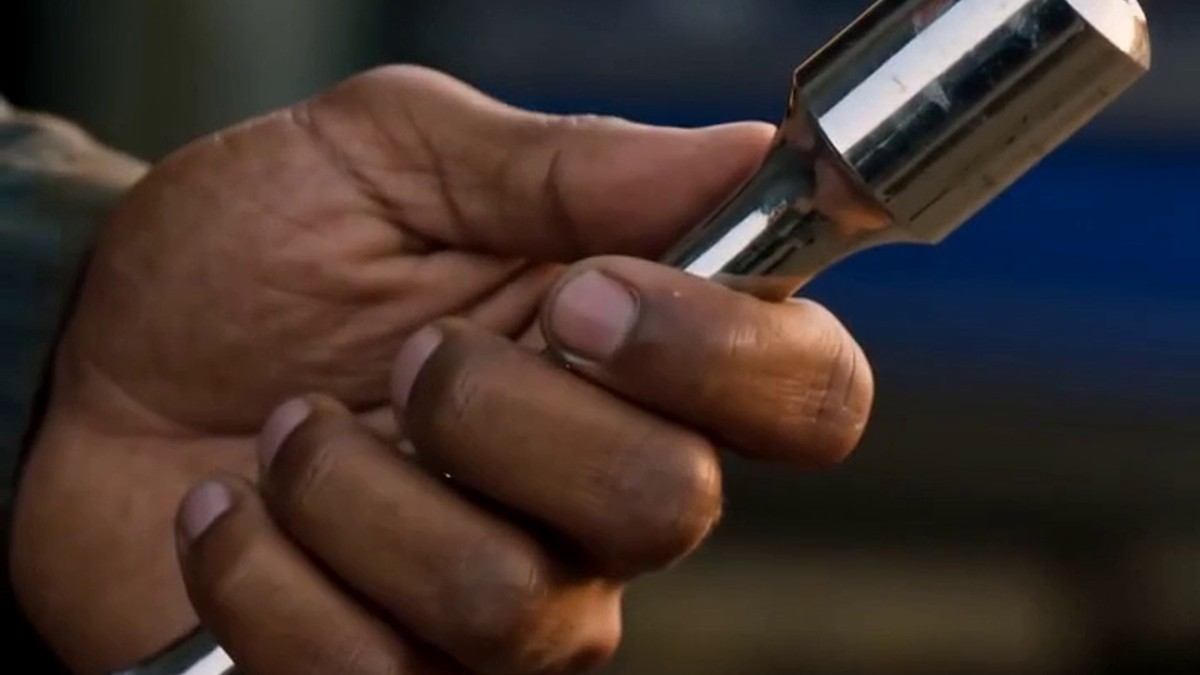
I named her Wrench, because that's what was sitting on my passenger seat when I picked her up.
My wife Donna wasn't thrilled. We already had a golden retriever, Biscuit, getting old and slow, and Donna said one dog in a house was plenty for two people with no kids. I told her Wrench was temporary, just till I found her a home. That was six years ago. Wrench never left.
Here's the part people don't believe: I didn't set out to become the guy with seventeen dogs behind his body shop. It happened the way debt happens — one reasonable decision at a time, until you look up and you're underwater.
After Wrench, I started noticing the dogs I used to drive right past. The ones tied to fence posts out by the Hyde Park orchards with no water bowl. The one someone dumped at the Stop & Shop parking lot on Route 9G with a note taped to its collar that just said "sorry." I started keeping a crate in my truck. Then two crates. My shop has a fenced lot out back where I used to store wrecked cars waiting on insurance adjusters, and one Saturday I looked at that gravel lot and thought: that's wasted space.
Donna and I fought about money first, then about smell, then about the fact that I was spending my Sunday mornings hosing out kennels instead of taking her to her sister's in Fishkill for brunch like we always did. I sold the Camaro to pay for a septic upgrade so I could put in proper drainage for the runs. I sold the Bronco to cover a vet bill for a pit mix named Otis who'd been used for bait and needed four surgeries before he could even walk right. Donna watched me sell off eleven years of car-guy pride, piece by piece, and she didn't see rescue. She saw a man throwing away everything he'd built for animals that would never say thank you.
We split up two winters ago. Not dramatic — no screaming match, no thrown plates. She just packed the Subaru one January morning while I was doing kennel rounds, and by the time I came in for coffee the closet on her side was empty and there was a note on the kitchen counter next to the Mr. Coffee. I still have that note in a drawer. I don't know why I kept it.
What she didn't know, or maybe didn't want to know, was that I wasn't running from something in our marriage. I was running toward something I didn't have words for yet. Every dog I pulled off a shoulder or out of a shelter's euthanasia list felt like fixing something that could actually be fixed — unlike the transmission jobs where the customer argues about the estimate, unlike the small talk at the diner where everybody already knows everybody's business. A dog doesn't care that you went bankrupt twice before you turned thirty. A dog just needs the water bowl filled.
By this July I had seventeen dogs living behind Kellerman Collision, in kennels I built myself out of chain link and pressure-treated lumber, heated in winter with two space heaters running off a dedicated circuit I had an electrician friend put in at cost. My mechanic, a kid named Deshawn who's twenty-four and thinks I'm insane in a way he clearly respects, feeds half of them before his shift starts. I feed the other half after I close the bays at six.
The turn — the thing that actually changed everything — came from a dog named Patch.
Patch showed up at my fence line on his own, no rescue call, no Facebook post asking for help. Just appeared one evening while I was locking up, standing at the chain link staring at me with one blue eye and one brown one, ribs showing through a coat matted with burrs. County animal control had a note on him already — a bite report from a property two miles up the road, listed as aggressive, scheduled for pickup and, most likely, put down within the week given the report on file.
I called the woman at Dutchess County Animal Control, a Marsha Tull, who I'd gotten to know from three years of hauling in strays. I asked her to hold off, said I'd take him, said I'd sign whatever liability waiver the county wanted. She told me straight: "Russ, if this dog bites anyone on your property, you're the one holding the bag. Not the county. You."
I signed anyway.
Patch didn't bite anyone. Took him five weeks before he'd let me touch his head. Took him three months before he stopped flinching every time I picked up a socket wrench off the workbench, like the sound of metal on metal meant something bad was coming. I found out later, through Marsha, that his owner had been arrested for beating him with a length of pipe — that's what the "aggressive" report actually was. Patch wasn't dangerous. Patch was terrified, and terrified looks like dangerous to people who don't stop to look closer.
That dog is the reason I turned Kellerman Collision from a body shop with a side hobby into something I'm now filing paperwork to make an actual registered rescue — Marlowe Second Chance, named for the road the shop sits on. I sat down with a lawyer in June, a guy named Ferraro who does my business filings anyway, and told him I wanted to set it up right: nonprofit status, a board, real accountability, so I'm not just some guy hoarding animals behind a garage.
Donna heard about the filing from her sister, who still talks to Deshawn's mom at the salon on Main Street. She called me — first time in fourteen months. Didn't yell. Just asked one question: "Was it worth it, Russ? All of it?"
I told her the truth. I didn't have a clean answer.
What I did have, by August, was a decision to make that had nothing to do with Donna and everything to do with the seventeen dogs eating me alive financially. The shop nets about eleven thousand a month after expenses, and I was pouring almost four thousand of that into food, vet bills, and heating oil for the kennels. I was two months behind on my equipment lease. My accountant, a sharp woman named Priya Anand who's kept my books for six years, sat across from me at the diner on Route 9 with a folder of numbers and said the sentence that actually forced my hand: "Russ, at this rate you lose the shop by spring, and then you lose the dogs anyway, because there's no shop to fund them."
So here's what I did, and it's the part I'm not sorry about, whatever anyone thinks.
I sold the Camaro's replacement — a '78 Trans Am I'd bought two years back mostly out of habit — for nine thousand two hundred dollars to a collector out in Kingston. I closed out a personal savings account I'd been keeping separate from the shop, four thousand six hundred dollars I'd told myself for years was my "someday" fund, no clear idea for what. I walked into Priya's office with both amounts and had her draw up paperwork transferring thirteen thousand eight hundred dollars into a dedicated nonprofit account under Marlowe Second Chance, with Ferraro's filing attached and a board of three people — me, Priya, and Marsha from animal control, who agreed to sit on it once she saw I was serious about doing this by the book instead of just accumulating dogs.
I also did something I'd put off for a year: I called Donna and told her I was formally signing over my half of the house in Hyde Park to her, no negotiation, in exchange for her signing off clean on the shop and the property behind it, which had technically still had both our names on the deed since we bought it together in 2019. Eleven years married, and that house was the last thing tying our names together on paper. I drove to the title office in Poughkeepsie on a Tuesday morning, sat across from a clerk I'd never met, and signed a quitclaim deed with a pen that skipped twice before I got it working right.
Donna met me in the parking lot after, leaning against her Subaru with her arms crossed. She said she never expected me to just give it up without a fight. I told her I wasn't fighting her — I was done fighting, period, and the house wasn't worth more to me than knowing exactly what I owed and to whom. She looked at me a long moment, then said okay, and that was it. No hug. No closure speech. She got in her car and drove back toward Fishkill, and I drove back toward the shop, where Patch was waiting at the fence line like he does every evening now, tail going, both eyes — blue and brown — locked on the truck the second it turned in off Marlowe Road.