Some people get chills from pumpkin spice. I get them from the smell of diesel fuel and rain on hot concrete. That's what the parking lot of Novak & Sons Auto smelled like every morning at six, before the sun even thought about coming up over Cleveland. I'd stand by the side door with my coffee, just breathing it in.
My father opened that shop in 1988. When he died, the lawyer called me into a conference room with wood paneling that smelled like lemon polish and old paper. My mother sat across from me, her purse on her lap like a shield. She already knew what was coming. I didn't.
The will was simple. The building, the land, the lifts, the client list, the name over the door — all of it went to me. Not to her. We'd been married eleven years by then, and my father never once said he was planning this. He just did it.
I drove home that night with the radio off. My mother called while I was on the highway. I let it ring.
For two years, I ran Novak & Sons the way my father would have wanted. I kept the same supplier. I kept the same ancient coffee machine in the office that made coffee that tasted like transmission fluid. I kept the same mechanic, Pops Barnett, who'd worked for my father since before I could walk. The shop did okay. Then a big insurance contract came up for bid, the kind of fleet work that could carry us for a decade. That's when things started moving.
A Wednesday in October. I was under a Silverado, replacing a manifold, when I heard heels on the concrete floor. Expensive heels. Not the kind that belong anywhere near motor oil. I slid out from under the truck and there she was — my mother, in a cream pantsuit, standing next to the hydraulic lift with an expression like she'd just smelled bad milk.
"Jason," she said. "We need to talk."
I wiped my hands on a rag and didn't answer. Pops was watching from the other bay, pretending to sort bolts. He knew.
She pulled a folded document out of her bag. "I had my attorney look into some things. Your father's estate had debts you don't know about. The shop was collateral."
"What are you talking about?"
"That insurance contract you're bidding on? The company already checked. There's a lien on the property. You can't get the contract with a lien."
I took the paper. I don't remember reading it, just holding it. The words blurred. Something about a loan my father took out in 2019. I never knew. She never mentioned it.
"I can help," she said. "I'll pay off the lien. Take over the day-to-day. You keep working, you keep a salary. But the ownership transfers to me. Your name comes off the door."
I said, "So you waited two years to tell me."
"I waited until you were in a position to be reasonable."
Pops dropped a socket wrench. It clanged on the concrete. Neither of us turned.
That night I barely slept. I kept seeing my father in the garage at home, showing me how to set a timing chain when I was twelve. His knuckles cracked, hands covered in grease. He used to say: *A man who works with his hands never has to beg anybody for anything.* He'd hate what my mother was doing. He'd hate even more that I was considering it.
But the lien was real. I had my lawyer check. It was real.
So I said yes. Not because I wanted to. Because the shop meant more to me than my pride. I signed the papers in her lawyer's office, with a pen that had some bank's logo on it. I watched my name come off the incorporation documents. Jason Novak, owner, became Jason Novak, employee.
I thought that was the bottom.
Then came March.
She'd hired a new office manager, a guy named Trent, who wore polo shirts with the collar popped and called me "buddy." He started changing the schedule without asking me. He put a bid in on a contract for a chain of car washes, undercutting my number by forty percent. When I asked why, he said, "Your mom's orders. She's not in this to make friends."
My mother started coming by twice a week. She'd sit in what used to be my office and make calls. One time I walked in and she was wiping dust off my father's old sign, the one he'd hung over the door in 1992, and she said, without looking at me, "This thing is an eyesore. I'm having it taken down."
"That was Dad's," I said.
"He's gone. The sign needs to be gone too."
Pops quit in April. He came into the office in his coveralls, threw his keys on the desk, looked at my mother, and said, "Vera, your husband would be ashamed." She didn't say a word. He walked out. I watched him go from the window, a Chevy C10 idling in the lot, his toolbox already in the bed. I should've gone with him. I didn't.
The worst part wasn't losing the shop. It was the day I came home and found my mother sitting at my kitchen table, drinking my coffee, waiting. My wife knew her schedule. She knew my mother had a key to the house from years ago, back when she'd come over and cook for us after our son was born. Nobody ever took it back.
"Jason," she said. "We need to talk about the house."
The house. The one my wife and I bought together in Parma, a three-bedroom brick ranch on a street with big sycamore trees. The mortgage was in both our names. But my mother had "helped" with the down payment, eighteen years ago. Helped. That was her word. She had the paperwork to prove it was a loan, not a gift. A loan with interest, compounded, that I'd supposedly never repaid.
"Eighteen years," she said. "Do you know what compound interest does over eighteen years?"
I stood there in my own kitchen with my hands wet from washing them at the sink. Water dripped onto the linoleum.
"You wouldn't," I said.
"I already have. I met with a judge's clerk this morning. The paperwork's filed. You can either sign the house over, or we go to court and it gets messy. Your kids hear everything. Your wife hears everything. Your choice."
I don't remember gripping the edge of the counter. I just know my knuckles were white. I said, "You're not even talking about money anymore. You just want to win."
She set her cup down, all casual. "I want what I'm owed. Your father raised you to understand that much."
Then she stood, walked to the hook by the back door, and pulled my house keys off the ring.
"You won't be needing these soon," she said. "I'll have my attorney send the papers over tomorrow."
She drove off in a black Cadillac. I watched the taillights disappear down our street, past the neighbors' Halloween decorations, a plastic skeleton on a lawn, grinning at nothing.
That night I sat in the garage, on an overturned bucket, looking at the small safe my father gave me when I bought the house. I hadn't opened it in years. I didn't even remember the combination. But my fingers did. They moved before my brain caught up — three turns, a click.
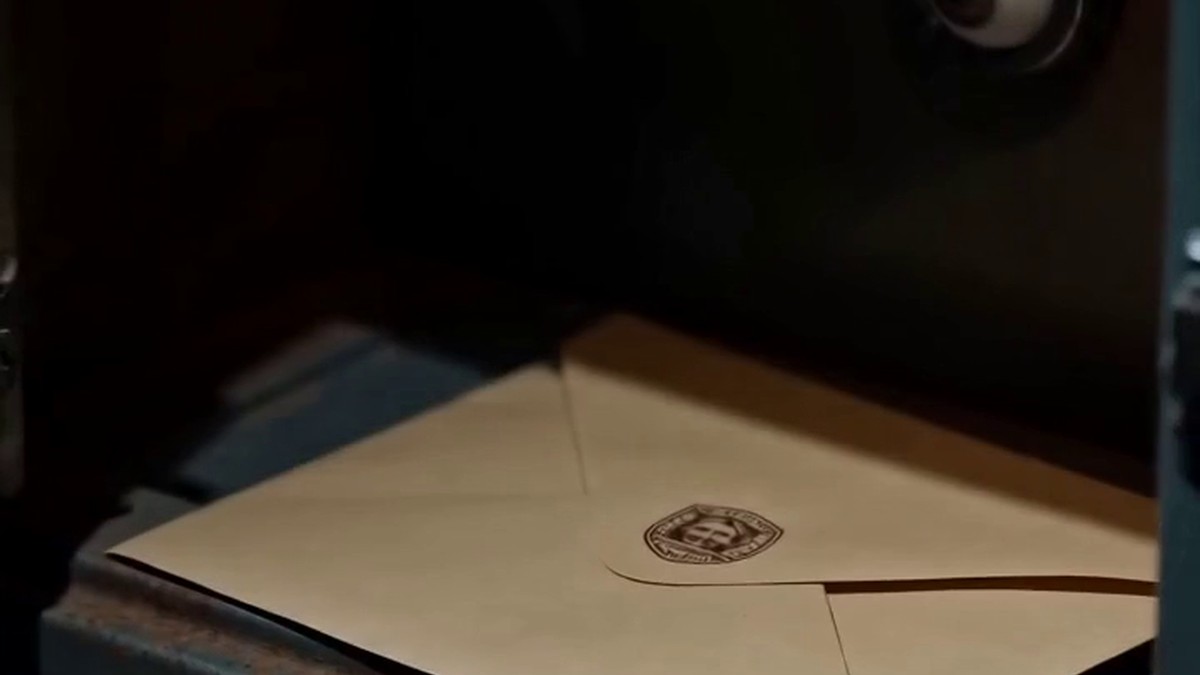
Inside, there was a manila envelope. I didn't remember putting it there. Inside the envelope, there was a letter from my father, in his terrible handwriting, all caps, the same way he'd label parts boxes.
*IF VERA EVER PUSHES TOO FAR. REMEMBER THE SOUTHFIELD PROPERTY.*
Southfield. A piece of land in Medina County, a few acres, nothing special. My father bought it in 1995 and never built anything on it. After he died, nobody thought about it. It never came up in the estate, because it wasn't in his name.
He'd put it in mine. In 1987, before I was even born? No, that didn't make sense. I squinted at the paperwork under the garage bulb. The deed was dated 1995. Two pages. The land was in a trust. A trust with my name on it. And the letter said:
*Sell it. Pay what's owed. Or don't. But don't let her take what you built.*
I sat there for a long time, holding the letter. The garage smelled like oil and cold. A stray cat from two houses down, the one with the notched ear, slinked in under the side door and sat by my boots like it wanted to hear too.
I called my lawyer at 7 a.m. The land in Medina County was worth more than the lien. More than the "loan." Almost — not quite, but almost — more than everything my mother was trying to take. It had been sitting there, thirty years, waiting. He'd never told me. He figured I knew.
I didn't tell my wife yet. I didn't tell my mother. I just went to work at 6 a.m., same as always, and pulled into the lot that still had Novak & Sons painted on the side of the building, even though it wasn't mine anymore.
My mother's Cadillac was already there. So was a pickup truck I didn't recognize. Two men were on ladders, taking down my father's sign. One of them had a Sawzall. The blade was already through the first bolt.
I got out of my truck. Didn't slam the door. Didn't run. Just walked over. My mother came out of the office, holding a clipboard.
"You're early," she said.
"I signed something today," I said. "Thought you should know."
She looked at me, the way you'd look at a dog that learned a trick you didn't teach it. "What?"
I pulled a folded paper out of the inside pocket of my jacket. No, not a paper. A copy of the wire transfer. I'd been at the bank before it opened, sitting in the parking lot with the headlights on, waiting for the loan officer to unlock the doors for employees. I'd rolled the Southfield sale. The lien was gone, paid in full. Her leverage gone with it.
"The lien," I said. "It's cleared. I want the shop back. I'll take it in court, or you'll hand it over now. Your call."
She didn't look at the paper. She looked at the sign, swaying on one bolt fifty feet above us. Then at me.
"You can't leave it alone, can you," she said.
"The contract you came here to kill," I said. "I got it. The fleet deal. The lien's cleared, and the company's already overnighted the signed contract to my lawyer. Not to the shop. To me, personally."
That was a card I'd been holding. I'd titled the new company the night before, in the garage, with the cat watching. Novak Fleet Services, LLC. My father's name. My father's reputation. All of it.
"Now you take the sign down," I said. "The real one. And you can keep going, Vera. But not here. Not with my father's name."
She stared at me. Then she started talking about the house, about the loan, about the "misunderstanding." But I'd already seen the truth in her eyes. The house papers weren't filed. It was a bluff. Always was. She'd never file them, because a judge would ask questions she couldn't answer. Questions about why she hid a lien from her own son. Questions about a woman in a cream pantsuit with a clipboard, no work boots, no calluses, trying to run a man's shop.
The Sawzall stopped. The worker looked down, unsure. My mother turned and walked to her Cadillac. She didn't look back at the sign. She drove off.
I stood in the lot as the sun came up over the building, and I watched the men on the ladders put the sign back up. One of them, the one with the Sawzall, asked, "Hey, you're the owner, right?"
I said, "Yeah."
"Your dad?" he asked, pointing at the name. "He built this?"
I said, "He did."
I went inside. Pops' old coffee machine was still there, at the back of the office, on a shelf under the breaker panel. It hadn't been touched since he left. I filled the reservoir, put a filter in the basket, dumped in the same coffee he'd used for twenty years — the kind that tasted like it was brewed through an engine block. The machine gurgled.
The smell filled the office.
I poured a cup, black, and put my feet up on the desk that used to be my father's. And I drank it. And then I called my wife and told her to bring the kids by after school.
I wanted them to see the name over the door.
Because it was staying.
Every last letter of it.