The Saturday sun pressed down on Miller’s Ford, Pennsylvania, baking the sidewalk along Chestnut Street until the heat shimmered in waves. Kids had taken over the pavement outside the public library, armed with buckets of sidewalk chalk, turning the concrete into a messy rainbow of stick-figure families and lopsided dragons. Parents lounged on the library steps, half-watching, half-scrolling through their phones.
Detective Roy Miller—no relation to the town name, a coincidence he’d stopped explaining twenty years ago—walked toward the corner deli for his usual turkey on rye. He was off duty, jeans and a faded Phillies cap, trying to forget the week’s caseload. His phone buzzed. A text from his ex-wife about switching weekends with their son. He typed a short reply, not looking up, and nearly tripped over a little girl crouched directly in his path.
"Whoa, sorry, kiddo," he said, stepping around her.
She didn't respond. She couldn't have been older than seven or eight, barefoot, with pink chalk dust up to her elbows. Her ponytail bobbed as she worked, completely absorbed. Unlike the other kids who slapped down whatever came to mind, this girl was deliberate, her strokes careful, her face scrunched in concentration. She was drawing a face. A woman's face, life-sized on the gray stone.
Roy glanced down and his breath stopped.
It was the eyes. He knew them instantly. The slight downward tilt at the outer edges, the left one with a barely visible droop. He'd stared at those eyes a hundred times, pinned to the board in the cold case room. Lauren Whitely. Missing eight years. Nineteen at the time. Last seen leaving a gas station on Route 11 at 11:47 p.m.
He didn't move. His heart pounded against his ribs. The girl finished shading the jawline and picked up a piece of white chalk. She began sketching a delicate chain around the woman's neck, and dangling from it, a pendant shaped like a crescent moon with a tiny star trapped inside its curve. The Whitely family heirloom. Something the press never got a clear photo of. Something only the case file had in detail.
"Isn't that pretty?"
Roy flinched. A woman had stopped beside him. Mid-thirties, white sundress, iced coffee in hand. She was looking at the chalk drawing with a half-smile that collapsed into something else the moment her eyes registered the pendant. The cup slipped from her fingers, splashing coffee across the hot concrete.
"Where did she…?" the woman whispered. Her face had gone pale. "That's Lauren's. That was our grandmother's. Nobody ever saw it except family."
Roy turned to her. "You're Sarah Whitely."
She nodded, unable to look away from the drawing. "How does she know about the necklace?"
The girl kept sketching, unbothered. She added wisps of hair around the temple, a small mole on the collarbone.
Roy lowered himself to one knee, his detective instincts overriding everything else. "Hey, sweetheart. That's a really good picture. Did someone show you a photo of this lady?"
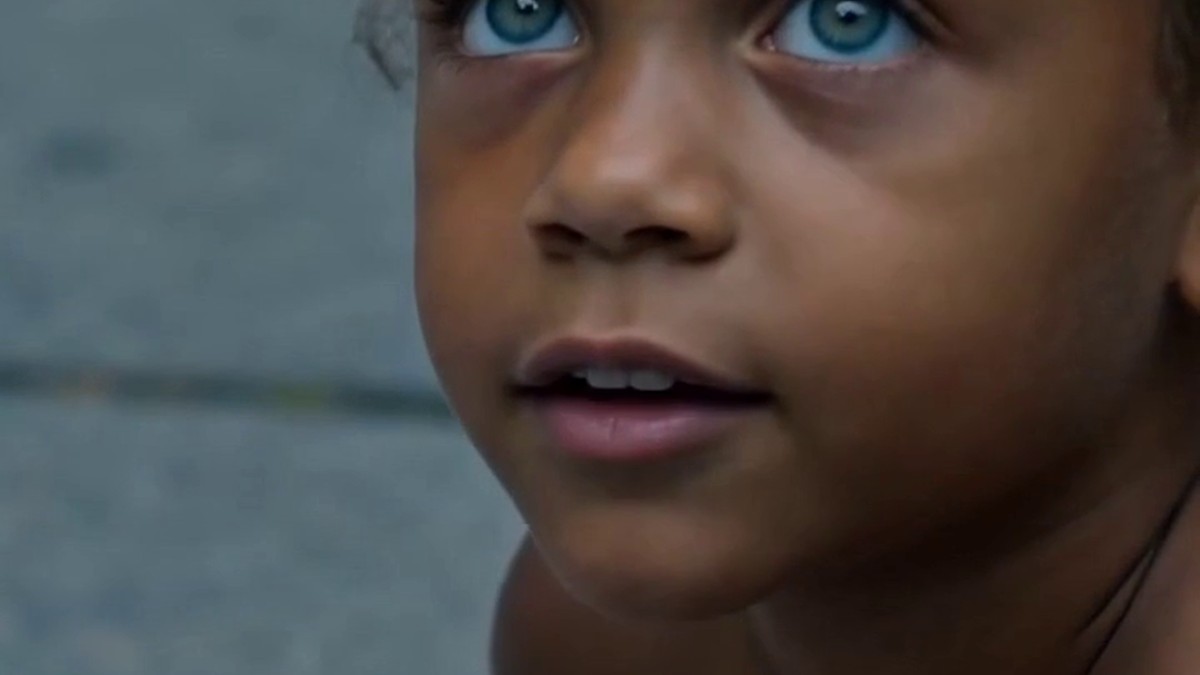
The girl finally stopped and looked up. Her eyes were a light, transparent blue, the kind that seemed to look through things rather than at them. "She showed me."
"She… the lady in the picture?"
"Uh-huh. She comes in my room sometimes. She wears a white dress and points to things. She told me to draw this." She gestured at the sidewalk. "She wants people to know where she is."
Sarah inhaled sharply. Roy held up a hand to quiet the murmuring crowd that had begun to gather. A few people were filming. He shot them a cop's glare, and the phones lowered.
"Where is she?" Roy asked gently. "Did the lady tell you where she is?"
The girl pointed east, beyond the library, past the town limits where Chestnut Street dissolved into a dirt road and thick woods. "The round house with no door. Under the white rock."
Roy's stomach clenched. The old Millers’ well house. Stone, circular, with an iron grate covering the opening. Abandoned for decades. Right at the edge of the Whitely property where Lauren used to play as a kid. They'd searched those woods three times back in 2016. Never found anything.
"When did she tell you this?"
"Last night," the girl said. "She was crying. She said her daddy misses her."
Sarah's hand flew to her mouth. She wobbled, and Roy quickly stood to steady her.
Within an hour, Roy had the county excavation unit at the well house. He wasn't on the case—officially, it sat with Detective Alvarez from the state police—but screw protocol. He stood at the treeline with Sarah as the crew pried the rusted grate free and lowered a camera into the dark. The technician's voice crackled over the radio. "Got something. Looks like… yeah, remains. And we're seeing red fabric, could be the dress from the file photo. Oh, and one more thing. There's a necklace. Crescent moon, star inside. Intact."
Sarah's knees buckled. Roy caught her before she hit the ground. She wept into his shoulder, a raw, frantic sound that carried through the trees.
The investigation that followed took apart three lives. The killer wasn't a stranger but the assistant manager of the gas station where Lauren was last seen—a man named Daryl Kent, whose property backed up to the Whitely woods. He'd offered her a ride home that night, he later confessed, after deputies found fibers from her dress in the trunk of his old Cutlass. The motive was the same tired, ugly story: a rejected advance, an argument, his hands around her throat. The well house had been his childhood hangout. He knew the grate was heavy enough to keep anyone from looking.
The chalk drawing on the library sidewalk washed away in a thunderstorm two days later. But by then, the whole town had seen the photos. Roy kept a copy on his phone, zoomed in on the pendant, the mole, the eyes.
He tracked down the girl's mother—her name was Emily Caulfield, age seven, no prior connection to the Whitely family, no access to old newspapers or the internet without supervision. She'd just moved to town three weeks ago from Illinois.
"Has she ever done anything like this before?" Roy asked the mother on the front porch, keeping his voice low. Emily was inside, eating a bowl of cereal, swinging her feet under the kitchen table.
The mother shook her head. "She's always had a vivid imagination. But this… I don't know how to explain it. She said the lady in the white dress was sad and needed to go home. I thought it was just a dream."
Roy gave her his card. "If she says anything else, anything unusual, you call me. Day or night."
He walked back to his truck and sat in the driver's seat for a long time, staring at the windshield. Eight years of nothing. A file box in a dusty room. And a seven-year-old solved it with a stick of chalk.
The funeral for Lauren Whitely was held on a Thursday, thirteen days after the remains were found. Roy stood at the back of the cemetery in his dress blues. Sarah spotted him and walked over, her eyes red but steady.
"I owe you," she said.
"You don't owe me a thing. I just happened to walk by."
"No." She took his hand. "You stopped. You paid attention to a little girl when the rest of us would have just stepped over her. Thank you."
She released his hand and rejoined her father, an old man bent over a casket that was no longer empty. Roy stayed through the final prayer, then slipped away before the crowd dispersed.
Driving home, he passed the library. New chalk drawings covered the same patch of sidewalk—a sun, a tree, a house with a curly line of smoke. He pulled over and looked at them for a while. No faces this time. Just ordinary kid art.
He bought his own sidealk chalk that evening at the dollar store. Six bright colors. When his son came over on Saturday, they'd cover the whole driveway.