Jake set the carrier down on the freezing metal bench and checked his phone. No messages. No missed calls. The screen just showed 6:48 a.m. and a weather alert for freezing rain that probably wouldn’t hit until after lunch.
Inside the carrier, Leo shifted his weight. The plastic floor creaked under his claws. Jake crouched and peered through the grate. The big orange tabby was pressed into the back corner, ears flat, eyes wide. The early train to Boston wouldn’t leave for another thirty-five minutes, and every one of those minutes was already feeling like a silent accusation.
He’d left Katie’s place for good that morning while she was still in her bathrobe, holding a mug of tea that had gone cold twenty minutes before. The kitchen smelled like burnt toast—she always got distracted when she was upset, leaving the bread in too long. Jake had been packing in the living room, shoving shirts into a duffel bag, not bothering to fold anything.
Leo had been watching from the top of the cat tree, tail twitching. That cat knew something was wrong before either human said a word.
“You’re taking him.” Katie’s voice came from the doorway. Not a question.
Jake didn’t turn around. He yanked open a drawer and pulled out a handful of charging cables. “He’s my cat.”
“He’s been sleeping on my pillow for three years.” She spoke quietly, without anger. “He waits by the door for me every day at four. You don’t even get home until seven.”
Jake zipped the bag. “I found him. I paid his vet bills. I’m not leaving him here.”
That wasn’t the whole truth. The cat had shown up on their back porch a month after they moved in together, scrawny and covered in fleas. Katie was the one who coaxed him inside with tuna. Katie was the one who named him Leo. Katie was the one who sat up with him the night he had a fever, wrapping him in a towel and whispering dumb little songs.
But Jake was the one leaving. And somehow, taking the cat felt like taking a piece of proof that the last five years had actually happened.
Katie didn’t argue. She just stood there in her old flannel robe, fingers wrapped around the mug, her ponytail half-undone. “He doesn’t like car rides.”
“It’s a train.”
“Even worse. He’ll be scared.”
Jake snatched up the carrier from beside the coat rack, and Leo let out a low, unhappy sound. The cat didn’t fight when Jake guided him inside. He just looked past Jake’s shoulder, toward the kitchen, and his big amber eyes settled on Katie like he was waiting for her to fix this.
The door clicked shut behind him. The last thing Jake saw was Katie’s reflection in the hallway mirror, small and blurred.
Now, on the platform, Jake’s coffee from the vending machine had gone cold. He’d taken three sips and forgotten it on the bench. Pigeons strutted across the wet concrete, pecking at a dropped pretzel. The Burlington station was mostly empty—just a couple of college kids with backpacks and an older woman knitting something green.
Leo had stopped moving entirely. He’d curled into a tight ball and tucked his nose under his tail, a pose Jake had only ever seen him do at the vet. Every time the intercom crackled, his flanks quivered. Once, a suitcase tipped over nearby, and Leo let out a thin, reedy meow that barely sounded like a cat at all.
Jake hooked a finger through the grate. “Hey, buddy. It’s okay.”
Leo flinched away.
The same cat who headbutted Jake awake every morning. The same cat who purred so loud you could hear him from the next room. Now he wouldn’t even sniff Jake’s hand.
And in that moment, Jake understood something he’d been too stubborn to admit: he wasn’t doing this for Leo. He was doing it because the thought of walking into an empty apartment in a new city, alone, was unbearable. He wanted to hear a cat’s footsteps on the floor. He wanted to fill a food bowl at six and a water bowl at nine. He wanted a reason to come home that wasn’t just work and microwave dinners and silence.
Leo had been Katie’s cat for years. Jake just hadn’t wanted to see it.
The boarding call for the 7:25 to Boston crackled over the speaker. Jake didn’t move.
And then he heard footsteps—fast, slapping against the platform, the kind of run that’s half panic and half hope. He looked up.
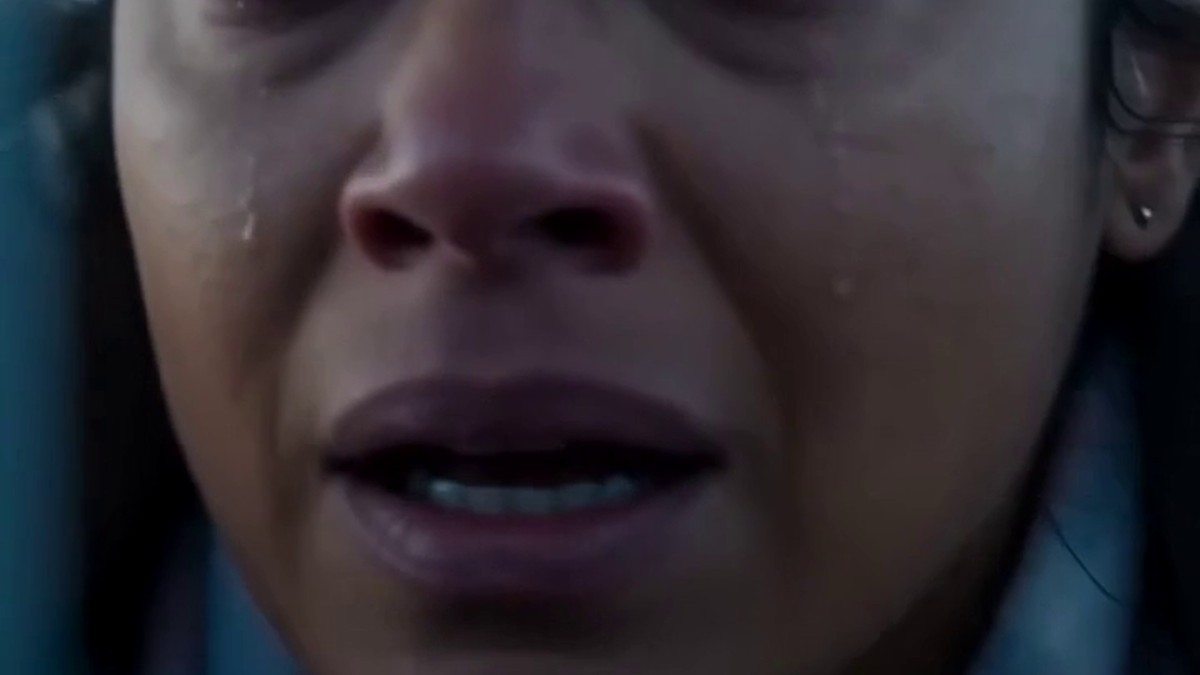
Katie was ten yards away, breathing hard. She still had her robe on, with a puffy coat thrown over it and unlaced snow boots that looked like she’d grabbed them off the mat. Her hair was a mess. Her cheeks were wet, from the drizzle or from tears, it was impossible to tell.
She didn’t say a word. She just walked straight up to the carrier and dropped to her knees.
Leo lifted his head. His whiskers twitched. He turned toward the grate, and his whole body seemed to unclench. The tail came out from under him. He pressed his nose against the metal, and a low, rumbling purr started up—deep and steady, the kind Jake hadn’t heard in days.
Katie slipped one finger through the grate and stroked the bridge of his nose. Leo pushed his face into her hand like he was trying to crawl through the plastic.
Jake stood frozen. He should say something. Apologize. Explain. But his throat wouldn’t work.
“Is he okay?” Katie’s voice cracked. She wasn’t looking at Jake. She was looking at Leo, checking his ears, his eyes, the way only someone who really knows an animal can.
“Yeah. He’s just scared.”
She let out a shaky breath, and the purring got louder. Leo butted his head against the grate, knocking a tiny piece of kibble out of the bowl inside. Katie laughed—a wet, surprised sound—and wiped her nose on her sleeve.
The conductor called out, “Last call for Boston, track two.”
Jake bent down. He unlatched the carrier door.
Katie looked up at him.
“Take him,” he said. “He’s not mine.”
She stared at him for a long second, her eyes searching his face. He could see the questions she wasn’t asking: Why now? Why not this morning? Do you mean it?
He nodded, just once.
Katie didn’t say thank you. She didn’t need to. She just opened the carrier wide, and Leo stepped out carefully, pressing his whole body against her legs, weaving a figure eight around her ankles. She scooped him up, and he curled into her chest immediately, paws kneading her coat, the purr so strong Jake could feel it in his own ribs.
Jake gathered his duffel. He turned toward the train.
“Jake.”
He stopped but didn’t look back.
Her voice was soft, but it carried through the cold air just fine. “He’ll be okay.”
Jake swallowed. “I know.”
He stepped onto the train. The doors hissed shut behind him.
The car was half-empty and smelled like stale coffee and old upholstery. He found a seat by the window, shoved his bag up top, and didn’t look at the empty space where the carrier should have been.
The train jolted and started to roll. Outside, the platform slid past in a blur of gray. Katie was already walking away, Leo bundled in her arms, her boots squeaking on the concrete.
Jake’s hand went to his jacket pocket—the left one, the one with the broken zipper he kept meaning to fix. Deep inside, his fingers brushed against something small and soft. A shred of orange fur, twisted into a tiny puff.
He didn’t throw it away.
A few rows back, a woman was talking on her phone, her voice low and tired. Just before she hung up, Jake heard her say, almost too quiet to catch: “I miss you already.”
The train picked up speed. The station fell behind. Soon it was just trees, and then open fields, blank and quiet under the gray morning sky. Jake rested his forehead against the cold window and closed his eyes.
For the first time in weeks, the silence didn’t feel like a punishment. It was just empty, the way a new place is empty before you fill it. He could work with that.