Henry Dabney had been stepped on so many times he’d started to believe the ground was just naturally uneven.
Forty-three years old, five-foot-four in his work boots, with wrists like soda straws and a voice that cracked when he was nervous—which was always. The world took one look at him and decided he was free real estate. A human doormat with a pulse.
He worked in the back office of a municipal library in Milwaukee, cataloging books nobody had checked out since the Clinton administration. The public never saw him. His colleagues called him “Chip,” short for chipmunk, because his front teeth were a little too prominent and he had a habit of freezing mid-chew when someone addressed him directly.
He hated that name.
He never told anyone he hated it.
Somewhere deep inside Henry, behind three deadbolts of social terror, was a man who wanted to bellow. A man who wanted to take up space. That man was real, and he was getting harder to ignore, but Henry had no idea how to let him out.
The only person from his old life who still bothered with him was a guy named Marcus, his roommate from freshman year of college—the one semester Henry could afford before his mother got sick and he had to drop out and work double shifts at a shipping depot to pay for her home care. Marcus had gone on to become a successful contractor, married a dental hygienist, bought a four-bedroom colonial in Wauwatosa, and produced two loud, solid boys. He was a good man, the kind who remembered birthdays. He still called Henry “Hank,” a nickname Henry privately liked, and invited him over for Packers games even though Henry knew nothing about football.
It was during one of those Sunday visits that Henry first laid eyes on the tangerine nightmare.
The cat was the size of a cinder block. It was sprawled across Marcus’s leather ottoman like a fur-covered throw pillow that had been left in the dryer too long and come out wrong. One ear was crumpled. The other had a notch the size of a dime missing from it. Its tail was too short, its whiskers were all bent at aggressive angles, and it watched Henry with the flat, assessing gaze of a bouncer who’d seen everything and was unimpressed by all of it.
“What is that?” Henry asked.
“That,” Marcus said, cracking a can of Leinenkugel’s, “is Big Sue. And she is a problem.”
Big Sue, he explained, had wandered onto their property six months ago as a stray. His wife had felt sorry for it. The cat repaid this kindness by shredding the leather sofa, knocking a flat-screen TV off its stand, and casually swatting their eight-year-old in the face when he tried to give it a hug.
“She doesn’t scratch,” Marcus clarified. “She *slugs*. Full paw, no claws, like a tiny boxer. Kid had a bruise for a week. We’ve been trying to rehome her ever since, but nobody wants a fifteen-pound land mine. The shelter said they’d take her, but…” He trailed off, looking uncomfortable. “You know what they do with the unadoptable ones after a while.”
Henry looked at the cat. The cat looked at Henry. Neither of them blinked.
“I’ll take her,” Henry said.
The words came out of his mouth before his brain had a chance to approve them, which was alarming. Henry did not make spontaneous decisions. Henry’s decisions were carefully researched, outlined in triplicate, and then abandoned out of fear.
Marcus stared at him. “You serious?”
There was a long pause. Henry’s lizard brain was shrieking at him to take it back. But there was something in the way that cat held his gaze—defiant, inconvenient, unwanted by everyone—that felt like a mirror.
“Yeah,” he heard himself say. “I’m serious.”
—
The first week with Big Sue was a war of attrition.
She hid behind the washing machine for three days, emerging only to eat the food he left out and to hiss at him with the kind of venom usually reserved for IRS auditors. On day four, she discovered the curtains. By day five, the curtains were history—she’d climbed them, shredded them, and then vomited on the remains. Day six, she knocked his grandfather’s urn off the mantelpiece. (The urn survived. Henry’s nerves did not.)
His apartment, a cramped one-bedroom walk-up in Riverwest, suddenly felt even smaller. Every corner held a menace. Every thump in the night meant something was being destroyed.
And yet.
On the seventh night, Henry woke up at 3 a.m. to find Big Sue curled on his chest like a fifteen-pound weighted blanket, purring with the low hum of a malfunctioning refrigerator compressor. She had one eye cracked open, watching him. The message was clear: *Don’t make this weird.*
Henry didn’t move a muscle. He barely breathed. And when he woke up in the morning, the cat was still there, warm and solid and somehow exactly what he hadn’t known he needed.
—
Work was getting worse.
His direct supervisor, a woman named Brenda Fisk, had taken a special interest in Henry—the way a particularly bored cat takes an interest in a wounded moth. She was fifty-three, built like an oak wardrobe, and had a voice that could strip paint at thirty paces. She called him “Chip” constantly. She assigned him the tasks nobody else wanted: relabeling the microfiche archives, cleaning out the basement storage closet, hauling boxes of outdated tax code volumes to the recycling dumpster in the alley.
“Chip, you’re a lifesaver,” she’d purr, handing him another stack of mildewed paperwork. “You don’t mind, do you?”
And Henry, spine made of wet spaghetti, would say, “No, of course not.”
He’d been saying “of course not” for seven years. He’d been swallowing his pride for seven years. He’d been going home to an empty apartment for seven years, eating microwave dinners over the sink, and telling himself this was just how life was for people like him.
But people like him didn’t have Big Sue.
Something shifted after the cat arrived. It was subtle at first—a faint, unfamiliar hum at the base of his skull. Irritation, maybe. Or resentment. Whatever it was, it had teeth.
—
The Tuesday that changed everything started unremarkably.
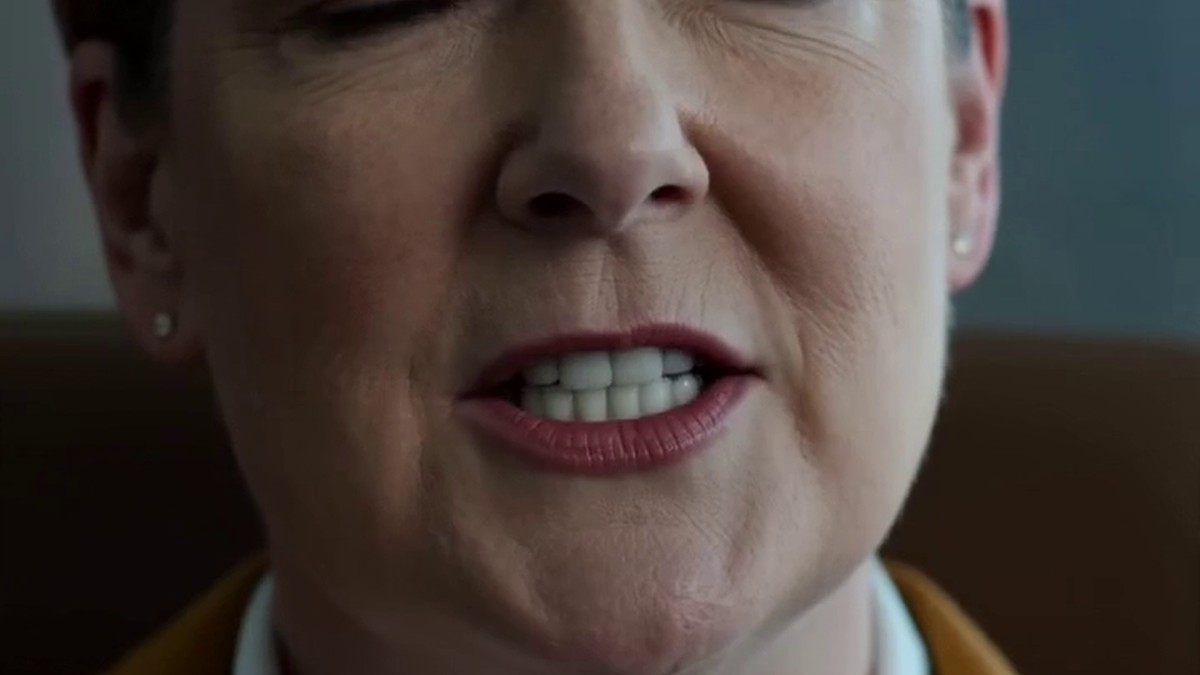
Henry was at his desk, hunched over a spreadsheet, when Brenda appeared in his doorway like a bad weather front. She was wearing a mustard-yellow blazer that made her look like an angry school bus. In one hand she held a thick manila folder.
“Chip! Just the man I needed to see.”
Henry straightened up. “What can I help with, Brenda?”
“Annual inventory audit.” She dropped the folder on his desk with a slap that sent a pencil rolling to the floor. “It’s due Friday. I need you to stay late every night this week to get it done. Don’t worry about overtime—I already cleared it with HR as volunteer hours.”
Henry blinked. “Volunteer hours? Brenda, that’s—”
“Fantastic, I know!” She beamed, teeth on full display. “You’re such a team player, Chip. That’s what I love about you. You never complain.”
She turned to leave.
And Henry, to his own absolute astonishment, opened his mouth.
“Brenda, wait.”
She stopped. Turned. One eyebrow went up.
“I…” Henry’s heart was doing something frantic against his ribs. His palms were sweaty. Every instinct told him to shut up, sit down, and open the folder. But there was that hum again, louder now. Big Sue’s purr, but inside his own chest. “I can’t work volunteer hours. That’s not legal. I’ll do the audit, but I need to be paid for the overtime.”
The silence that followed was dense enough to chew.
Brenda’s smile didn’t fade. It tightened. “Chip. Be reasonable. The budget—”
“I am being reasonable.” He was shocked to discover his voice wasn’t cracking. “I’m being perfectly reasonable. Pay me for my time, or redistribute the workload so it can be done during normal hours.”
Something flickered in Brenda’s eyes—surprise, quickly replaced by something colder. “We’ll see,” she said, and left.
Henry sat there, shaking, for a full minute.
That night, he told Big Sue all about it while she kneaded a blanket on his lap, her eyes half-closed in what he chose to interpret as approval. “I don’t know where that came from,” he admitted. “I think I’m having a breakdown.”
Big Sue made a noise that sounded like *mmrp* and bumped her head against his chin.
—
The retaliation came faster than he expected.
Three days later, he was called into a meeting with Brenda and a man he didn’t recognize—a district administrator named Mr. Calloway, thin and papery, with the expression of someone who’d been mildly inconvenienced by everyone he’d ever met. Brenda was wearing her most sympathetic face, which meant bad news was imminent.
“Henry,” she said, not calling him Chip for once, which was somehow more terrifying, “there have been some serious discrepancies in the inventory records.”
“What discrepancies?”
“Over the past six months, there’s been an unusually high rate of missing materials flagged in your sections. Manuals, reference books, some equipment from the supply closet. Nothing huge individually, but it adds up.”
Henry felt the floor drop out from under him. “That’s not possible. I’m meticulous with the records. I—”
“The numbers don’t lie, I’m afraid.” She slid a printed report across the table. “We’re not accusing you of anything, of course. We’re just looking into it. But until the investigation is complete, you’ll be on administrative leave. Paid, of course. We’re not monsters.”
Mr. Calloway nodded gravely. “Standard procedure.”
Henry stared at the report. The numbers made no sense to him. He couldn’t tell if they were fabricated or just wrong in some way he couldn’t explain, but he felt the jaws of a trap closing around him. Brenda had the keys to the inventory database. Brenda could log whatever discrepancies she wanted. And Brenda had a motive now, didn’t she?
He’d said no to her. Just once. One small, reasonable no.
And this was the price.
—
He walked home in a fog, his tie loosened, his shoulders hunched against a cold November drizzle. For the first time in years, he felt something worse than fear: the cold, familiar certainty that he should have kept his mouth shut. Stupid for pushing back, the voice in his head said. He caught his reflection in the window of a laundromat—a small man in a wrinkled shirt, tie loosened, eyes rabbit-wide. He looked away so quickly he nearly walked into a parking meter.
Big Sue met him at the door.
She was sitting on the welcome mat like a loaf of judgmental bread, her crooked tail flicking slowly. When he stepped inside and didn’t immediately bend down to pet her, she let out a short, irritated *mraow* and followed him into the living room.
He dropped onto the couch and put his head in his hands. “I’m going to lose my job, Sue. And I can’t prove she did anything.”
The cat jumped onto the cushion next to him. She stared at him with those flat, knowing eyes. Then she did something she’d never done before: she reached out one paw and placed it, very deliberately, on his knee.
Henry looked down at the paw. At the nicked ear and the misshapen tail. At this creature everyone had given up on, who had been passed from home to home, labeled too difficult, too ugly, too much.
And something inside him snapped clean in half and rebuilt itself in the same instant.
“No,” he said out loud.
Big Sue’s ears swiveled forward.
“No,” he said again, standing up. “I’m not letting this happen. I’m not.”
—
The next morning at exactly 8:14 a.m., Henry put on his best suit—the one he’d worn to his mother’s funeral twelve years ago, slightly too tight in the shoulders now—and went to the library.
Not as Chip the chipmunk. As Henry Dabney, employee ID 4437, with seven years of flawless performance reviews and nothing to hide.
He marched straight past Brenda’s office, ignoring her startled expression, and knocked on the door of the branch director, a quiet woman named Mrs. Okonkwo who rarely involved herself in staff drama but was known for being fastidiously fair.
She listened without interrupting, her hands folded on the desk. When he finished, she was silent for a long moment.
“Mr. Dabney,” she said finally, “I’ve known Brenda for fifteen years. She’s difficult, but what you’re implying…” She let the sentence hang. “I will request an audit of the database logs. It may take some time—our IT support is part-time, and they’re backed up. I can’t promise you anything except that I will look.”
Henry nodded, his throat dry. The next three days were the longest of his life. Every phone call made him jump. He inventoried his meager savings, updated his résumé, and stared at his ceiling at night while Big Sue snored on his feet.
On the fourth day, Mrs. Okonkwo called him into her office. An IT specialist—a lanky guy named Derek who smelled like Red Bull—had found what he needed: the inventory modifications had been made from Brenda’s login credentials, on dates and times when Henry wasn’t even in the building. The audit logs told a story of deliberate falsification. Derek had needed extra time because Brenda had layered the entries carefully, but the digital trail was finally clear.
By the end of that week, Brenda was placed on leave.
Henry was reinstated with an apology and a small, unexpected raise—fifty-seven cents an hour—for “demonstrating exemplary professional conduct under pressure.”
He didn’t feel triumphant. He felt wrung out, like a rag twisted too hard. But there was something else underneath the exhaustion—his hands, resting on his thighs, were still. Not frozen. Still. He flexed his fingers just to feel them move and almost laughed.
He’d stood up. He’d actually stood up.
And the world, against all odds, had bent.
—
Six months later, Henry was promoted to Brenda’s old position.
He still didn’t love confrontation. He still stammered sometimes when he had to lead meetings. But the hum was always there now, a low, steady sound he’d come to trust.
He and Big Sue developed a routine. Every evening after work, she’d wait by the door for him, announce her dissatisfaction with his absence via a series of indignant yowls, and then supervise while he opened a can of Friskies Seafood Sensations. They shared the couch during Jeopardy. She’d fall asleep on his feet and he’d let them go numb rather than disturb her.
On a Saturday in May, a woman at the farmer’s market stopped him because she was charmed by the photo of Big Sue on his phone’s lock screen. Her name was Delia, she had a rescue calico named Spackle, and she laughed at Henry’s jokes with an easy, open warmth that made him feel like he was standing in sunlight.
He didn’t ask her out that day. He wasn’t ready. But he took her number, and when he got home, he showed it to Big Sue.
“What do you think?” he asked.
Big Sue yawned so wide her jaw cracked, then began methodically licking her own shoulder.
Henry took that as cautious approval.
He looked around his apartment—the new curtains, the scratch post in the corner, the framed photo of an ugly, lopsided orange cat sitting on the mantel where his grandfather’s urn used to be. The space finally felt like his. Lived-in. His.
Big Sue finished her grooming and flopped onto her side with a heavy, satisfied grunt. Henry sat down beside her and rested his hand on her warm, round belly, feeling the steady rhythm of her breathing.
Outside, the Milwaukee evening was soft and golden-green. The window was open a crack, letting in the sound of kids playing somewhere down the block and the faint, brassy music from a neighbor’s radio.
Henry closed his eyes.
Beside him, the one-ton tabby began to purr.