The bell above the diner door jingled halfheartedly, its tinny ring lost in the stale hum of the ceiling fan. It was a slow Tuesday in Millbrook, Ohio, the kind of afternoon that made the cracked red vinyl booths feel like tombs. Outside, a raw autumn wind rattled the window frames, shoving dead leaves against the glass. Inside, the air smelled of burnt coffee and old grease, a scent so permanent it had soaked into the wallpaper decades ago.
Dottie was wiping down the counter for the third time, her knuckles swollen, a faded dishrag moving in slow, deliberate circles. She was seventy-three, with hair the color of tarnished silver and eyes that had seen too much of the small, hard scraps life tosses at people. The lunch rush had been nonexistent; only two truckers in the corner nursing cold cups of coffee and hiding from their own exhaustion. Then the door creaked open again, but no bell rang this time—the wind had pushed it first, and a small, ragged figure slipped inside as if blown in with the leaves.
She was maybe seven. A child made of bones and shadows. Her coat was a thin, dirty thing, two sizes too big, sleeves hanging past her fingertips. Her face was smudged, but her eyes—huge and hollow—burned with something that sat between terror and a desperate, fading hope. She didn't walk toward the counter so much as drift there, her sneakers silent on the linoleum. She stopped a few feet away, clutching the edge of a stool like it was the only solid thing in a world that had dissolved under her feet.
For a long moment, nobody moved. The truckers stared at their mugs, suddenly fascinated by the patterns in the ceramic. A mother in a booth pulled her own child closer, as if poverty were a contagion. The girl’s lips parted, dry and cracked, but no sound came. She was stranded in a sea of adults who had decided, collectively, that they were not seeing what they were seeing.
Dottie saw. She put down the rag. Her heart, a tired muscle she thought had long ago exhausted its capacity for shock, clenched and then broke open like a dam. Without a word, she walked to the grill, scooped a hot mound of scrambled eggs onto a plate, added two strips of bacon glistening with fat, a thick slice of buttered toast, and a small glass of orange juice. She carried it to the counter, set it down in front of the child, and leaned her weight on her arms so she could look the girl directly in the eyes. Her voice, when it came, was a soft, gravelly whisper, a sound the girl would replay in her head for the next twenty years.
“Just eat, sweetheart.”
The girl’s hands shook as she reached for the fork. She started with the toast, tearing into it like a wild thing, her jaw working furiously. Tears streamed silently down her dirty cheeks, cutting clean tracks through the grime. Dottie stayed there, shielding the scene from the room with her body, not asking any questions. She refilled the juice glass twice. She let the child eat until the plate was clean, and then she slipped a twenty-dollar bill from her apron pocket—her tip money for the week—and pressed it into the girl’s small, cold palm. She didn’t know if the girl had a home. She didn’t know what would happen the moment the child walked back out that door. But she knew she couldn’t let her vanish into the cold without something warm in her belly and a tiny bit of paper that might buy her another meal.
The girl left as quietly as she’d come, the bell finally working to sing her exit. Dottie watched through the window until the thin silhouette was swallowed by the gray afternoon. Then she went to the back room, locked herself in the supply closet, and sobbed into a stack of napkins.
Twenty-two years passed. The diner survived—barely. A new owner kept the name, “Dottie’s Place,” out of respect, though Dottie herself had long since stopped working double shifts. She was still a fixture, a beloved relic who came in on Friday mornings to sit in her old booth by the window, drink weak tea, and watch the town she’d fed for half a century shuffle past. Her hands were slower now, her memory a patchwork quilt with a few missing squares, but her spirit remained a stubborn, unwavering flame.
One Friday in late May, the doorbell jingled—a real jingle now, bright and new. Sunlight flooded the tiled floor, and a woman stepped inside. She was tall and striking, wearing a dress of soft white linen that skimmed her ankles, her dark hair swept up in an elegant twist. Her posture was straight, but her hands were trembling, clutching a small, worn leather purse. She paused just inside the doorway, her eyes scanning the room with a frantic, hungry urgency that had nothing to do with food. They landed on the silver-haired figure in the corner booth.
Dottie looked up. She saw a beautiful woman in white, a stranger with a face full of old pain and new joy, and her tired mind simply filed her under “customer.” She smiled politely, the reflexive, shallow smile of someone who has served thousands of faces and can no longer hold onto each one.
The woman walked toward her. Every step seemed to cost her something. By the time she reached the booth, her eyes were swimming, and her jaw was tight with effort. She didn’t sit. She just stood there, looking down at the old woman, and when she finally spoke, her voice was barely a breath, a ghost of the cracked whisper from a lifetime ago.
“I ate until the plate was clean.”
The words landed on Dottie like a bell struck in a silent room. The noise of the diner—the clatter of a coffee cup, the radio playing old country—muffled and died. Dottie’s eyes widened, the teacup frozen halfway to her lips. She stared at the stranger’s face, searching, and then she saw it. The bone structure under the woman’s high cheeks, the shape of those impossibly large eyes, still burning, but no longer with hunger. With fire.
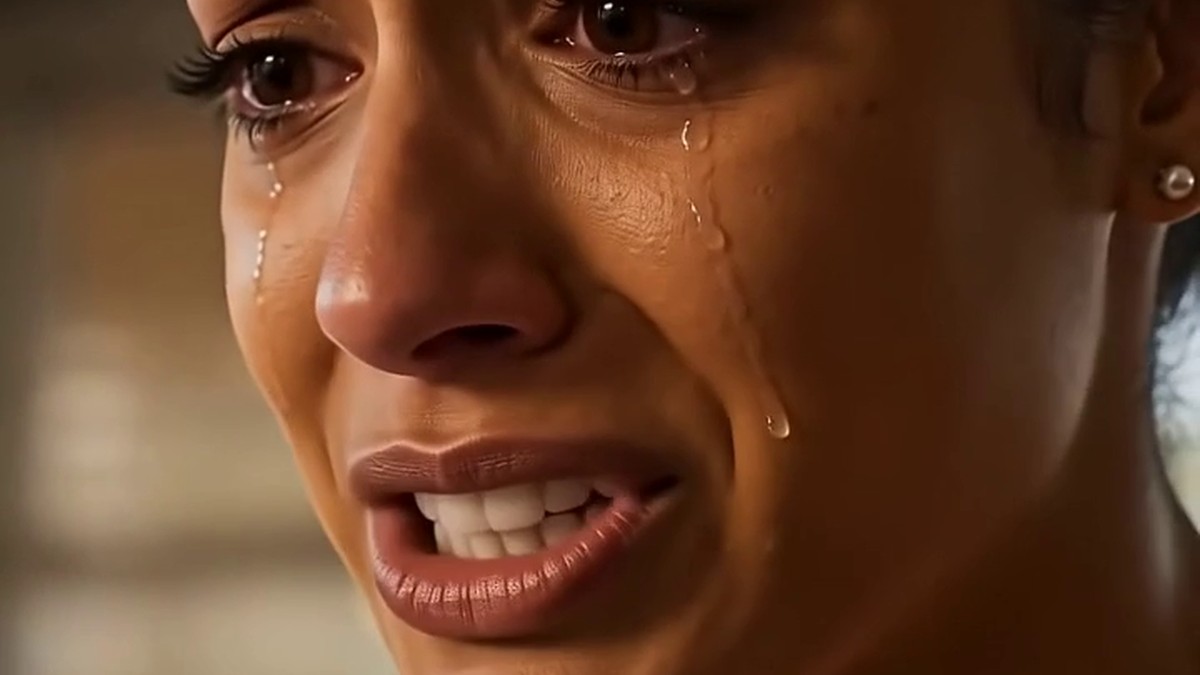
The woman’s composure cracked. A sob tore out of her, raw and unpolished. She fumbled with the clasp of her purse, pulled out a crumpled, yellowed piece of paper, and held it out. It was a twenty-dollar bill, so old it felt like tissue, its edges soft from years of being touched and folded but never spent.
“I framed it,” the woman choked out, laughing through her tears. “I kept it. I always said I’d bring it back when I was strong enough to stand in front of you and not feel like that starving little girl anymore. I’m a doctor now. A pediatrician. I came back to tell you… I came back because today is my wedding day. And there was only one person I needed to see before I walked down the aisle.”
Dottie’s hand came up, trembling, and covered her mouth. The diner was completely still. The young waitress behind the counter had frozen, the trucker at the far end had put down his phone. No one breathed. The old woman slowly pushed herself up from the booth, her joints screaming in protest, and she stood, unsteady, until she was eye-level with the crying bride.
For a long, heavy moment, they simply looked at each other. Two strangers bound by a single plate of eggs and three words spoken in a language of pure, stubborn decency. Dottie’s voice, that same gravelly whisper, finally broke free, thick with decades of unwept tears.
“Did you get enough to eat, sweetheart?”
The woman—Danica, she would later introduce herself, Danica Reed—laughed and sobbed and reached for Dottie’s hands. “Yes,” she said. “Yes, I did. I’ve been feasting on that kindness my whole life.”
Dottie pulled her into an embrace that smelled of tea and old memories. She held her tight, like she was anchoring her to this moment, to the diner, to the proof that one small, unseen act can echo through time and change the shape of the world. The bell jingled again as the wind pushed the door, but nobody noticed. All they saw was an old woman and a bride, tangled together in the middle of a tired diner, proving that sometimes, the person who saves you doesn’t wear a cape. She wears an apron. And she offers you breakfast when the whole world has looked away.