The man's finger cut through the air like a verdict. His voice bounced off the crystal chandeliers, filled the gilded room, made sure every guest heard exactly what he intended them to hear. Next to him, his wife leaned in with a smile sharp enough to draw blood. "Everything you had, old woman — it's ours now. Every last cent."
They were certain of it. Completely, dangerously certain.
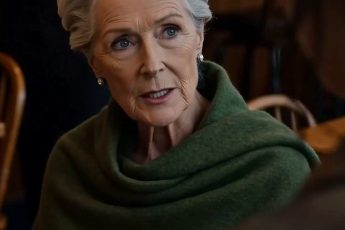
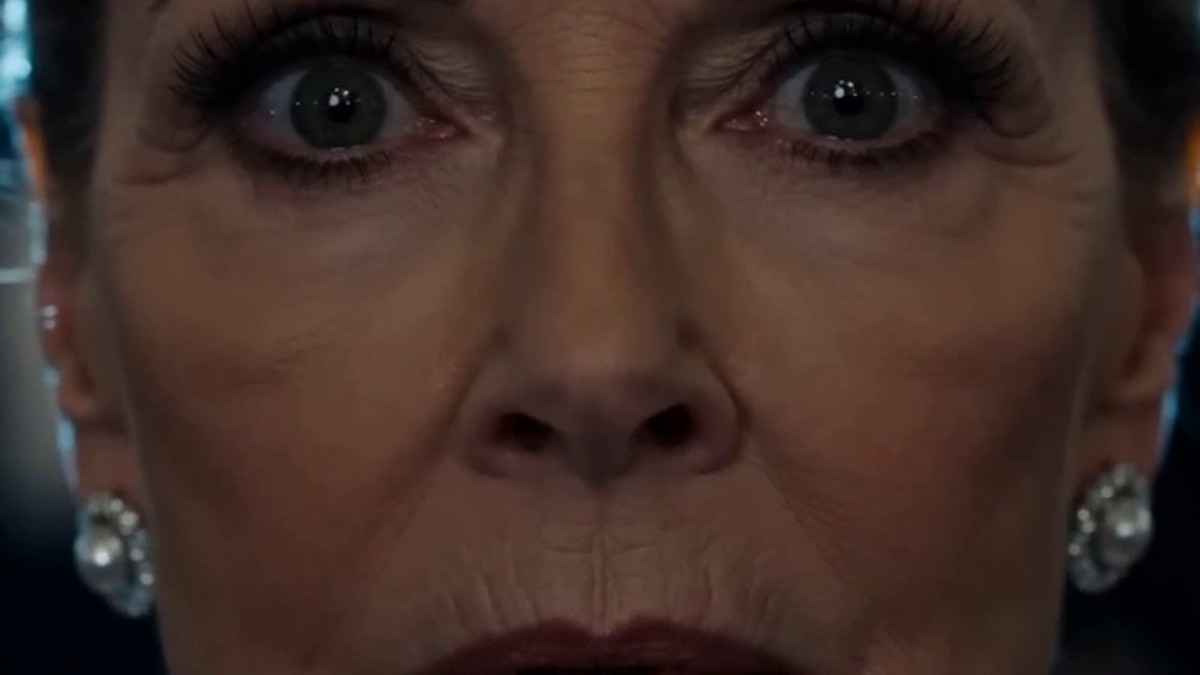
Charlotte stood very still for a moment. Her eyes opened wide — not with grief, not with rage, but with something far quieter. Then she turned. Walked straight through the glittering crowd, heels steady on the marble, and disappeared through the door without a single word.
No tears. She wasn't hiding tears.
—
Later, the banquet hall was someone else's problem.
Charlotte sat in a corner booth of a dark, half-empty bar, the kind of place where nobody looks twice at anyone. The frail, apologetic woman from the party — she simply didn't exist anymore. A glass of aged scotch rested in one hand. Her phone pressed to her ear in the other. And across her face, slow and deliberate as a tide coming in, spread a smile that had nothing warm in it whatsoever.
She hadn't been broken tonight.
She'd been *waiting* for tonight.
"Want to watch it all collapse around them by morning?" she murmured into the phone.
Her finger traced the rim of the glass.
She was only just beginning.
The voice on the other end of the line belonged to a man named Reeves — her attorney for thirty-one years, the kind of man who understood that silence was its own form of loyalty.
"The documents are ready," he said. "All of them."
"Good." Charlotte set down the scotch. "Then we begin."
—
What David and Simone didn't know — what they had never bothered to learn, because people like them never bother — was that Charlotte hadn't built her fortune carelessly.
She'd built it like a fortress.
Every asset they thought they'd seized through the amended trust, every account they believed they'd drained dry, every share certificate they'd waved in front of their lawyers with those sharp, delighted smiles — all of it was a room with no floor. Charlotte had spent the better part of eight months constructing a financial architecture so precise that a hostile takeover of her own estate would trigger a cascade she alone understood. Three shell holdings registered in Delaware. A charitable foundation with specific conditional clauses. And a silent partnership that predated the marriage by two decades — one David had signed away his interest in, carelessly, on a Wednesday afternoon in 1998, when he thought he was doing her a favor.
She had kept the original.
Of course she'd kept the original.
—
By six in the morning, Reeves had filed.
By seven, the first injunction landed on the desk of David's attorney like a stone through glass.
By eight, the calls started.
Charlotte heard about the calls later, secondhand, the way you hear about a storm that missed your window but flattened the house next door. David had shouted. Simone had gone very quiet — which, Charlotte suspected, was actually more frightening. Their legal team scrambled. Numbers stopped adding up. The amended trust, so carefully engineered to strip her of everything, now sat inside a legal structure that made it functionally void. Everything they'd seized had been transferred, legally, months before David ever walked into that banquet hall and pointed his finger at her like a god.
He had humiliated her in front of two hundred people.
She had let him.
Because you don't show the hunter the trap. You wait until they step into it themselves.
—
She didn't go to bed.
She showered. Changed into something simple — grey trousers, a dark blouse — and drove to the office building downtown that still bore, in clean brushed steel letters beside the lobby door, her name. Not his. Hers. The building she'd purchased before she ever met David Harlow. The one asset he'd never thought to touch because he'd never understood what it meant.
The lobby guard looked up when she walked in. He was young, maybe twenty-three, and had worked the morning shift for two years without ever seeing her in person.
"Ms. Hartwell," he said, straightening.
"Good morning." She smiled — a real one this time. "Is the conference room on twelve available?"
"Yes, ma'am. Should I call ahead?"
"No need."
She took the elevator alone. Watched the numbers climb. Felt something settle in her chest that she hadn't felt in a very long time — not triumph, not quite. Something slower. Quieter. The particular satisfaction of a woman who had been written off so thoroughly that her enemies had handed her every advantage while celebrating their own cleverness.
—
They came at ten.
She had expected it. Reeves had warned her: *They'll want a meeting. They'll want to negotiate.* What he hadn't told her — what perhaps he hadn't quite believed — was that they would come in person.
David walked through the conference room door first. He looked diminished already, though it had only been hours. The certainty was gone from his face, replaced by something tighter, harder — the expression of a man recalculating. Behind him, Simone. Still composed. Still wearing that sharp, practiced composure like body armor.
Their attorney, a man named Fitch who Charlotte had met once at a charity dinner and immediately disliked, trailed in last.
Charlotte sat at the head of the table.
She did not stand.
"Charlotte." David's voice was controlled but thin at the edges, like ice you could already hear beginning to crack. "This is unnecessary. You know we can tie this up for years."
"You can," she agreed pleasantly. "That would be expensive for you. Much less so for me, as it turns out."
Simone set her hands on the back of a chair but didn't sit. "What do you want?"
"To be clear," Charlotte said. "That's all. Just very clear."
She opened the folder on the table in front of her. Slid three pages across the surface toward Fitch. He picked them up. His expression did not change, but something behind his eyes did — a subtle, professional dimming, the look of a lawyer reading terms he already knows his client won't like.
"The partnership reverts," Charlotte said. "The holdings revert. The board seats revert. What was transferred under the amended trust gets unwound — your attorneys will confirm within the hour that there's no mechanism to resist it." She paused. "And David resigns from the foundation's directorship by end of business today."
Silence.
David looked at Fitch. Fitch gave the smallest, almost imperceptible shake of his head — the gesture of a man declining to argue with a structural collapse.
"You planned this." David's voice had dropped. There was no more performance in it. Just the raw, unadorned fact of it, and the thing beneath — not quite anger anymore. Something closer to awe, and something closer to shame. "You planned this before the party."
"I planned this," Charlotte said, "before you started the conversation that ended with the party."
Simone had gone very still. That composure, Charlotte noticed, was finally costing her something. A muscle in her jaw. The careful, deliberate steadiness of someone suppressing an emotion they refuse to let show.
"You let us humiliate you," Simone said. Quiet. Almost wondering.
"Yes."
"In front of everyone."
"Two hundred and fourteen people, give or take." Charlotte closed the folder. "And every one of them will hear what happens next. That's the thing about public humiliation — it builds an audience."
Another silence. Longer this time.
David pulled out the chair and sat. The fight had gone out of him the way air goes out of a room — not dramatically, not all at once, but completely, until nothing remained. He looked, Charlotte thought, very much like what he was: a man who had reached too far and found nothing to hold.
Fitch began reviewing the documents in earnest. His pen moved.
—
They left at noon.
Charlotte stood at the window on the twelfth floor and watched the car pull out of the parking structure below. She could see the shape of David in the back seat, the suggestion of Simone beside him, and then the car turned and they were gone.
Her phone buzzed. Reeves.
*It's done. Fitch confirmed. Filings by end of day.*
She read the message once. Then she put the phone in her pocket.
The city spread out below her in the flat winter light — grey and enormous and entirely indifferent to what had just happened in this room. Nobody down there knew. Nobody down there cared. That was fine. That was, in fact, the point. She hadn't done this for the audience. She had done it because there are certain things you do not take from a woman who has spent a lifetime building carefully, and one of those things is her name, and another is her dignity, and the last and most important is her sense of her own mind.
They had tried to take all three in the span of a single sentence.
*Everything you had, old woman — it's ours now.*
Charlotte picked up her jacket from the back of the chair. Folded it over her arm. She walked to the elevator, pressed the button, watched the doors open.
She had a lunch reservation she'd made three weeks ago, when she was still — to all outward appearances — a woman about to lose everything.
She had never canceled it.
She wasn't the type.