I only stopped at the shelter to drop off two bags of kibble. Ten minutes, tops. I didn't even turn off the engine.
That was the plan, anyway. I'd made a habit of it since retiring from the fire department in Tulsa — swing by the Green Country Animal Shelter on my way back from the hardware store, hand off whatever dog food was on sale at the Homeland grocery, wave at the volunteers, get home in time for the Thunder game. Simple. Predictable. My wife Denise and I had built a quiet life out of routines like that.
Then I heard it.
A low sound, cut short almost as soon as it started. Not a bark. Not even really a whine. It was the kind of sound an animal makes when it's stopped expecting anyone to answer — half-swallowed, like the dog had already decided it wasn't worth finishing.
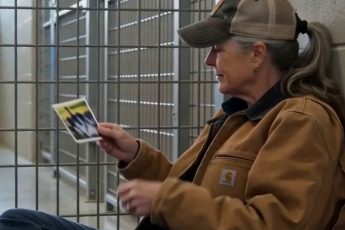
I followed it to the last kennel in the row, past the chain-link runs where the younger dogs were throwing themselves at the gate for attention. This one was quiet. Two old dogs sat pressed together in the back corner, on a blanket someone had folded twice to make it thicker.
The male was big, some kind of shepherd mix gone gray from the muzzle back. His hips looked stiff even sitting still. The female was small — maybe a beagle mix — with one cloudy eye, and she'd wedged herself against his side like she was afraid a gap would open up between them and swallow her whole.
A volunteer named Priya came over with a clipboard and told me they'd been dropped off that morning. Their owner, an elderly man, had gone into assisted living out past Broken Arrow, and his kids didn't have room — or didn't want the hassle — for two dogs pushing fourteen. The male was fourteen. The female was thirteen. Ten-plus years together, according to the intake sheet, which felt like a strange thing to write down and an even stranger thing to end.
While I stood there, the little one tried to stand up. Her back legs slid out from under her on the blanket. Before I could react, he shifted his weight and leaned into her, offering his own body as something to lean on, the way he'd apparently done a thousand times before. She settled against him like nothing had happened.
Something in my chest did something I wasn't prepared for.
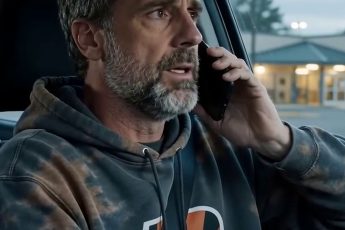
I walked out to the parking lot — past a guy loading a litter of puppies into a Ford pickup, three kids fighting over who got to hold which one — and called Denise from the driver's seat.
"I think our quiet life might be over," I said.
She didn't answer right away. Somewhere behind her I could hear the TV, probably the Weather Channel, since a line of storms was supposed to roll through that night.
"How many?" she finally asked.
"Two."
A pause. Then: "Of course it's two."
I looked back through the shelter window. The little one had tucked her nose under his chin. "They're old, Denise. Really old."
"So?"
"Nothing. I just — they've got nobody left."
Long quiet on the line. I could hear her breathing, thinking it over the way she does before she agrees to anything that's going to cost us money or sleep.
Then the text came through, three words: *Bring them home.*
We named them Walter and June — after Denise's grandparents, who'd been married fifty-one years and died eleven months apart. It felt right.
Walter moves slow now, arthritis in both hips, and he always stops at doorways to wait for June to catch up. June's mostly blind these days, but she knows the jingle of his collar tag against the metal buckle, and she'll follow that sound down the hallway, out to the yard, anywhere. At night she sleeps with her nose pressed into the fur at his shoulder. He still angles his body between her and anything unfamiliar, same as he must have done his whole life, long before we knew either of them.
A few weeks after we brought them home, I opened the trunk of my Silverado to grab a cooler for a fishing trip. The two bags of kibble were still sitting back there, untouched. I'd forgotten to drop them off. Forgotten the entire reason I'd gone to the shelter in the first place.
I stood there in the driveway holding a bag of dog food that had traveled all that way for nothing, and it hit me — I'd walked into that shelter thinking I was doing someone else a small favor. Instead, two old dogs walked out and rearranged everything.
Denise says fate doesn't usually knock. Most of the time it just sits behind a chain-link fence, quiet, waiting to see if anyone's going to stop long enough to notice — and say, not this time, not you two, not alone.