Denise Calloway had been asking the same question for eleven years, and Marlene Sutter had never once given her a straight answer.
"Where do you dream of going, Mom?" Denise would ask, usually on a Sunday, usually while refilling her mother's coffee at the kitchen table in Marlene's small house outside Hagerstown, Maryland. "Portugal? Italy? You always said Italy."
"Someday," Marlene would say, and change the subject to the weather or the church bake sale or whether Denise's husband Roy had finally fixed the gutter.
Marlene was seventy-three, widowed nine years, and she ran her late husband's auto repair shop the way some women run a household — quietly, stubbornly, from a metal desk in the back office that still smelled faintly of motor oil and the peppermints she kept in a dish by the phone. Sutter's Auto & Tire had four bays, two full-time mechanics, and a sign out front that Frank had painted himself in 1988. Marlene had never touched the paint. She'd never touched much of anything that was Frank's.
What Denise didn't know — what nobody but the bank and Marlene's lawyer knew — was that the shop wasn't just sentimental. It was the only asset Marlene had. Frank hadn't believed in retirement accounts. He'd believed in the shop, in Route 9 traffic, in customers who came back for thirty years. The building and the business together were worth around four hundred thousand dollars, and every dollar Marlene had was tied up in it.
Denise's son Tyler was the one who broke things open, though he didn't mean to.
Tyler was twenty-four, had just gotten his ASE certification, and had been begging his grandmother for a job at the shop since he graduated. Marlene kept saying she'd think about it. Then, on a Tuesday afternoon in early August, Tyler showed Denise a photo he'd taken on his phone — not meaning anything by it, just excited — of paperwork sitting on Marlene's desk when he'd stopped by to drop off a part.
It was a title transfer. Sutter's Auto & Tire, LLC. And the name being added as co-owner wasn't Denise. It wasn't Tyler. It was Curtis Boone.
Denise stared at the photo on her son's phone for a long moment before she asked, "Who is Curtis Boone?"
"Some guy," Tyler said. "He's been coming around the shop a lot. Grandma says he's a family friend."
Denise had never heard the name in her life.
She drove to her mother's house that same evening, the photo already burning a hole in her phone, and found Marlene in the kitchen boiling water for tea like it was any other Tuesday.
"Who's Curtis Boone?"
Marlene didn't drop the kettle. She didn't even turn around right away. That was the thing about her mother — she absorbed a blow the way a stone wall absorbs rain, no visible reaction, and you had to wait to see what leaked through later.
"He's been helping me at the shop," Marlene finally said. "Doing books. Some of the ordering."
"Tyler saw a title transfer, Mom. Your name and his name. Co-owner."
Marlene set two mugs down on the counter, careful, like the conversation itself might spill. "It's not what you think."
"Then tell me what it is."
What it was, Marlene admitted over the next forty minutes, sitting at the same table where she'd deflected eleven years of Denise's travel questions, was this: Curtis Boone was sixty-one, a widower Marlene had met at a grief support group at the Lutheran church on Potomac Street eighteen months earlier. He'd started coming by the shop to "help out." He drank his coffee black, same as Frank had. He fixed the flickering light in the waiting room that had been broken since 2019. And somewhere in the last six months, he had convinced Marlene that adding him to the LLC would "protect the business" if anything happened to her, and that he'd been quietly putting his own money into the shop's accounts to cover a slow stretch back in the spring — eleven thousand dollars, he said, though there was no paper trail Marlene could actually produce.
"He said family gets complicated," Marlene said, not meeting Denise's eyes. "He said this way nobody has to fight over it later."
"Nobody was fighting over anything, Mom. There's me. There's Tyler. That's the whole family."
"I know that now."
"Do you?"
The tea went cold. Neither of them drank it.
Denise didn't sleep much that week. She kept picturing her mother alone in that back office, a widow for nine years, being told by a man in a grief group that he was protecting her — while quietly attaching himself to the one asset that stood between Marlene and nothing. She thought about the coffee, the fixed light, the black coffee just like Frank's. It was almost clever, how ordinary it all was.
On Thursday, Denise called her mother's lawyer, a woman named Patricia Ferro who'd handled Frank's estate nine years earlier. Patricia agreed to meet Denise and Marlene together on Friday morning, and — at Denise's request, though Marlene resisted for two days before agreeing — Patricia also agreed to have Curtis Boone come in at the same time, under the pretense of "finalizing the paperwork."
Curtis didn't know Denise would be there. That was the point.
Friday, 10 a.m., a small conference room above a insurance office on Washington Street in Hagerstown. Fluorescent lights, a coffee maker that gurgled in the corner, a window looking out over a parking lot where the paint lines had faded to almost nothing. Curtis Boone walked in wearing a golf polo and carrying nothing — no folder, no documents, no proof of the eleven thousand dollars he claimed to have contributed. He saw Denise sitting next to her mother and his step caught, just slightly, before he recovered and reached out a hand she didn't take.
"Denise, right? Marlene talks about you all the time."
"Sit down, Curtis."
Patricia laid it out plainly. There was no record of any eleven-thousand-dollar deposit from Curtis Boone into the business accounts — she'd pulled six months of statements. There was no written agreement about what "protecting the business" was supposed to mean, no operating agreement amendment signed by both parties, nothing but a draft title transfer sitting unfiled on Marlene's desk. In the state of Maryland, Patricia said, that draft was worth exactly nothing unless Marlene signed it and filed it. It hadn't been filed. It could be shredded in the next five minutes.
Curtis tried anyway. He talked about how much he cared for Marlene, how lonely she'd been, how he only wanted what was best. His voice climbed a register when he got to the money — insisting the eleven thousand was real, that he could "get proof," that this was all a misunderstanding stirred up by a jealous daughter.
Marlene had been quiet the entire meeting. She opened her purse, took out a folder — the same manila folder Tyler had photographed on her desk — and slid it across the table to Patricia.
"Shred it," she said. "All of it."
"Marlene—"
"You drink your coffee black like Frank did," Marlene said, looking at Curtis for what felt like the first time all morning. "I noticed that the first week. I told myself that meant something. It doesn't mean anything, Curtis. It means you take your coffee black."
She stood up. Patricia ran the title draft through the shredder in the corner of the room right then, the machine's grinding filling the silence Curtis didn't fill. He left without the handshake this time.
That afternoon, Marlene called a locksmith and had the back-office lock at Sutter's Auto & Tire changed — not because Curtis had a key, but because she wanted, in her own words, "to change something with my own hands." Denise sat with her while the locksmith worked, and Tyler swept the waiting room floor even though nobody asked him to, because he didn't know what else to do with his hands either.
The following Monday, Marlene called Tyler into the office and offered him the job — full-time, benefits, twenty-two dollars an hour to start, with the understanding that in five years the shop would be his if he wanted it. She had Patricia draw up the paperwork that week. Real paperwork, filed with the state, with Denise as backup executor and Tyler named outright as the eventual owner.
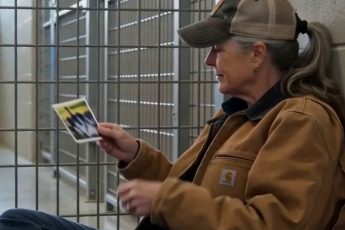
Denise found the travel brochure by accident, tucked under the new stack of paperwork on her mother's desk — a glossy folder for a two-week trip to the Amalfi Coast, dates in October, already booked and paid for through the Rotary Club's travel program.
"You said someday," Denise said.
"I got tired of someday," Marlene said, sliding the shredder receipt into the same folder, right next to the boarding pass confirmation. "Eleven years is long enough to make a person start believing in it."